oceania | New Zealand
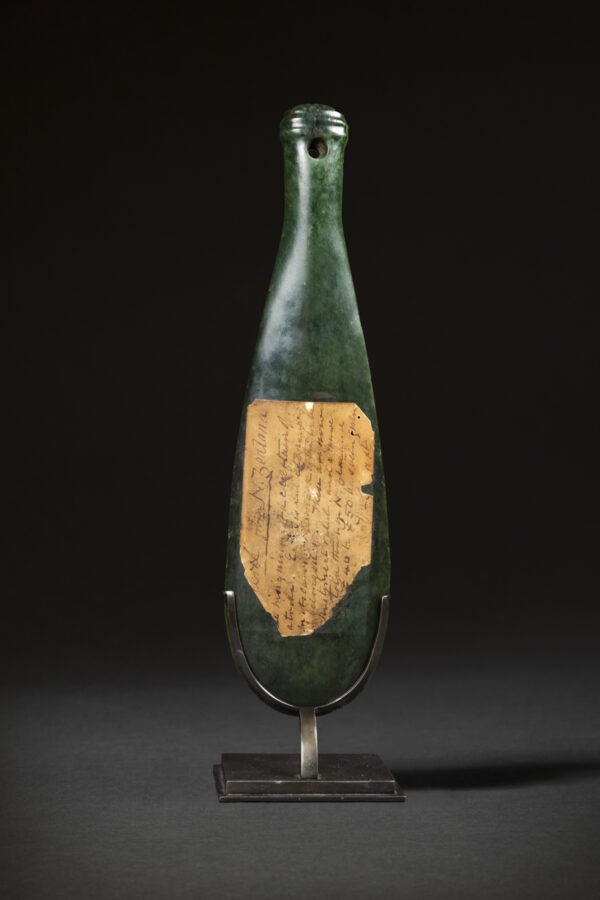
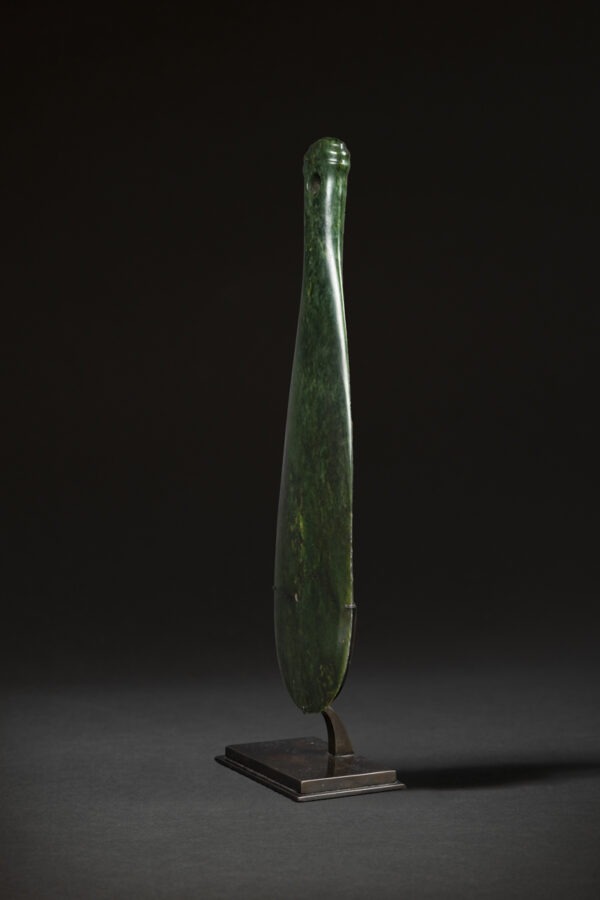
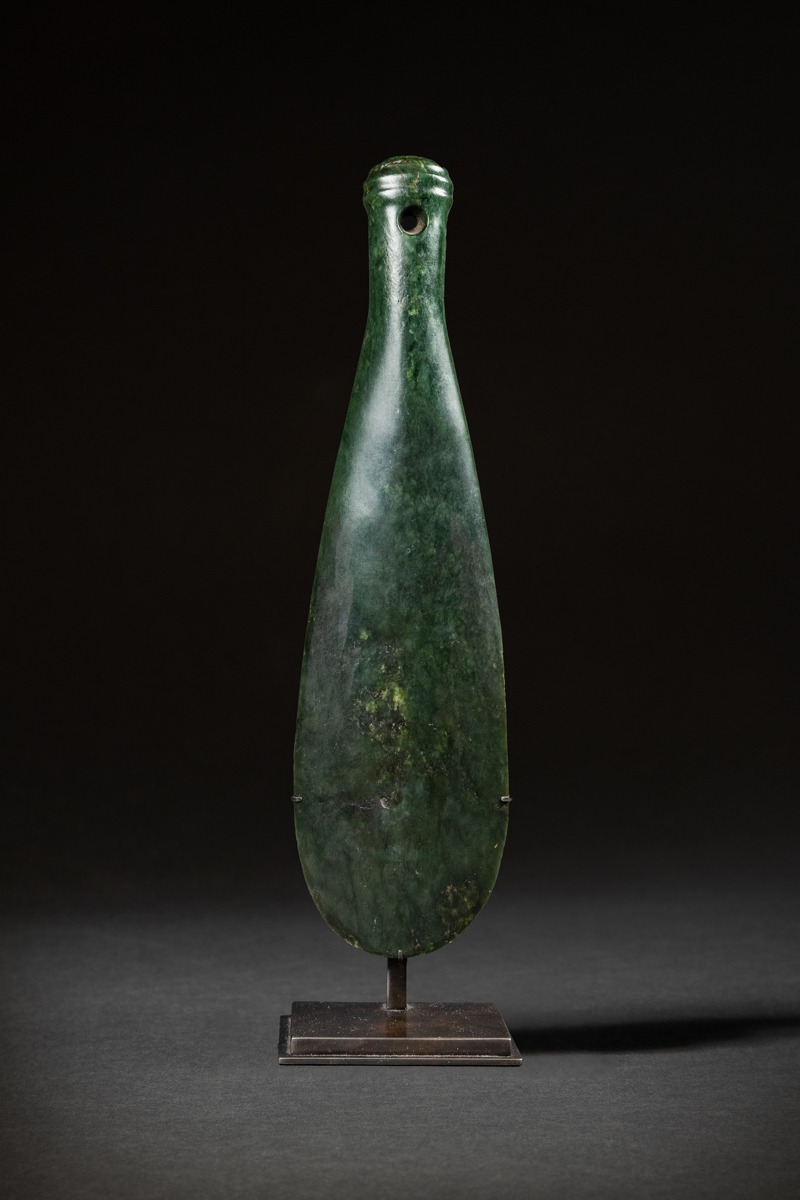
Maori Hand Club
New Zealand
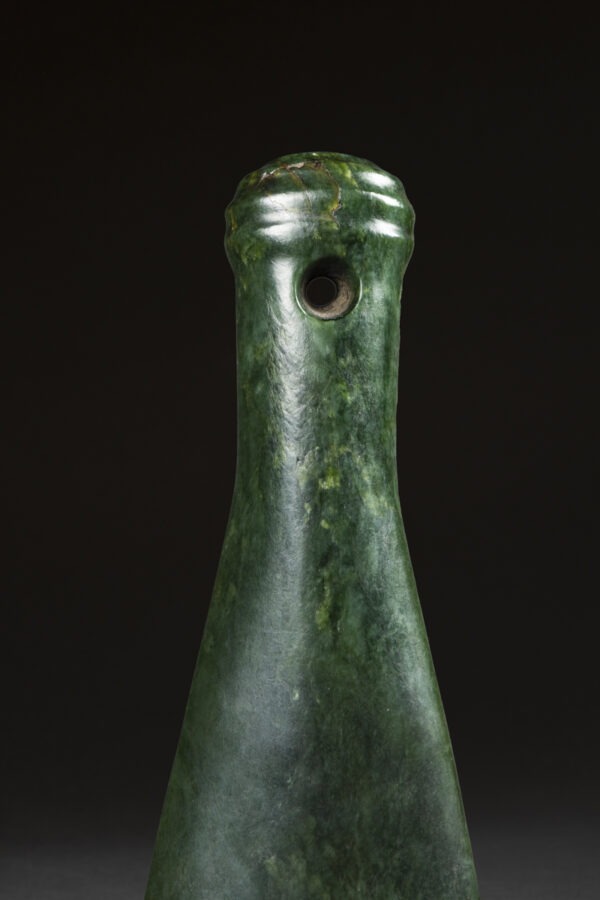
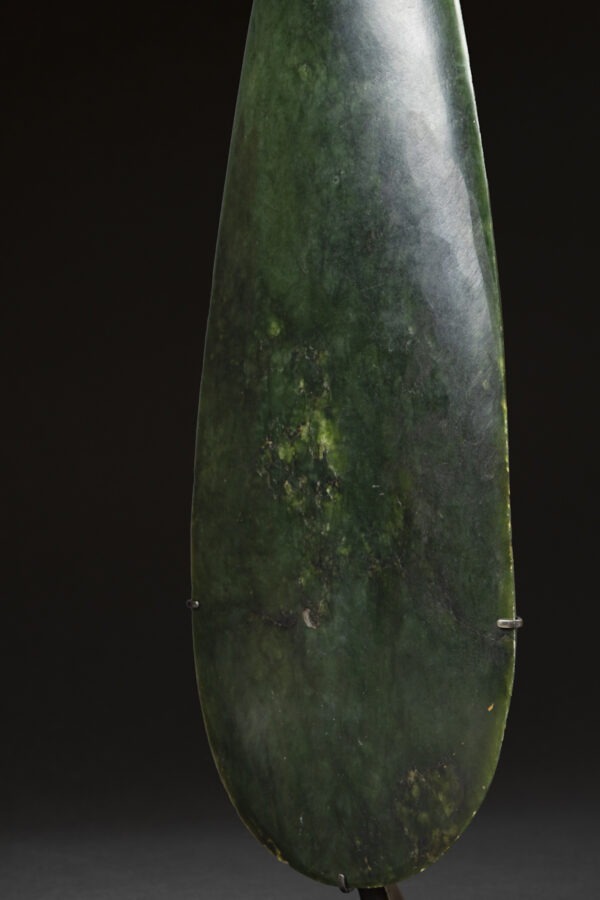
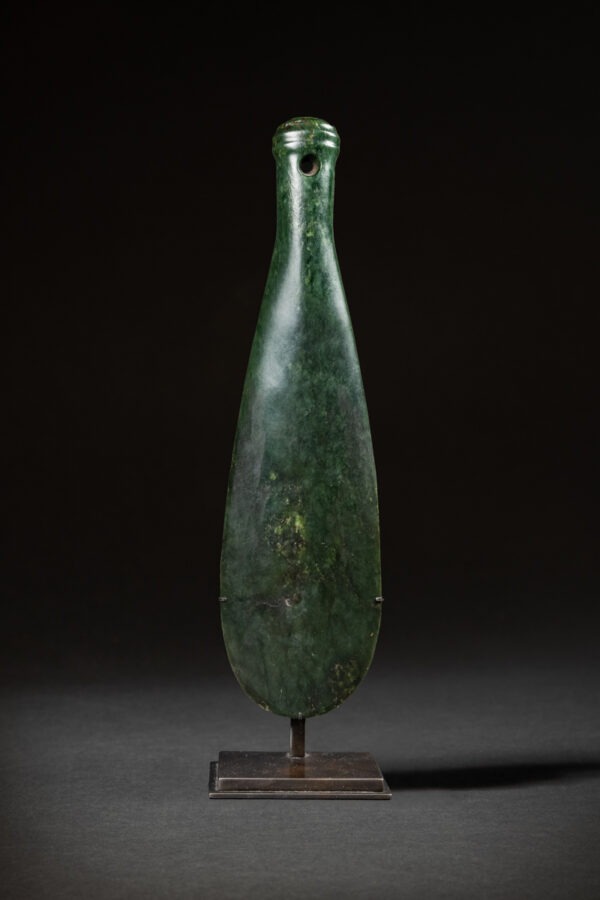
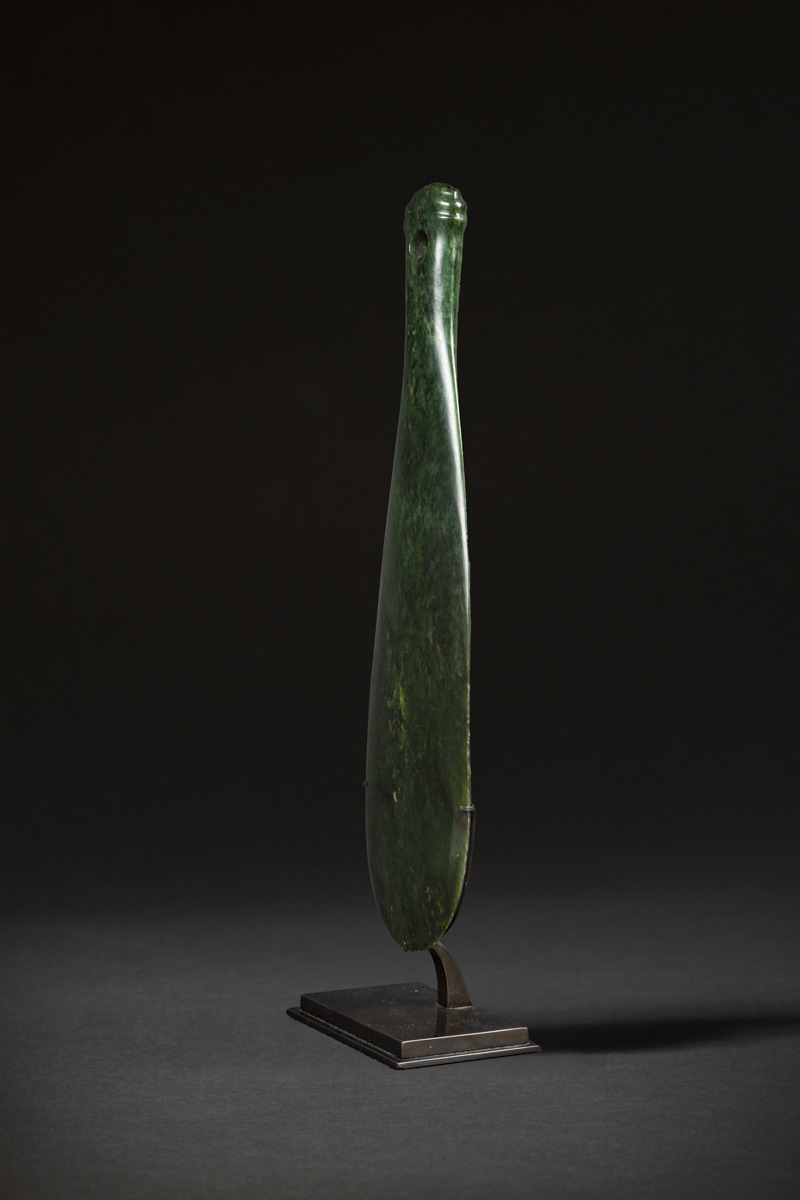
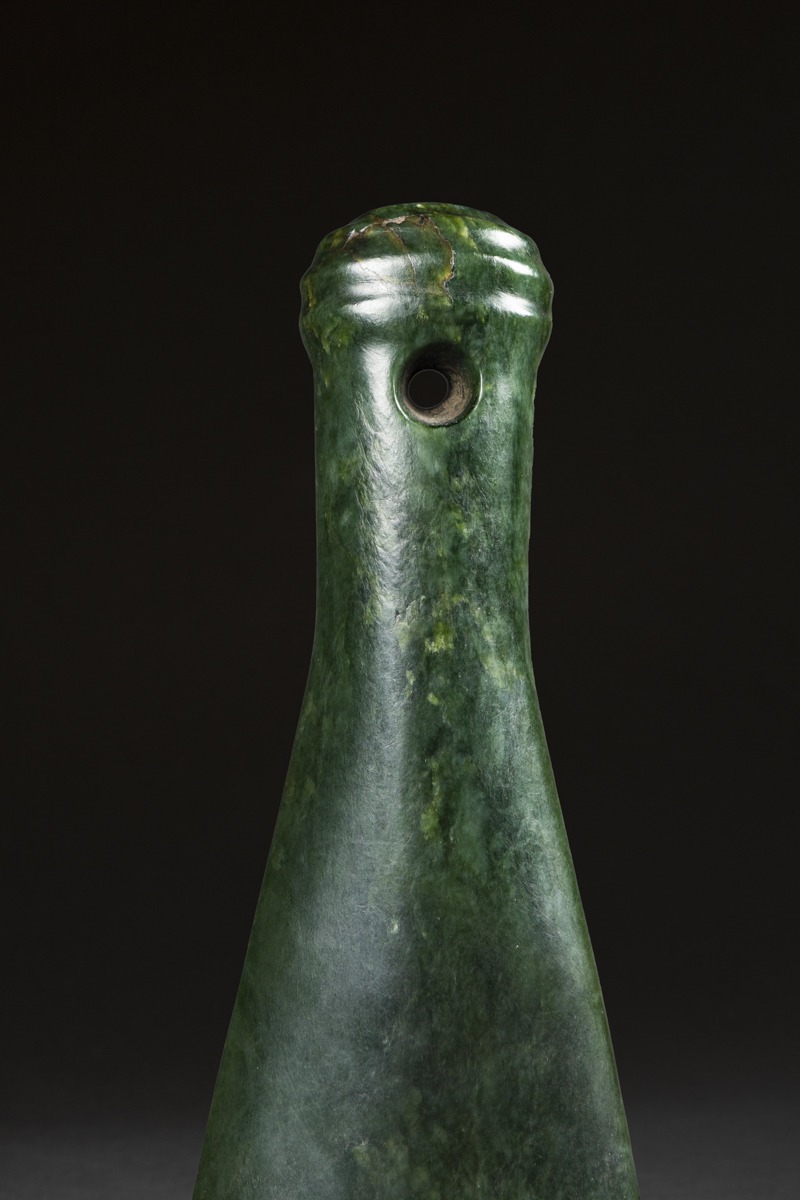
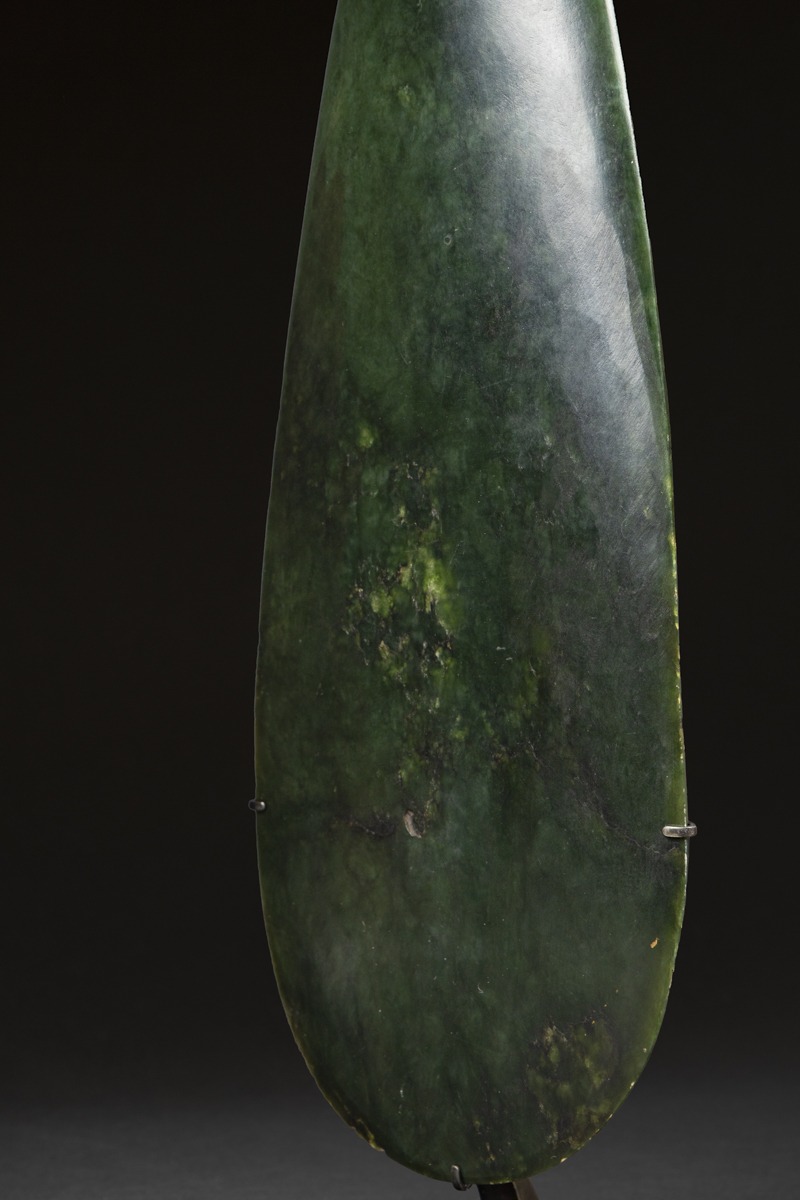
Mere Pounamu / Patu War Club
Maori
18th century or earlier
Carved Greestone (pounamu nephrite)
Height: 37.5 cm – 14 ¾ in.
Provenance
Christie’s London, 6 Dec. 1995, lot 6
Collection Mark & Carolyn Blackburn, Honolulu, Hawai’i
Bonhams Los Angeles, 2 July 2020, lot 28
Collection Patrick Mestdagh, Brussels, Belgium
Private collection, Nice, France
Publication
« Polynesia, The Mark & Carolyn Blackburn Collection of Polynesian Art », A. Kaeppler, University of Hawai’i Press, Honolulu 2010, fig. 492
« Casse Tête II », Galerie Meyer, Paris, Parcours des Mondes 2022, p. 240
Maori Patu Pounamu 37.5 cm / Galerie FLAK
Price: on request
War was an integral part of Maori life. The complex and diverse causes of conflicts found their origins in disputes between groups competing for territory or resources. They could be linked to retaliations / vendettas between villages. Finally, taking part in combat was a way for a warrior to gain mana (sacred power).
Short hand clubs like the one presented here were designed for close combat. The whole blade edge might be used to parry blows or strike an opponent during combat.
These striking weapons were also an important symbol of authority.
The Maori hand club presented here is an extraordinary, early example, redolent with power and “mana”. It is carved from pounamu (nephrite), the sacred stone of the Māori, symbolizing its importance and the high status of its owner within Māori society.
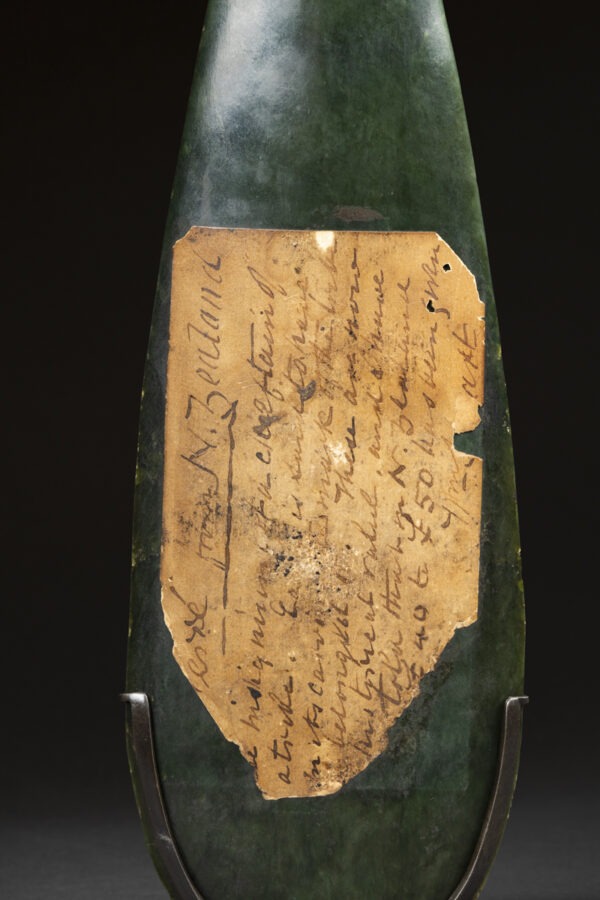
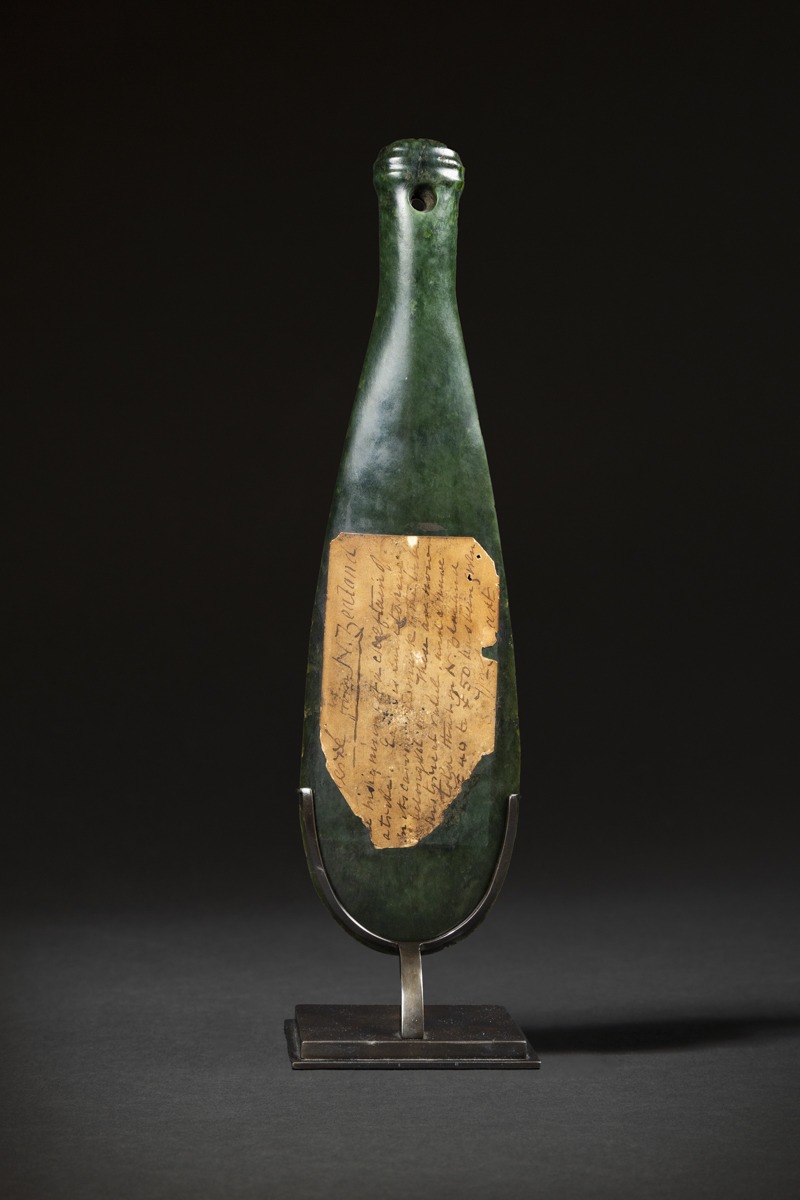
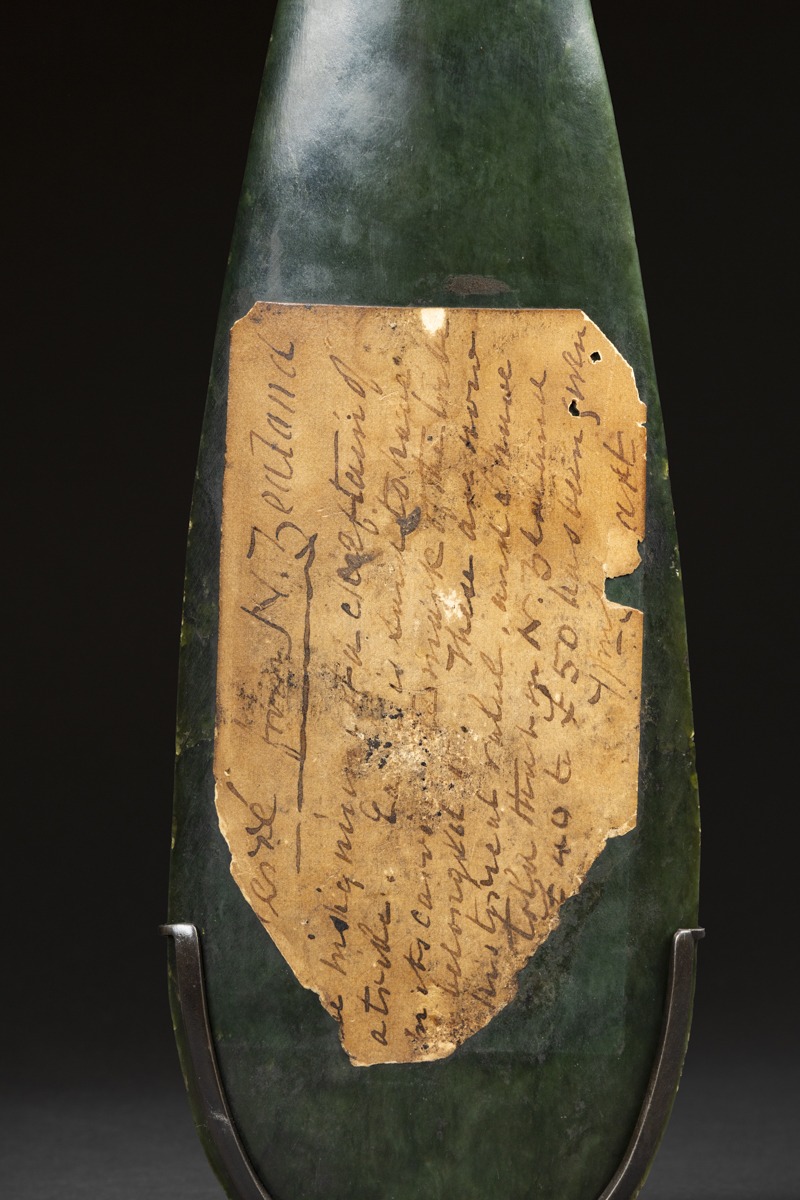
The remains of an early 19th century handwritten label affixed to the club reads (partially) as follows:
Meré from N. Zealand
⁃ insignia of a chieftain of.
⁃ a tribe. Each (?) is said - to have its carver
⁃ mark of the (their) tribe
⁃ belonged
⁃ There are now at value (?) and a
⁃ hunt in N. Zealand
⁃ 40 to £50 has been given
⁃ (faded signature)
Passed down from generation to generation as a precious heirloom, patu hand clubs were regarded by the Māori as objects of great importance, with those made of nephrite jade (known as patu pounamu or mere pounamu) being the most prized.
The use and possession of nephrite was reserved for the nobility or a high-ranking individual.
According to Kaeppler (ibid, p. 348), "Greenstone mere were used as a short sword after a series of parries and counter-parries. As both a weapon and an insignia of rank, such mere became treasured heirlooms passed down from father to son and given personal names. Remnants of an early nineteenth-century handwritten label are attached that discuss the value placed on this hand club and note a price of 40 to 50 pounds sterling."
Short hand clubs like the one presented here were designed for close combat. The whole blade edge might be used to parry blows or strike an opponent during combat.
These striking weapons were also an important symbol of authority.
The Maori hand club presented here is an extraordinary, early example, redolent with power and “mana”. It is carved from pounamu (nephrite), the sacred stone of the Māori, symbolizing its importance and the high status of its owner within Māori society.
The remains of an early 19th century handwritten label affixed to the club reads (partially) as follows:
Meré from N. Zealand
⁃ insignia of a chieftain of.
⁃ a tribe. Each (?) is said - to have its carver
⁃ mark of the (their) tribe
⁃ belonged
⁃ There are now at value (?) and a
⁃ hunt in N. Zealand
⁃ 40 to £50 has been given
⁃ (faded signature)
Passed down from generation to generation as a precious heirloom, patu hand clubs were regarded by the Māori as objects of great importance, with those made of nephrite jade (known as patu pounamu or mere pounamu) being the most prized.
The use and possession of nephrite was reserved for the nobility or a high-ranking individual.
According to Kaeppler (ibid, p. 348), "Greenstone mere were used as a short sword after a series of parries and counter-parries. As both a weapon and an insignia of rank, such mere became treasured heirlooms passed down from father to son and given personal names. Remnants of an early nineteenth-century handwritten label are attached that discuss the value placed on this hand club and note a price of 40 to 50 pounds sterling."
Documentation
Explore the entire collection