Kachina Collection | Arizona
Katsina Doll
Arizona
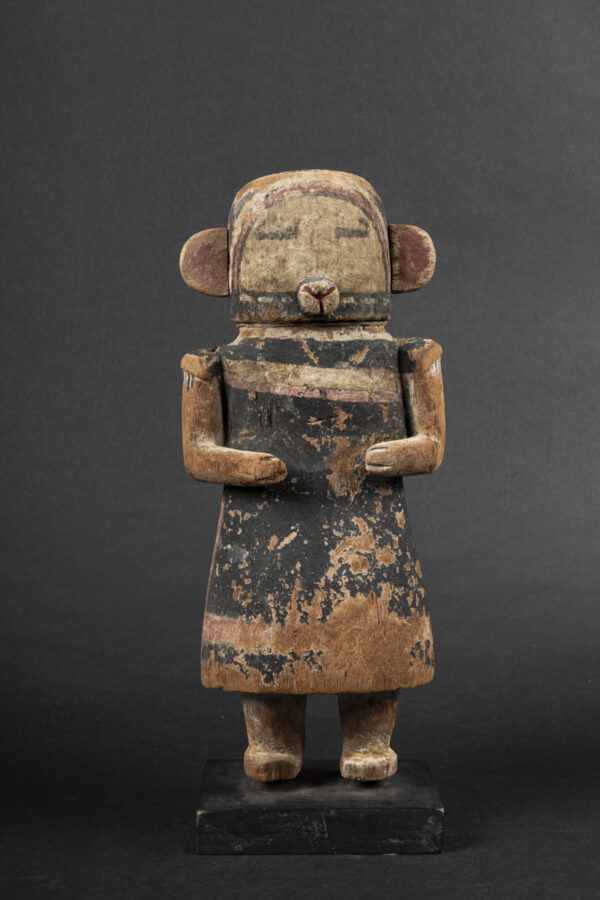
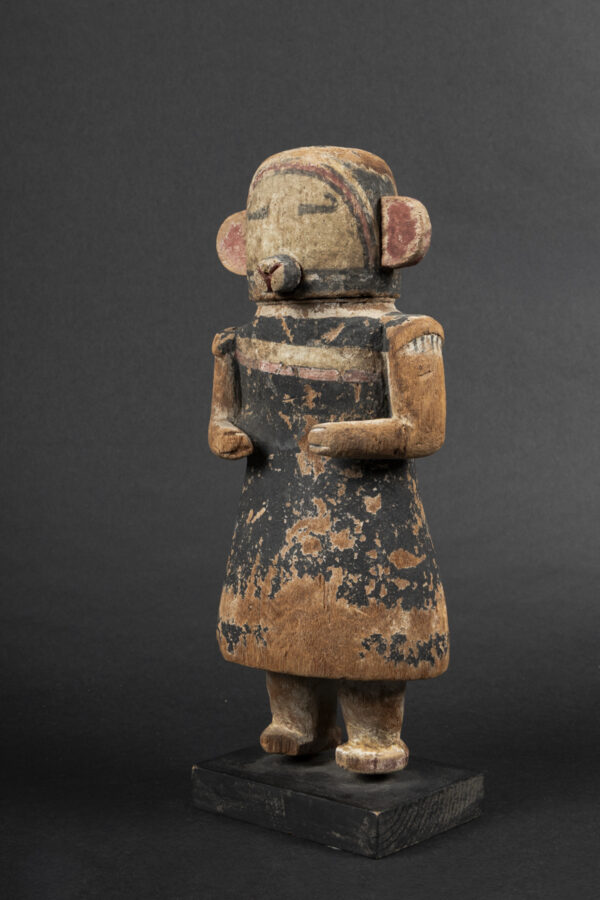
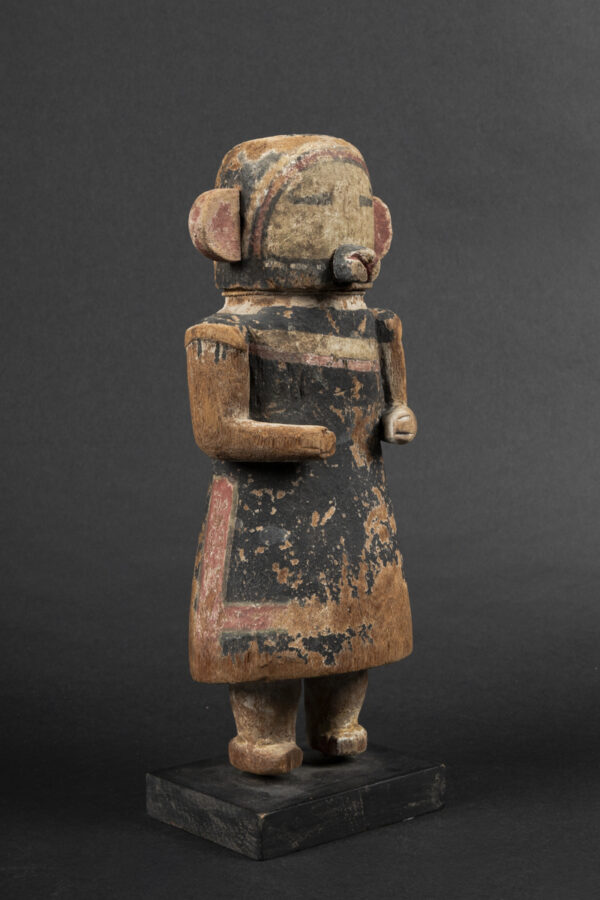
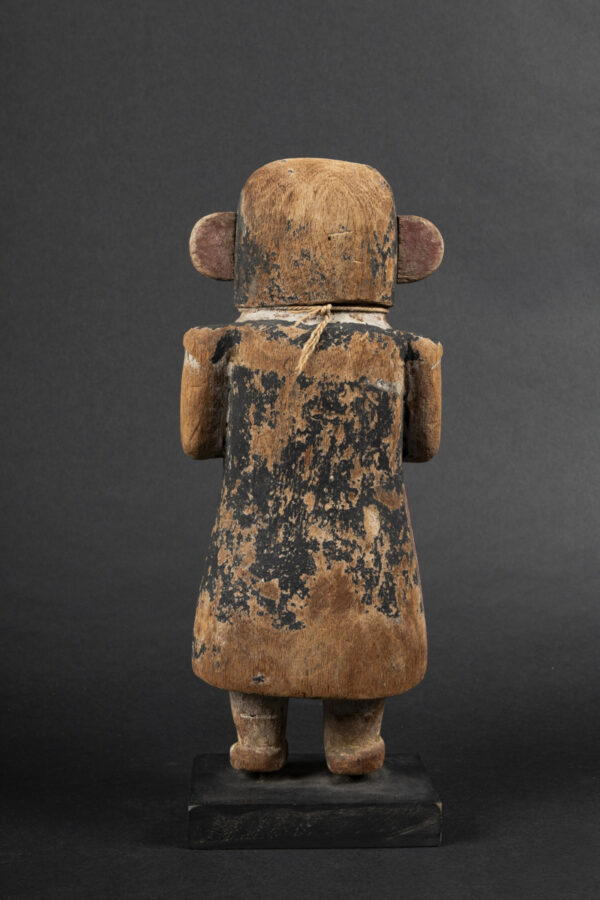
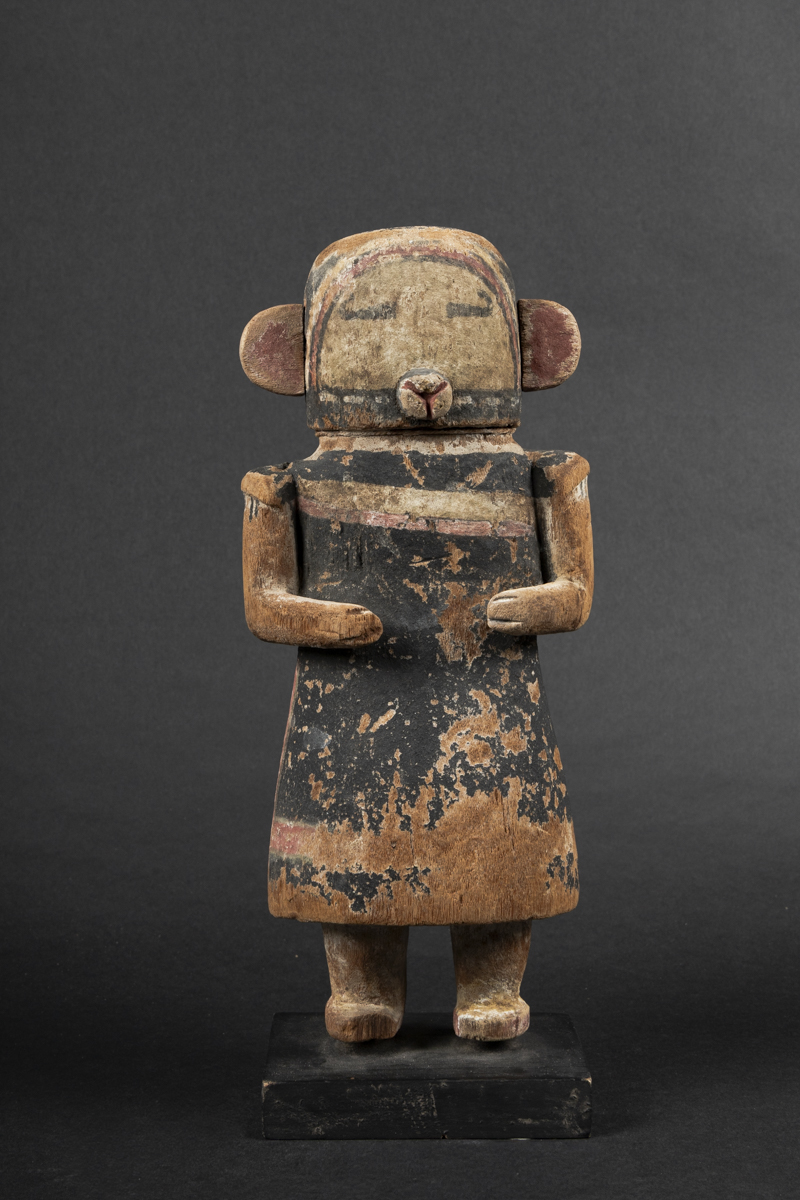
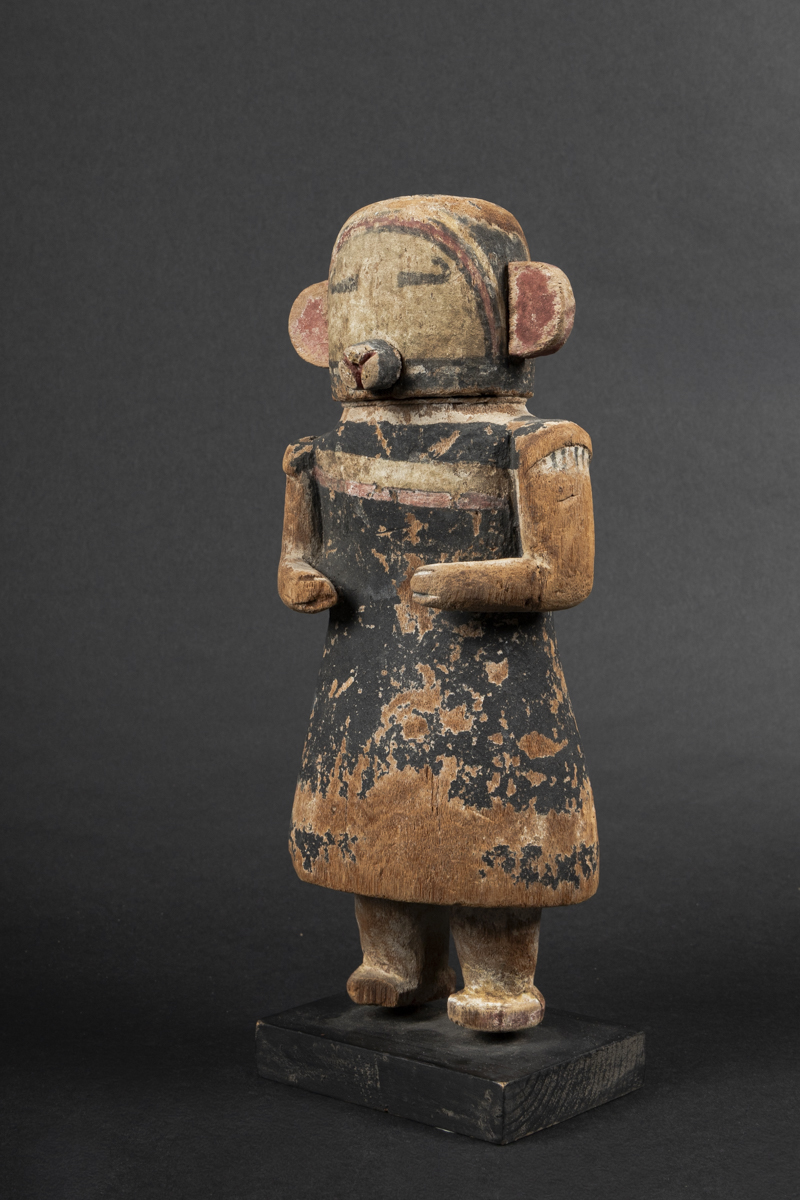
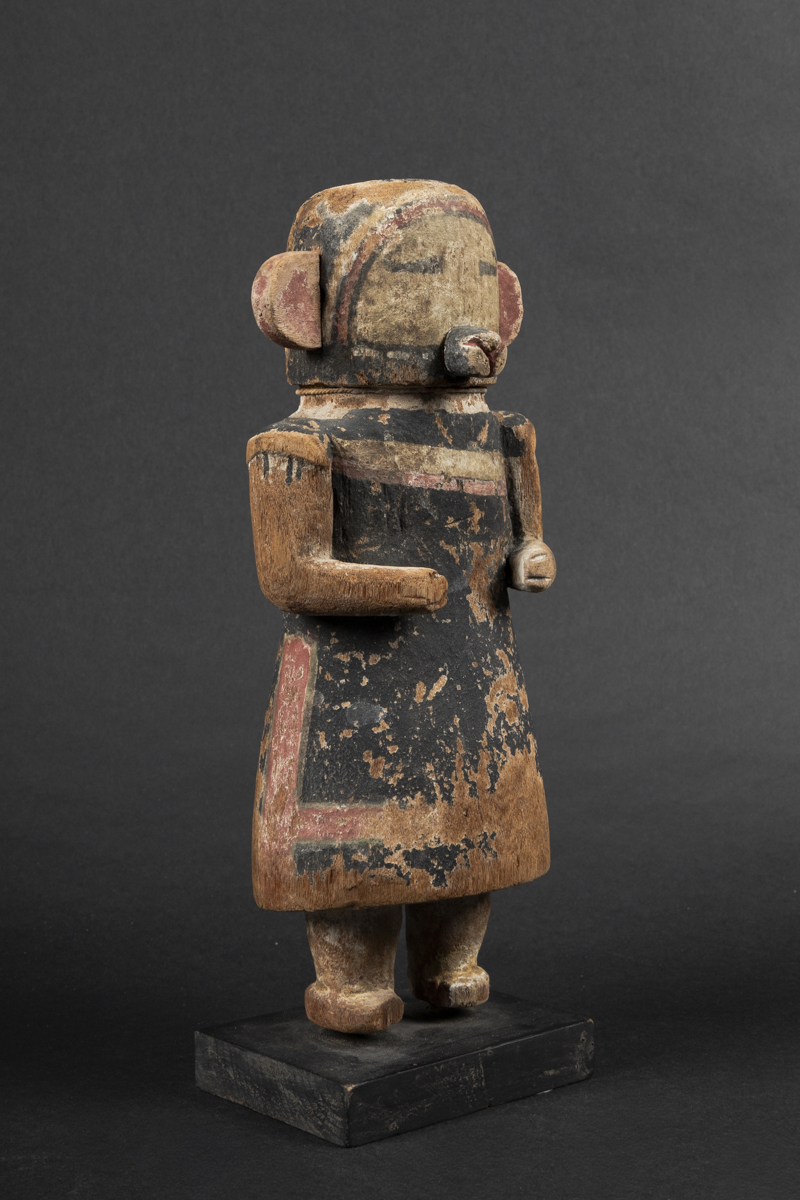
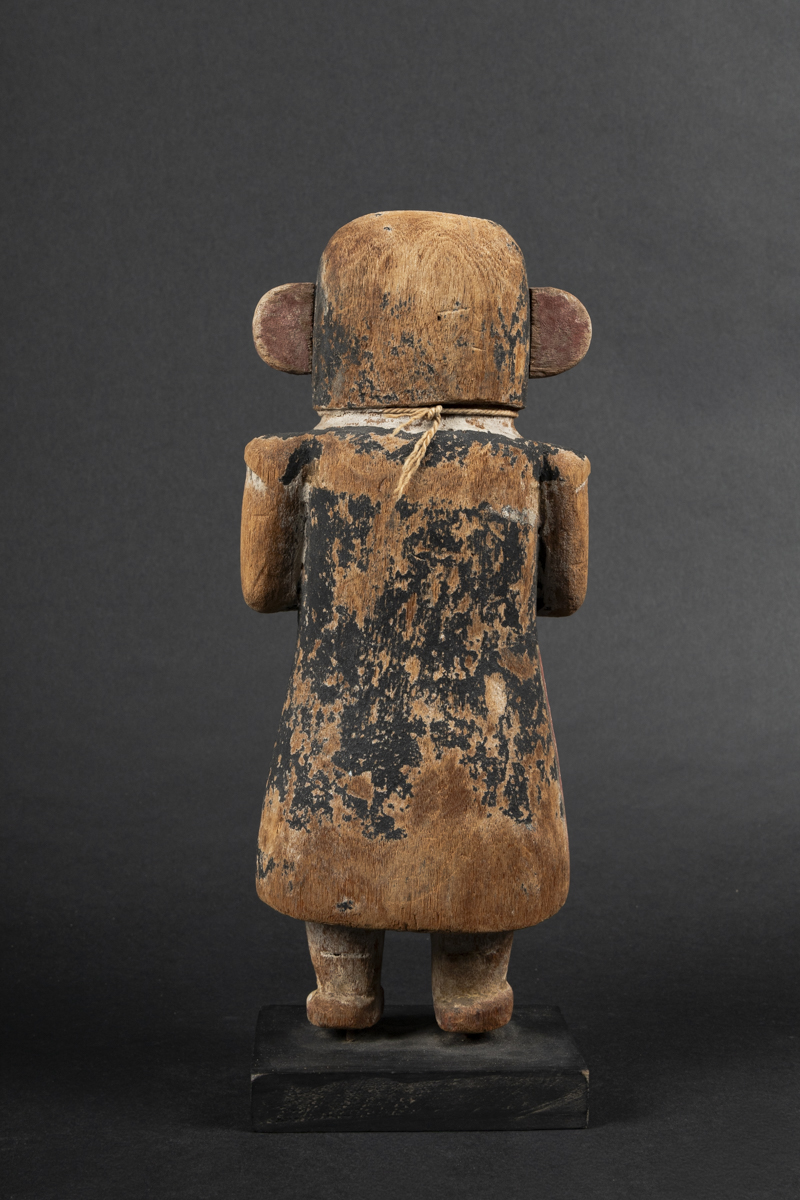
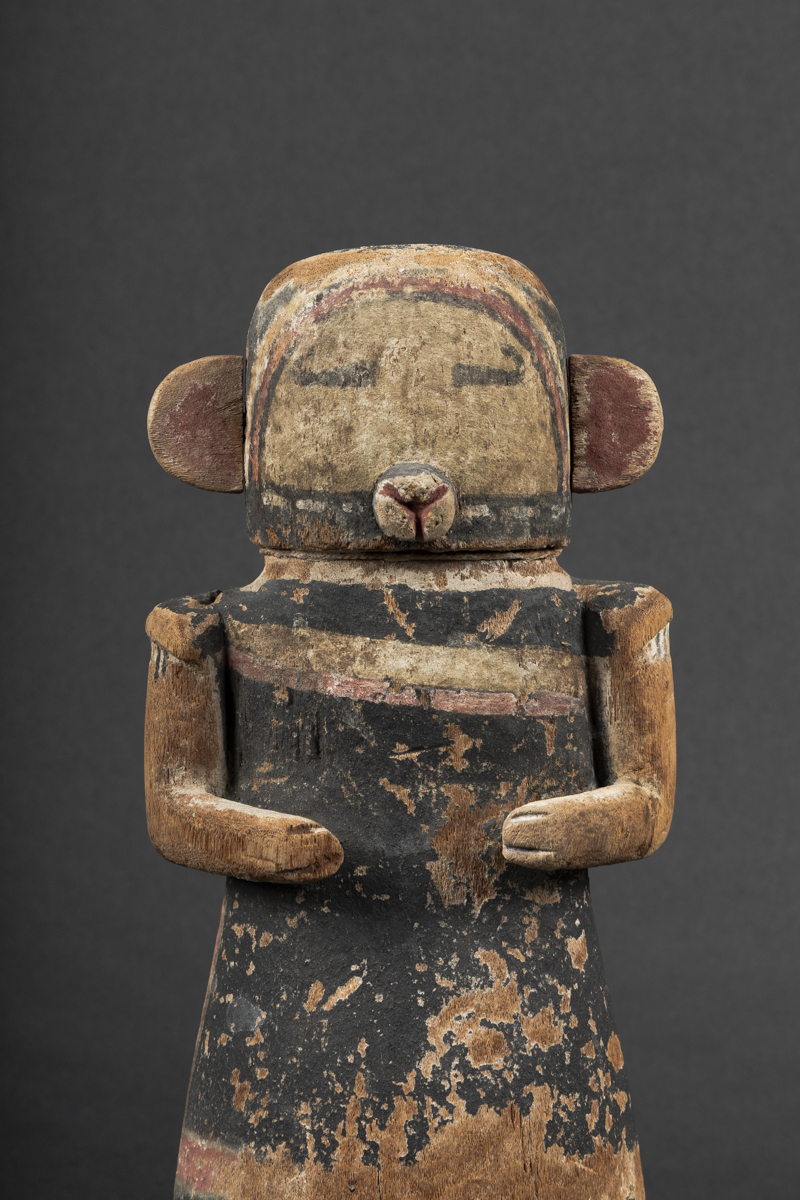
Dress Katsina Doll
Koroasta
Hopi
Arizona, USA
Circa 1880 – 1890
Carved wood (cottonwood) and pigments
Height: 26 cm – 10 ¼ in.
Provenance
Collection Fred Harvey (1835-1901)
The Fred Harvey Company, USA
Collection Jean-Paul Morin, France
Sotheby’s Paris, 14 Oct. 2020, lot 95
Private collection, California, acquired at the above sale
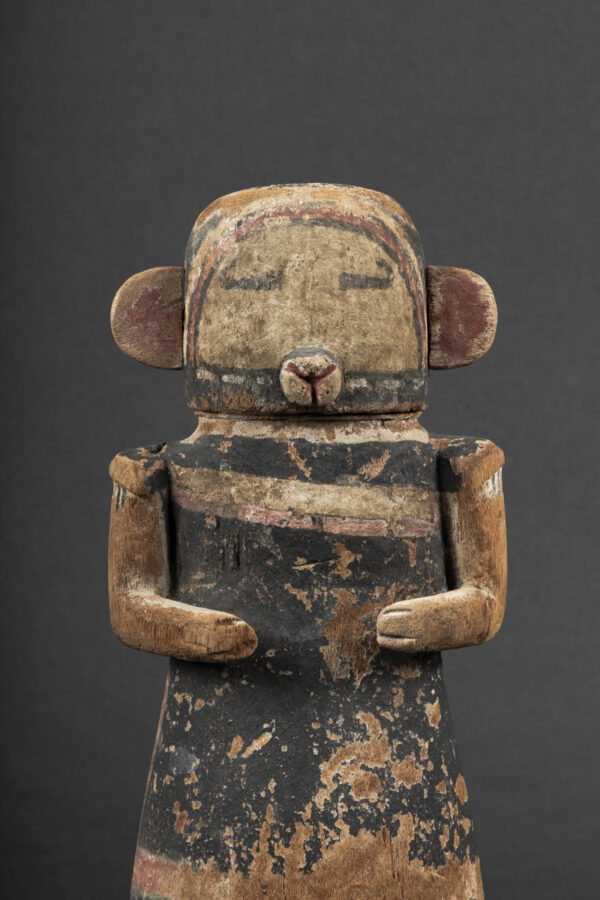
Fred Harvey Koroasta Kastina doll 26 cm / Galerie Flak
Price: on request
A powerful and archaic Katsina Doll with a prestigious provenance…
Katsina dolls (or Katsinam) represent spirits or gods from the pantheon of the Pueblo peoples in the American Southwest. Given to children, Katsina dolls constituted a teaching tool allowing them to familiarize themselves with the spiritual world and perpetuating knowledge of the founding myths on which their society was based.
This Katsina doll is known as Koroasta, Korosoto, or Kwasaitaka, and is often referred to as the Dress Katsina doll. Among the Hopi, it corresponds to the Third Mesa sculptural form of the Zuni Koroasta (or Korosta) Katsina. The Hopi sometimes call it the Ota Katsina, named after the opening words of its song. The designation “Dress Katsina doll” derives from the fact that, although the Katsina spirit itself is considered male, it appears ceremonially dressed in a woman’s garment, typically without a belt.
One of the most distinctive features of this Katsina doll is the beak or nose, which in some examples is formed from small cornhusk packets and in others—such as the present example—is rendered as a carved beak that opens in three parts.
Painted lines encircling the face are understood to evoke rainbow colors. In ceremonial performances, the Koroasta Katsina traditionally carries a digging stick, as well as a bag of seeds distributed to spectators. These seeds are regarded as auspicious signs of forthcoming abundant harvests, and recipients are eager to plant them.
Closely associated with the growth of corn, the Koroasta Katsina enjoyed great popularity among both the Hopi and the Zuni. Hopi Koroasta dancers perform during the Powamu ceremony on the Third Mesa.
In terms of provenance, Fred Harvey (1835–1901) was an English‑born American entrepreneur who built a chain of restaurants, hotels and souvenir shops along the Atchison, Topeka & Santa Fe Railway, creating the famous Harvey Houses and the “Harvey Girls” service corps.
In the early 20th century, the Fred Harvey Company became one of the most influential institutional collectors and distributors of Native American art through its Indian Department, acquiring pottery, basketry, textiles, beadwork and kachina dolls that were sold to major private collectors as well as to museums such as the Smithsonian, the American Museum of Natural History, the Field Museum and the Heard Museum.
By commissioning jewelry and other objects, staging craft demonstrations in places like the Alvarado Hotel and Hopi House, and using Native imagery in architecture and marketing, the company both helped to preserve and popularize Southwestern Native arts while also shaping—and commercializing—how tourists perceived Indigenous cultures.
Katsina dolls (or Katsinam) represent spirits or gods from the pantheon of the Pueblo peoples in the American Southwest. Given to children, Katsina dolls constituted a teaching tool allowing them to familiarize themselves with the spiritual world and perpetuating knowledge of the founding myths on which their society was based.
This Katsina doll is known as Koroasta, Korosoto, or Kwasaitaka, and is often referred to as the Dress Katsina doll. Among the Hopi, it corresponds to the Third Mesa sculptural form of the Zuni Koroasta (or Korosta) Katsina. The Hopi sometimes call it the Ota Katsina, named after the opening words of its song. The designation “Dress Katsina doll” derives from the fact that, although the Katsina spirit itself is considered male, it appears ceremonially dressed in a woman’s garment, typically without a belt.
One of the most distinctive features of this Katsina doll is the beak or nose, which in some examples is formed from small cornhusk packets and in others—such as the present example—is rendered as a carved beak that opens in three parts.
Painted lines encircling the face are understood to evoke rainbow colors. In ceremonial performances, the Koroasta Katsina traditionally carries a digging stick, as well as a bag of seeds distributed to spectators. These seeds are regarded as auspicious signs of forthcoming abundant harvests, and recipients are eager to plant them.
Closely associated with the growth of corn, the Koroasta Katsina enjoyed great popularity among both the Hopi and the Zuni. Hopi Koroasta dancers perform during the Powamu ceremony on the Third Mesa.
In terms of provenance, Fred Harvey (1835–1901) was an English‑born American entrepreneur who built a chain of restaurants, hotels and souvenir shops along the Atchison, Topeka & Santa Fe Railway, creating the famous Harvey Houses and the “Harvey Girls” service corps.
In the early 20th century, the Fred Harvey Company became one of the most influential institutional collectors and distributors of Native American art through its Indian Department, acquiring pottery, basketry, textiles, beadwork and kachina dolls that were sold to major private collectors as well as to museums such as the Smithsonian, the American Museum of Natural History, the Field Museum and the Heard Museum.
By commissioning jewelry and other objects, staging craft demonstrations in places like the Alvarado Hotel and Hopi House, and using Native imagery in architecture and marketing, the company both helped to preserve and popularize Southwestern Native arts while also shaping—and commercializing—how tourists perceived Indigenous cultures.
Explore the entire collection