Katsina Doll

Preview | Arizona

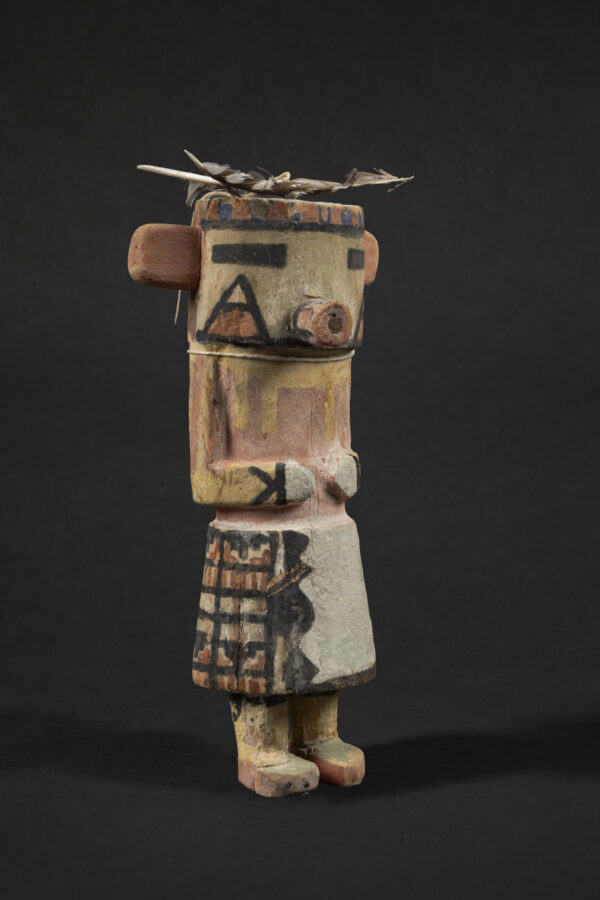
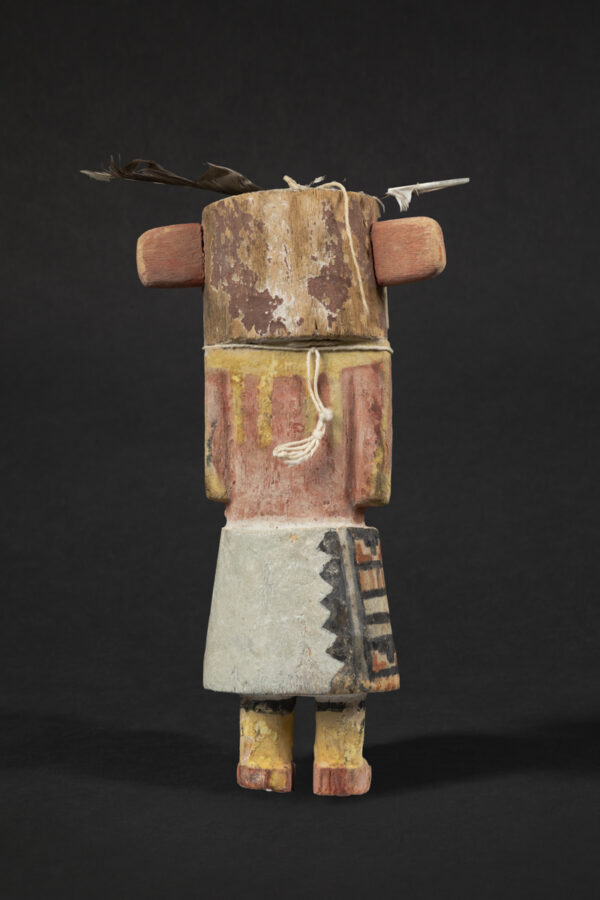
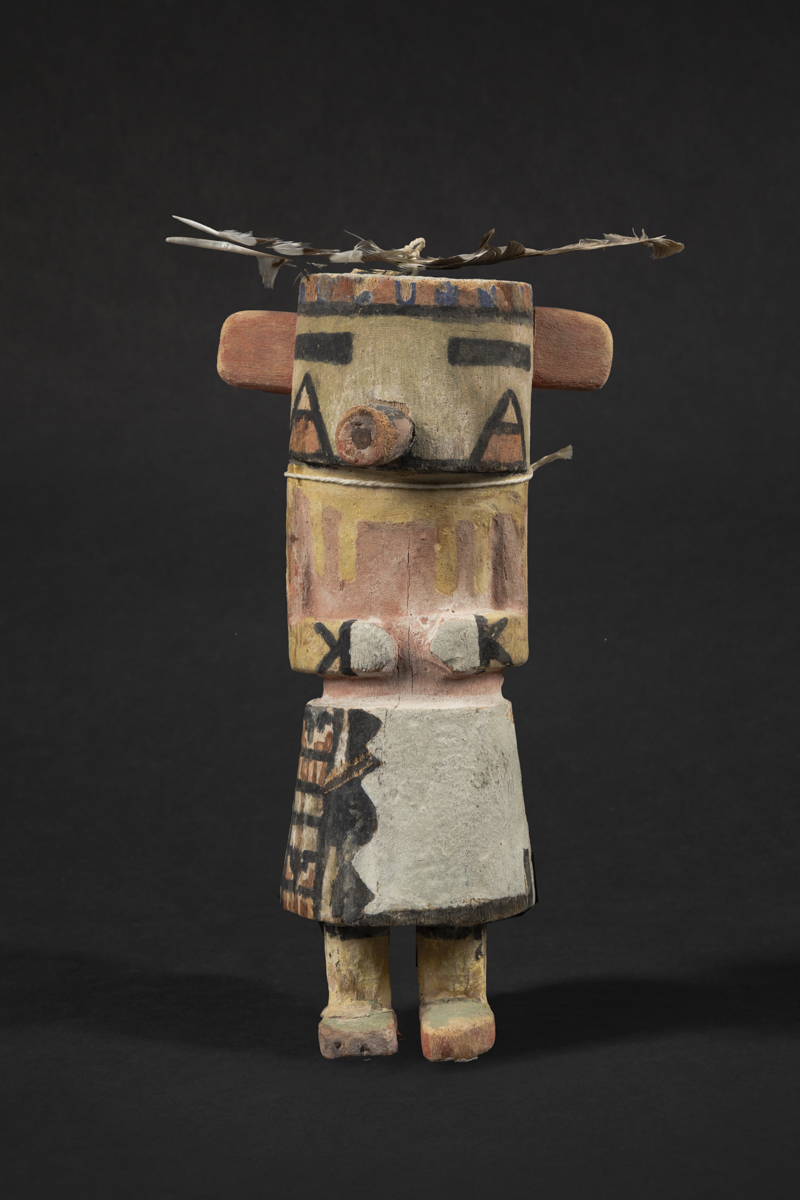
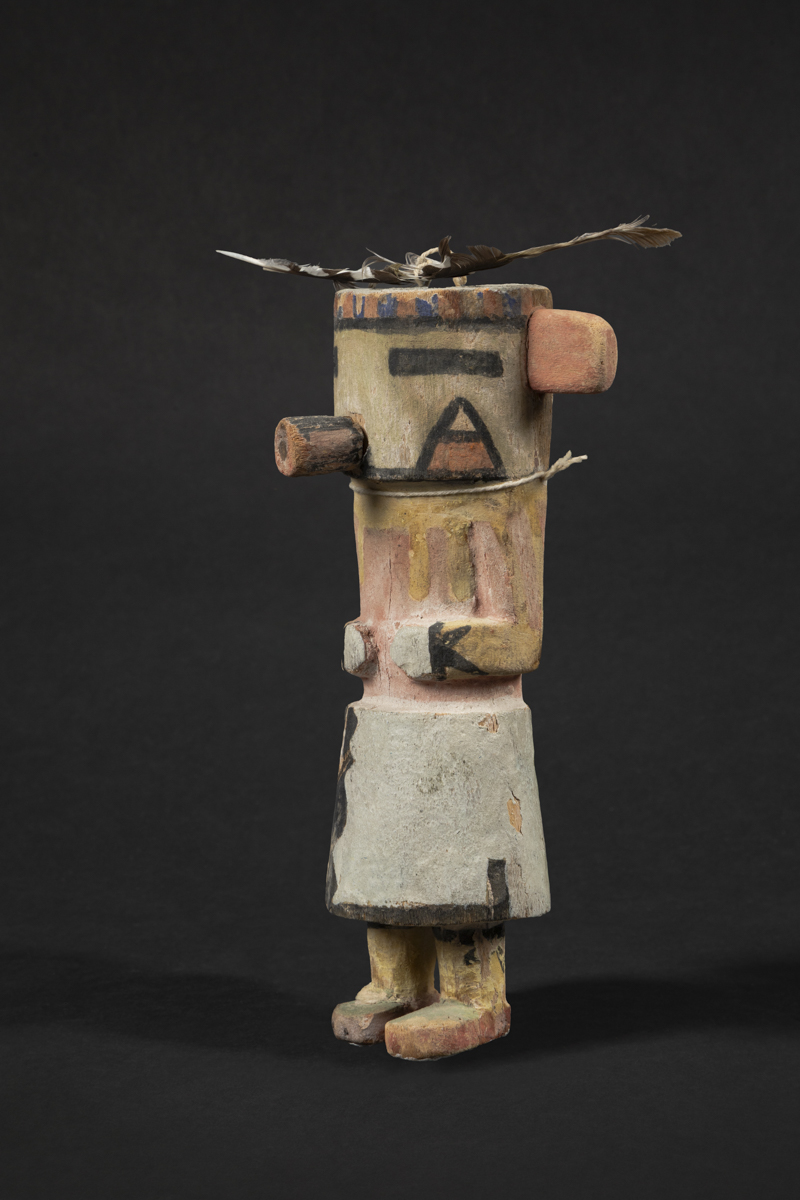
Katsina Doll

Arizona

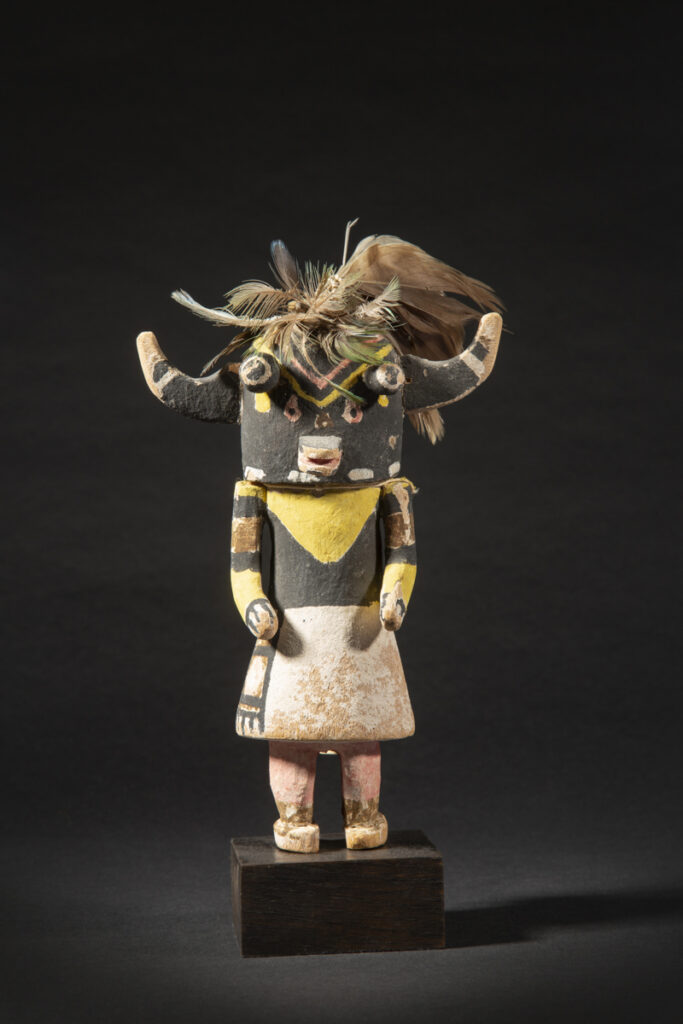
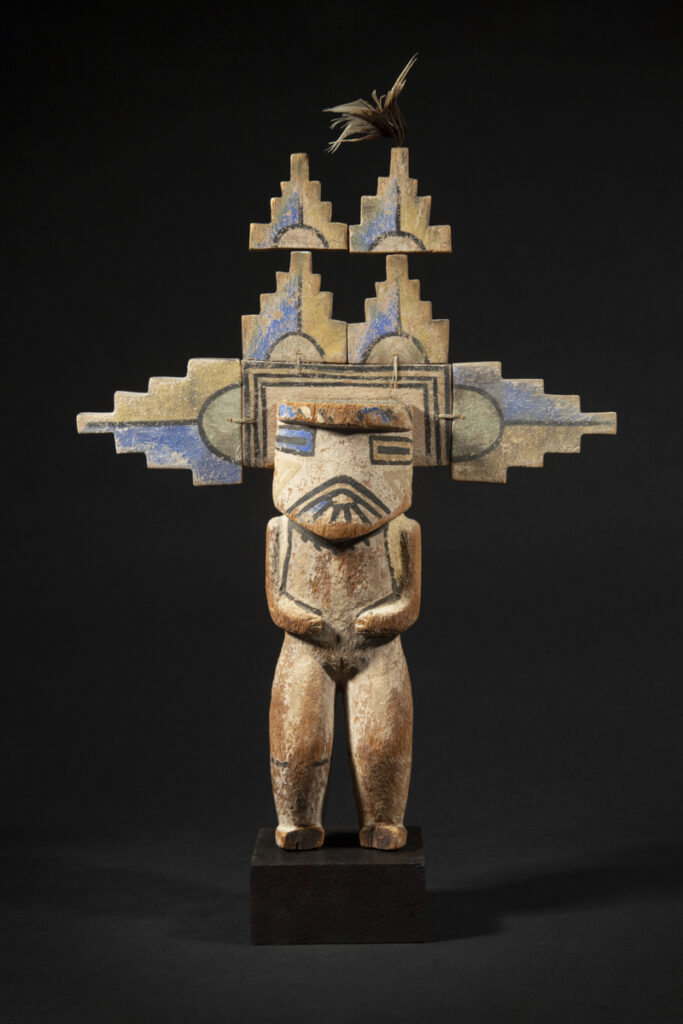
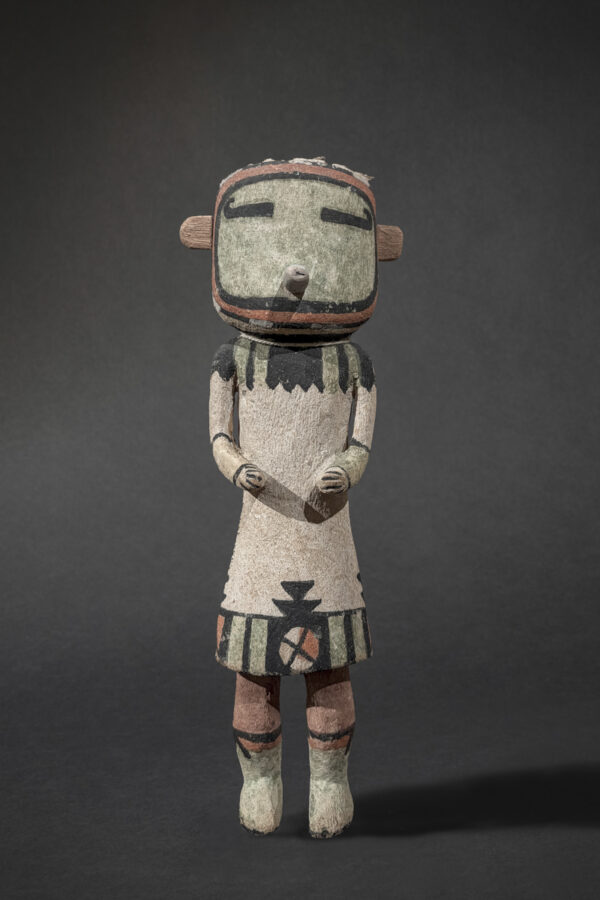
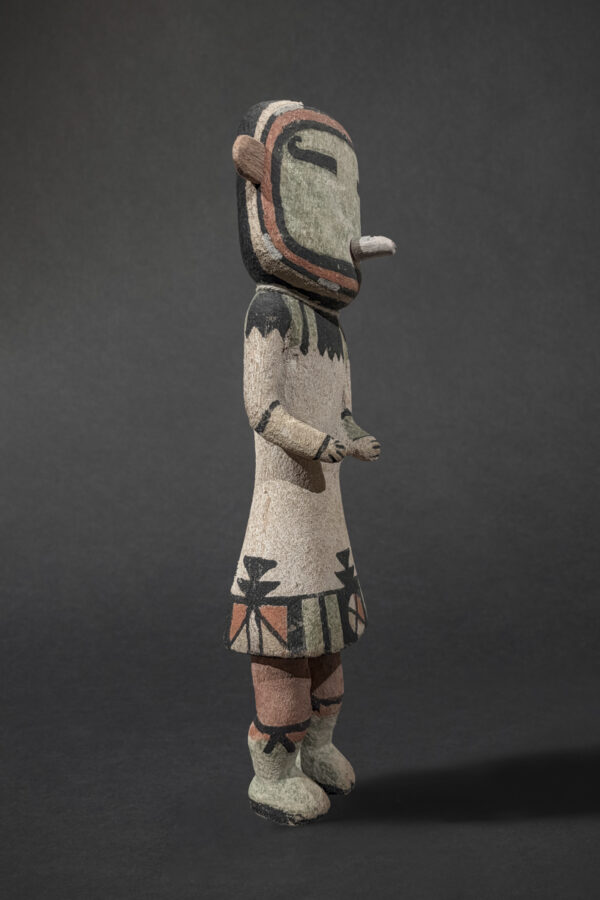
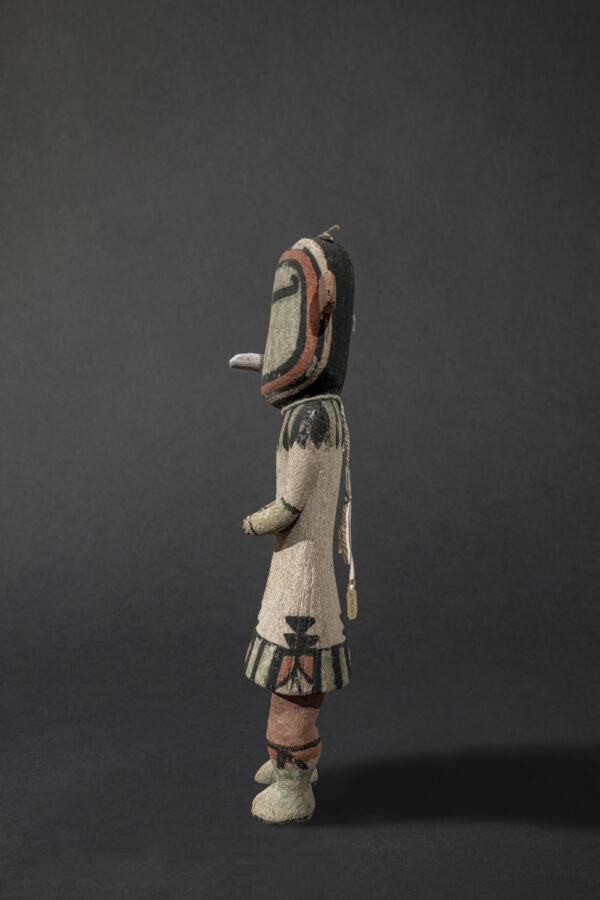
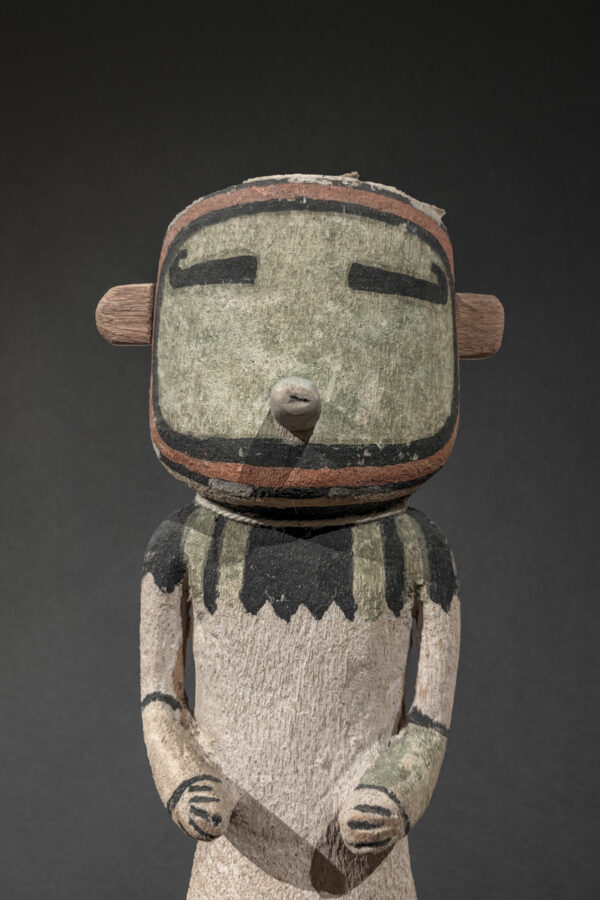
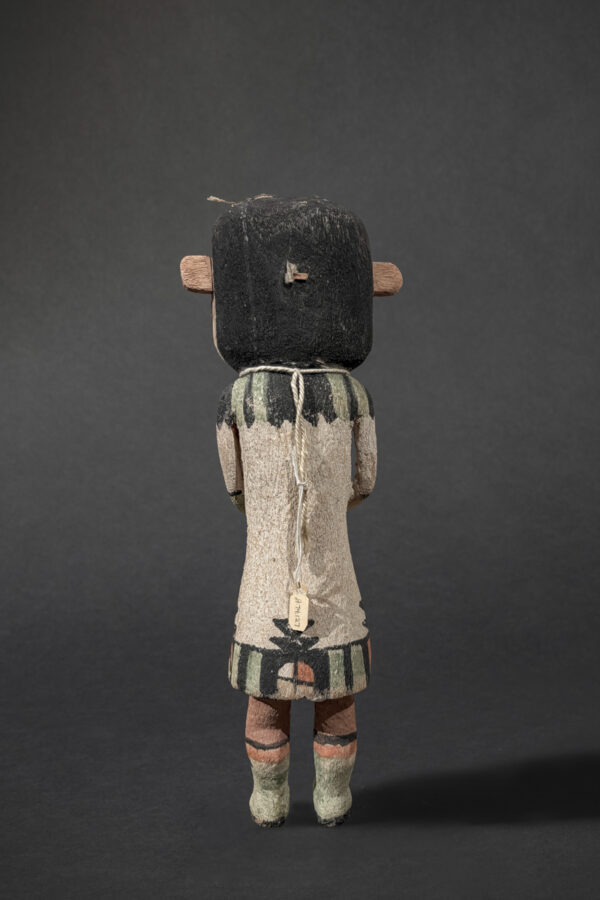
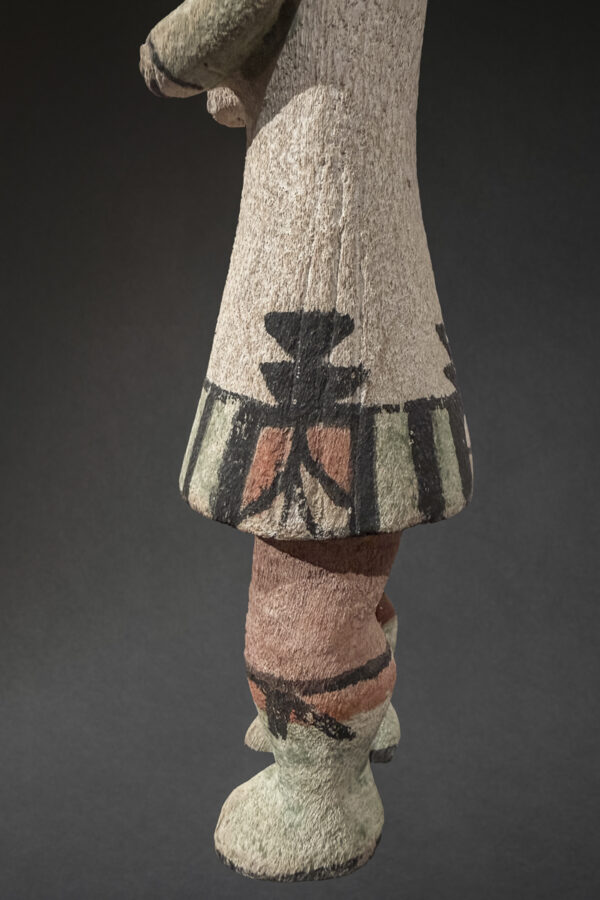
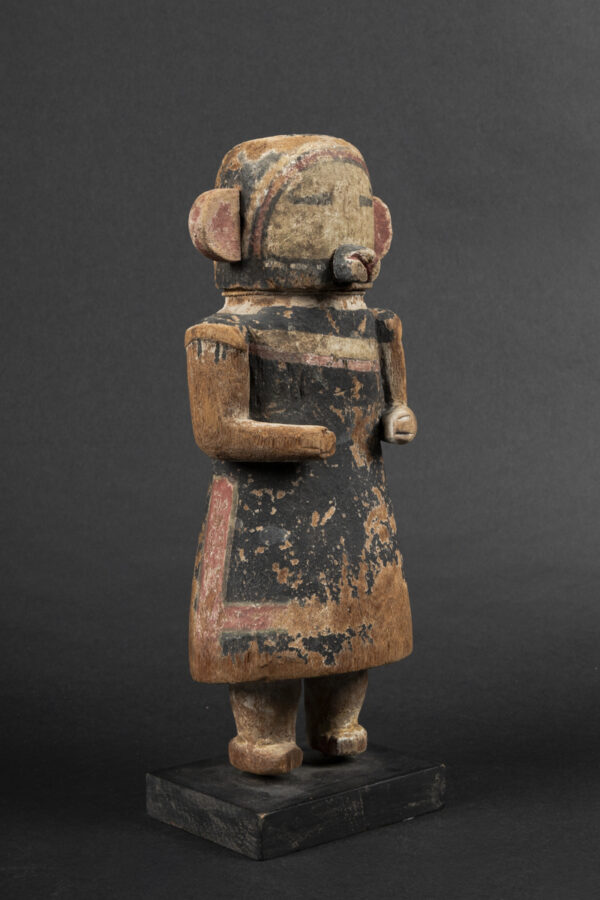
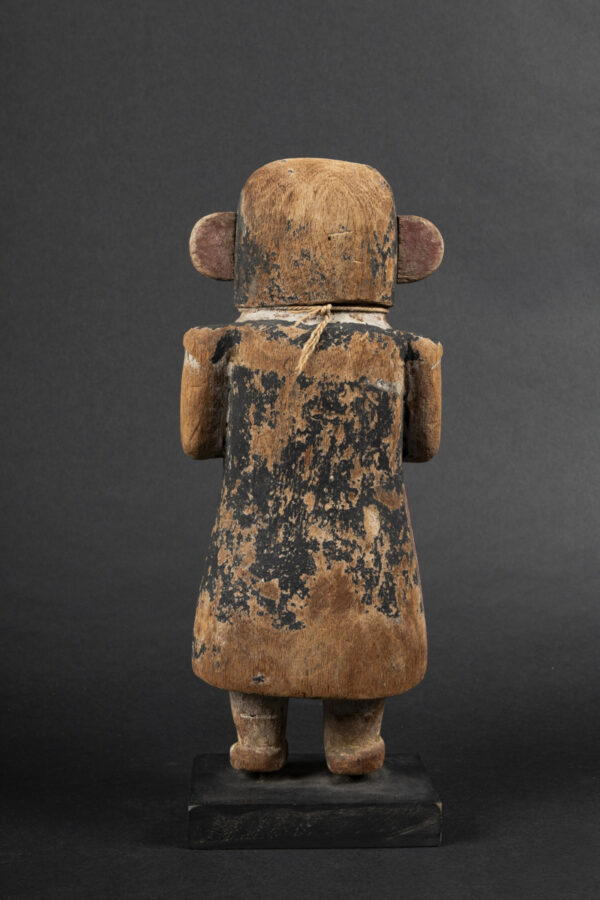
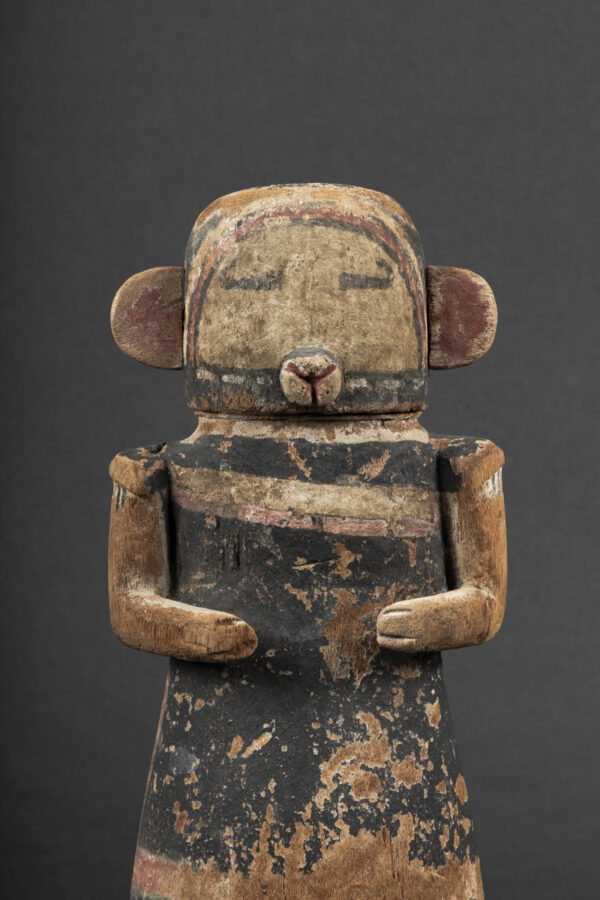
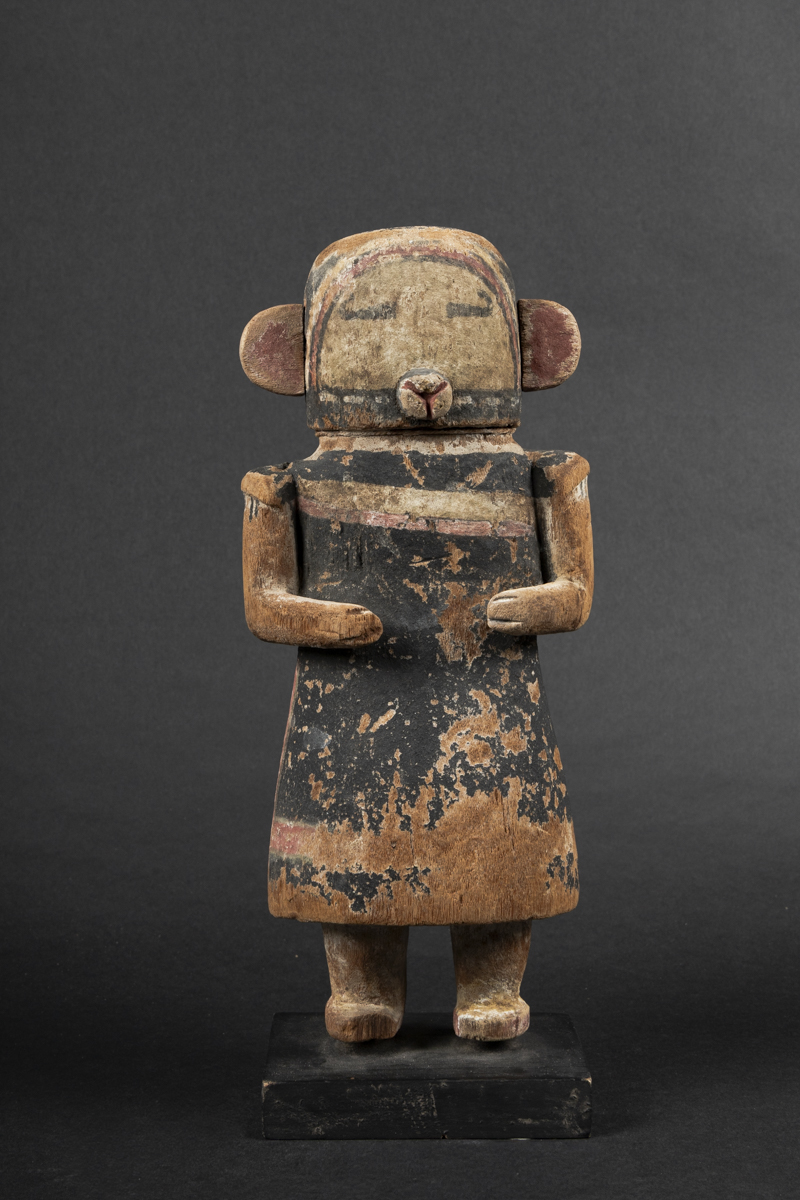
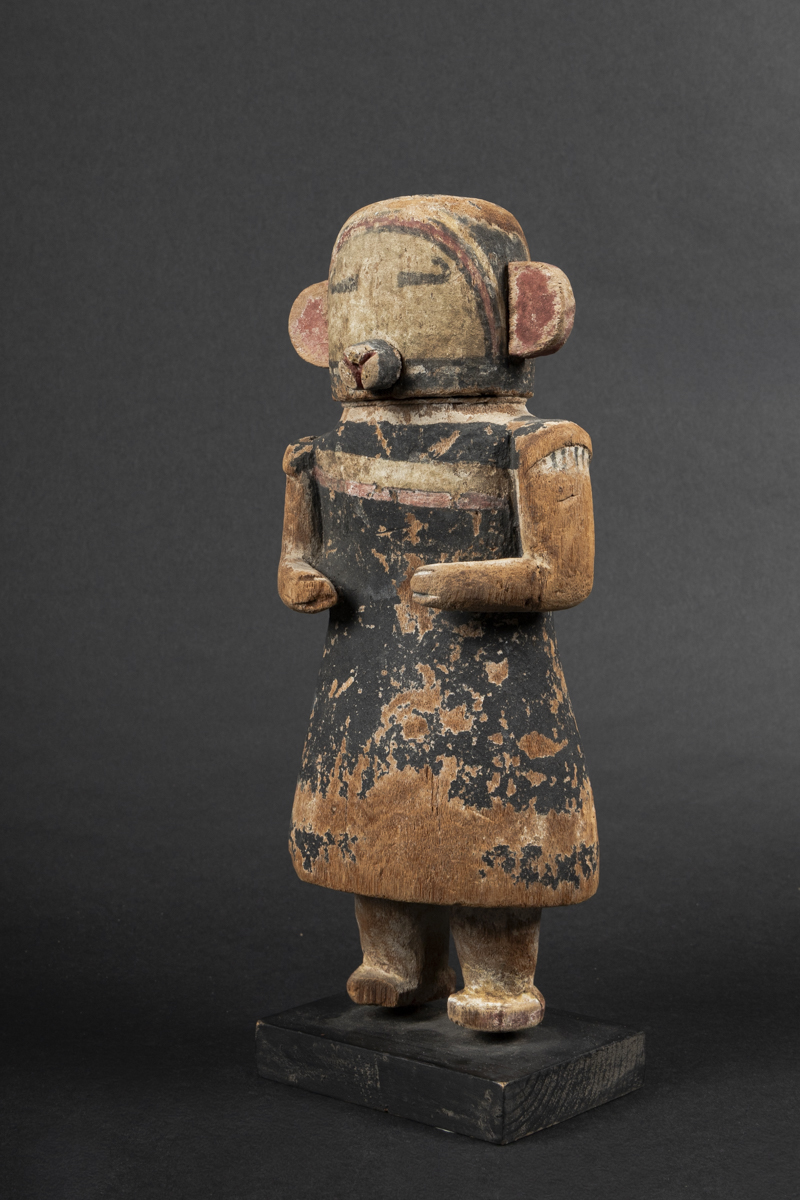
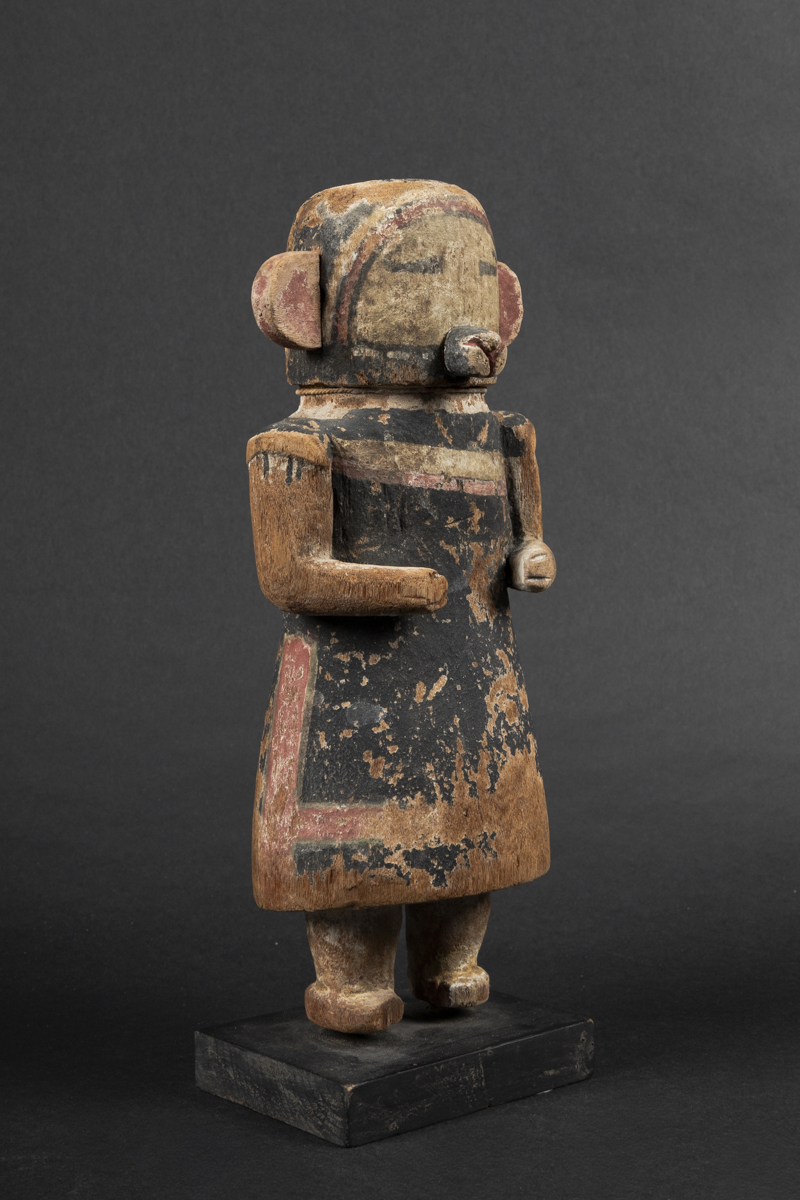
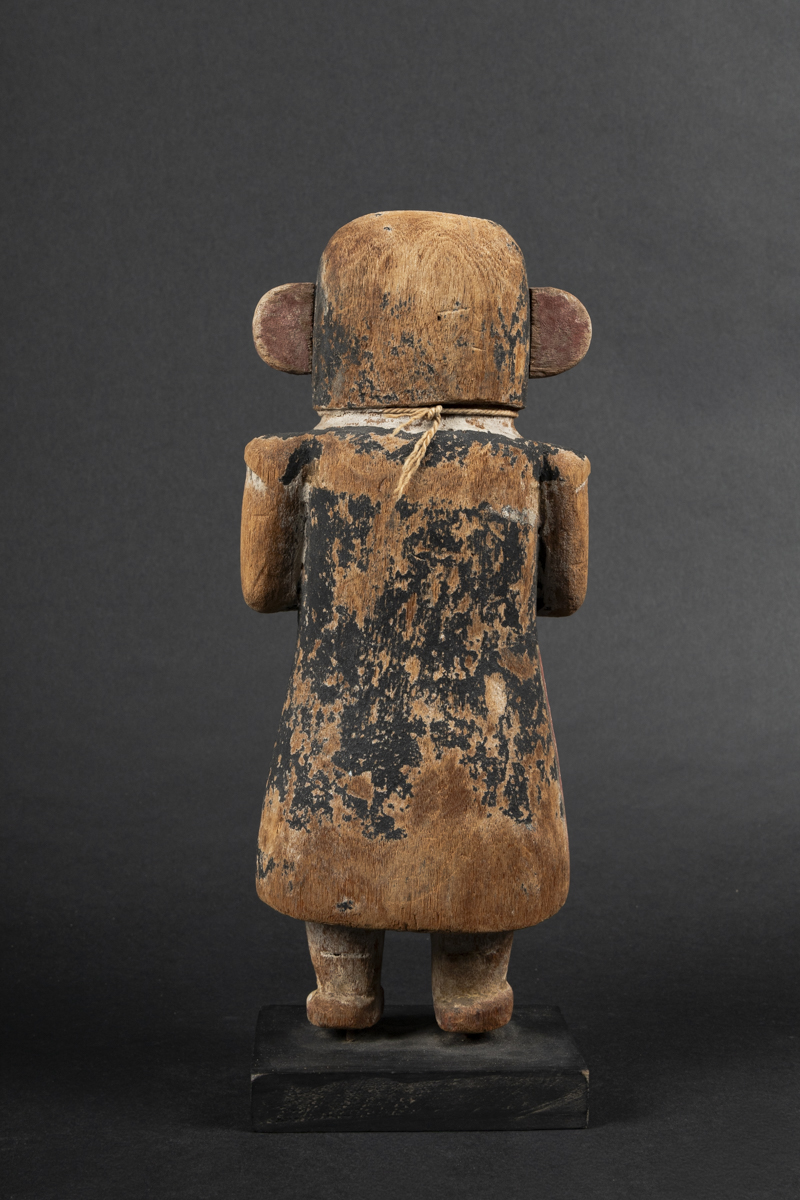
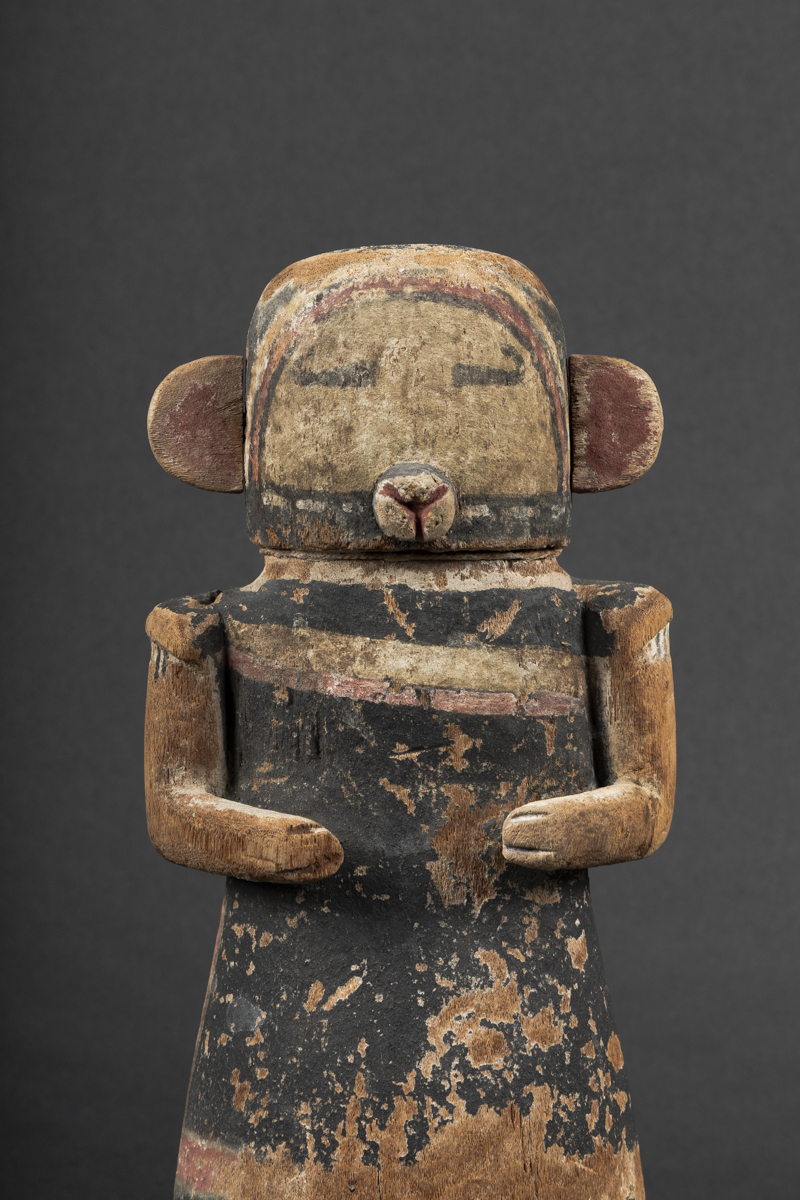
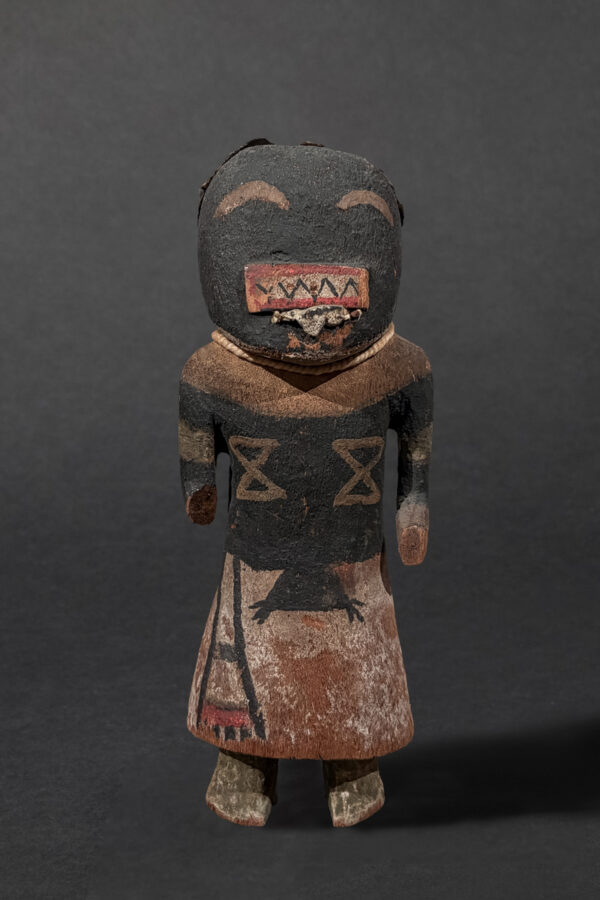
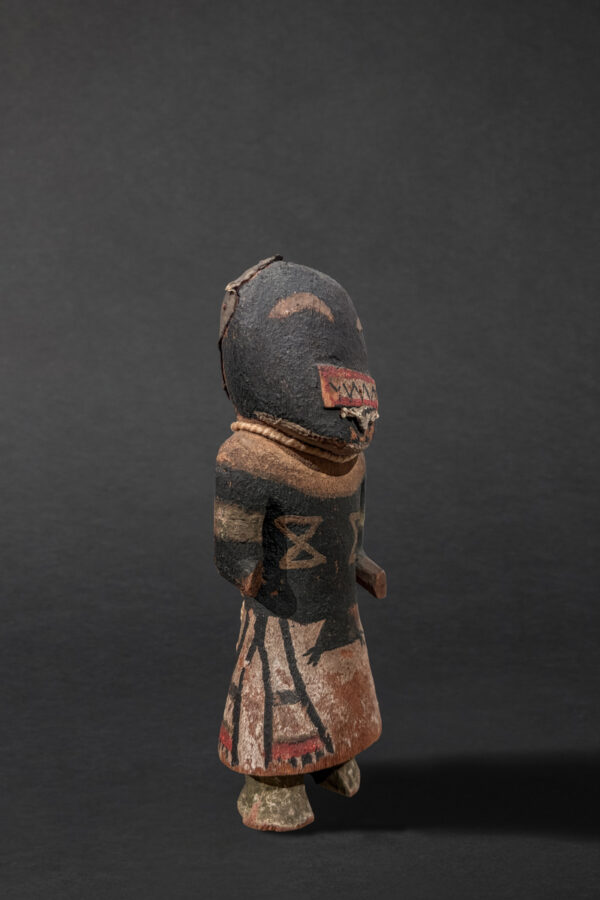
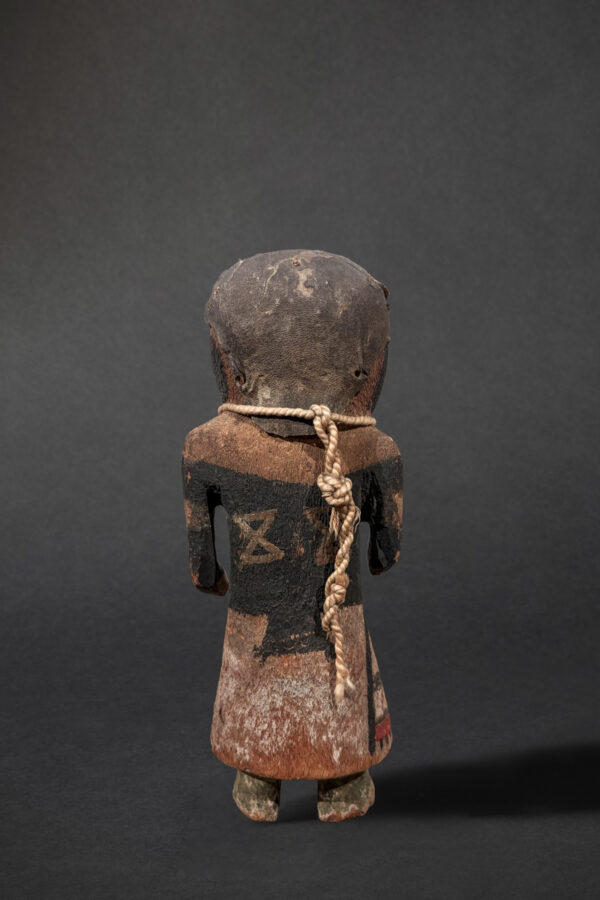
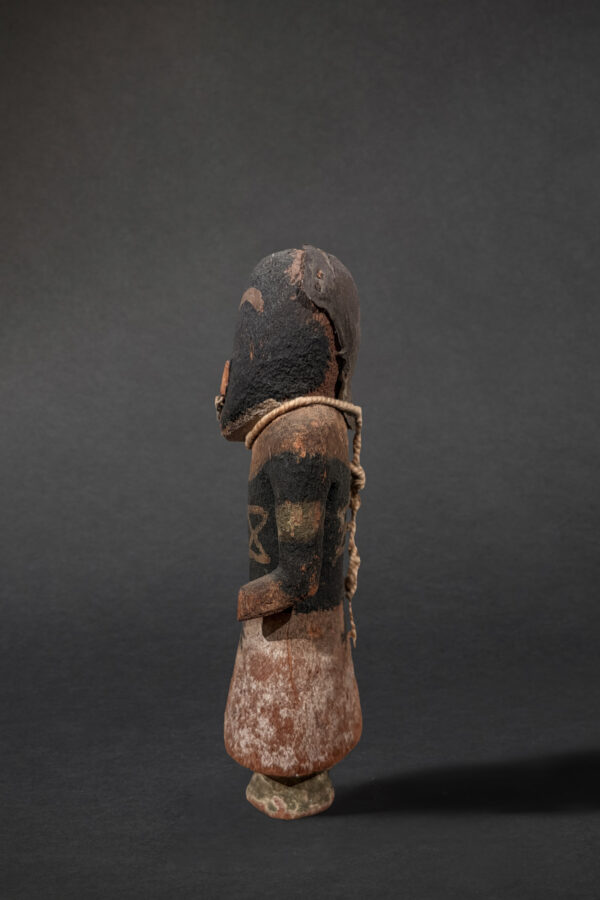
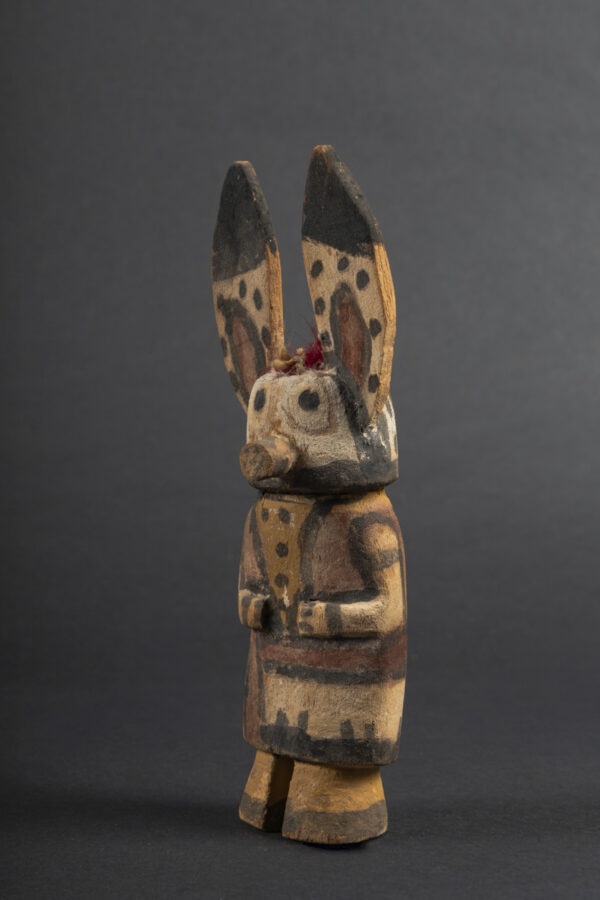
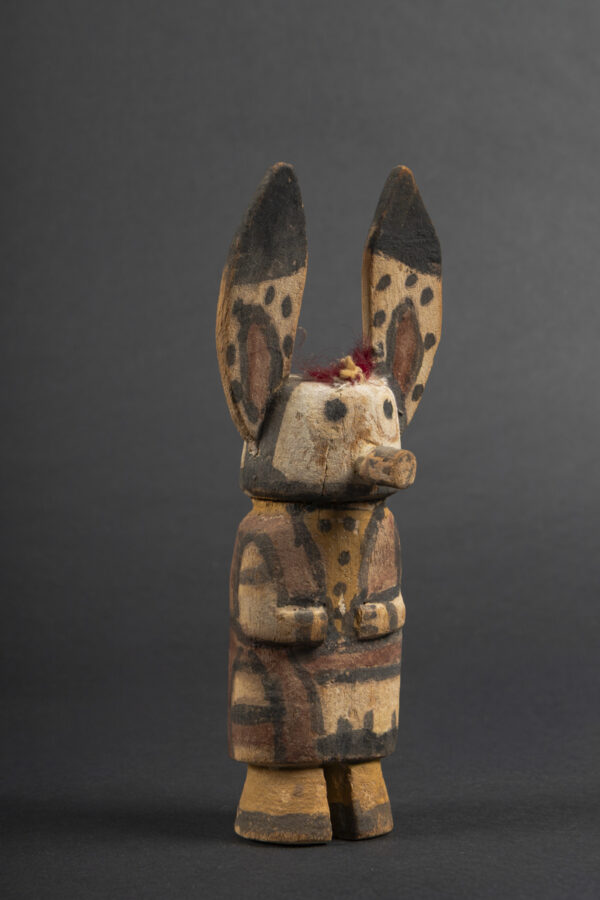
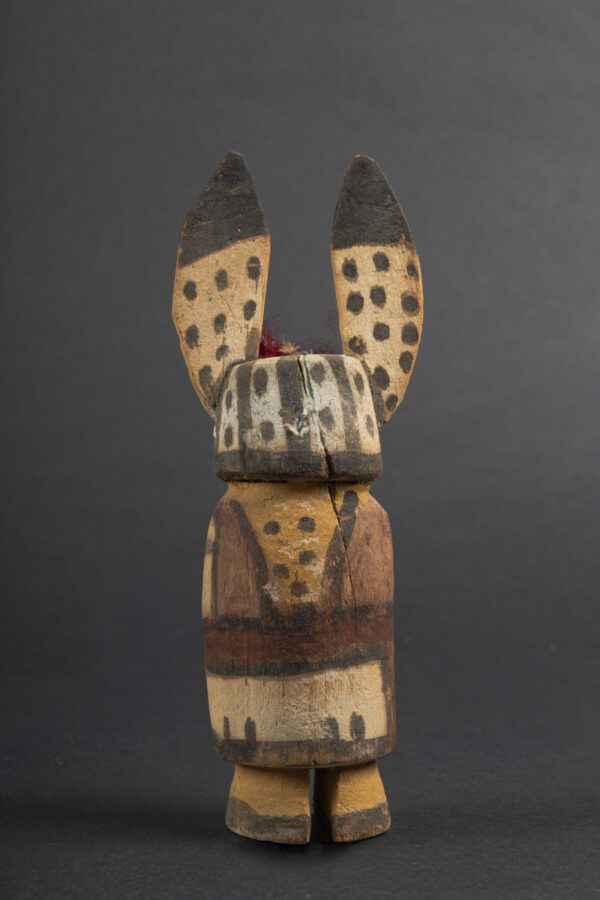
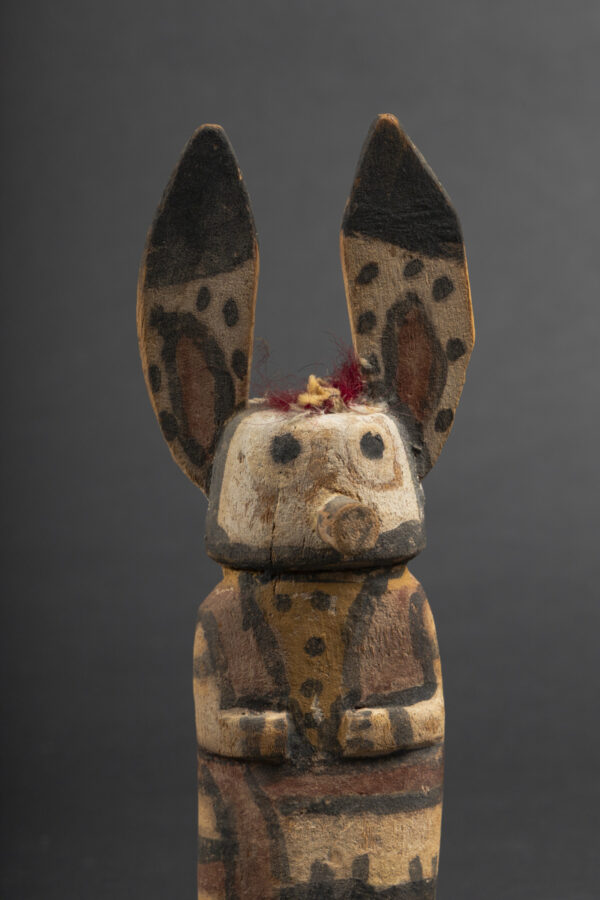
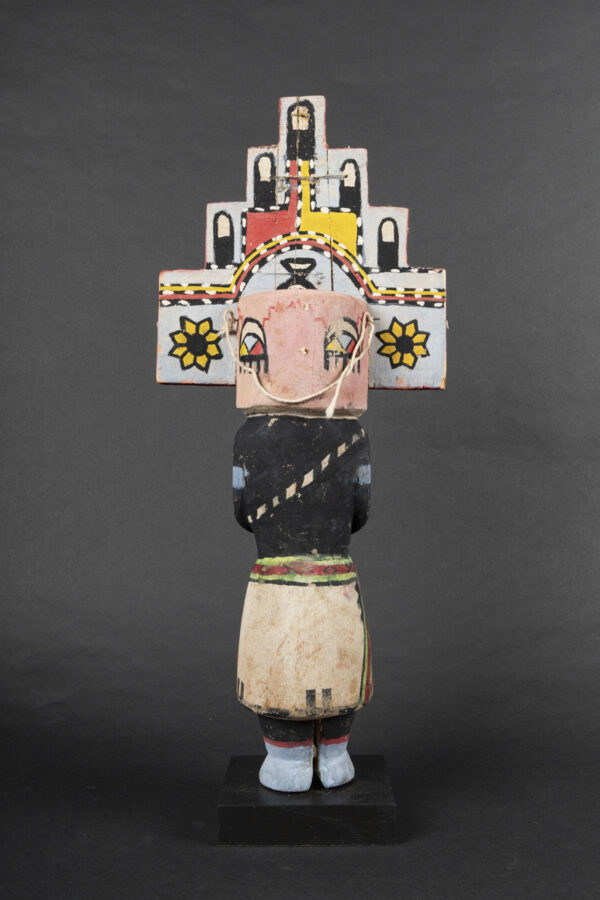
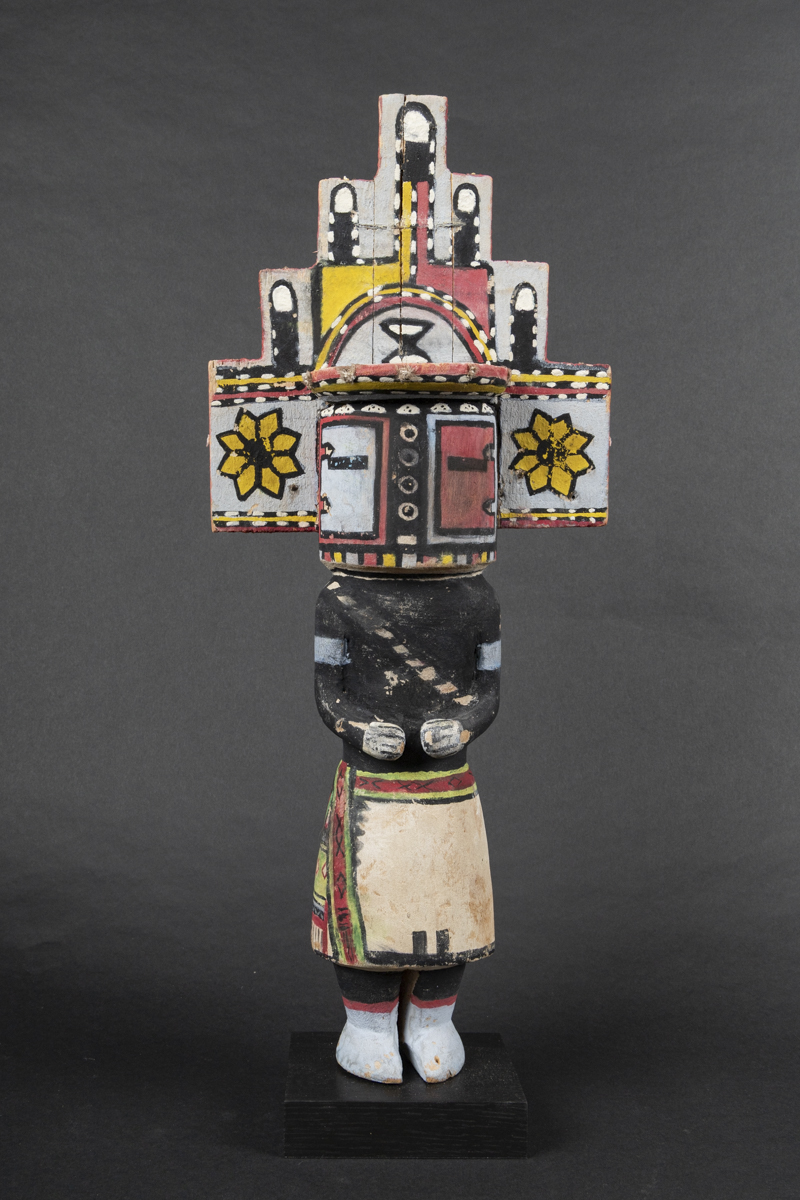
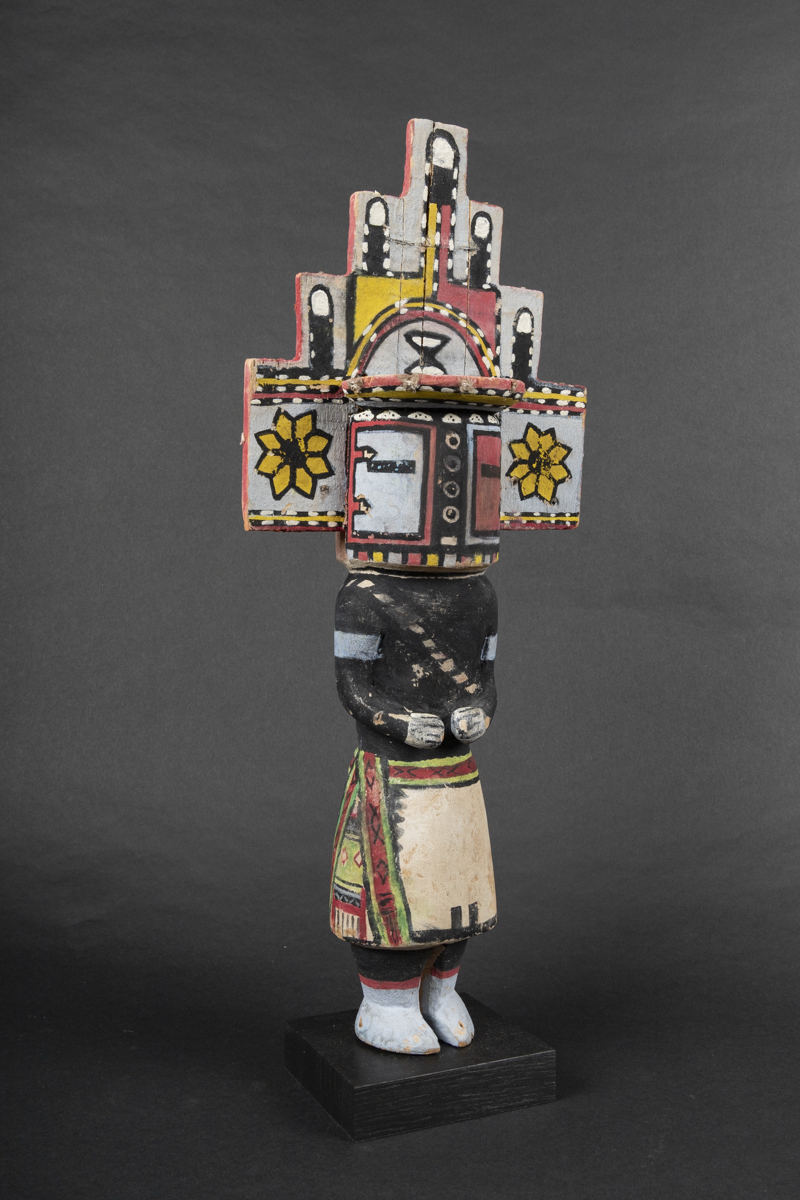
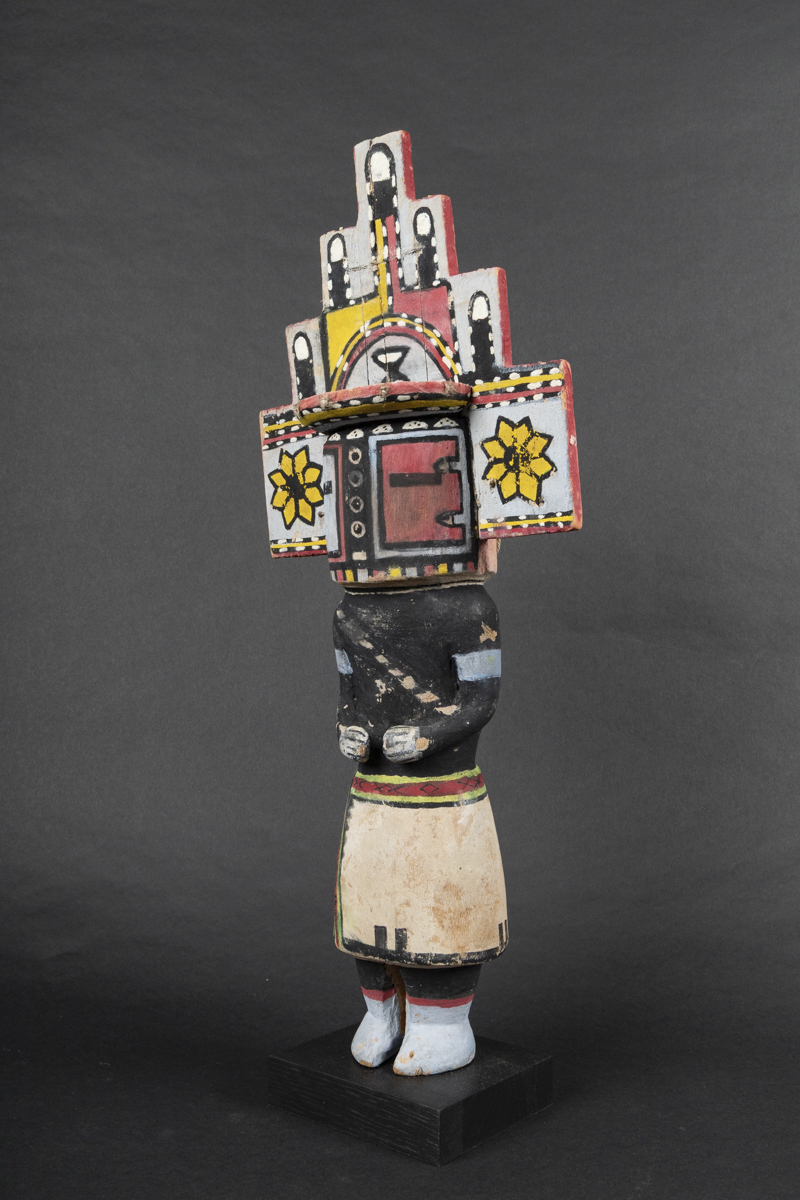
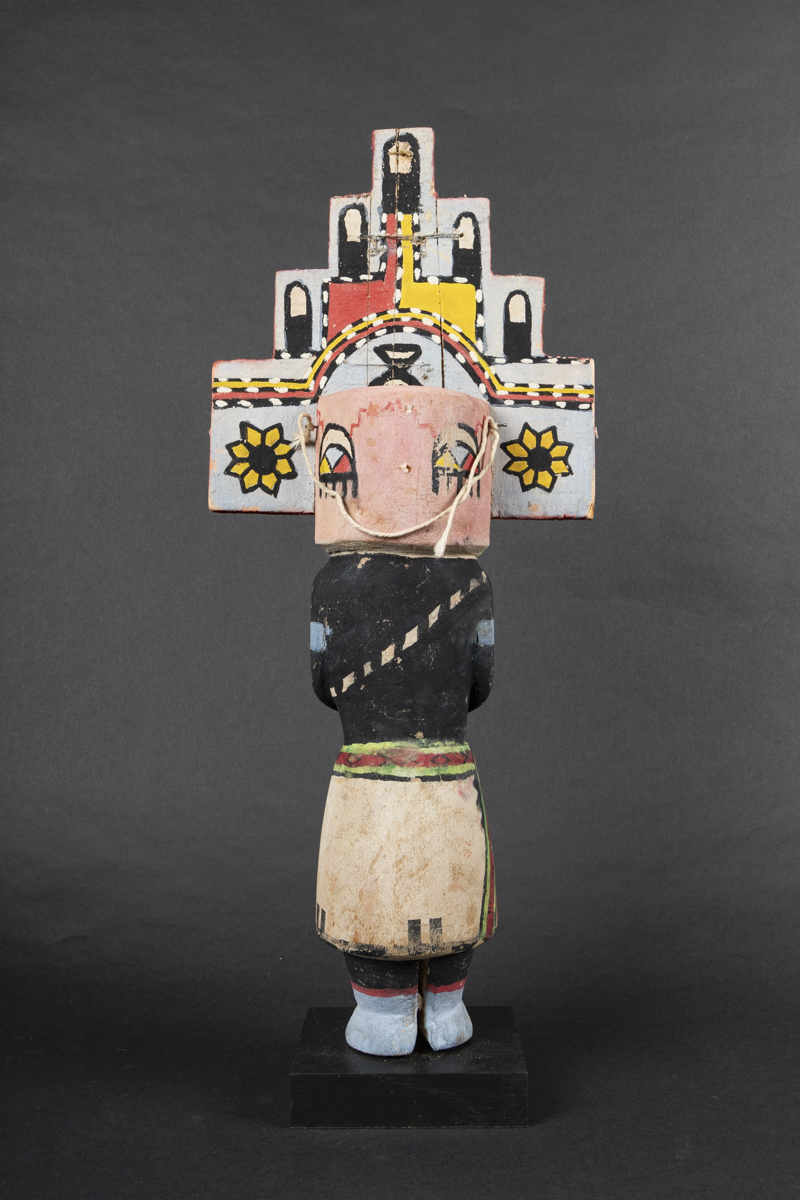
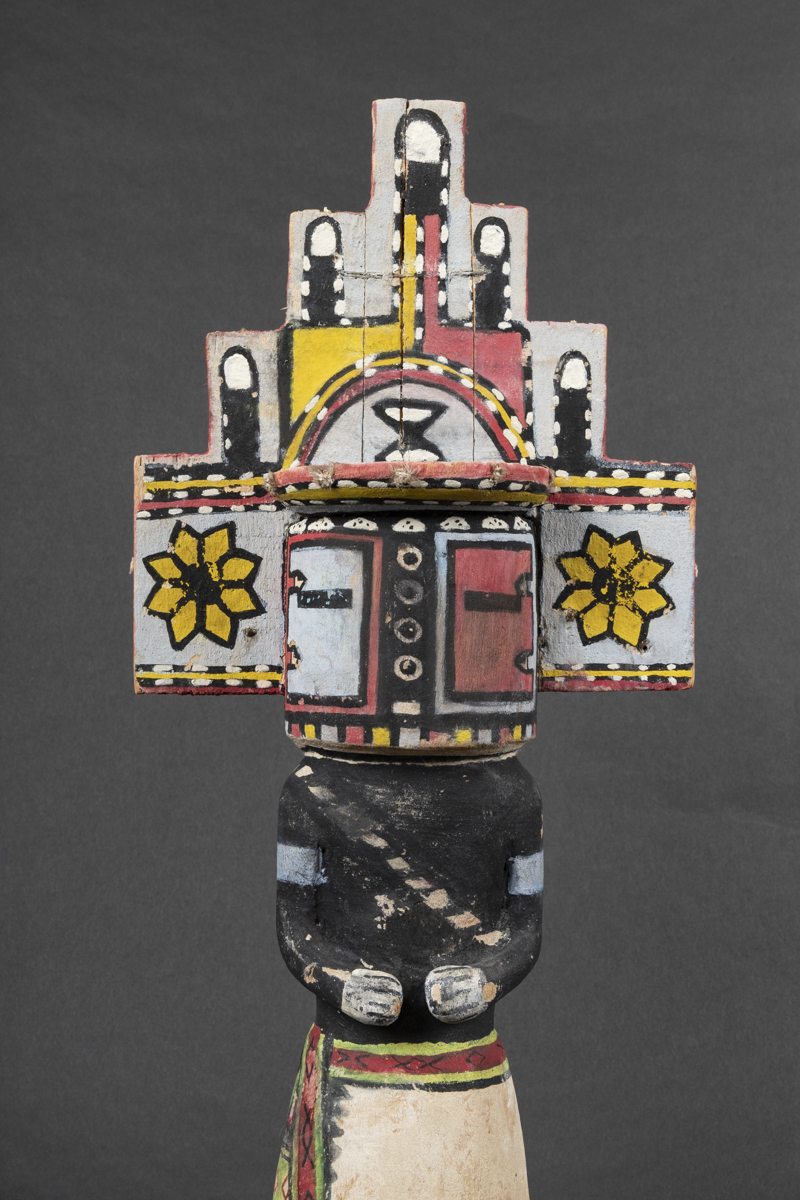
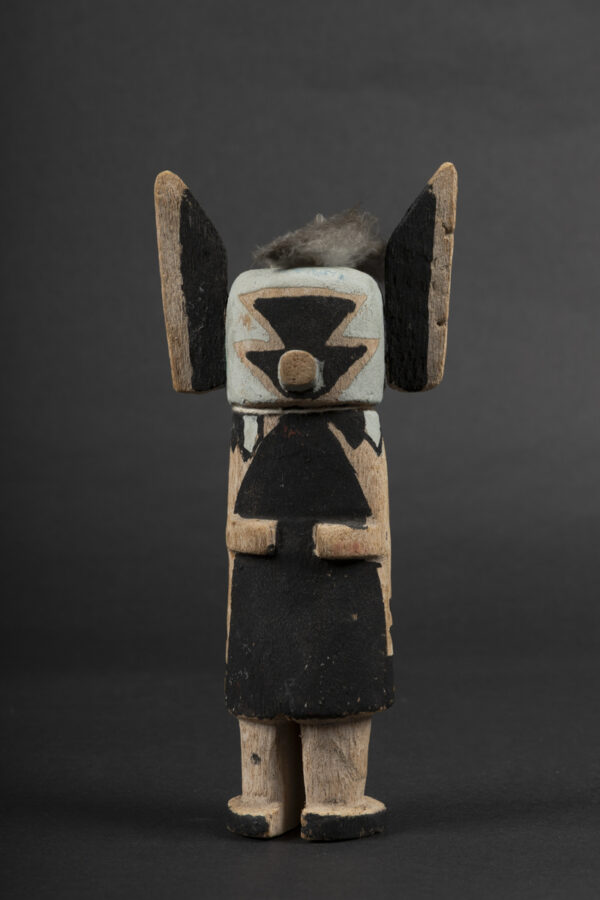
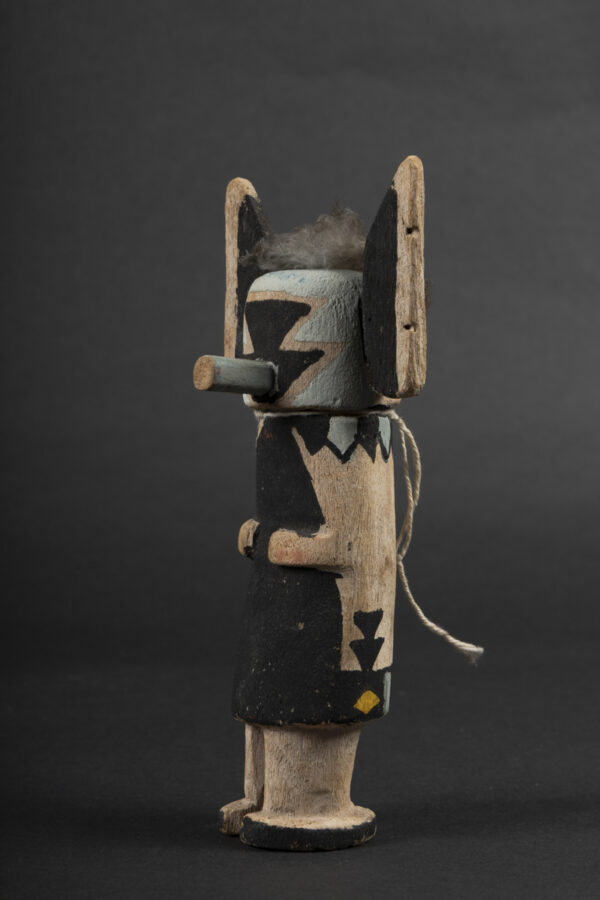
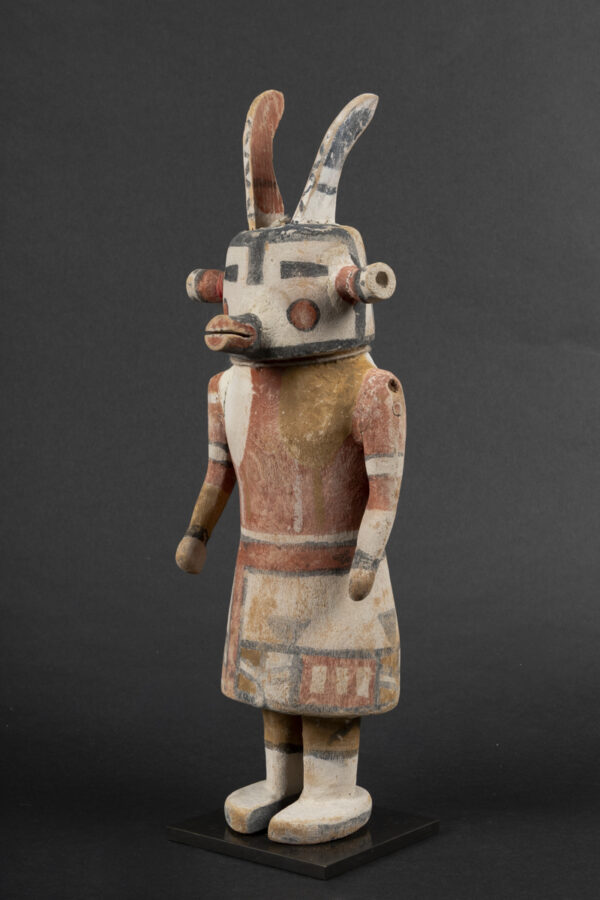
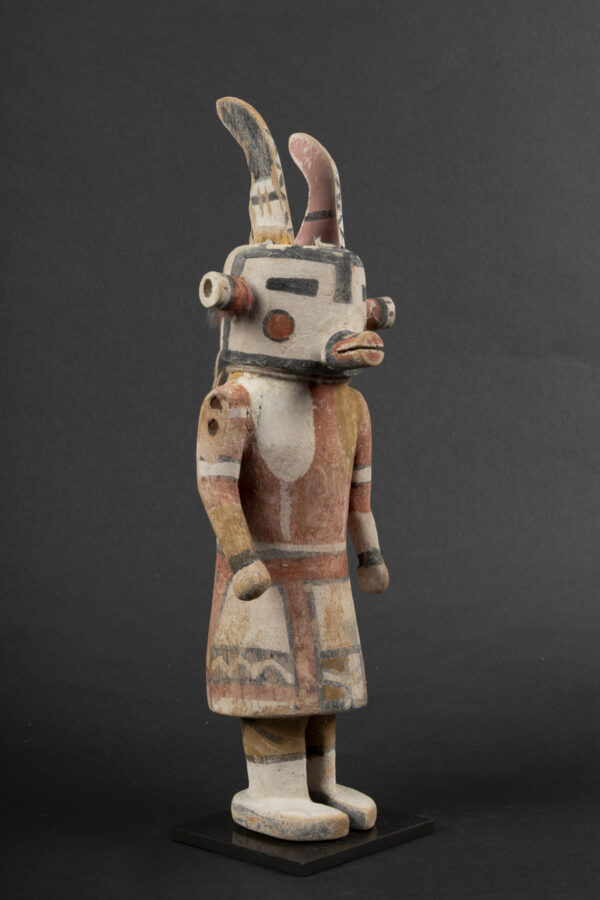
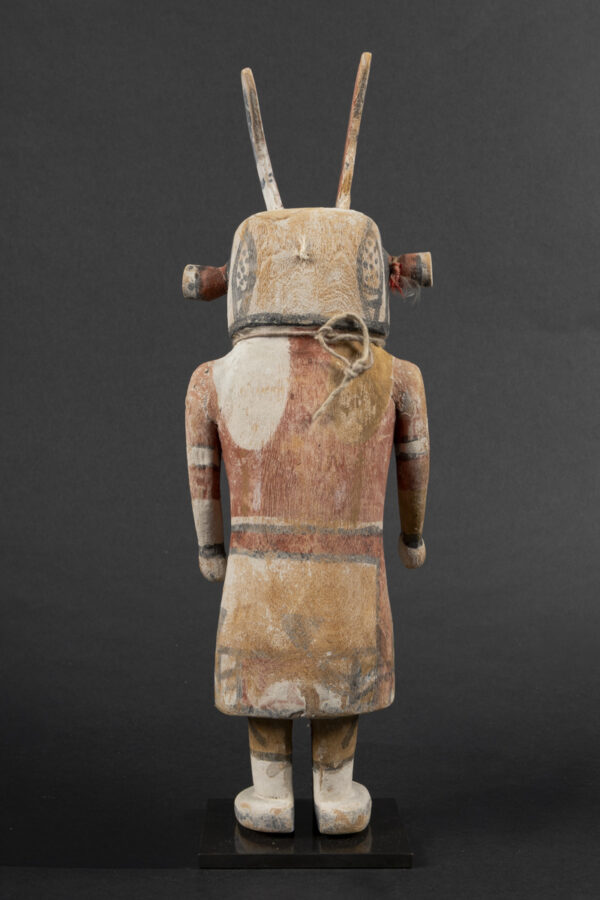
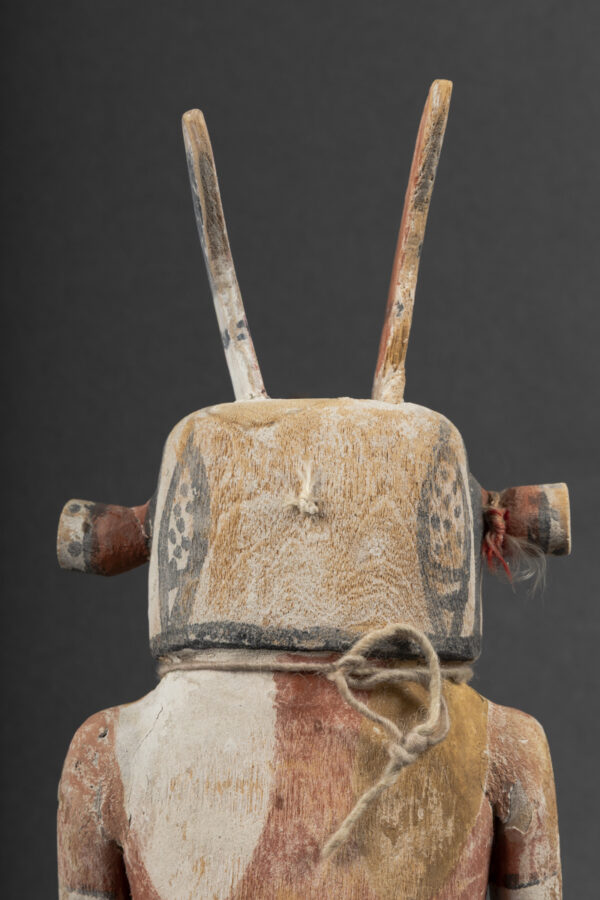
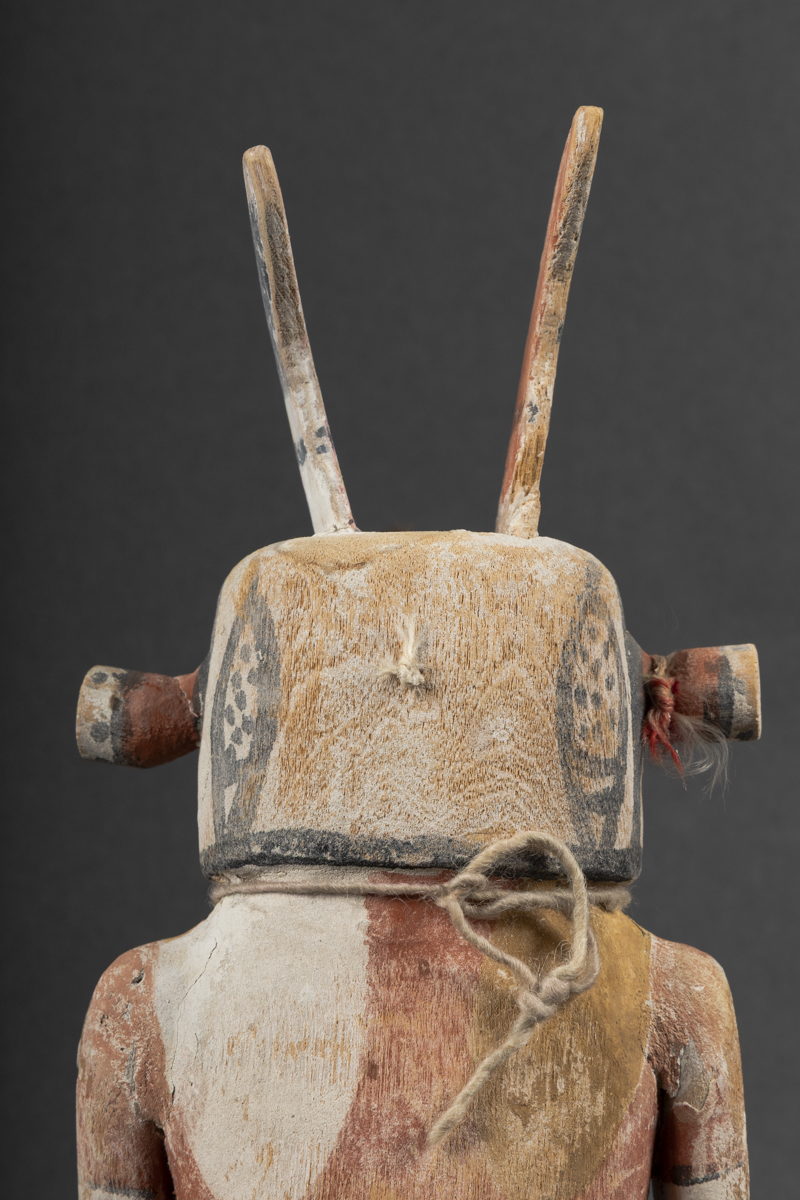
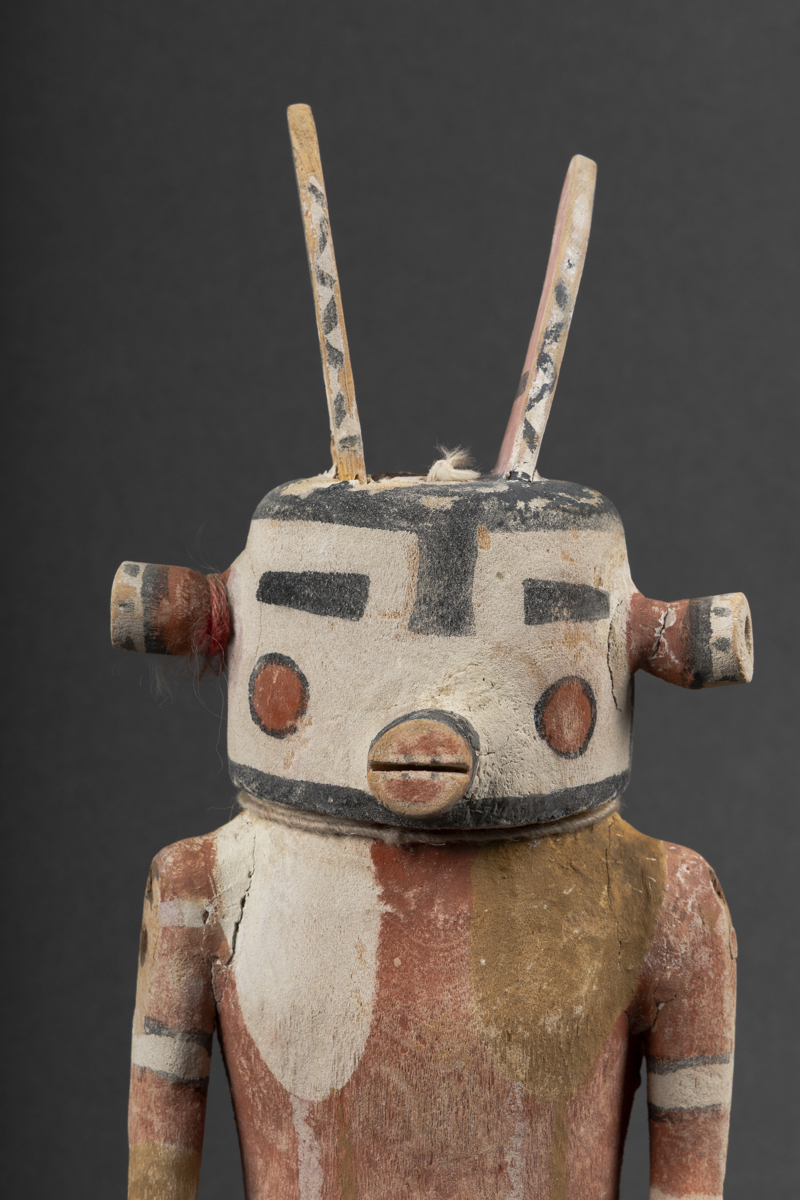
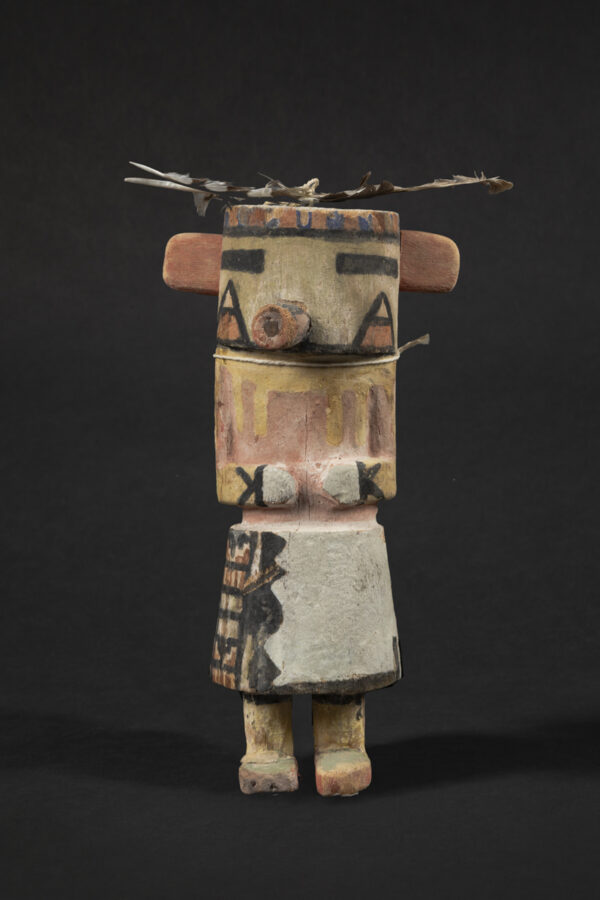
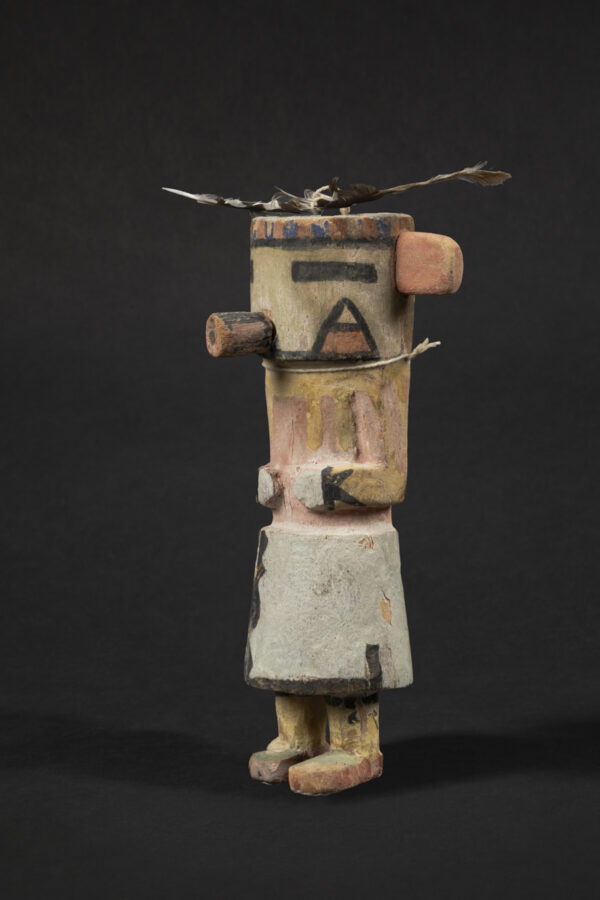
Rain Messenger – Uncle Katsina Doll
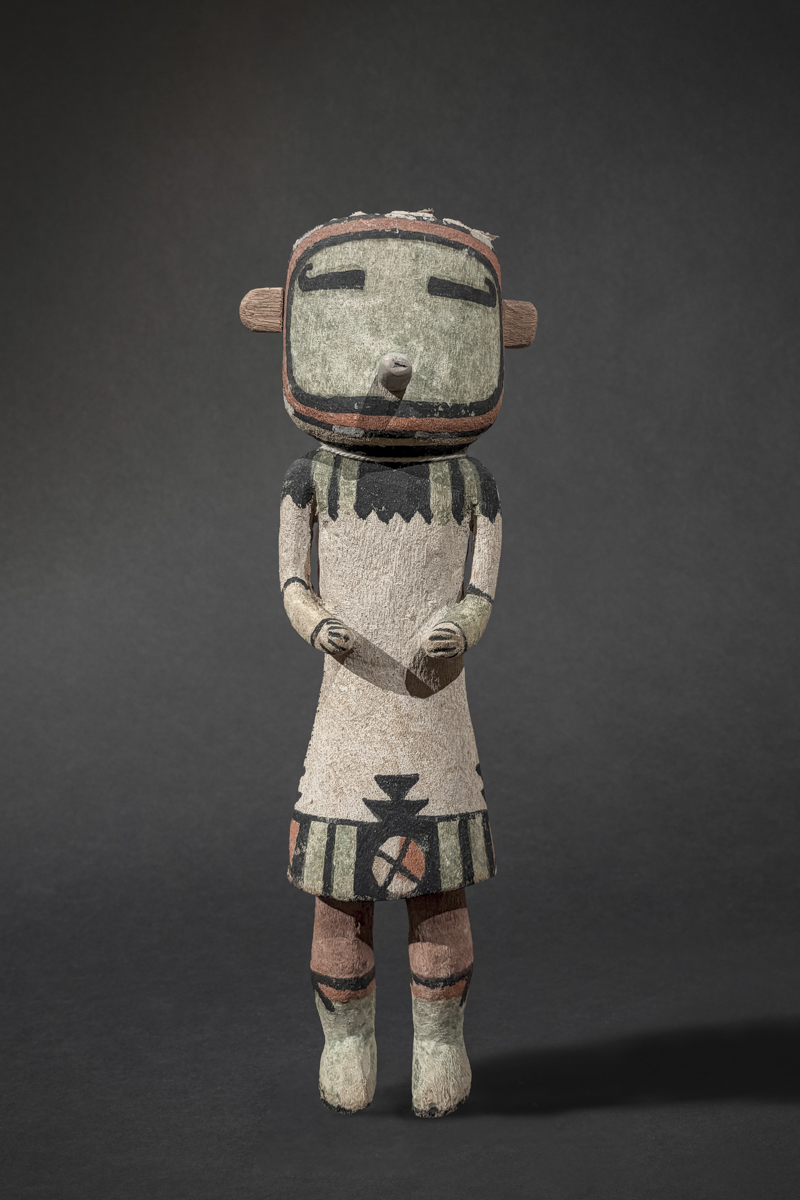
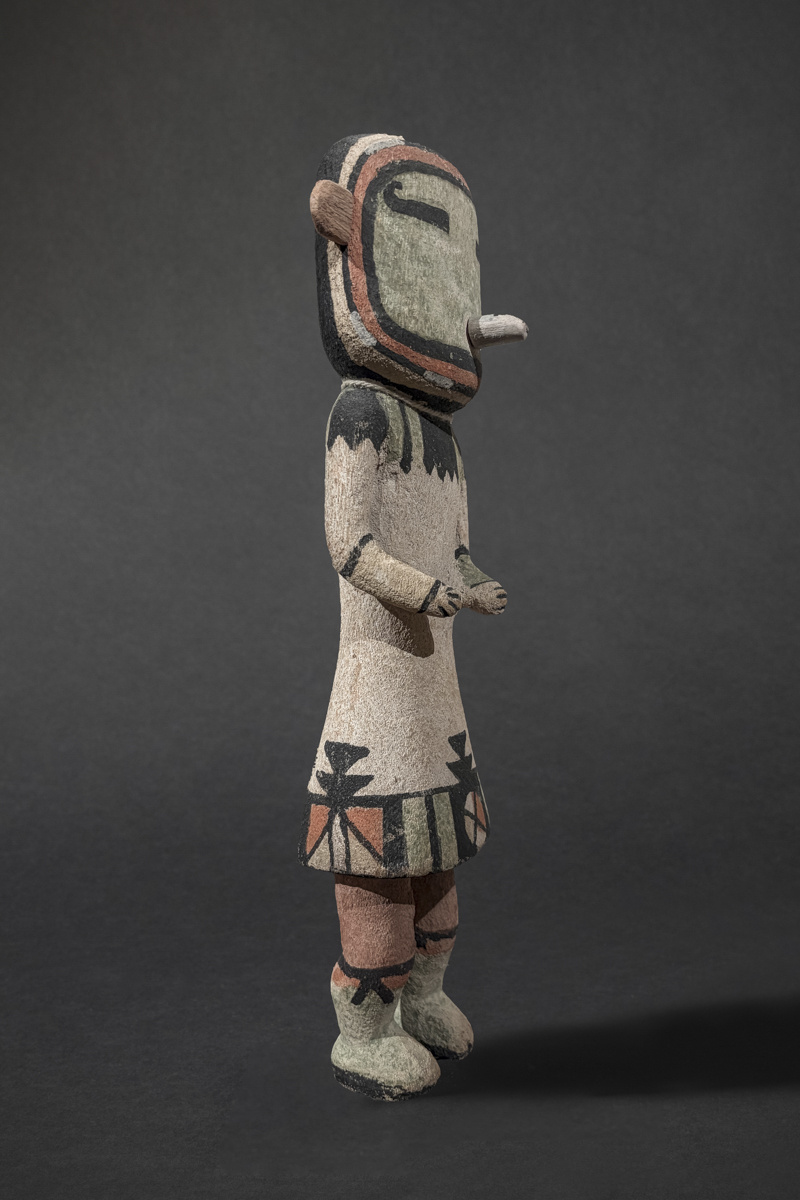
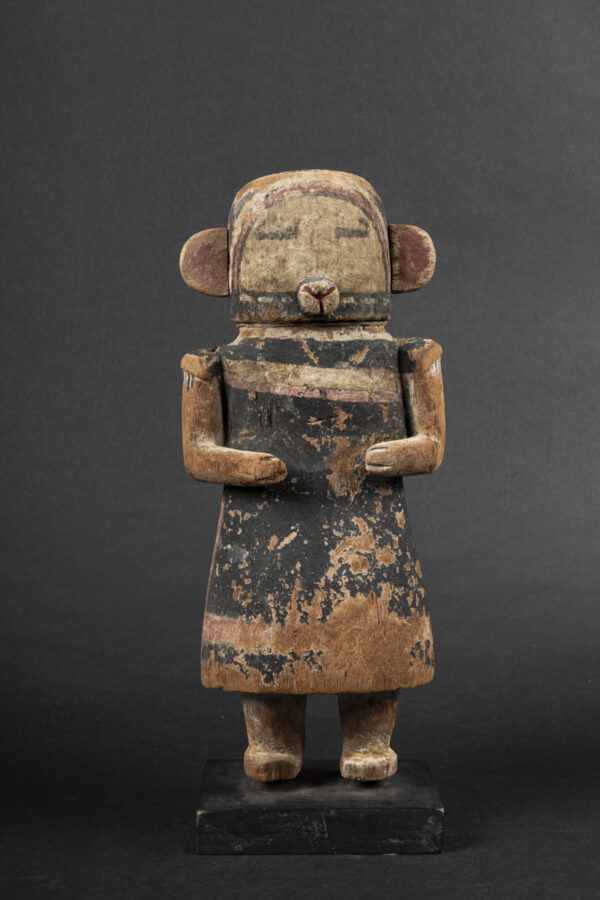
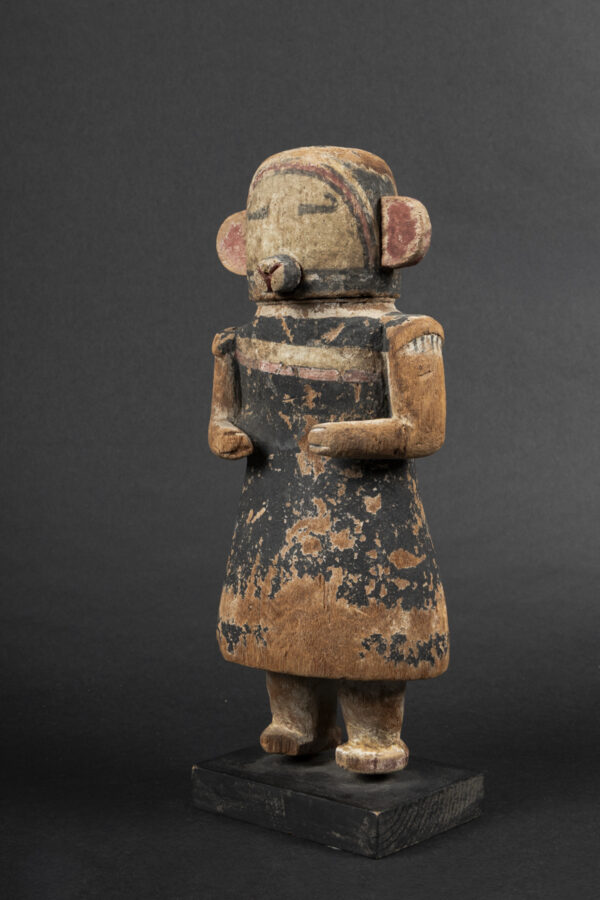
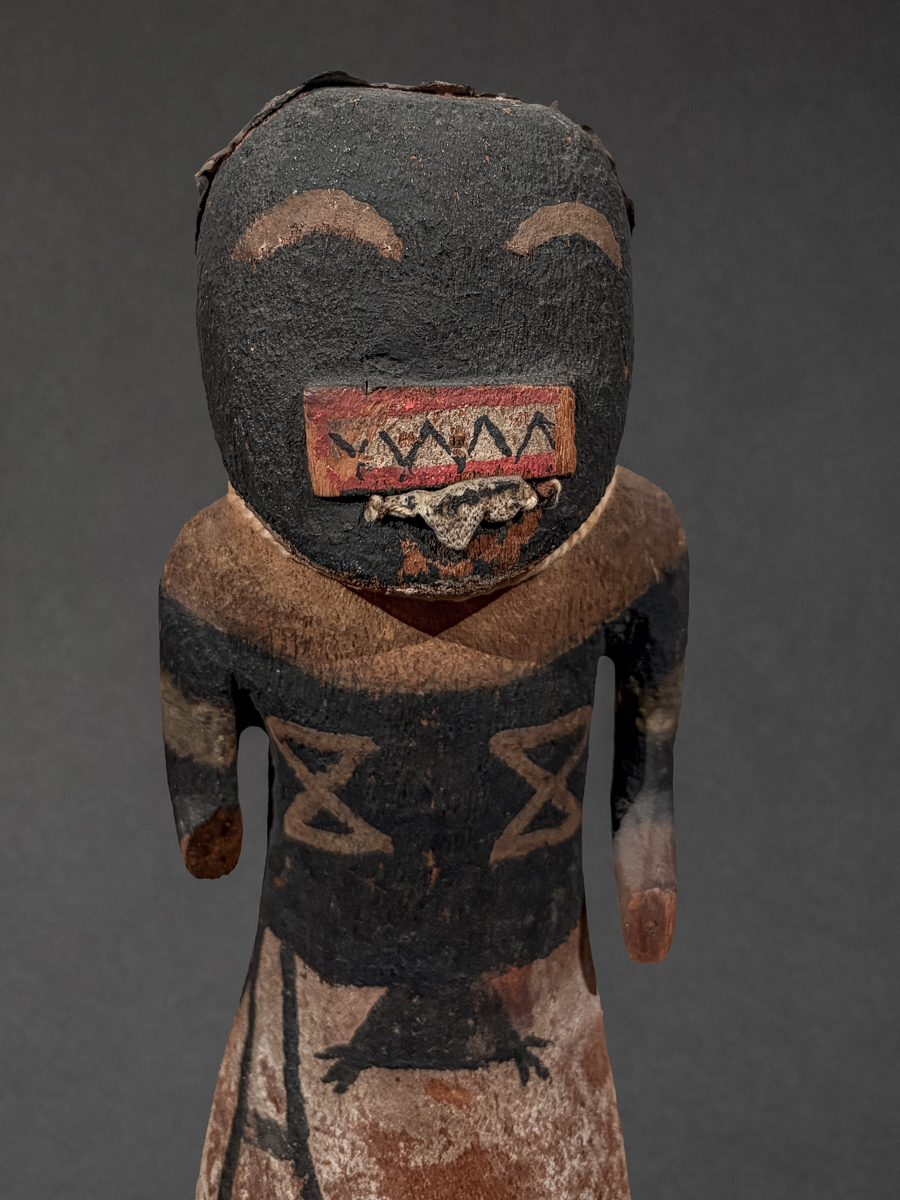
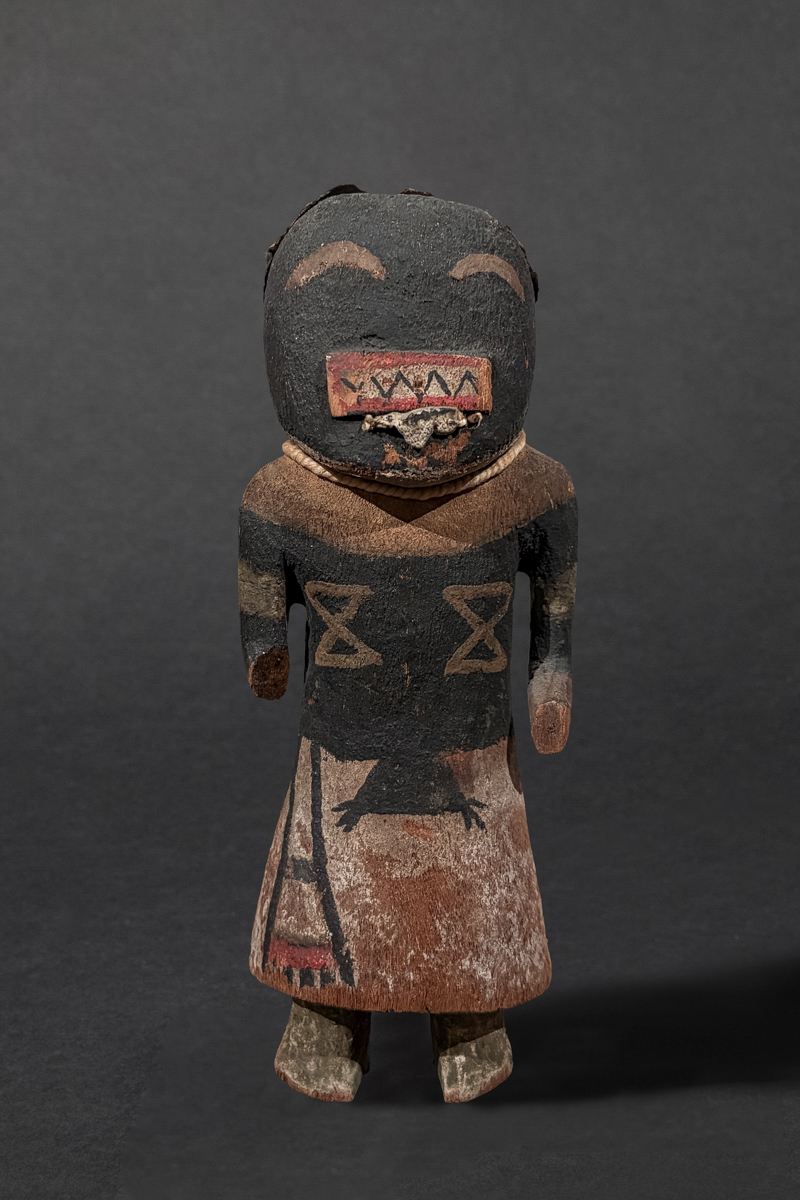
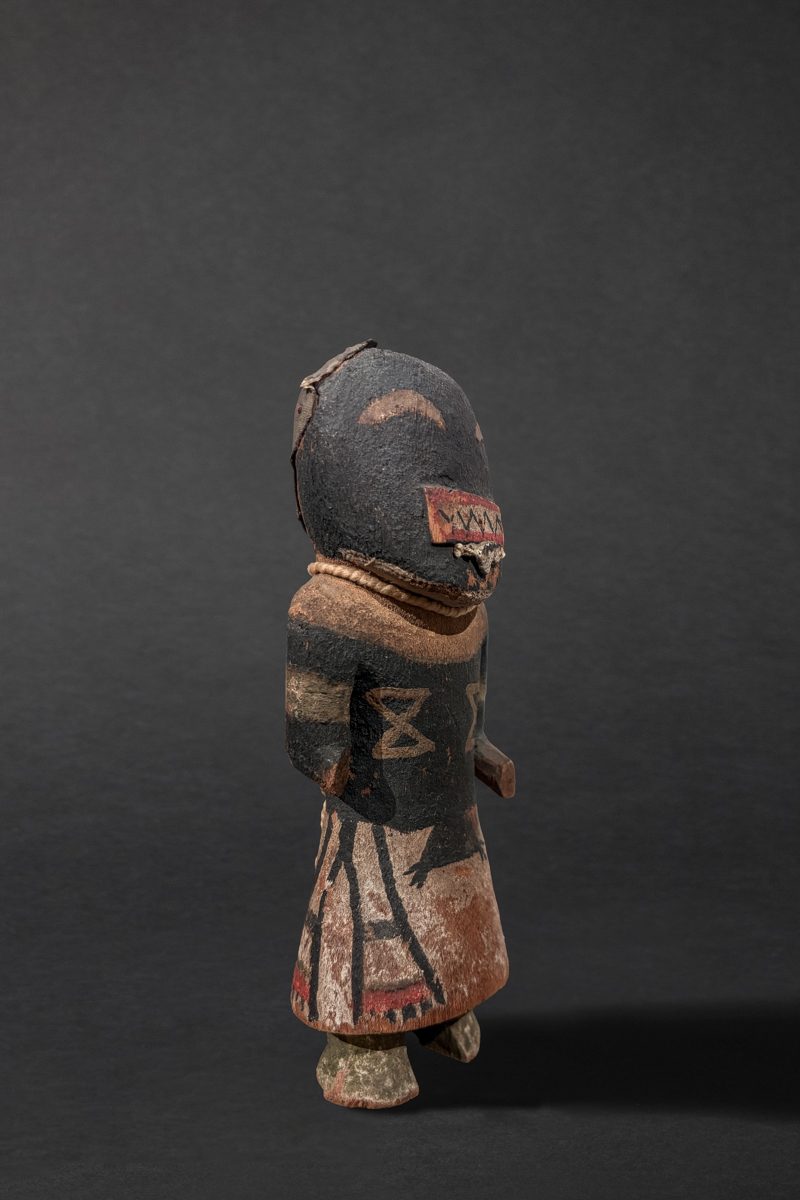
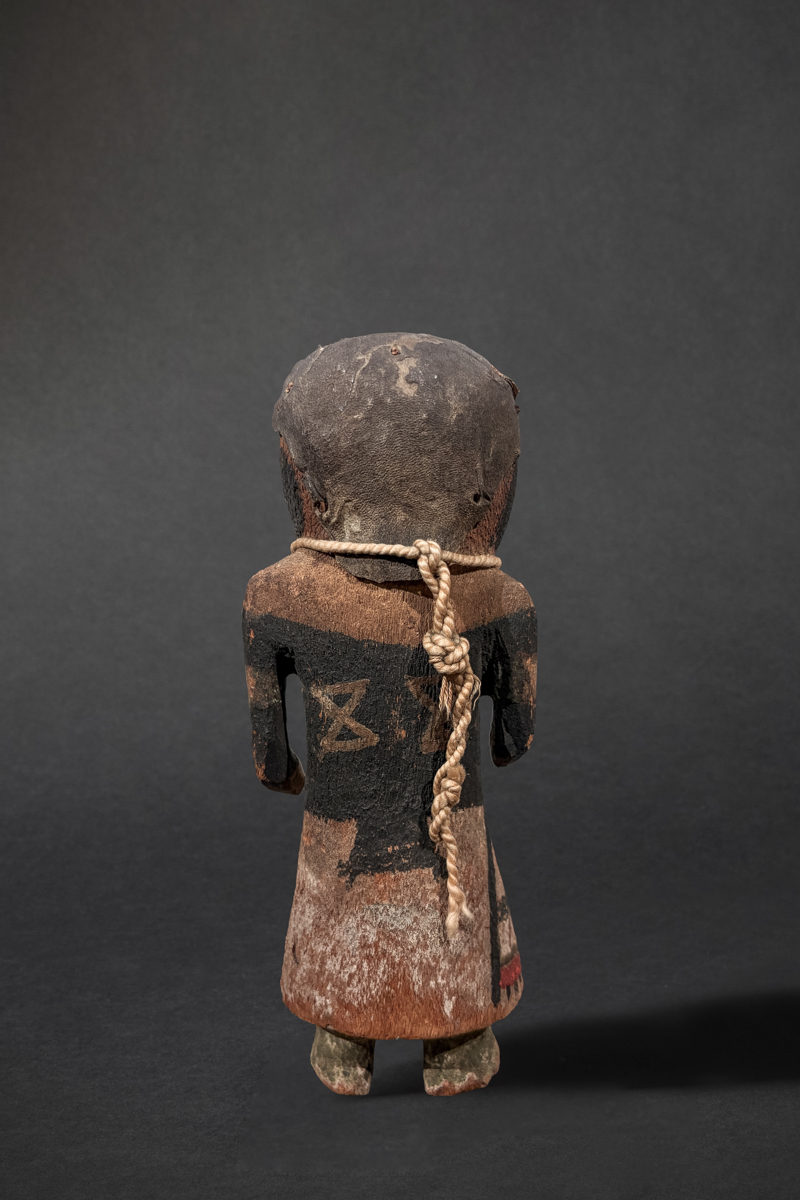
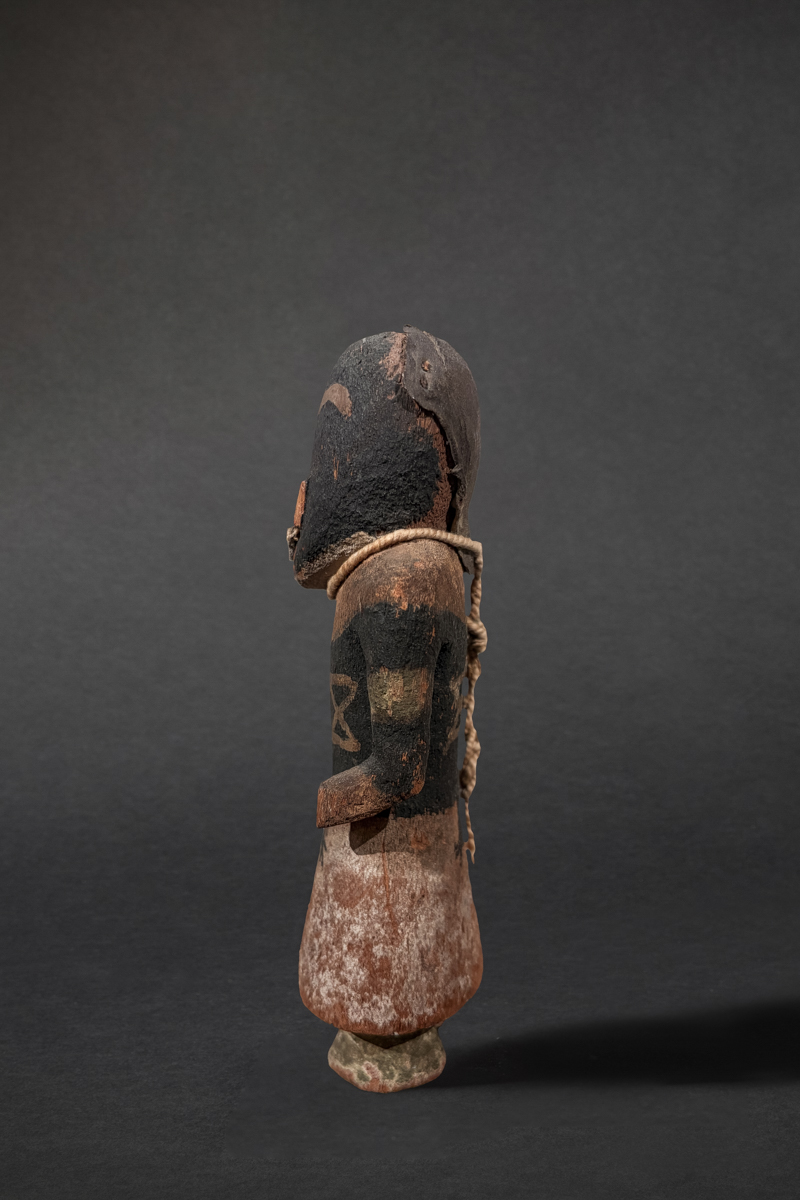
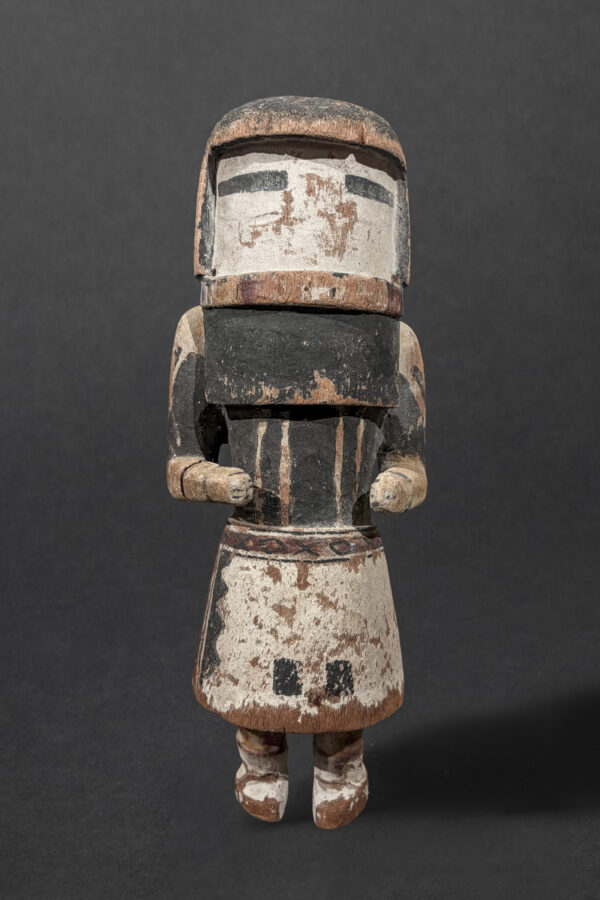
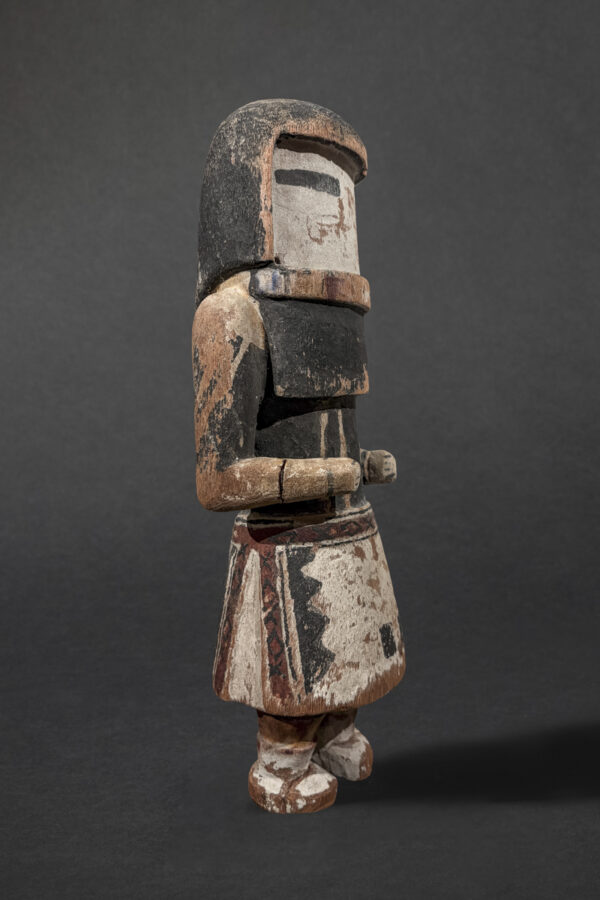
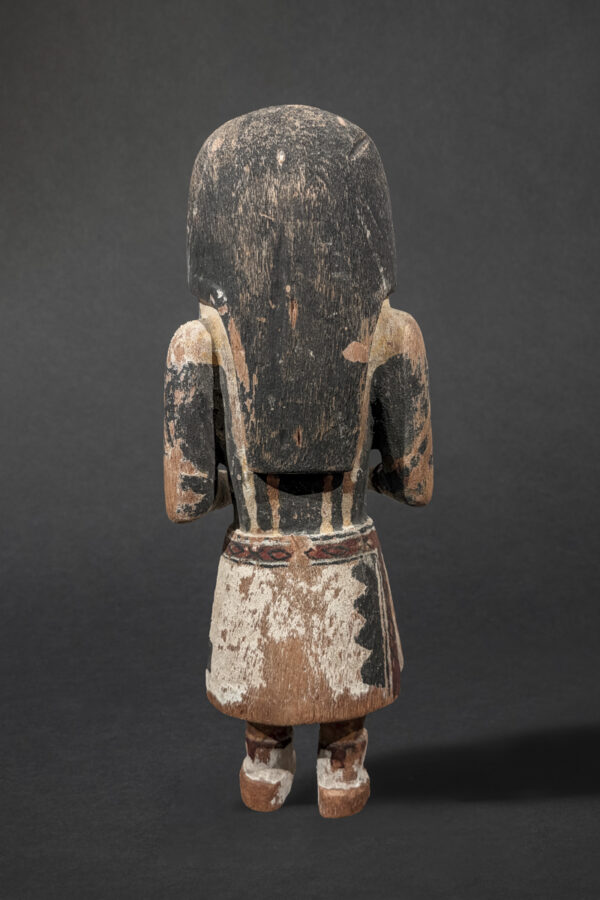
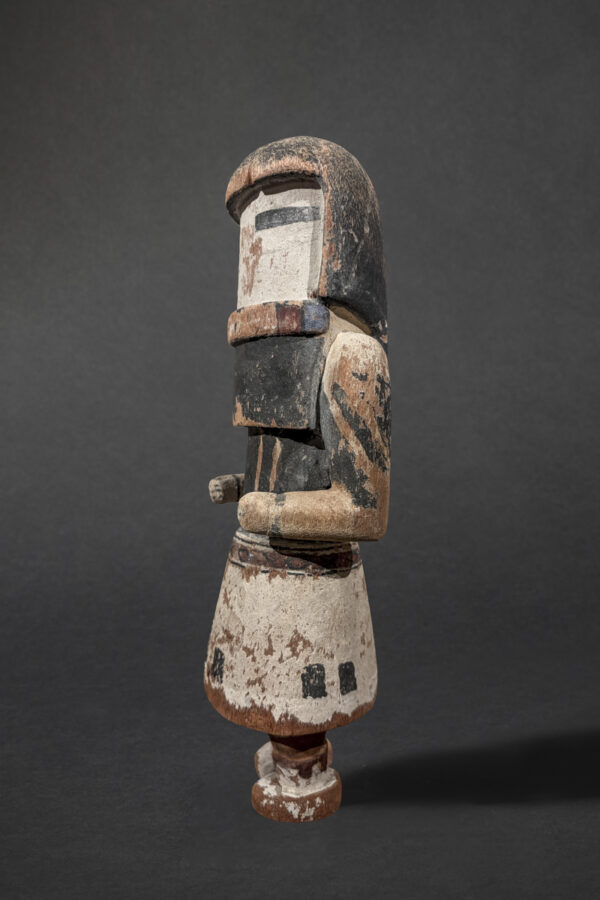
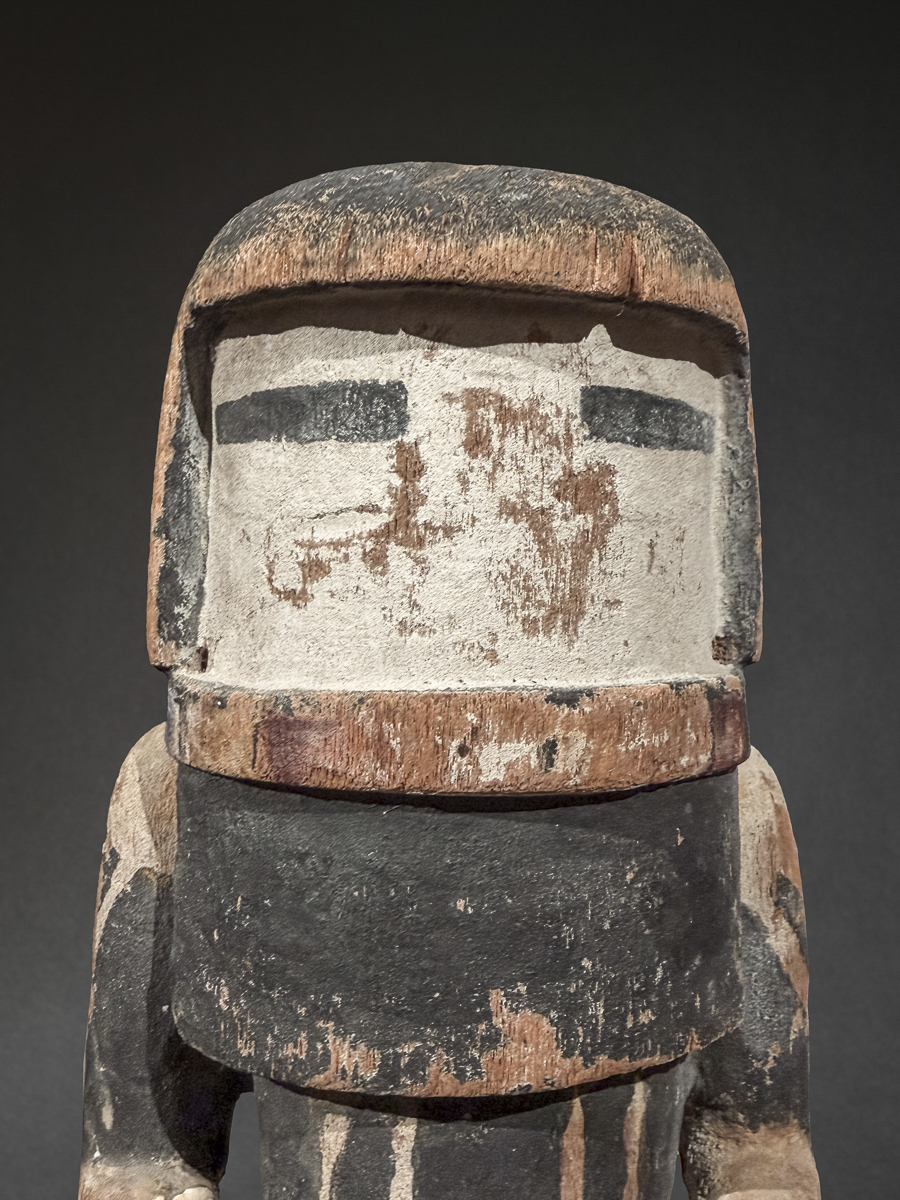
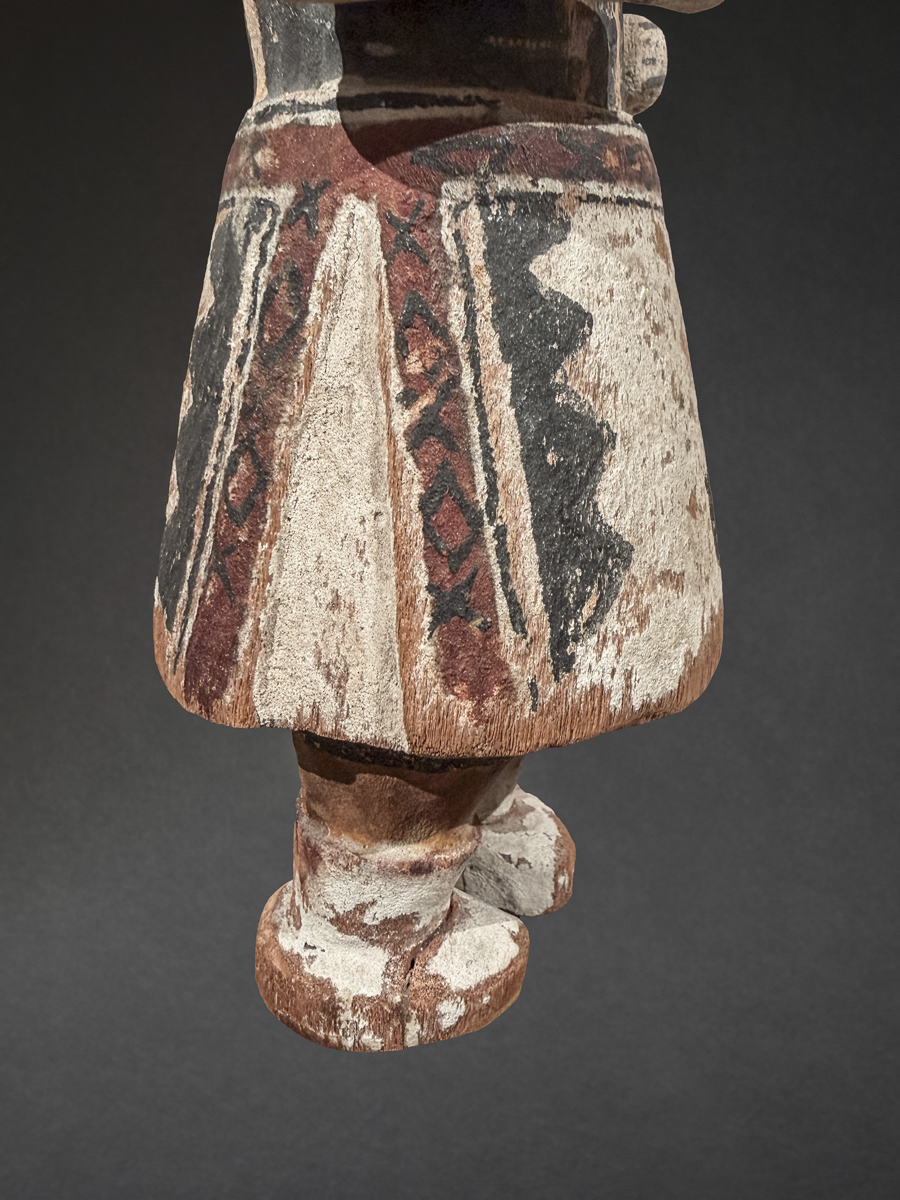
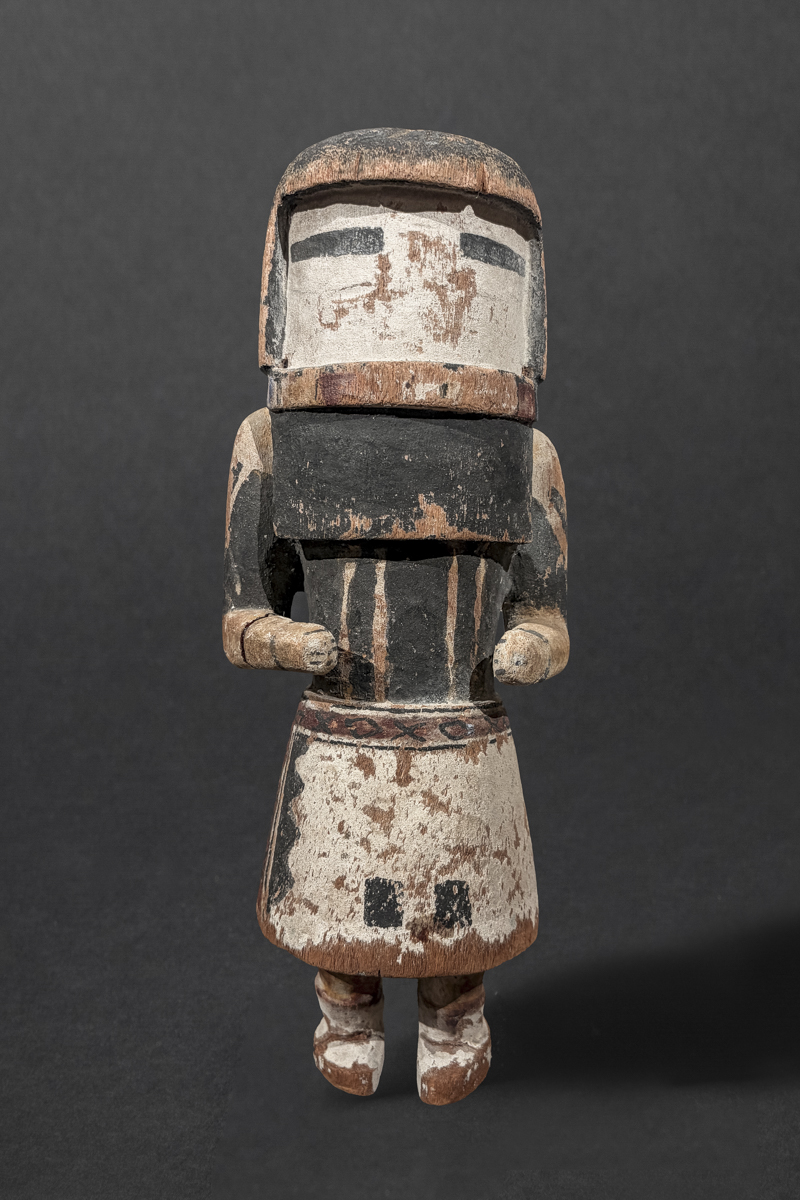
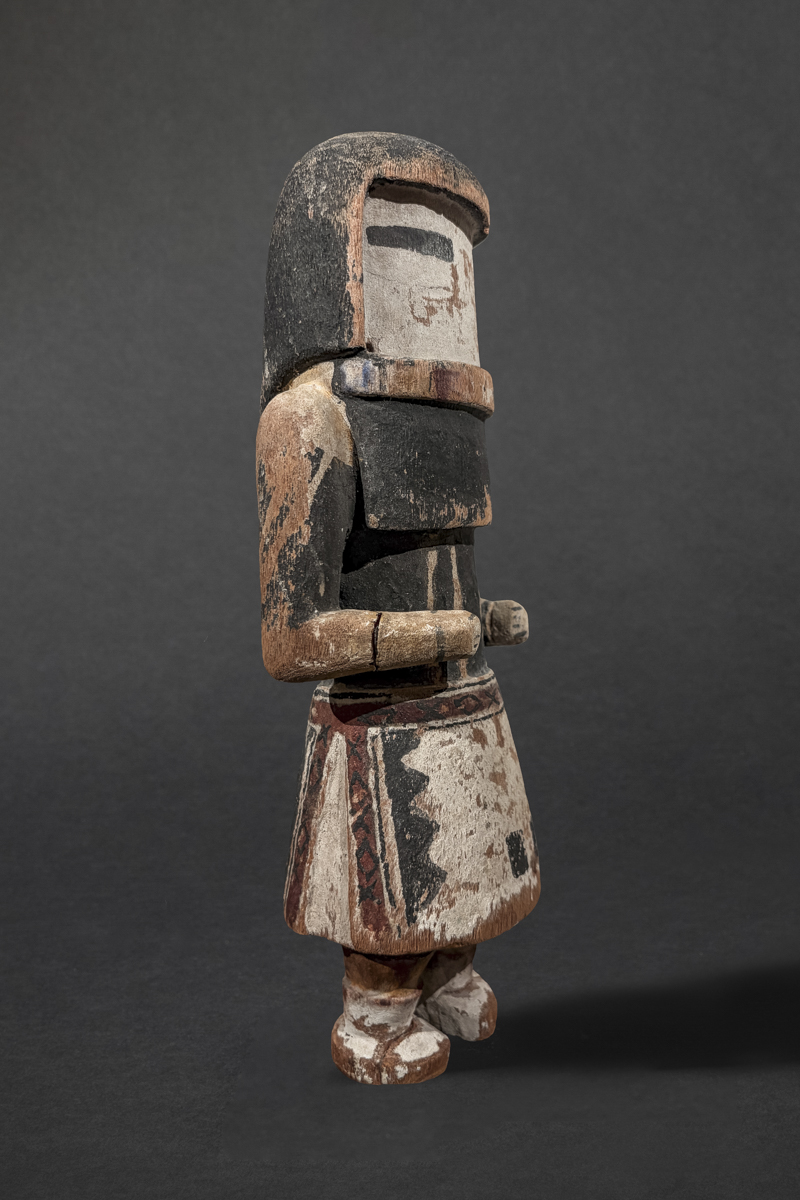
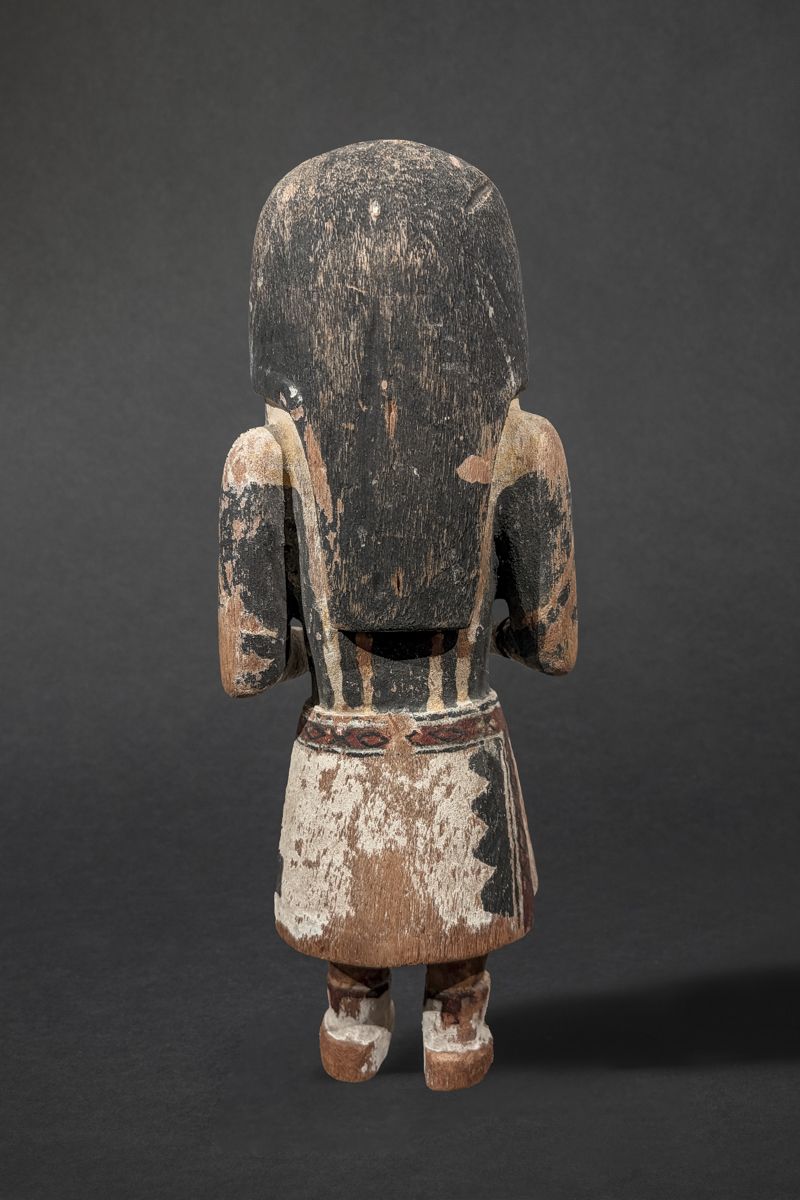
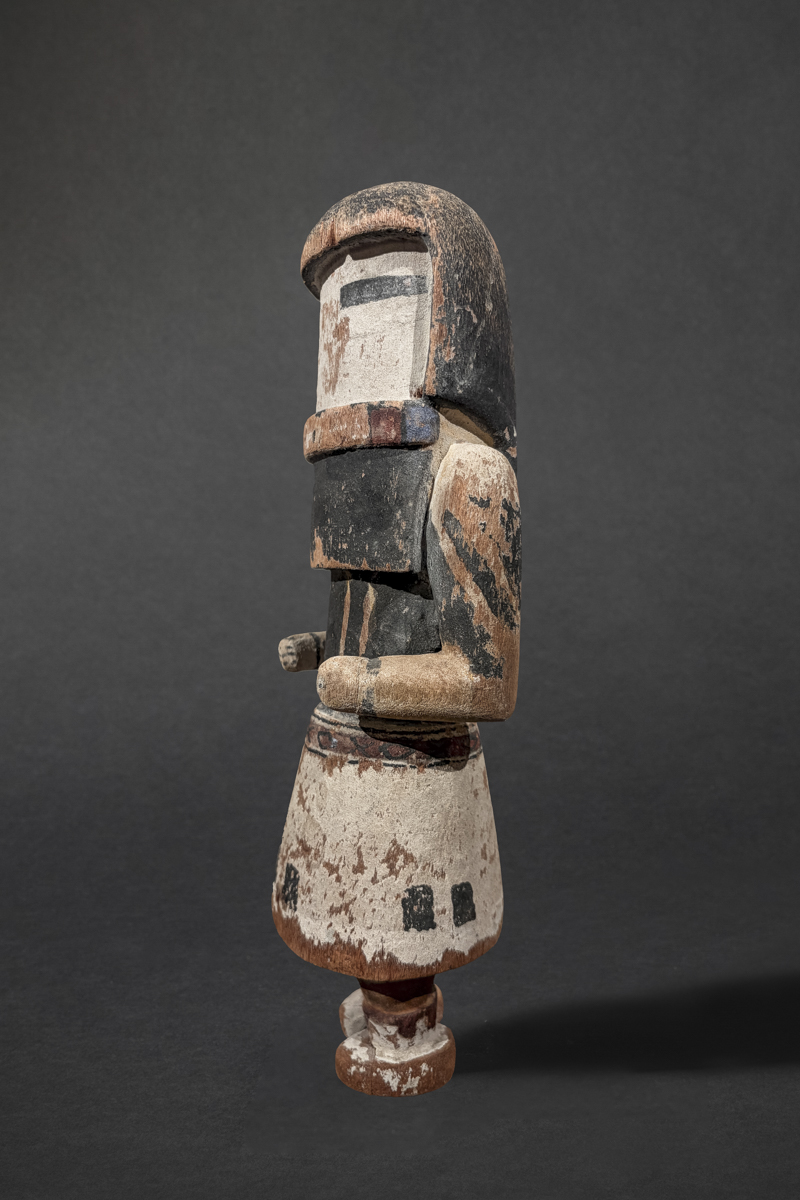
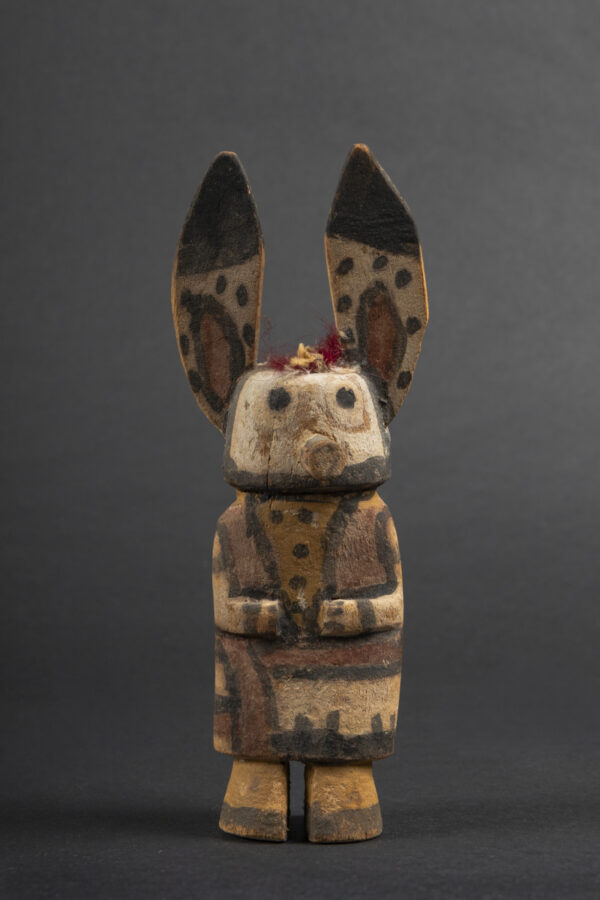
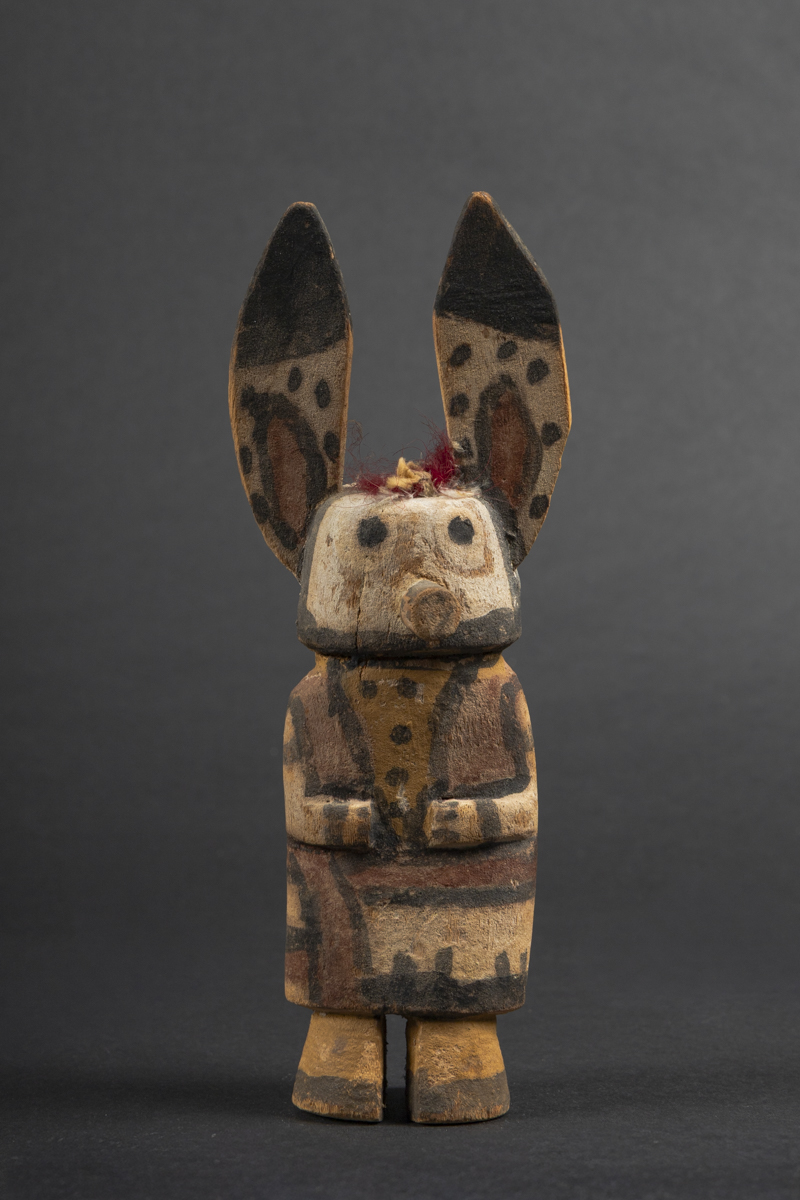
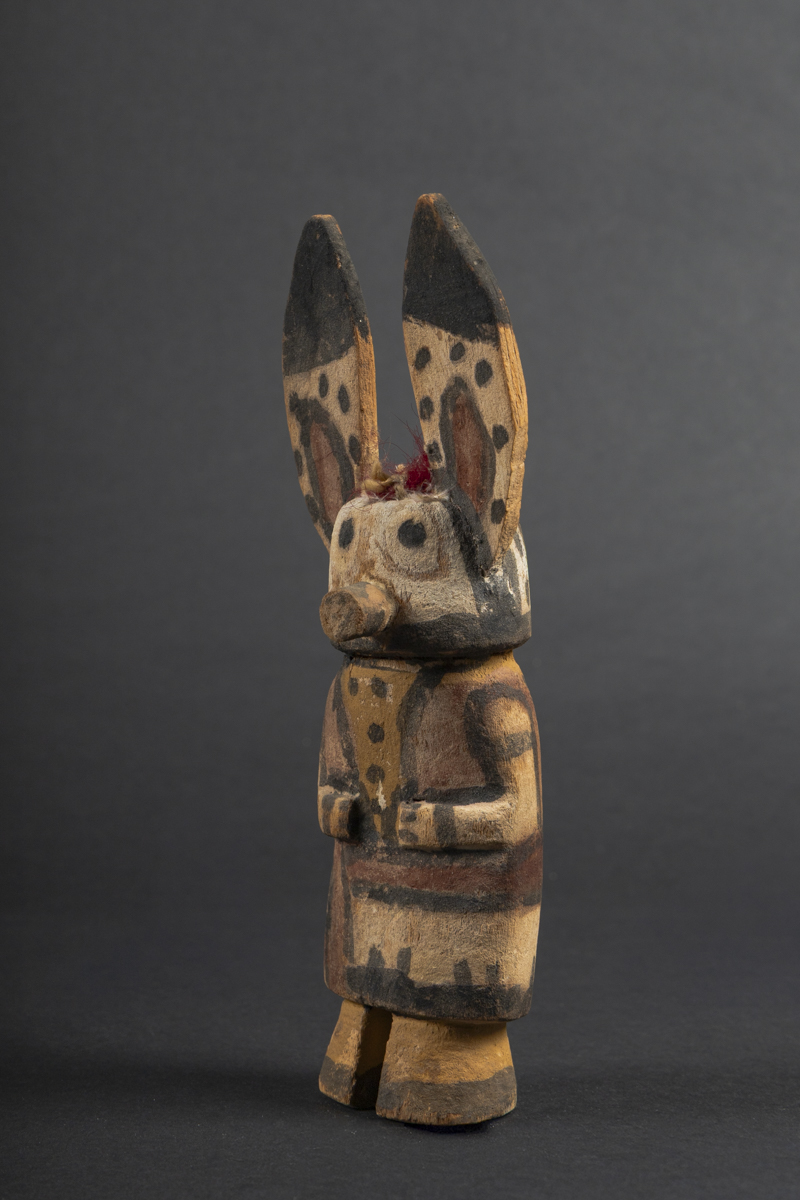
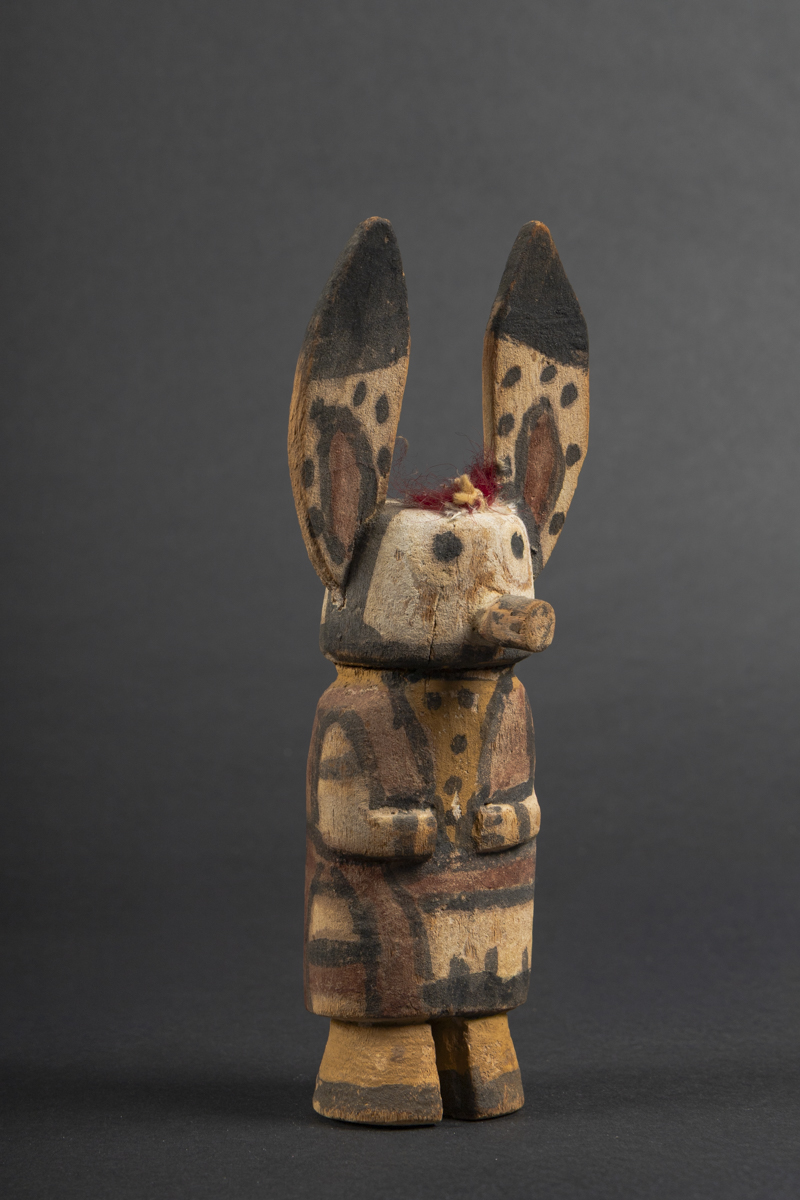
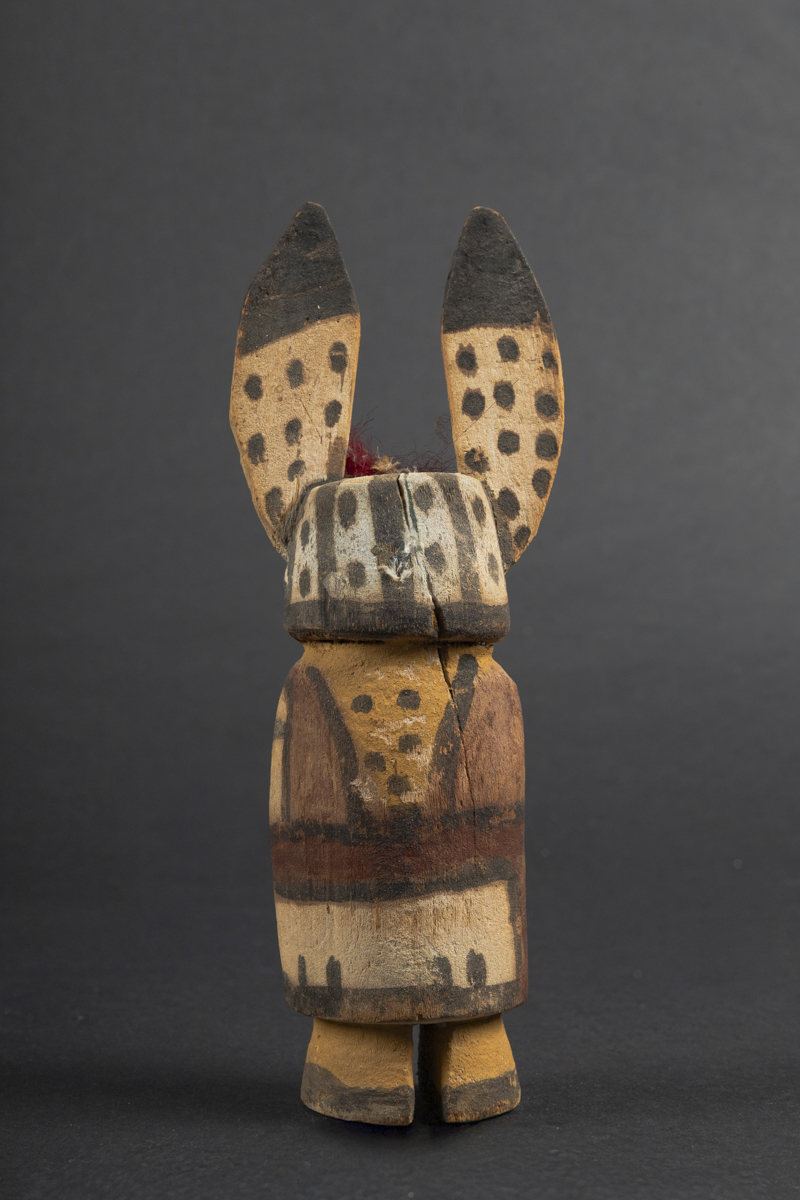
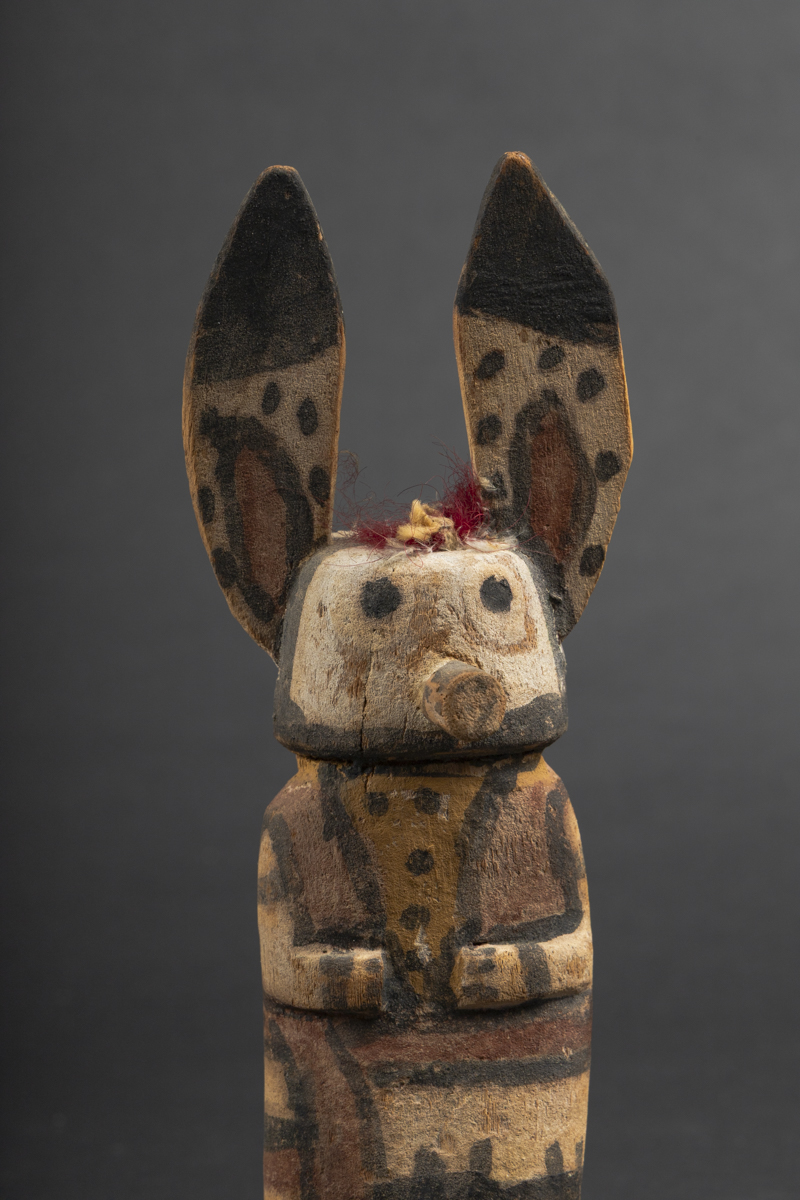
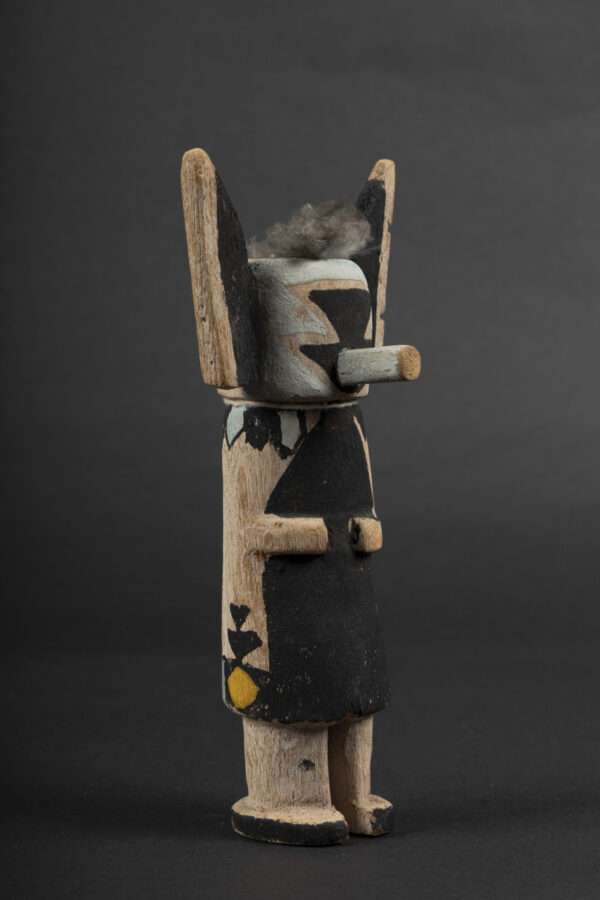
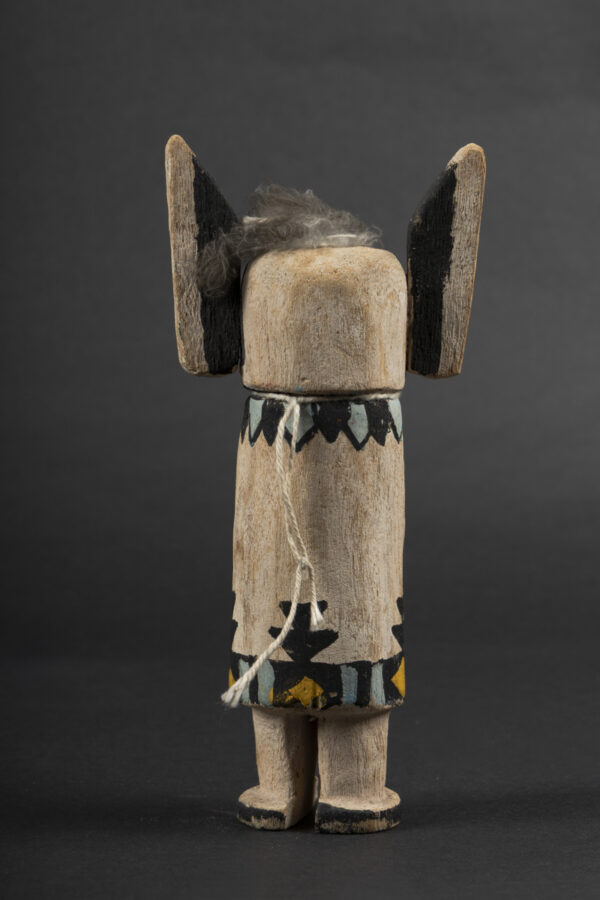
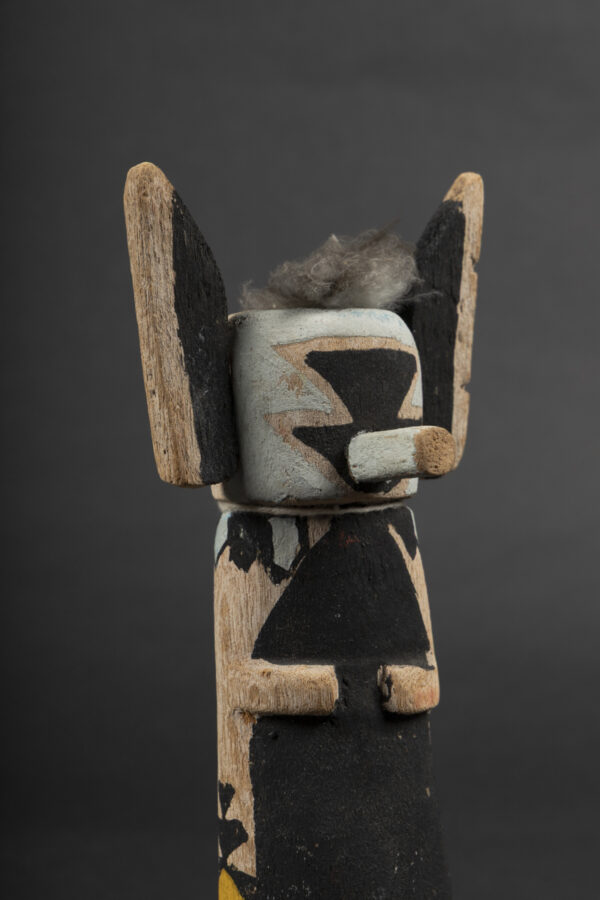
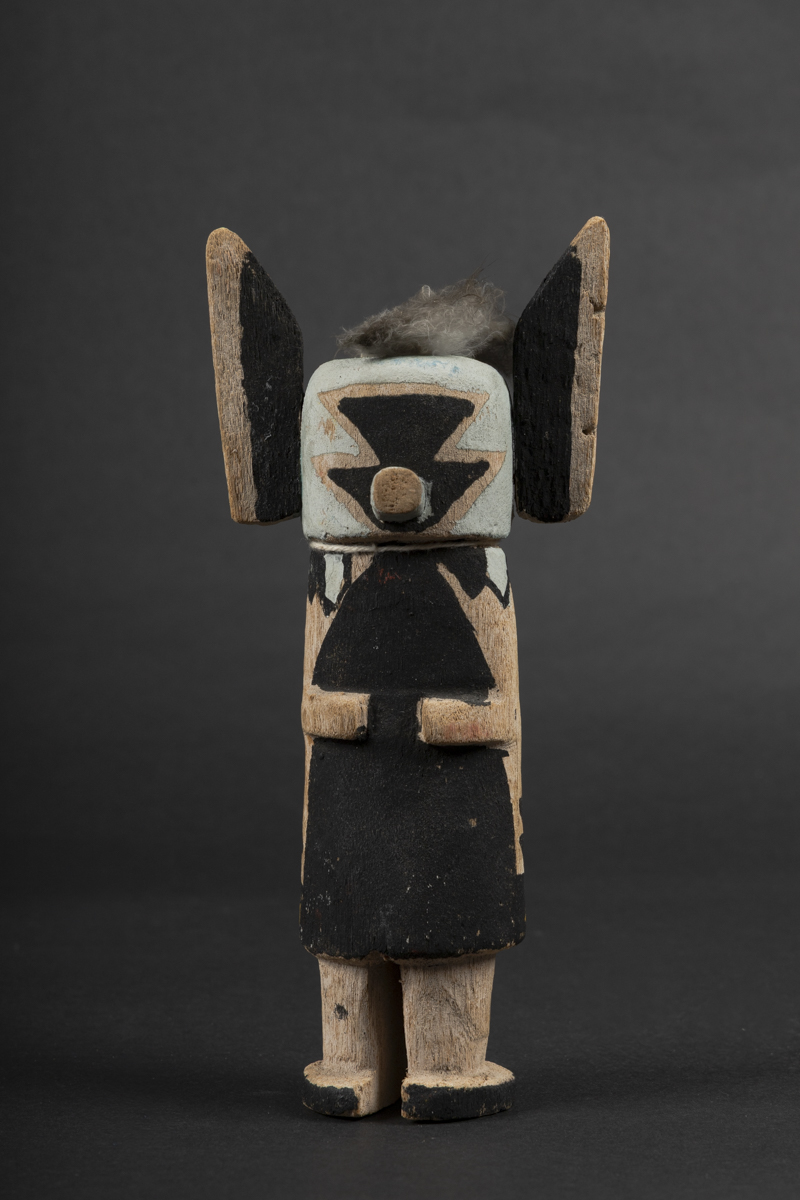
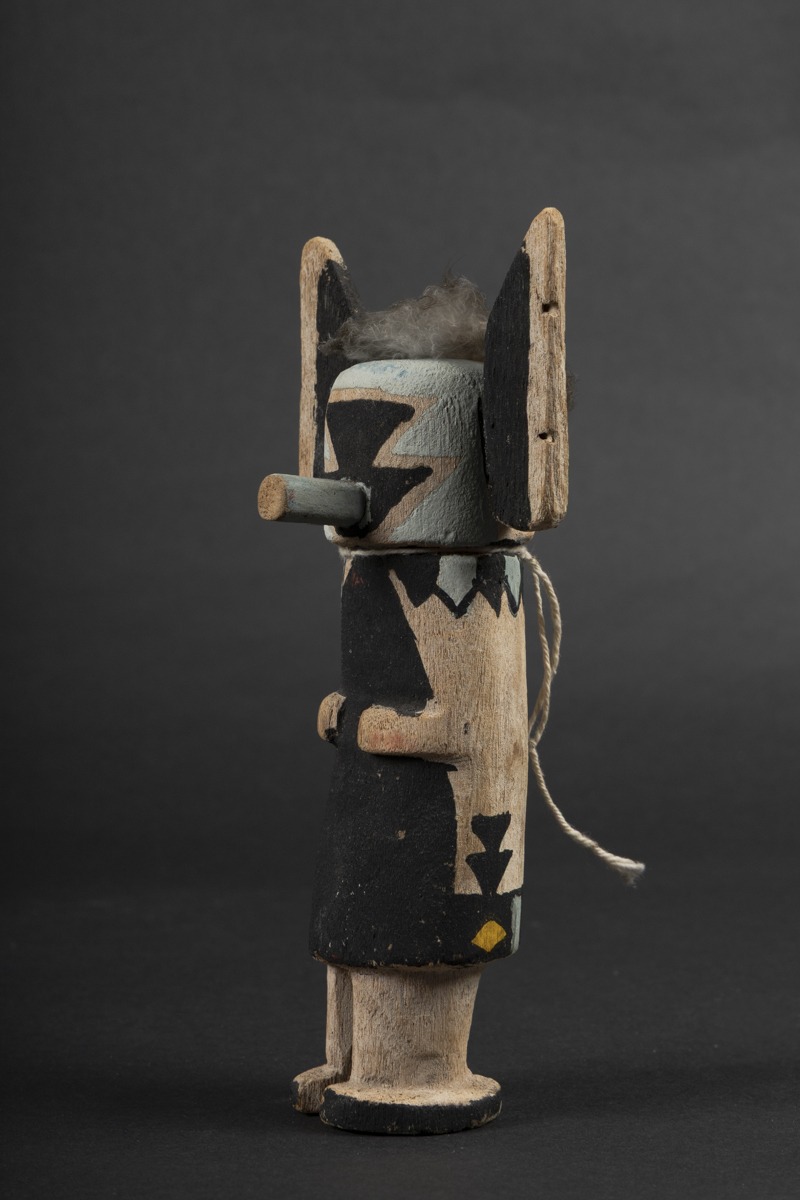
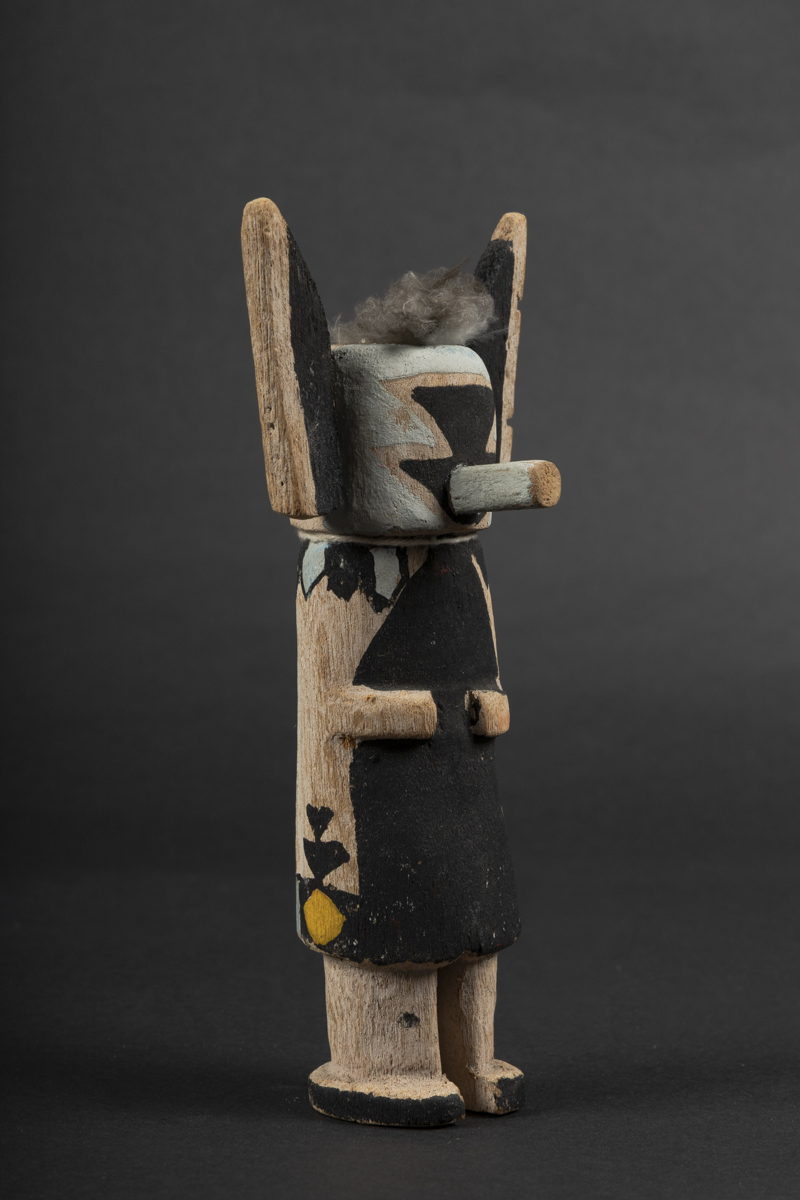
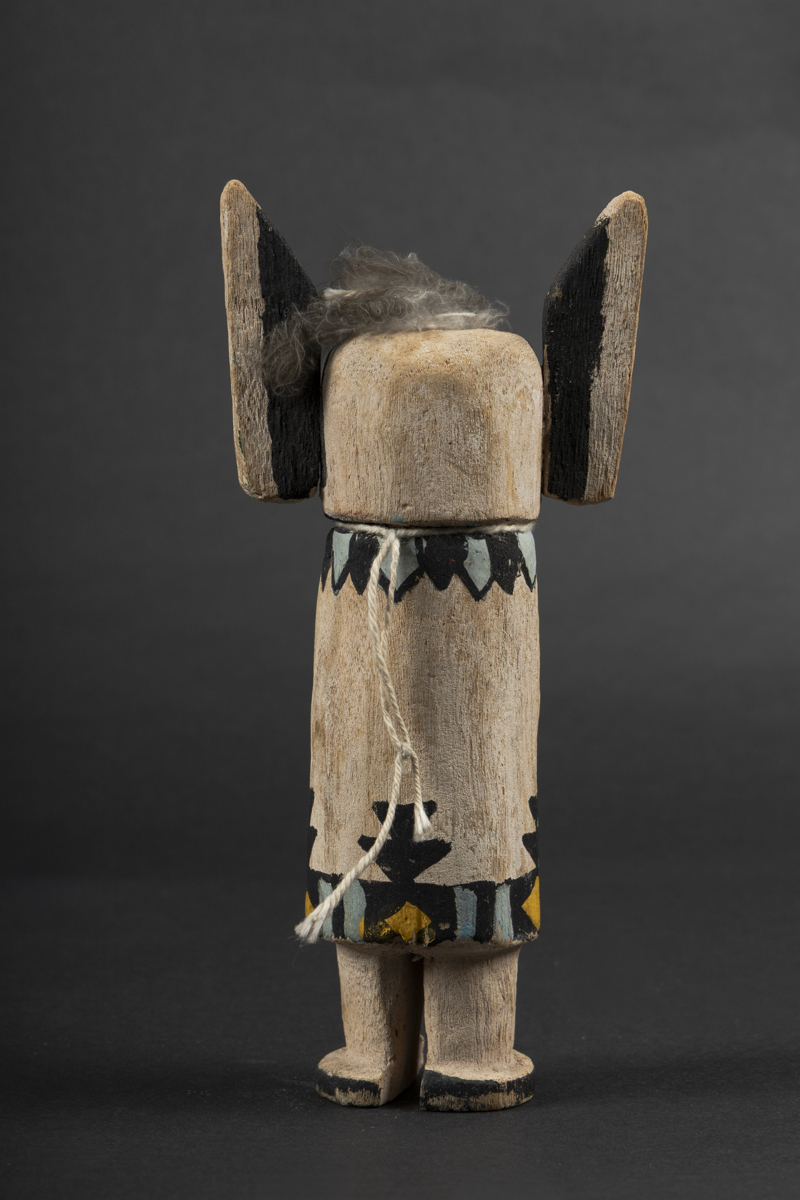
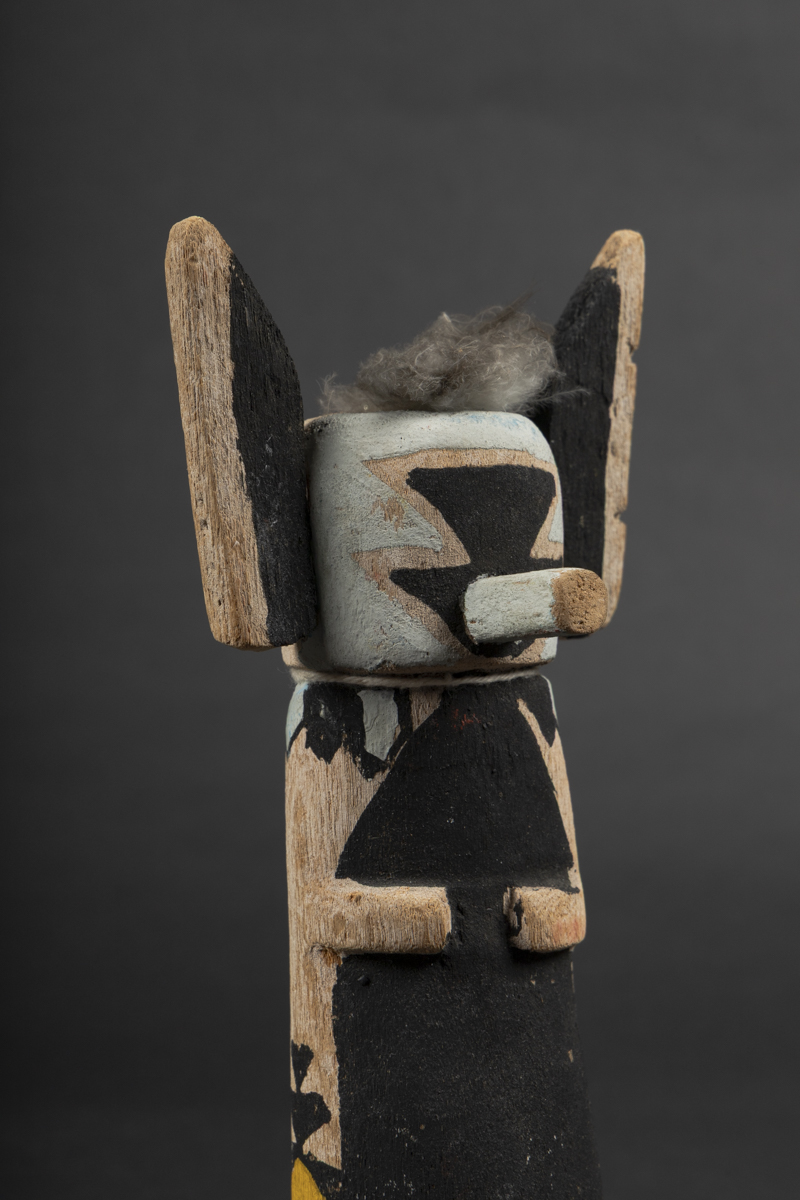
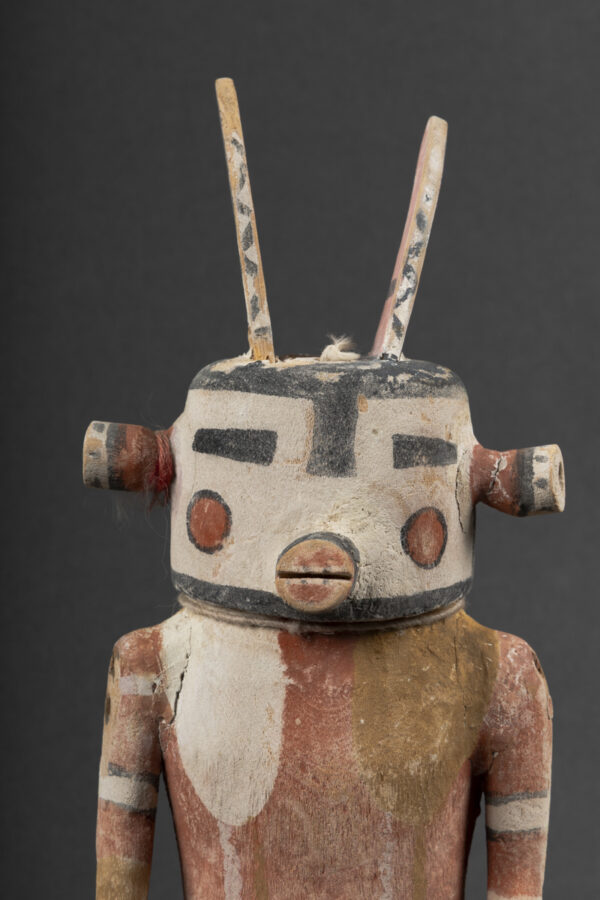
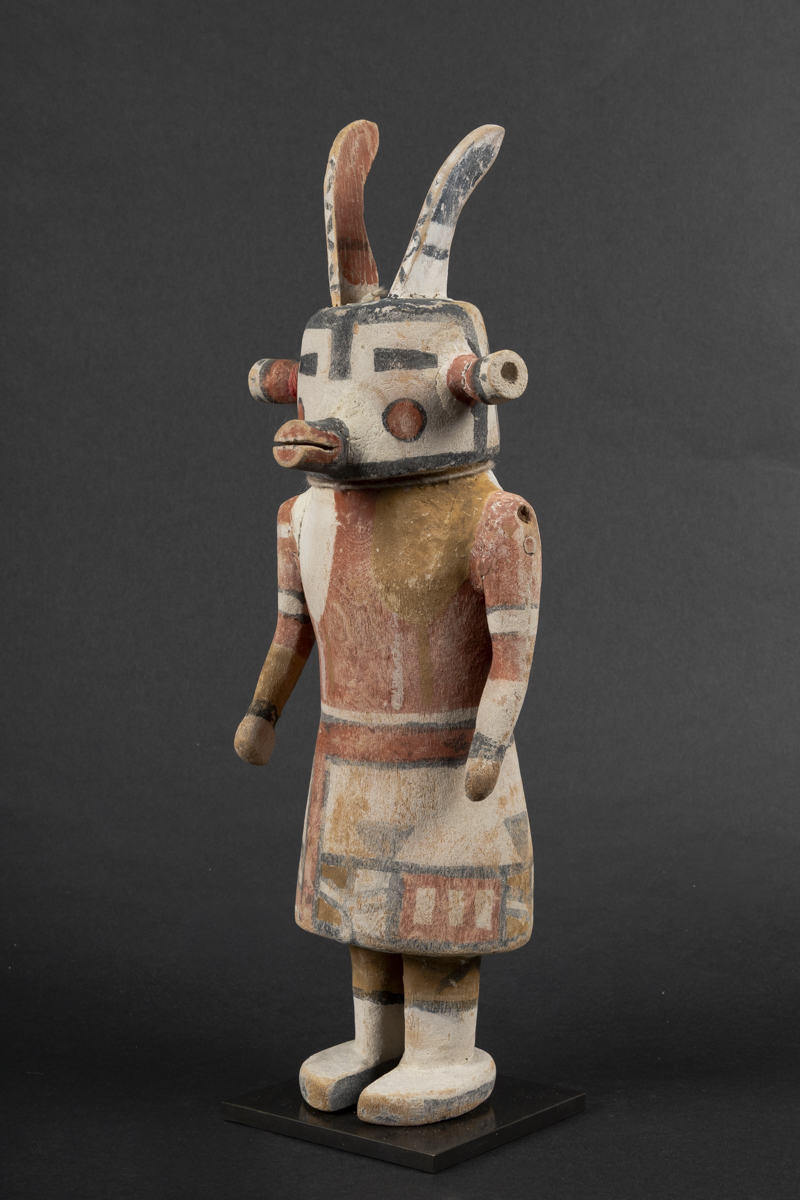
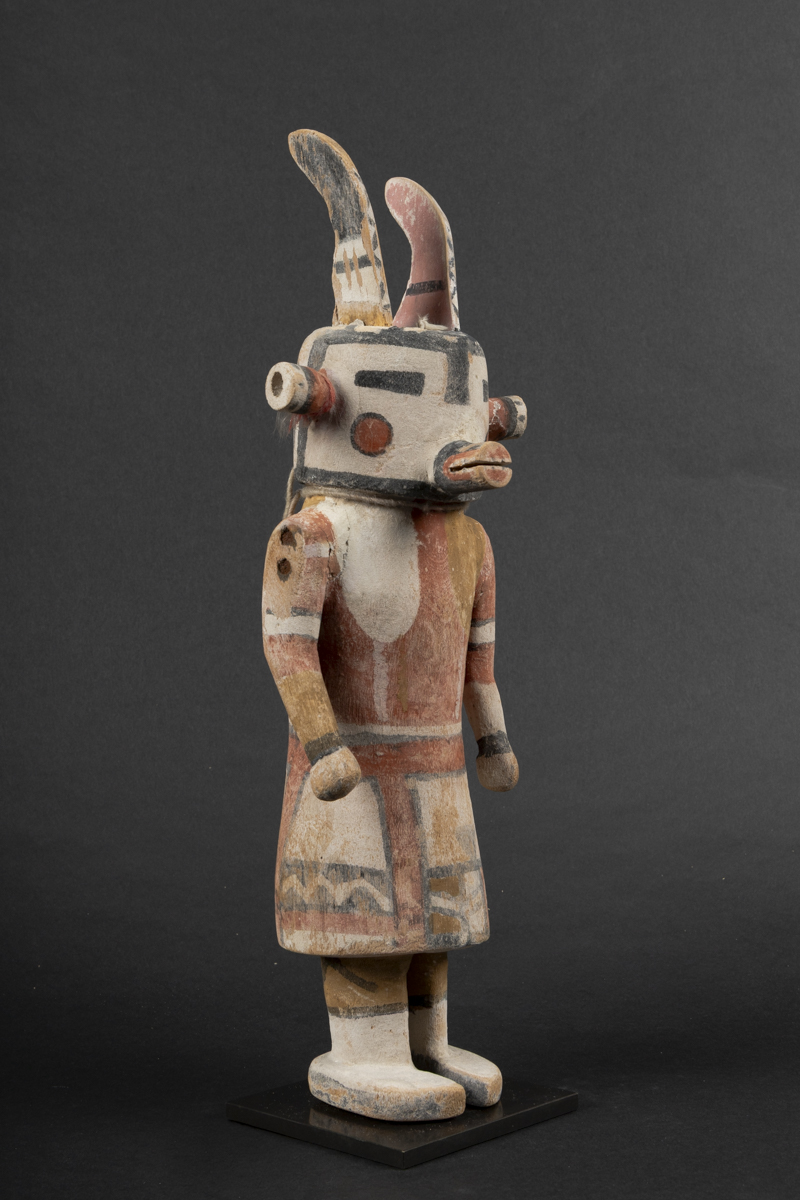
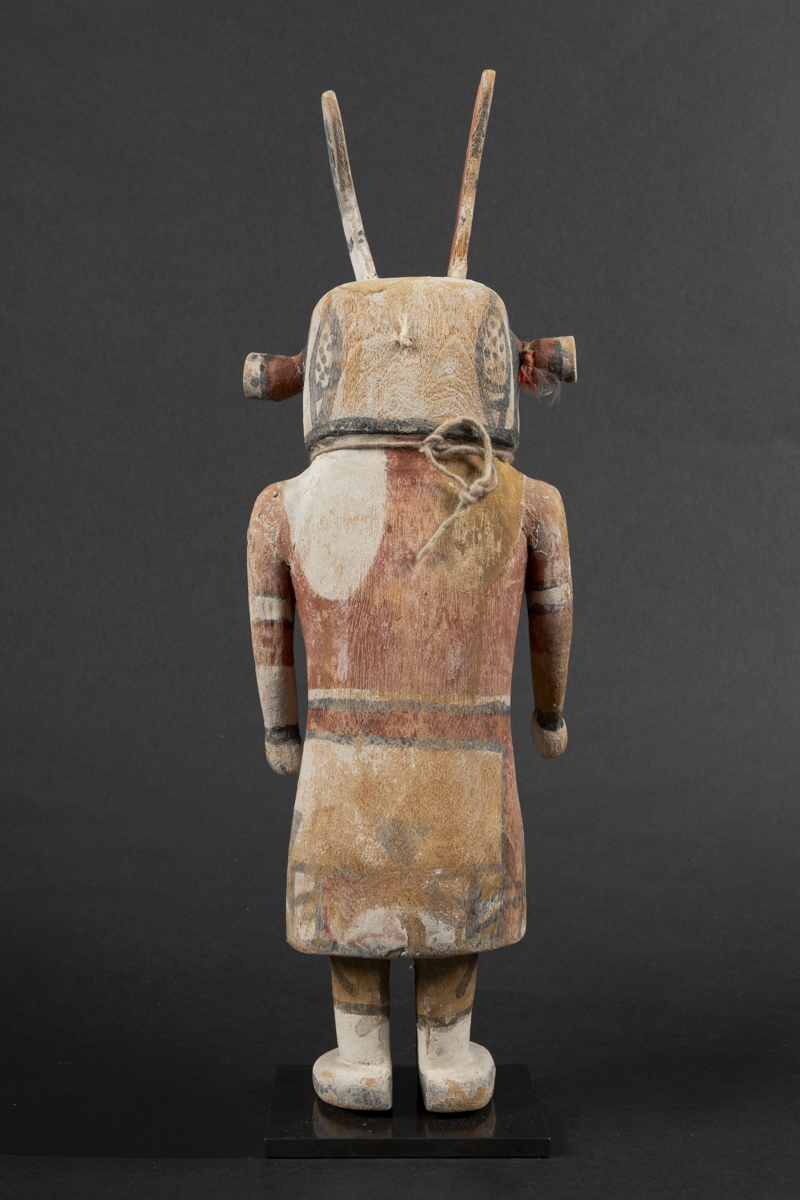
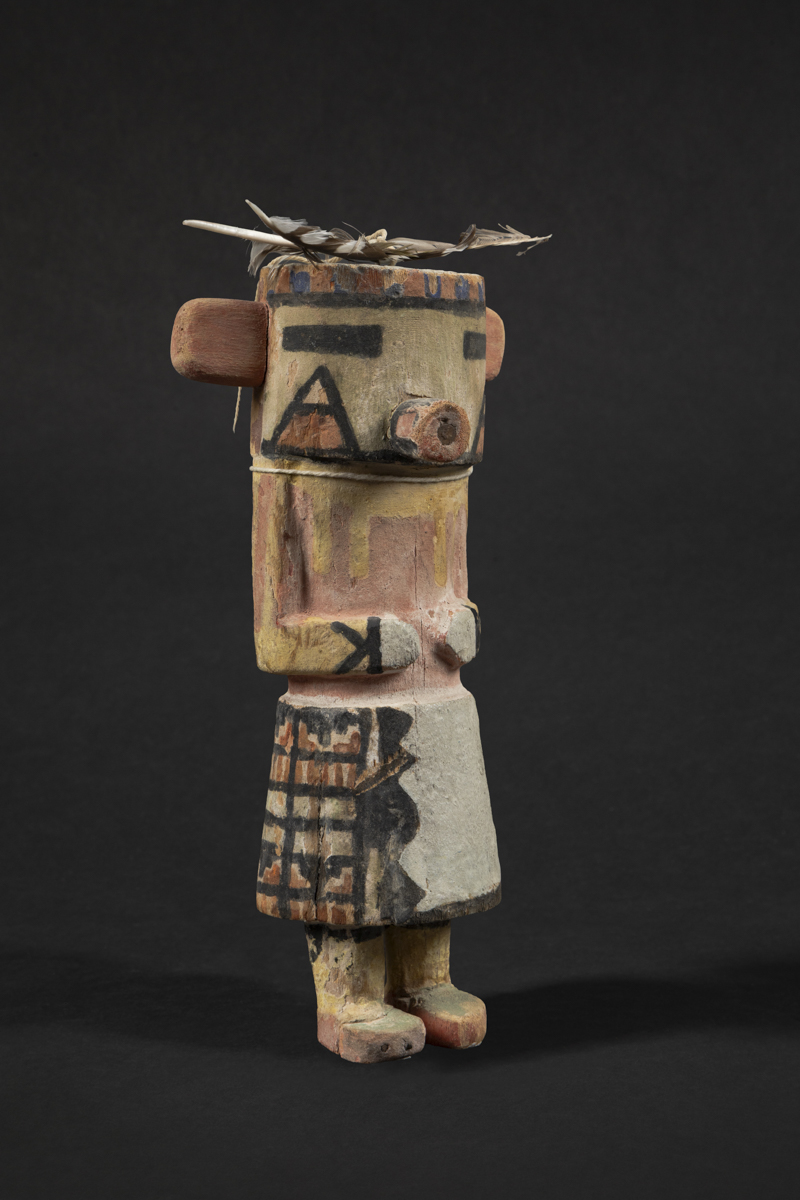
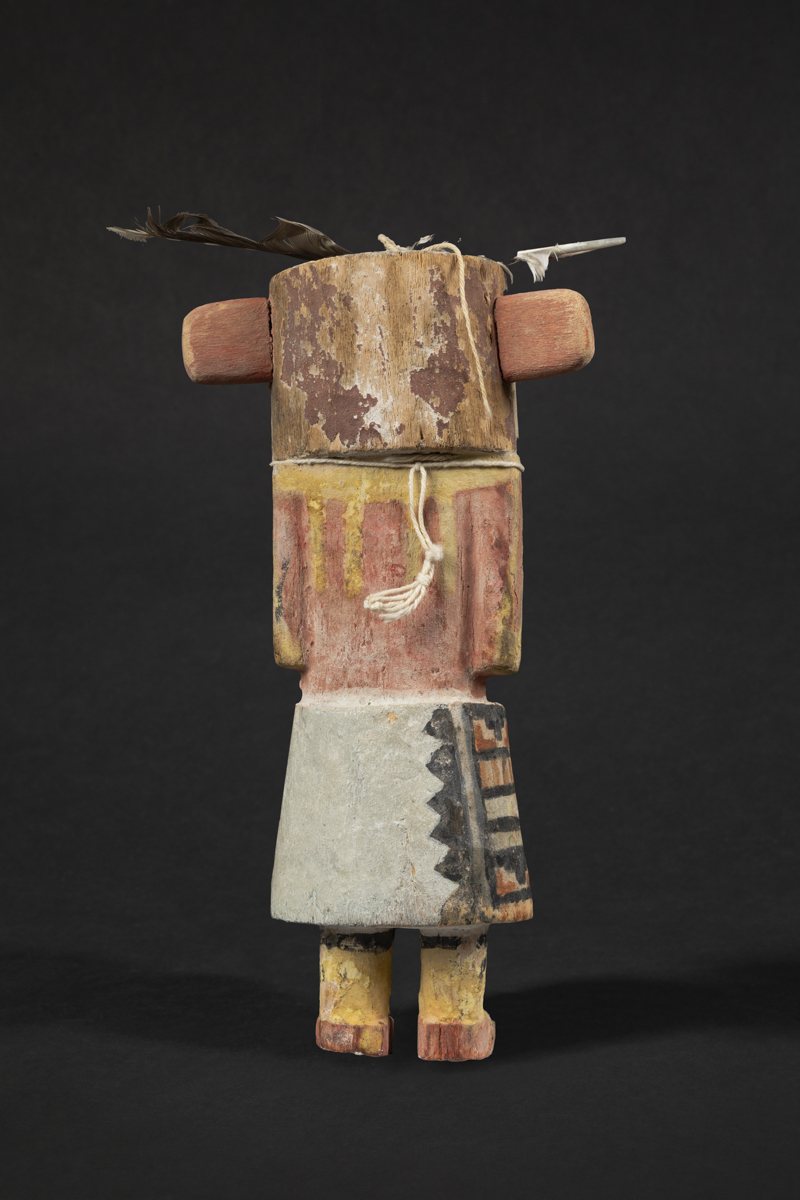
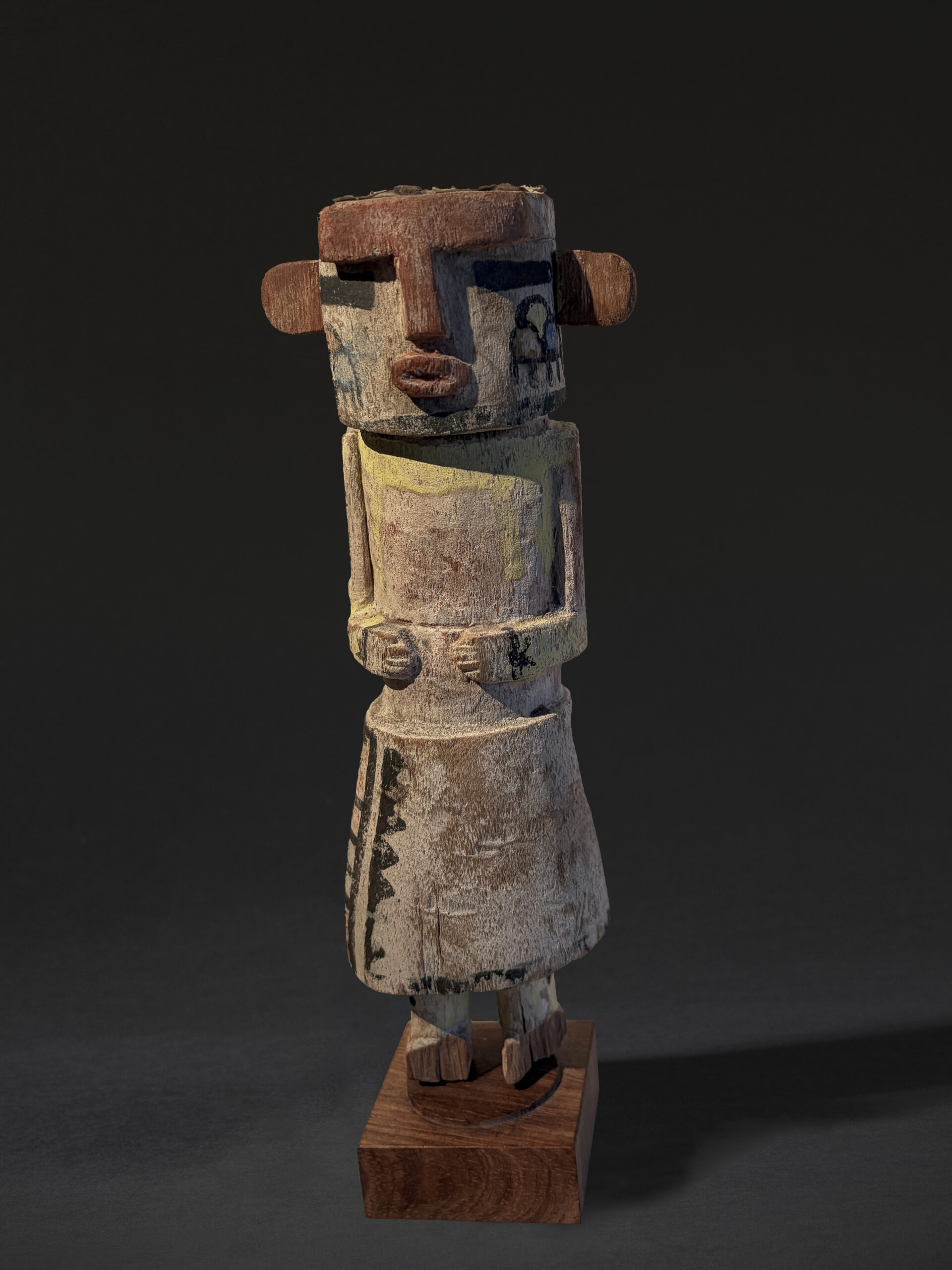
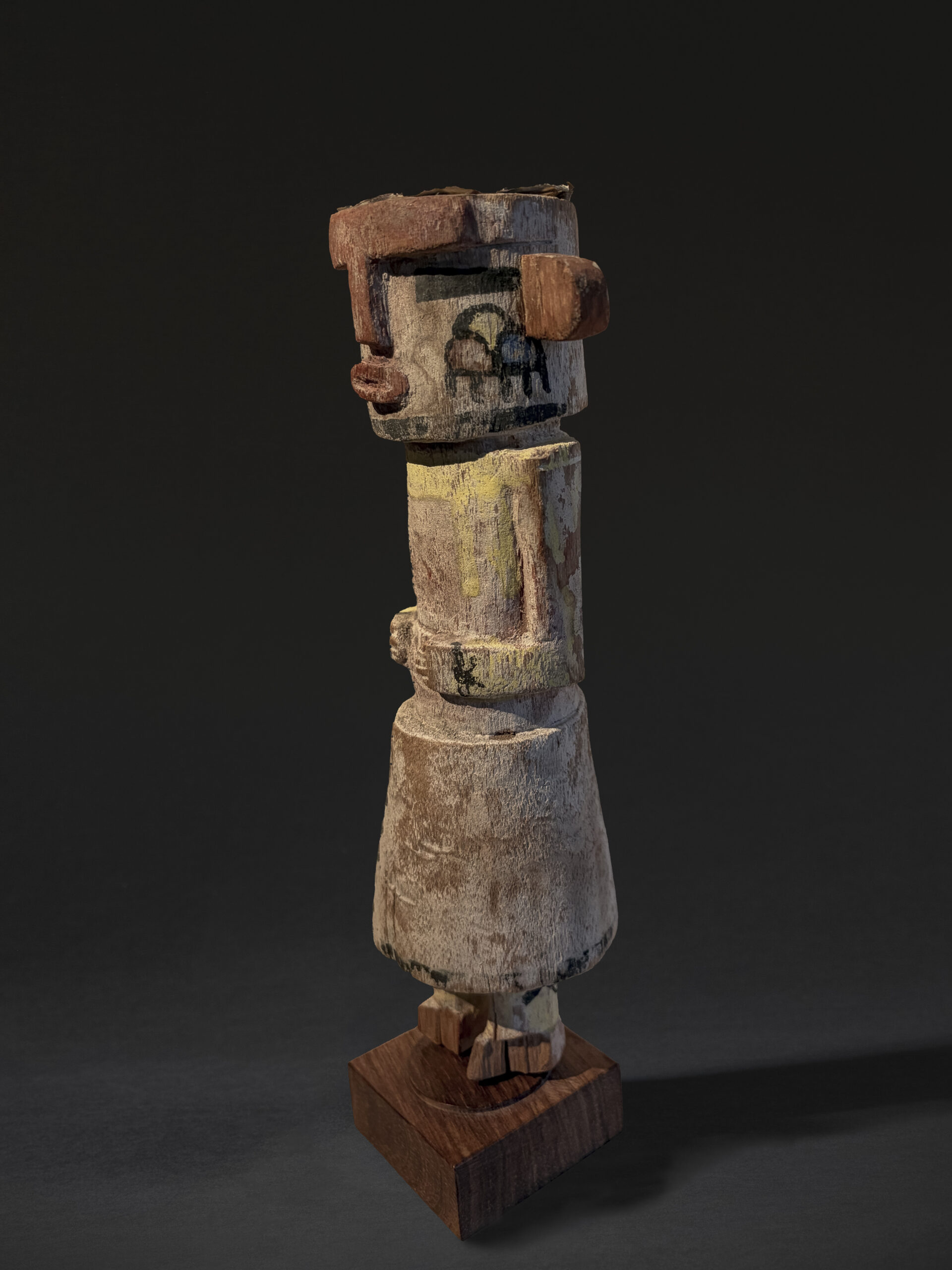
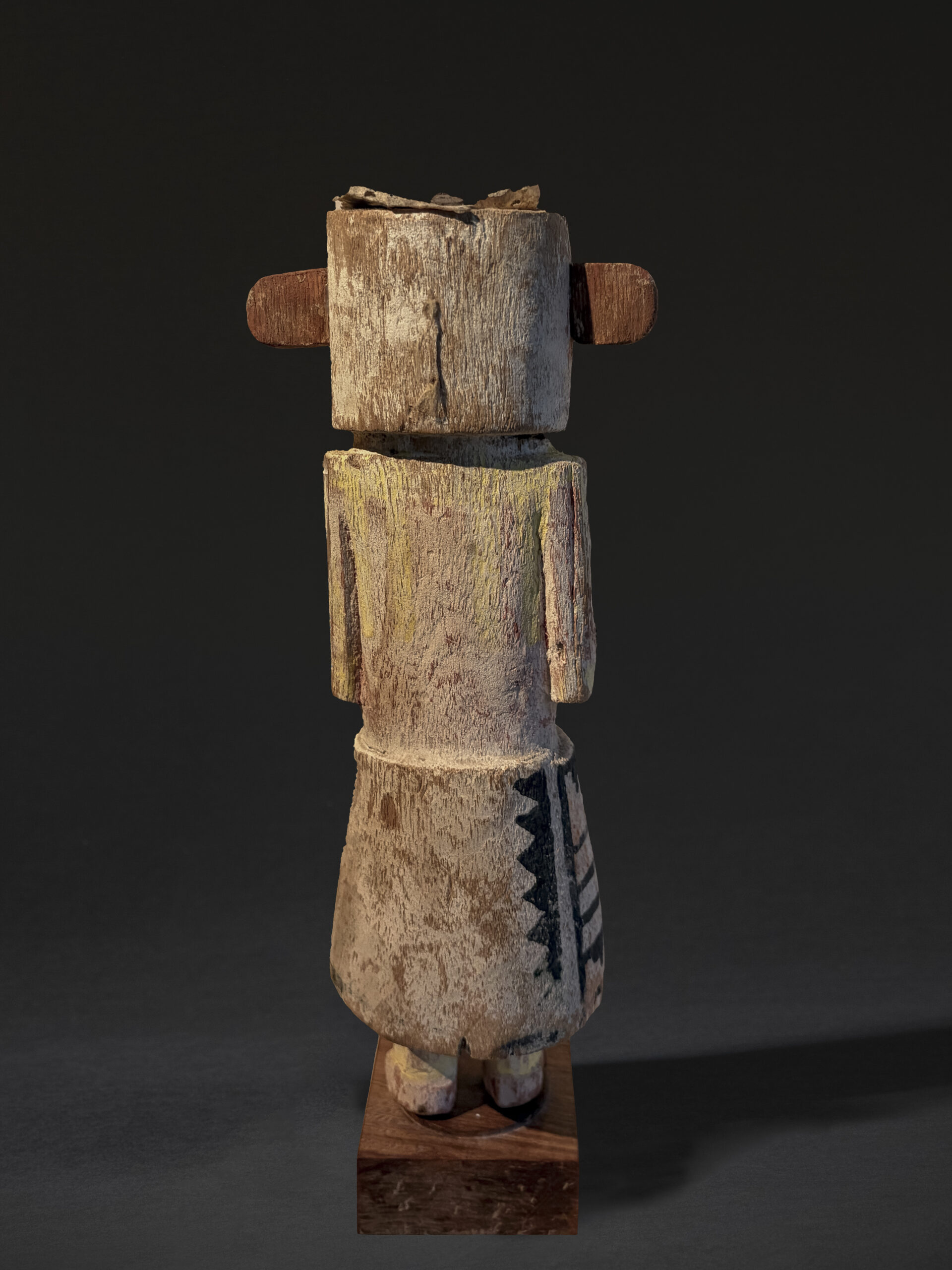
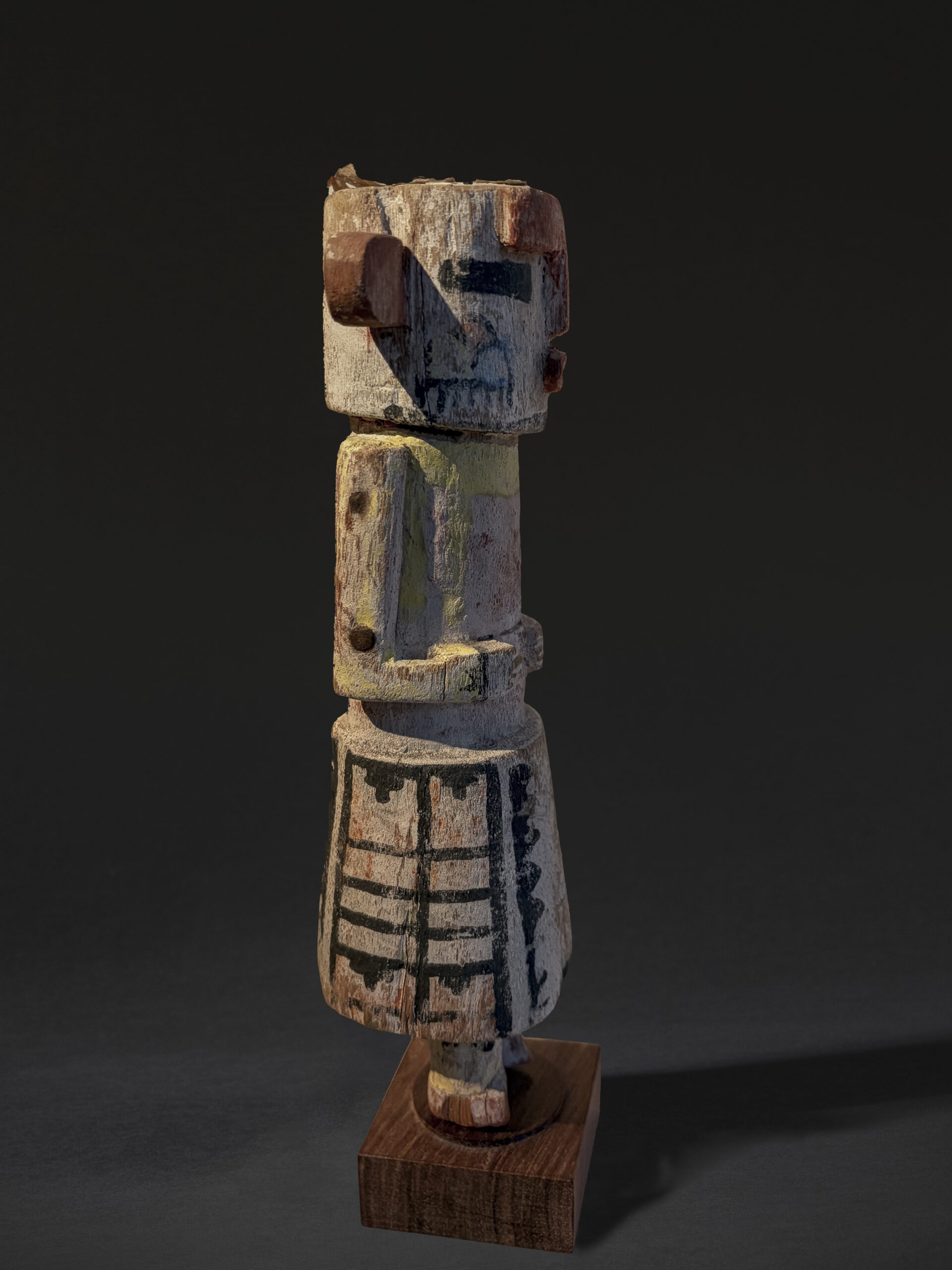
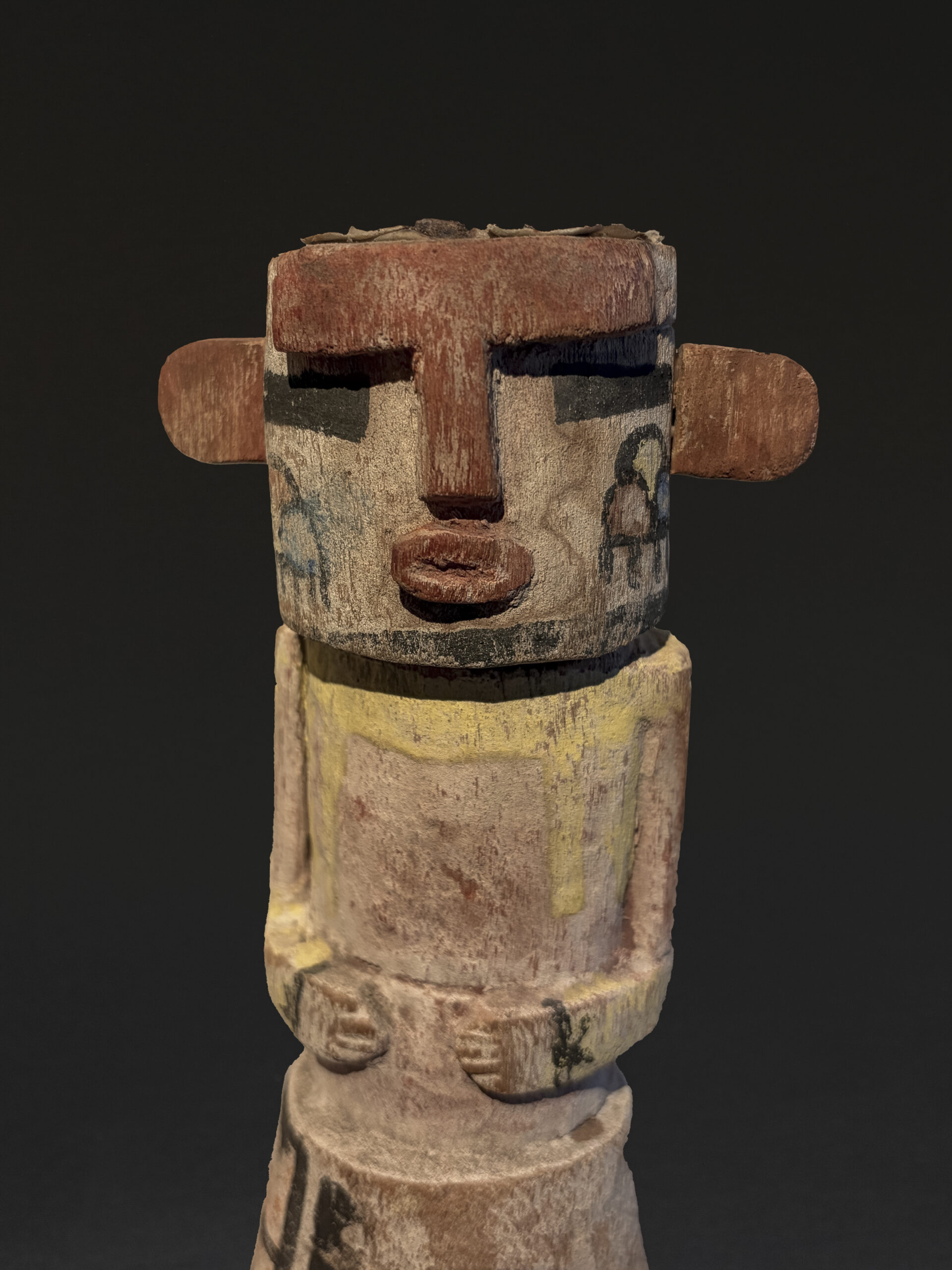
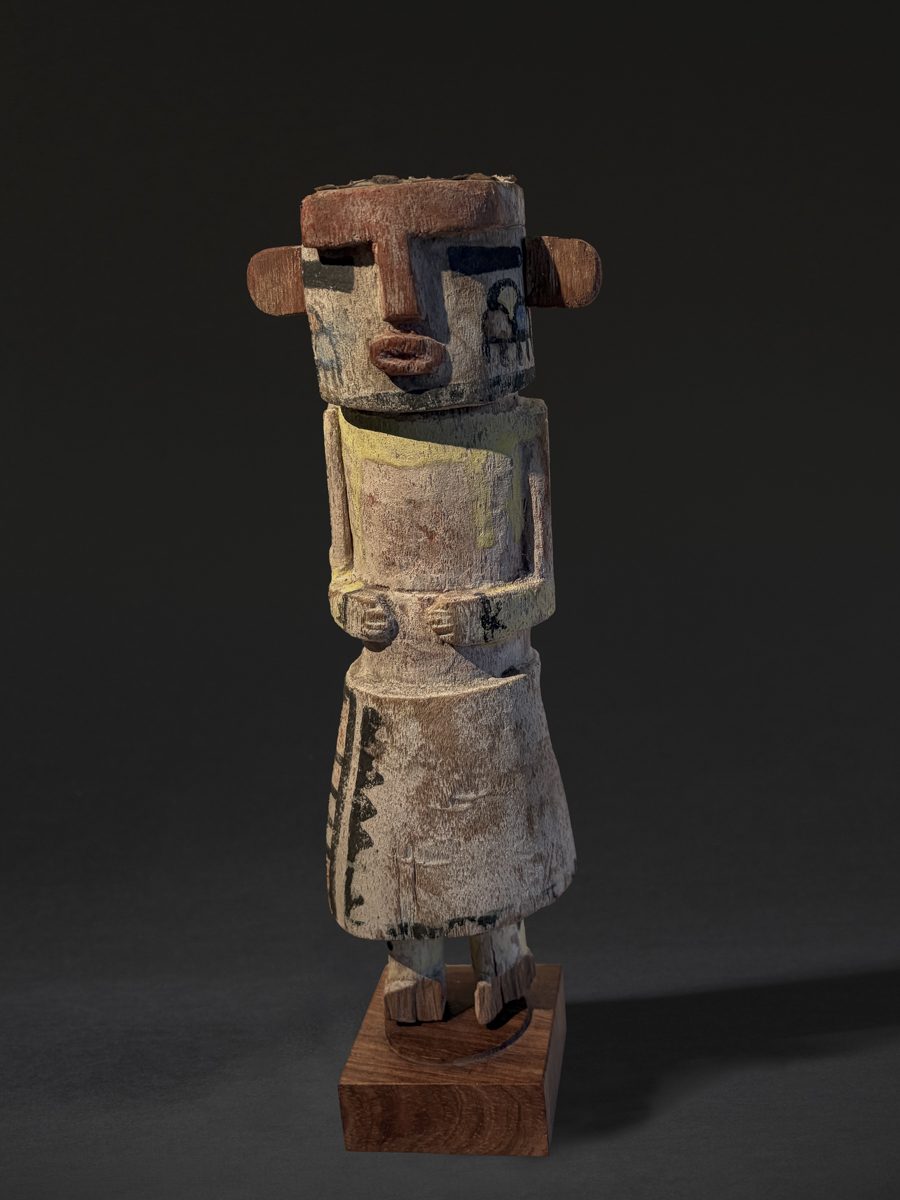
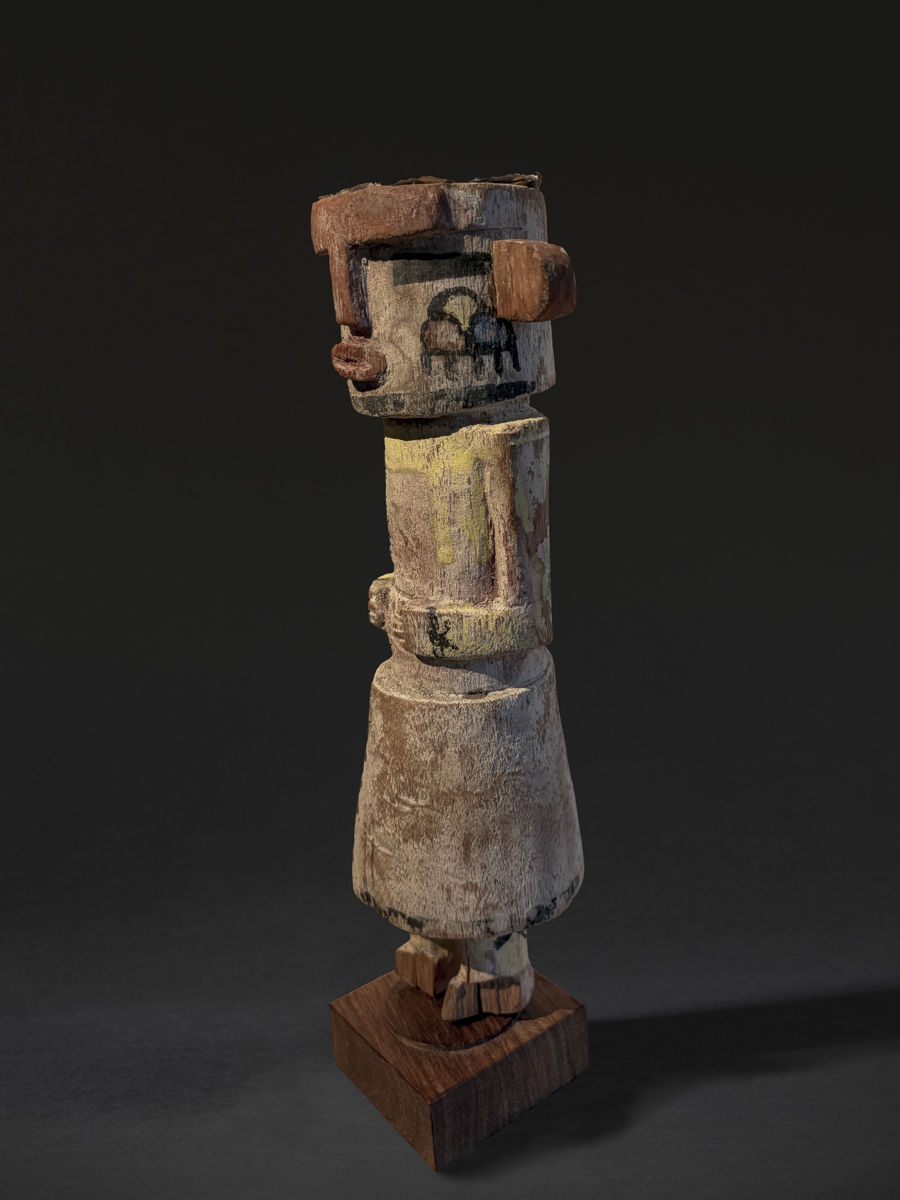
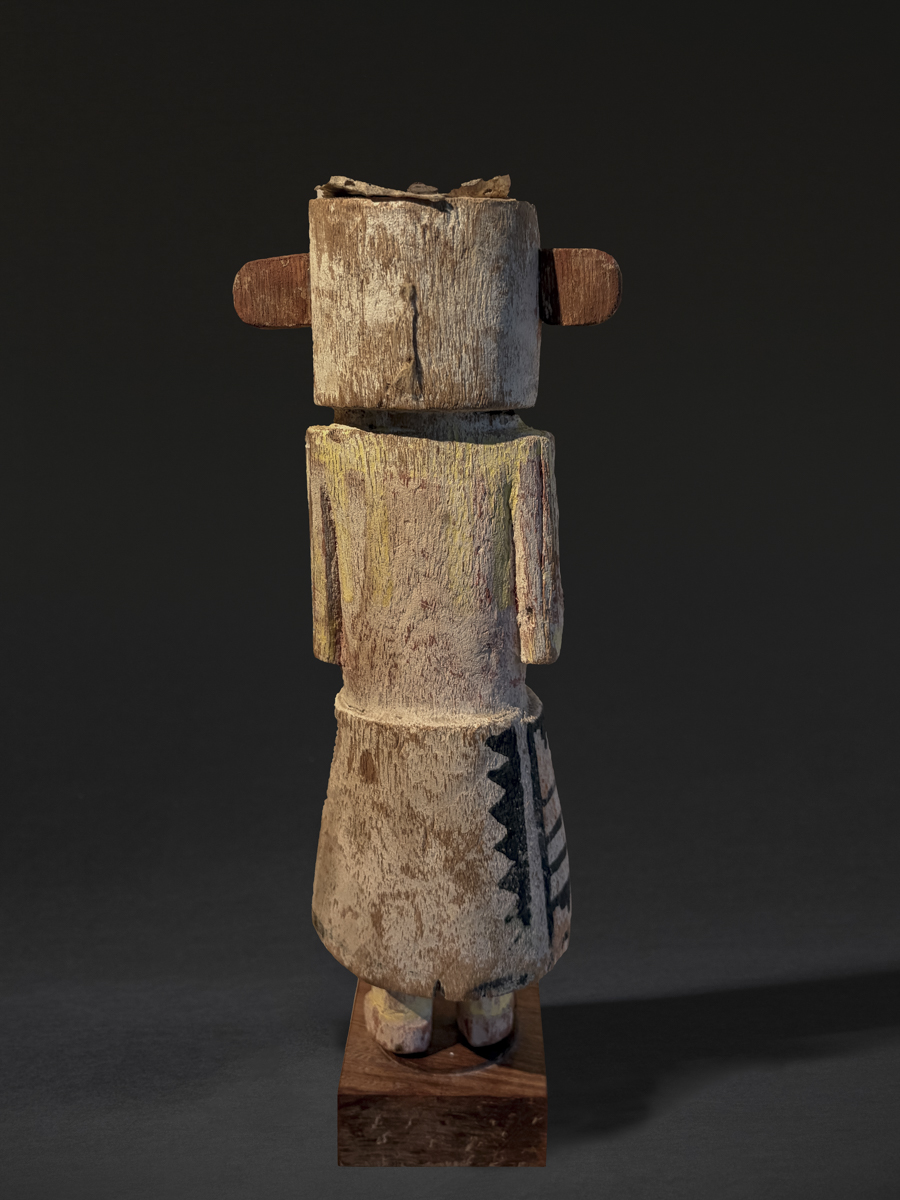
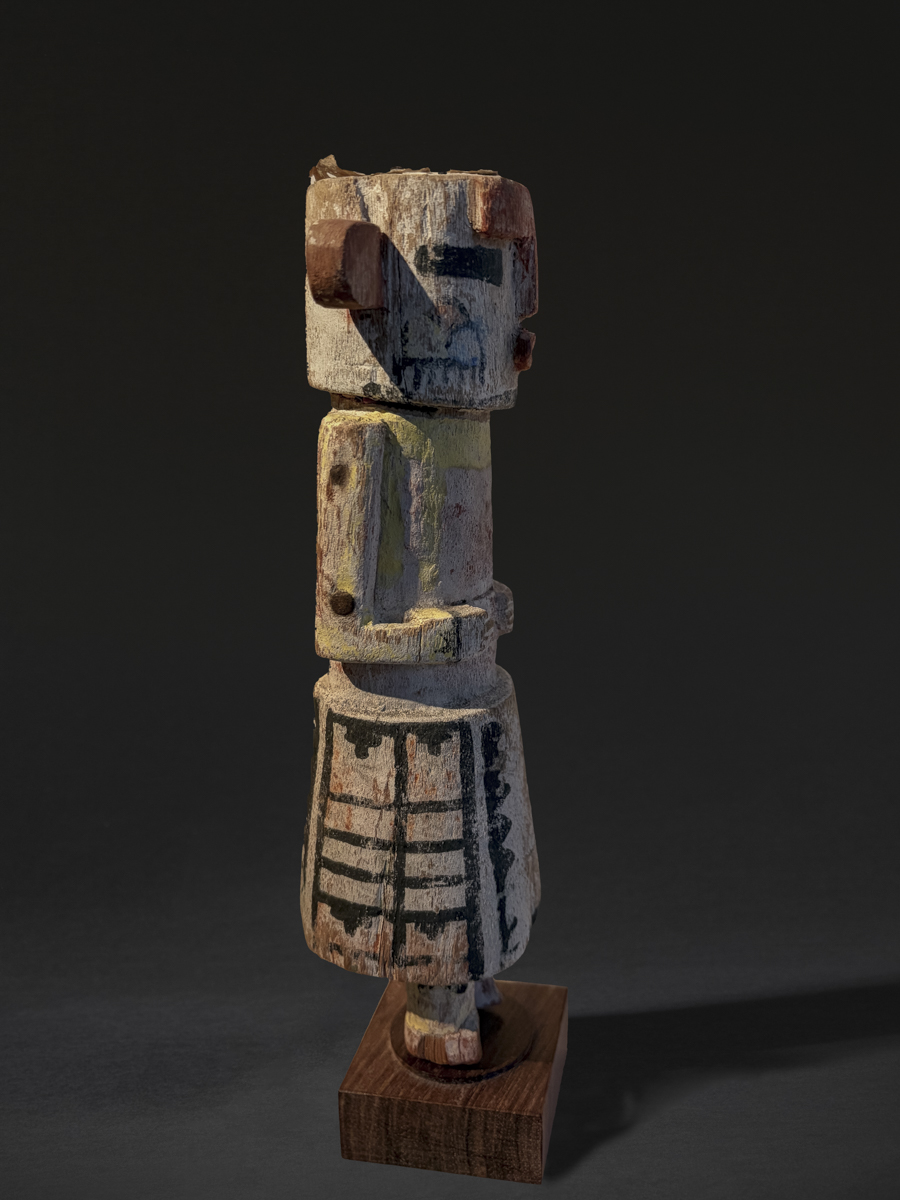
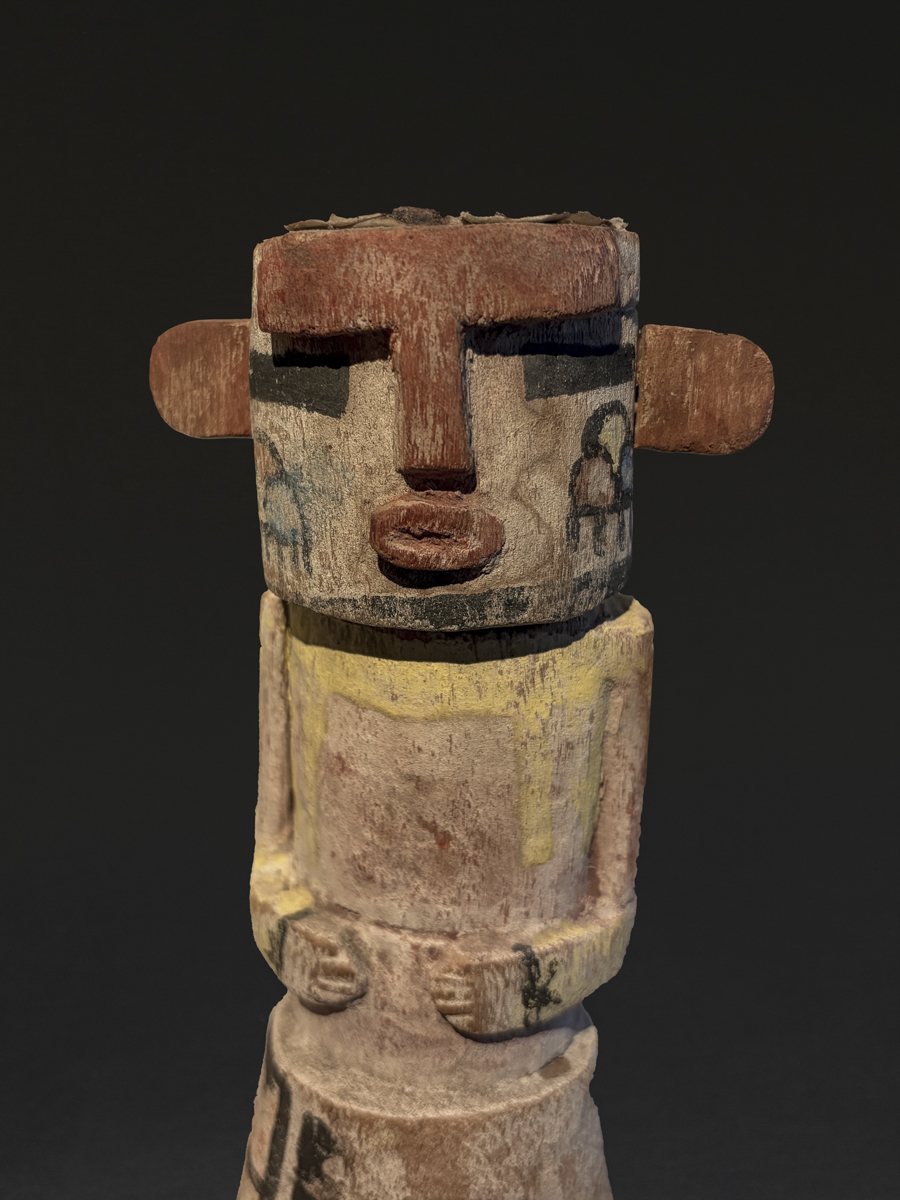
Heheya
Hopi
Arizona, USA

Circa 1900-1910
Carved wood (cottonwood) and pigments
Height: 20.5 cm – 8 in.

Provenance
Collection Jacqueline Kaplan, Los Angeles
Collection Monique Chambon, France, acquired from the above in 1981

Heheya Katsina doll 20.5 cm / Galerie Flak Price: on request
Katsina dolls (or Katsinam) represent spirits or gods from the pantheon of the Pueblo peoples in the American Southwest. Given to children, Katsina dolls constituted a pedagogical tool allowing them to familiarize themselves with the spiritual world and perpetuating knowledge of the founding myths on which their society was based.

This Katsina doll, known by the Hopi name Heheya, belongs to the group of Katsinam associated with the Harvest. This spirit once danced on each of the three mesas of the Hopi land.

Various Southwestern myths (Hopi and Zuni) refer to Heheya. According to one of them, as the Heheya Katsinam were on their way to help humans with the harvest, one of them lost his way and ended up in a cave. Feeling alone and abandoned, he began to weep. Since that day, the face of Heheya has always been shown covered with tears or, as in this example, adorned with rain clouds.

In other versions, Heheya weeps because, at a certain time, humans stopped calling upon him during the Katsina dances—hence his sorrow. The tears of Heheya, symbolizing life-giving rain, remind people of the importance of celebrating the Katsinam so that they never allow these spirits to fade into oblivion.

Video

Explore the entire collection
Preview
Preview | Arizona
Preview | Arizona
Preview | Arizona
Preview | Arizona
Preview | Arizona
Preview | Arizona
Preview | Arizona
Preview | Arizona
Preview | Arizona
Preview | Arizona
Preview | Arizona
Preview | Arizona
Kachina Collection | Arizona
Preview | Arizona
Preview | Arizona
Kachina Collection | Arizona
North America | Arizona
Discover our collections
CoLLECTIoNS

Katsina doll

Kachina Collection | Arizona

Katsina doll

Arizona

Dress Katsina Doll
Koroasta
Hopi
Arizona, USA

Circa 1890 – 1900
Carved wood (cottonwood) and natural pigments
Height: 31 cm – 12 ¼ in.

Provenance
Collection Joseph Jacinto Mora (1876-1947), Monterey, acquired during his stay in the Hopi village of Oraibi between 1904 and 1906
Collection Jo N. Mora Jr, Monterey, by descent
Collection George Terasaki (1931 – 2010), New York acquired from the above in March 1972
Sotheby’s New York, « Sculpture from the collection of George Terasaki », 19 Nov. 2019, lot 35
Private collection, California, acquired at the above sale

Publication
« Kachina: George Terasaki Collection », Alexandra Pascassio & George Terasaki, Paris, 2008, page 38
« Classic Hopi and Zuni kachina figures » Barton Wright, Andrea Portago, Museum of New Mexico Press, Santa Fe, 2006, pl. 72 p. 140

Jo Mora Koroasta Katsina doll 31 cm / Galerie Flak Price: on request
An exceptional and graceful Katsina Doll with a distinguished historical provenance.

Katsina dolls (or Katsinam) represent spirits or gods from the pantheon of the Pueblo peoples in the American Southwest. Given to children, Katsina dolls constituted a teaching tool allowing them to familiarize themselves with the spiritual world and perpetuating knowledge of the founding myths on which their society was based.

This Katsina doll is known as Koroasta, Korosoto, or Kwasaitaka, and is often referred to as the Dress Katsina doll. Among the Hopi, it corresponds to the Third Mesa sculptural form of the Zuni Koroasta (or Korosta) Katsina. The Hopi sometimes call it the Ota Katsina, named after the opening words of its song. The designation “Dress Katsina doll” derives from the fact that, although the Katsina spirit itself is considered male, it appears ceremonially dressed in a woman’s garment, typically without a belt.
One of the most distinctive features of this Katsina doll is the beak or nose, which in some examples is formed from small cornhusk packets and in others—such as the present example—is rendered as a carved beak (a later addition). Painted lines encircling the face are understood to evoke rainbow colors. In ceremonial performances, the Koroasta Katsina traditionally carries a digging stick, as well as a bag of seeds distributed to spectators. These seeds are regarded as auspicious signs of forthcoming abundant harvests, and recipients are eager to plant them.
Closely associated with the growth of corn, the Koroasta Katsina enjoyed great popularity among both the Hopi and the Zuni. Hopi Koroasta dancers perform during the Powamu ceremony on the Third Mesa.

In terms of provenance, Joseph Jacinto Mora, known as “Jo Mora,” was an artist, illustrator, photographer, sculptor, and author, born in 1876 in Montevideo, Uruguay. In the early years of the 20th century, Jo Mora traveled through California, then Arizona and New Mexico. Between 1904 and 1906, he lived among the Hopi near the village of Oraibi. He learned the language, shared their daily life, and attended ceremonies. He was granted rare permission to document a world that was then largely closed to outside observers. The body of photographs, watercolors, sketches, and written accounts that resulted from this experience—particularly those devoted to Hopi ceremonies and Katsina dances—remains a key reference to this day.
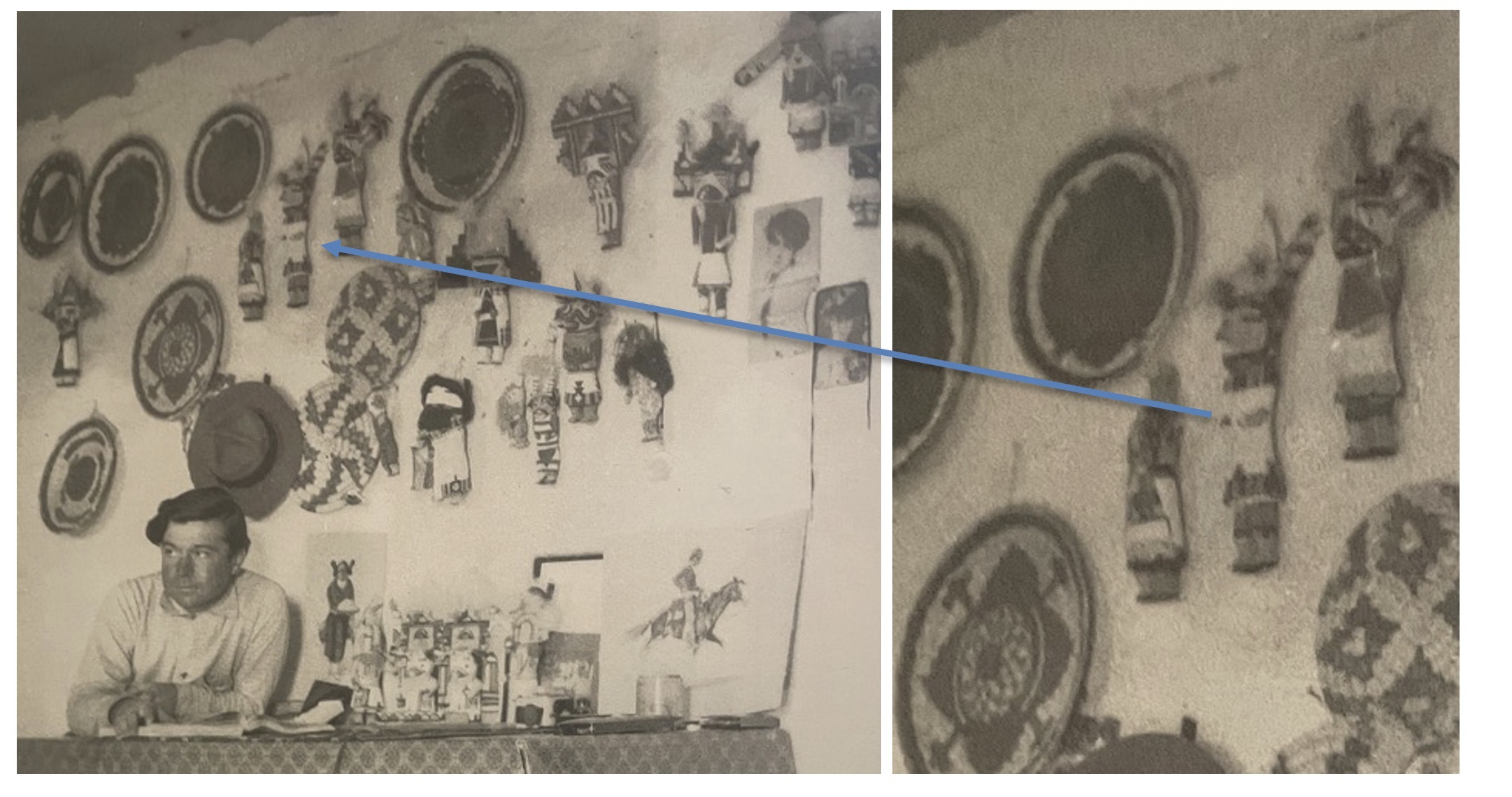
A photograph in the archives of the Northern Arizona University, NAU.PH.86.1.414, shows that this Katsina figure was already part of the collection of Joseph Jacinto Mora as early as 1906.
Passed down by descent to his son, Jo N. Mora Jr., this sculpture was acquired in March 1972 by the legendary dealer, connoisseur, and photographer George Terasaki (1931–2010). Terasaki assembled a collection worthy of the great ethnographic museums, and his encyclopedic knowledge made him a central figure in the field of indigenous arts and especially in the arts of North America. In November 2019, Sotheby’s New York dispersed the collection of George Terasaki.

Documentation

Jo Mora Oraibi 1906

“Portrait of Jo Mora with his collection of Katsina dolls, Oraibi circa 1906”
The Koroasta Katsina doll can be seen in the upper left corner (blue arrow)
Northern Arizona University, Cline Library (Jo Mora Collection), NAU.PH.86.1.414

Video

Explore the entire collection
Kachina Collection
North America | Arizona
Kachina Collection | Arizona
North America | Arizona
Kachina Archives | Arizona
Discover our collections
CoLLECTIoNS

Katsina Doll

Kachina Collection | Arizona

Katsina Doll

Arizona

Dress Katsina Doll
Koroasta
Hopi
Arizona, USA

Circa 1880 – 1890
Carved wood (cottonwood) and pigments
Height: 26 cm – 10 ¼ in.

Provenance
Collection Fred Harvey (1835-1901)
The Fred Harvey Company, USA
Collection Jean-Paul Morin, France
Sotheby’s Paris, 14 Oct. 2020, lot 95
Private collection, California, acquired at the above sale

Fred Harvey Koroasta Kastina doll 26 cm / Galerie Flak Price: on request
A powerful and archaic Katsina Doll with a prestigious provenance…

Katsina dolls (or Katsinam) represent spirits or gods from the pantheon of the Pueblo peoples in the American Southwest. Given to children, Katsina dolls constituted a teaching tool allowing them to familiarize themselves with the spiritual world and perpetuating knowledge of the founding myths on which their society was based.

This Katsina doll is known as Koroasta, Korosoto, or Kwasaitaka, and is often referred to as the Dress Katsina doll. Among the Hopi, it corresponds to the Third Mesa sculptural form of the Zuni Koroasta (or Korosta) Katsina. The Hopi sometimes call it the Ota Katsina, named after the opening words of its song. The designation “Dress Katsina doll” derives from the fact that, although the Katsina spirit itself is considered male, it appears ceremonially dressed in a woman’s garment, typically without a belt.
One of the most distinctive features of this Katsina doll is the beak or nose, which in some examples is formed from small cornhusk packets and in others—such as the present example—is rendered as a carved beak that opens in three parts.
Painted lines encircling the face are understood to evoke rainbow colors. In ceremonial performances, the Koroasta Katsina traditionally carries a digging stick, as well as a bag of seeds distributed to spectators. These seeds are regarded as auspicious signs of forthcoming abundant harvests, and recipients are eager to plant them.
Closely associated with the growth of corn, the Koroasta Katsina enjoyed great popularity among both the Hopi and the Zuni. Hopi Koroasta dancers perform during the Powamu ceremony on the Third Mesa.

In terms of provenance, Fred Harvey (1835–1901) was an English‑born American entrepreneur who built a chain of restaurants, hotels and souvenir shops along the Atchison, Topeka & Santa Fe Railway, creating the famous Harvey Houses and the “Harvey Girls” service corps.
In the early 20th century, the Fred Harvey Company became one of the most influential institutional collectors and distributors of Native American art through its Indian Department, acquiring pottery, basketry, textiles, beadwork and kachina dolls that were sold to major private collectors as well as to museums such as the Smithsonian, the American Museum of Natural History, the Field Museum and the Heard Museum.
By commissioning jewelry and other objects, staging craft demonstrations in places like the Alvarado Hotel and Hopi House, and using Native imagery in architecture and marketing, the company both helped to preserve and popularize Southwestern Native arts while also shaping—and commercializing—how tourists perceived Indigenous cultures.

Video

Explore the entire collection
Kachina Collection
North America | Arizona
Kachina Collection | Arizona
North America | Arizona
Kachina Archives | Arizona
Discover our collections
CoLLECTIoNS

Katsina doll

Kachina Collection | Arizona

Katsina doll

Arizona

The Black Warrior Katsina Doll
Tsakwaina
Hopi
Arizona, USA

Circa 1880 – 1890
Carved wood and pigments
Height: 18 cm – 7 in.

Provenance
Collection Max Ernst & Dorothea Tanning, Sedona
Collection Marcel Duchamp & Teeny Matisse, New York
Collection Rudi Blesh, New York
By family descent
Christie’s New York, 23 June 2004, lot 44
Collection Dennis & Janice Lyon, Arizona
Morning Star Gallery, Santa Fe, 2007
Collection Ralph T. Coe (1929-2010), Santa Fe
The Ralph T. Coe Center for the Arts, Santa Fe
Sold by the Ralph T. Coe Center in 2025 to support the museum’s philanthropic initiatives

Publication
« Hopi Katsina, 1600 artists biographies »,
Gregory Schaaf, 2008, p. 10

Tsakwaina Katsina doll Max Ernst 18 cm / Galerie Flak Price: on request
An Archaic Katsina Doll of Remarkable Surrealist Provenance

Katsina dolls (or katsinam) represent spirits or gods from the pantheon of the Pueblo peoples in the American Southwest. Given to children, Katsina dolls constituted a teaching tool allowing them to familiarize themselves with the spiritual world and perpetuating knowledge of the founding myths on which their society was based.

Tsakwaina (or Chakwaina), the Black Warrior Katsina Spirit is sometimes referred to as Esteban the Moor by the Hopi and their Pueblo neighbors. This nickname stems from a historical event that allegedly took place during the Spanish Conquista in the 1530s, at the onset of the search for the Seven Cities of Cibola, the legendary "Eldorado."
Esteban, a Moorish slave, was sent as a scout for the Spanish army on a mission to prepare for the arrival of troops and ensure a steady supply of food and shelter.
However, Zuni oral history recounts a different story. According to this version, Esteban violated a sacred boundary by crossing a line of corn pollen at the entrance of the now-disappeared village of Hawikuh. As a result, Zuni warriors killed him. Nevertheless, they recognized in hindsight his bravery for daring to come alone and defy the entire village. To commemorate this event, the Zuni decided to include the figure of a Black-faced Warrior, known as Tsakwaina, in their Katsina pantheon. The Hopi later adopted this Katsina figure too. The red tongue sticking out of the mouth is said to represent Esteban's death at the hands of Zuni archers.

The provenance of this Katsina figure is remarkable in more than one respect, having passed during the 20th century into the hands of major figures in the art world, beginning with two legendary Surrealist couples.
Originally part of the collection of Max Ernst and his wife Dorothea Tanning, this statuette was presented by them to their friends Marcel Duchamp and Alexina (Teeny) Matisse.

Max Ernst (1891-1976) and Dorothea Tanning (1910-2012), as well as Marcel Duchamp (1887-1968) and Teeny Matisse (1898-1983), shared not only enduring partnerships but also profound friendships rooted in their dedication to the arts. Both couples were particularly drawn to the art and material culture of North America, collecting, studying, and engaging with it in ways that informed and enriched their own creative practices. Their relationships exemplify how shared artistic curiosity and admiration can foster both personal connection and intellectual exchange.

Video

Explore the entire collection
Kachina Collection
North America | Arizona
Kachina Collection | Arizona
North America | Arizona
Kachina Archives | Arizona
Discover our collections
CoLLECTIoNS

Katsina doll

Preview | Arizona

Katsina doll

Arizona

Long Hair Katsina Doll
Angak’tsina
Hopi
Arizona, USA

Circa 1890
Carved wood (cottonwood) and pigments
Height: 25.5 cm – 10 in.

Provenance
Collection Frank Hill, Santa Fe
Collection Gary Spratt, San Francisco Bay area

Angak Katsina doll 25.5 cm / Galerie Flak Price on request
Katsina dolls (or Katsinam) represent spirits or gods from the pantheon of the Pueblo peoples in the American Southwest. Given to children, Katsina dolls constituted a pedagogical tool allowing them to familiarize themselves with the spiritual world and perpetuating knowledge of the founding myths on which their society was based.

As Barton Wright noted in "Kachina Spirit" (2003), Angak'Tsina is one of the most widely distributed Katsinam. It is found at Zuni, Laguna, Acoma, Santa Ana, San Felipe, and Jemez pueblos. When this spirit comes, he brings a soft gentle rain that is good for the crops. His song is very melodic. His loose hair is perceived as representing falling rain.

The figure features an undercut kilt and characteristic proportions, with an emphasis on the large size of the head—clear signs of great archaicism—along with the refinement of the painted motifs, particularly around the belt.

Video

Explore the entire collection
Preview
Preview | Arizona
Preview | Arizona
Preview | Arizona
Preview | Arizona
Preview | Arizona
Preview | Arizona
Preview | Arizona
Preview | Arizona
Preview | Arizona
Preview | Arizona
Preview | Arizona
Preview | Arizona
Preview | Arizona
Kachina Collection | Arizona
Preview | Arizona
Kachina Collection | Arizona
North America | Arizona
Discover our collections
CoLLECTIoNS

Katsina doll

Kachina Collection | Arizona

Katsina doll

Arizona

Katsina
Carved by Hopi Chief Wilson Tawaquaptewa (1873-1960)
Hopi
Arizona, USA

Circa 1930
Carved wood (cottonwood) and pigments
Height: 17.5 cm – 6 ¾ in.

Provenance
Private collection, USA

Tawaquaptewa Long-eared Katsina doll 17.5 cm / Galerie Flak Price: on request
Katsina dolls (or katsinam) represent spirits or gods from the pantheon of the Pueblo peoples in the American Southwest. Given to children, katsina dolls constituted a pedagogical tool allowing them to familiarize themselves with the spiritual world and perpetuating knowledge of the founding myths on which their society was based.

This Katsina doll is the work of a Hopi master carver, Wilson Tawaquaptewa (1873-1960).
Oraibi chief W. Tawaquaptewa was both a prominent a spiritual and political Hopi leader; he is also celebrated as one of the greatest Katsina doll carvers.
A major exhibition of W. Tawaquaptewa's works was notably presented a few years ago at the Birmingham Museum of Art (Alabama, USA).
The color palette on this doll is typical of this artist's works.

For more information on this artist, please refer to the chapter “The Unique Katsinam of Wilson Tawaquaptewa” in the book "L'Appel des Kachinas - Katsina Calling", pages 60 to 72 (B. Walsh, J. Flak, 2024).

Video

Explore the entire collection
Kachina Collection
North America | Arizona
Kachina Collection | Arizona
North America | Arizona
Kachina Archives | Arizona
Discover our collections
CoLLECTIoNS

Katsina Doll

Kachina Collection | Arizona

Katsina Doll

Arizona

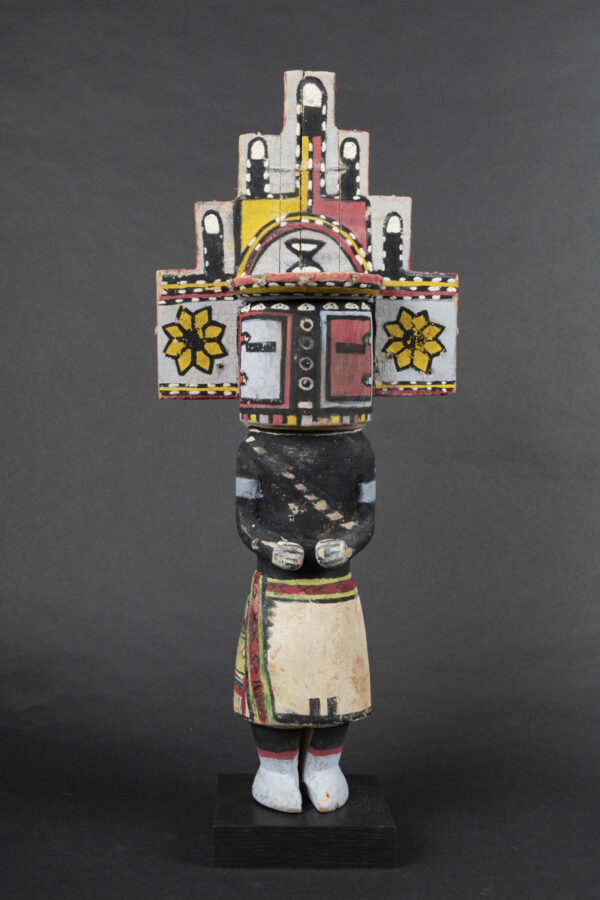
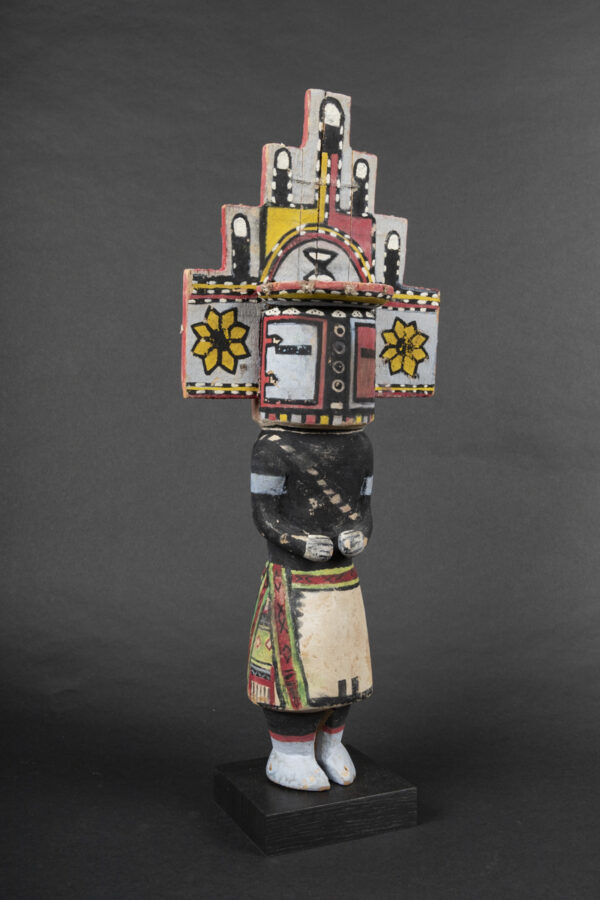
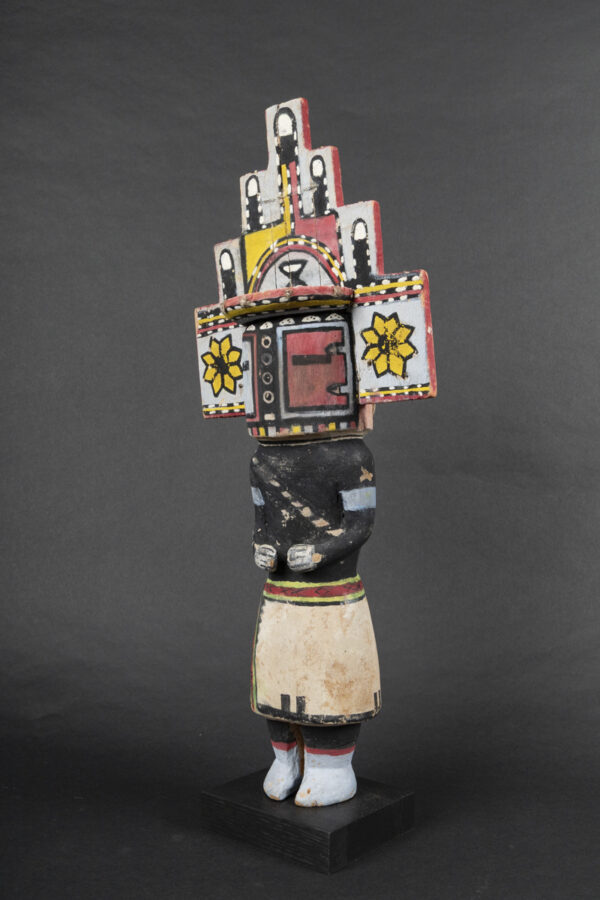
New Corn Katsina Doll
Hemis
Hopi
Arizona, USA

Circa 1930
Carved wood and pigments
Height: 49.5 cm – 19 ½ in.

Provenance
Toledo Museum of Natural History (inv. E376)
Heritage Auctions, Texas, 5 May 2012, lot 500024
Private collection, USA

Hemis Katsina Doll 49.5 cm Toledo Museum/ Galerie Flak Price: on request
Katsina dolls (or Katsinam) represent spirits or gods from the pantheon of the Pueblo peoples in the American Southwest. Given to children, kachina dolls constituted a teaching tool allowing them to familiarize themselves with the spiritual world and perpetuating knowledge of the founding myths on which their society was based.

This doll, adorned with a multitude of symbols related to moisture and agriculture, represents Hemis, the New Corn or Ripening Corn Katsina. Hemis is one of the most iconic Katsinam
in the Hopi pantheon. This spirit calls forth the rains that will nurture the growth of corn, the staple food for the Hopi people. Hemis derives its name from Jemez, neighbors of the
Hopi residing along the Rio Grande.
Hemis dancers are present at the opening of the Niman dances, the Home-Going Ceremony that marks the conclusion of the Katsina season. At the end of the summer, after Niman, the Katsinam depart from the mesas, leaving the Hopi people for six long months. Hemis is one of the most fitting Katsinam for this farewell ceremony, as his presence indicates that the corn harvest is assured for the coming season. Therefore, he can leave the village with the inhabitants feeling secure, knowing that their sustenance is guaranteed.

Video

Explore the entire collection
Kachina Collection
North America | Arizona
Kachina Collection | Arizona
North America | Arizona
Kachina Archives | Arizona
Discover our collections
CoLLECTIoNS

Katsina Doll

Kachina Collection | Arizona

Katsina Doll

Arizona

Crow Mother Katsina Doll
Angwunasomtaka
Hopi
Arizona, USA

Circa 1920
Carved wood (cottonwood) and pigments
Height: 18 cm – 7 in.

Provenance
Collection Alan Kessler, Santa Fe

Crow Mother Katsina doll 18 cm Kessler/ Galerie Flak Price: on request
Katsina dolls (or Katsinam) represent spirits or gods from the pantheon of the Pueblo peoples in the American Southwest. Given to children, kachina dolls constituted a teaching tool allowing them to familiarize themselves with the spiritual world and perpetuating knowledge of the founding myths on which their society was based.

This Katsina is named Angwusnasomtaka in the Hopi pantheon, which means "Crow Mother" or "The one with Crow Wings." On the First Mesa, she is known as Tumas.
She is considered the mother of all Katsinam. She appears on all three mesas, usually in connection with the initiation of the young Hopis. She is a Chief-Katsina and often leads the procession with a calm and imposing step. As she passes by the kivas, she calls various Katsinam to join the ceremony.

Video

Explore the entire collection
Kachina Collection
North America | Arizona
Kachina Collection | Arizona
North America | Arizona
Kachina Archives | Arizona
Discover our collections
CoLLECTIoNS

Katsina Doll

Kachina Collection | Arizona

Katsina Doll

Arizona

Antelope Katsina Doll (variant)
Chöp
Carved by Hopi Chief Wilson Tawaquaptewa (1873-1960)
Hopi
Arizona, USA

Circa 1930
Carved wood (cottonwood) and pigments
Height: 36 cm – 14 ¼ in.

Provenance
Collection Steve Nelson, California

Tawaquaptewa Antelope Katsina 36 cm / Galerie Flak Price: on request
Katsina dolls (or katsinam) represent spirits or gods from the pantheon of the Pueblo peoples in the American Southwest. Given to children, katsina dolls constituted a pedagogical tool allowing them to familiarize themselves with the spiritual world and perpetuating knowledge of the founding myths on which their society was based.

Chop Katsina danced to increase the numbers of game animals and bring rain, this Katsina is also said to enable the grass to grow and help cure spasms.
Chop dancers appeared in Mixed Dances (usully along with the Wolf Kachina/Kweo).

This Katsina doll is the work of a Hopi master carver, Wilson Tawaquaptewa (1873-1960).
Oraibi chief W. Tawaquaptewa was both a prominent a spiritual and political Hopi leader; he is also celebrated as one of the greatest Katsina doll carvers.
A major exhibition of W. Tawaquaptewa's works was notably presented a few years ago at the Birmingham Museum of Art (Alabama, USA).
The color palette on this doll is typical of this artist's works.

For more information on this artist, please refer to the chapter “The Unique Katsinam of Wilson Tawaquaptewa” in the book "L'Appel des Kachinas - Katsina Calling", pages 60 to 72 (B. Walsh, J. Flak, 2024).

Video

Explore the entire collection
Kachina Collection
North America | Arizona
Kachina Collection | Arizona
North America | Arizona
Kachina Archives | Arizona
Discover our collections
CoLLECTIoNS

Katsina Doll

Kachina Collection | Arizona

Katsina Doll

Arizona

Corn Dancer Katsina Doll
Ka’e
Hopi
Arizona, USA

Circa 1900-1920
Carved wood (cottonwood) and pigments
Height: 19 cm – 7 ½ in.

Provenance
Kania-Ferrin Gallery, Santa Fe
Private collection, USA

Publication
«Hopi Katsina, 1600 artists biographies»,
Gregory Schaaf, 2008, p. 14

Kae Katsina doll Kania Ferrin / Galerie Flak Price: on request
Katsina dolls (or Katsinam) represent spirits or gods from the pantheon of the Pueblo peoples in the American Southwest. Given to children, Katsina dolls constituted a teaching tool allowing them to familiarize themselves with the spiritual world and perpetuating knowledge of the founding myths on which their society was based.

A member of the Flora Katsinam (Kachina Tusak), Ka’e is one of the many Katsinam associated with maize. Ka’e is particularly cherished by the Hopi for her songs, choreography, and the vital role she played during her appearances. Present at almost every Katsina dance, she invoked the elements to ensure abundant corn harvests.
Plants hold fundamental importance for the Hopi, whose food resources are limited. Accordingly, many Katsinam in the pantheon reference vegetation, and particularly maize, which is the primary source of sustenance for Indigenous peoples of the American Southwest.
The doll presented here stands out for its exquisite color composition and the harmonious balance of its construction.

Video

Explore the entire collection
Kachina Collection
North America | Arizona
Kachina Collection | Arizona
North America | Arizona
Kachina Archives | Arizona
Discover our collections
CoLLECTIoNS
Newsletter

Subscribe to our newsletter