Africa | Nigeria
Yoruba Dance Wand
Nigeria
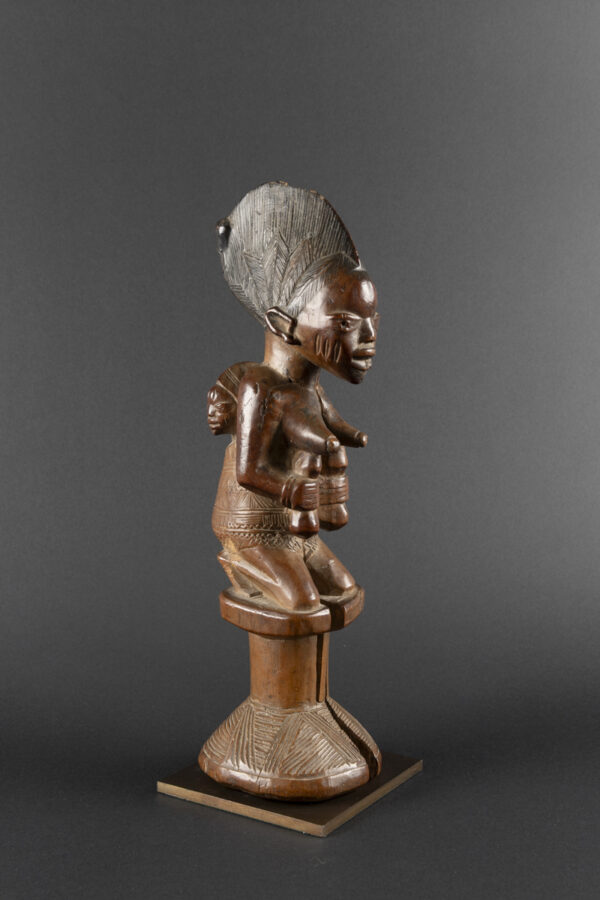
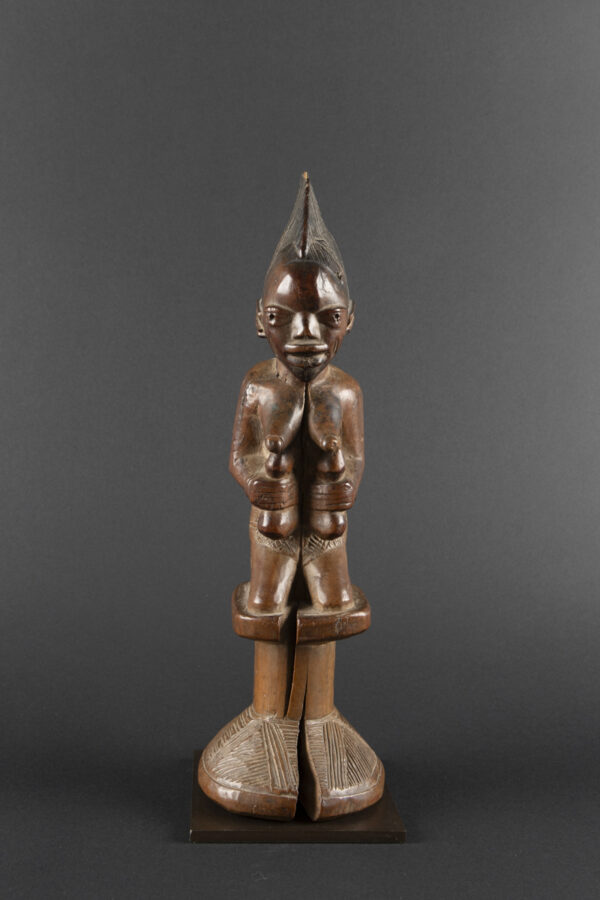
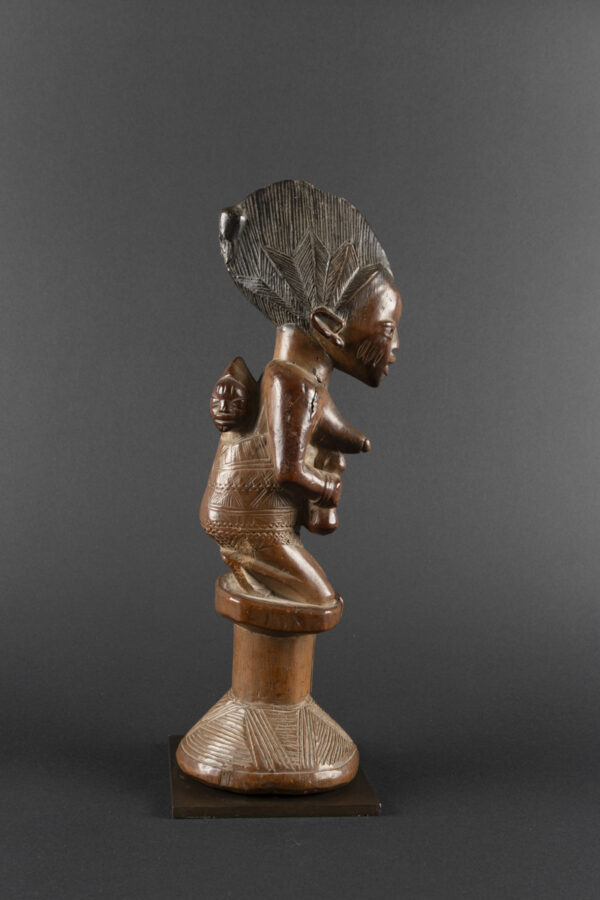
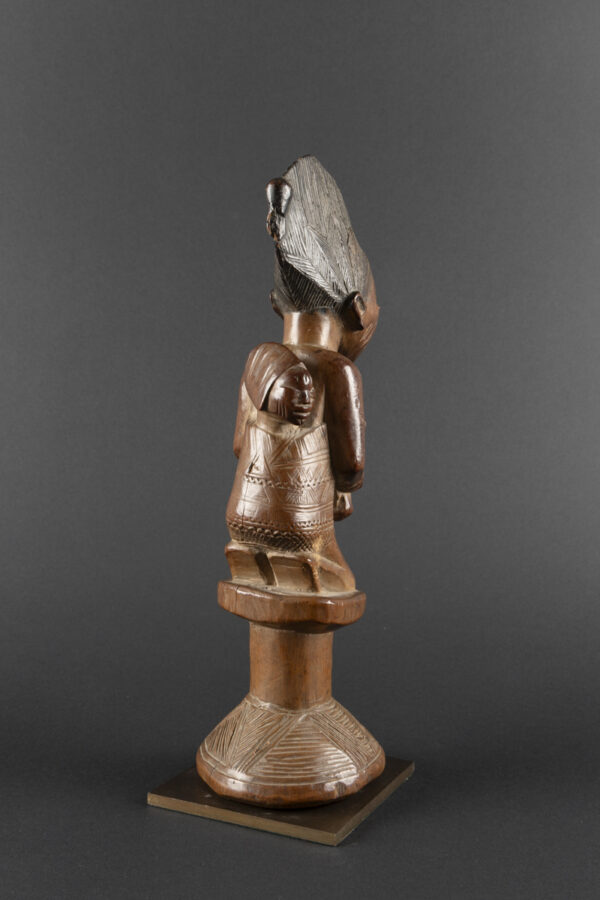
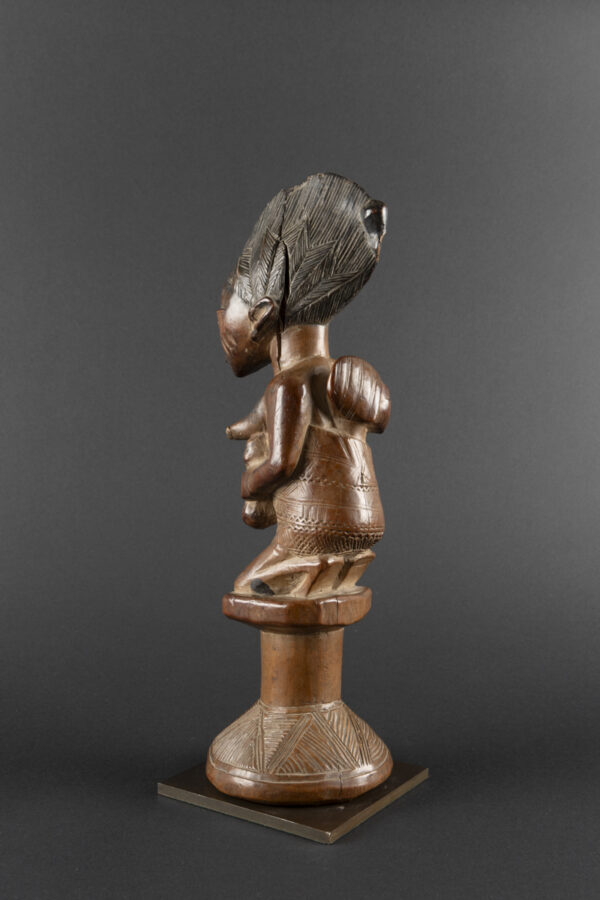
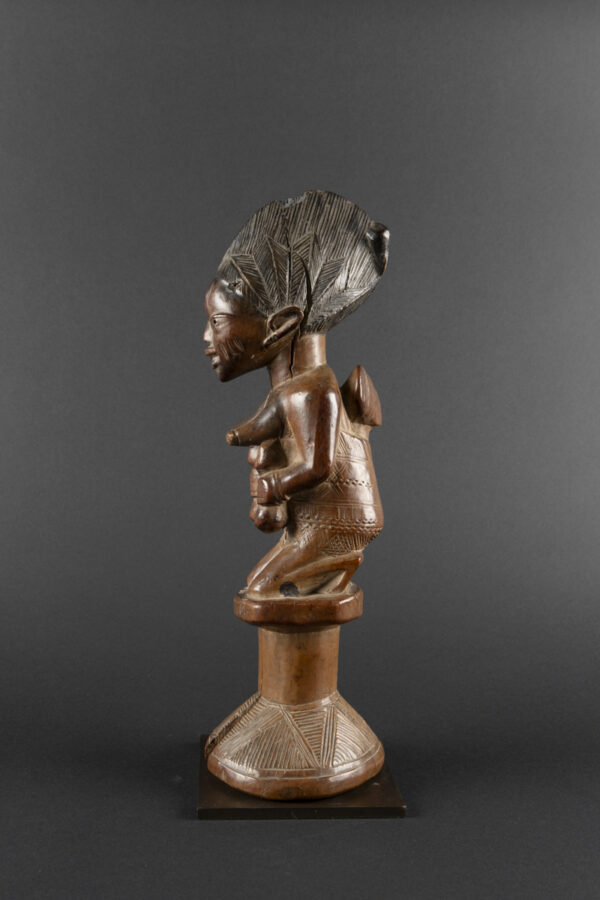
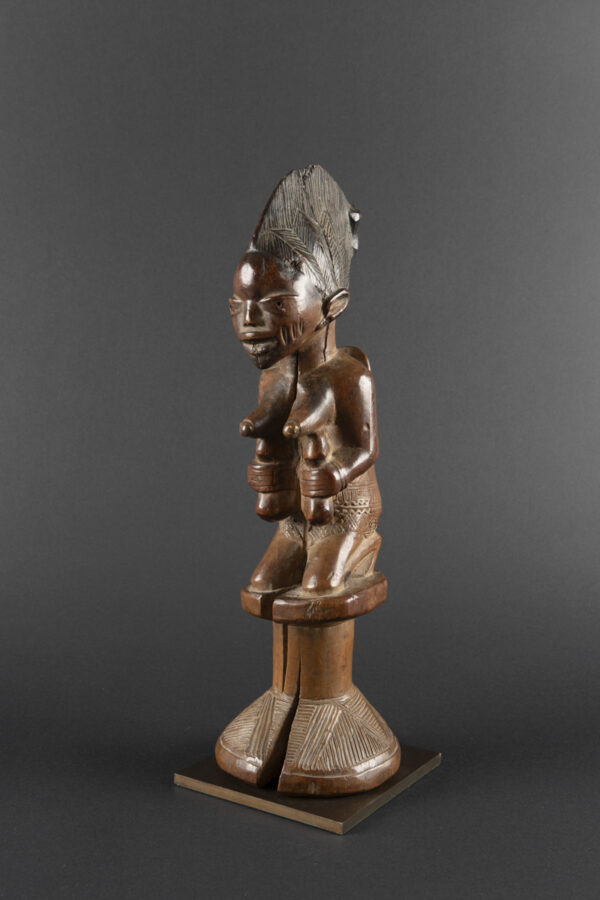
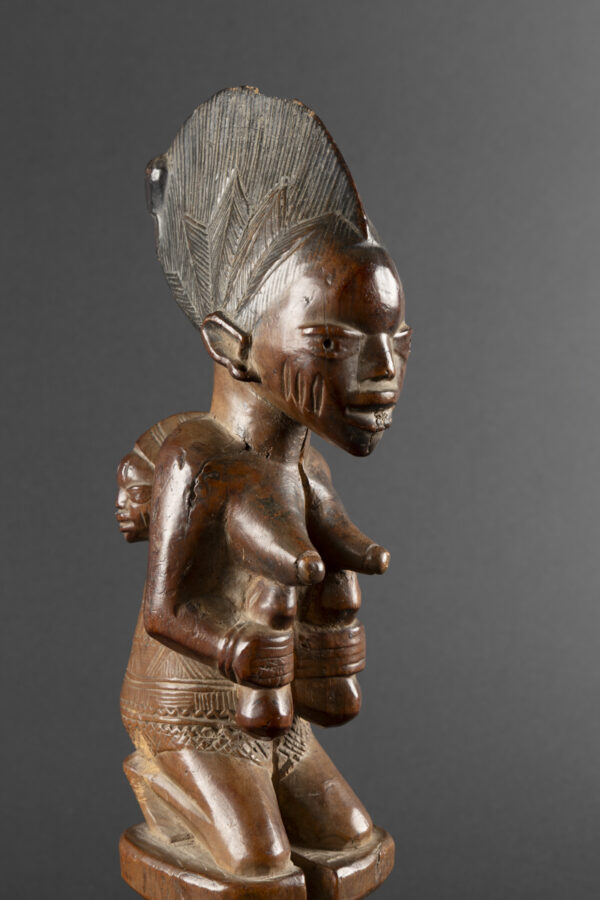
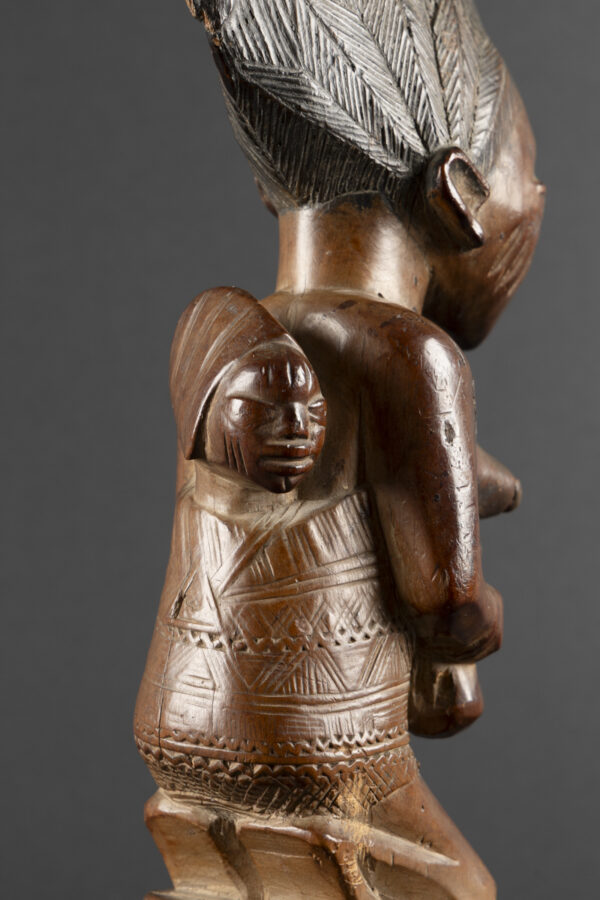
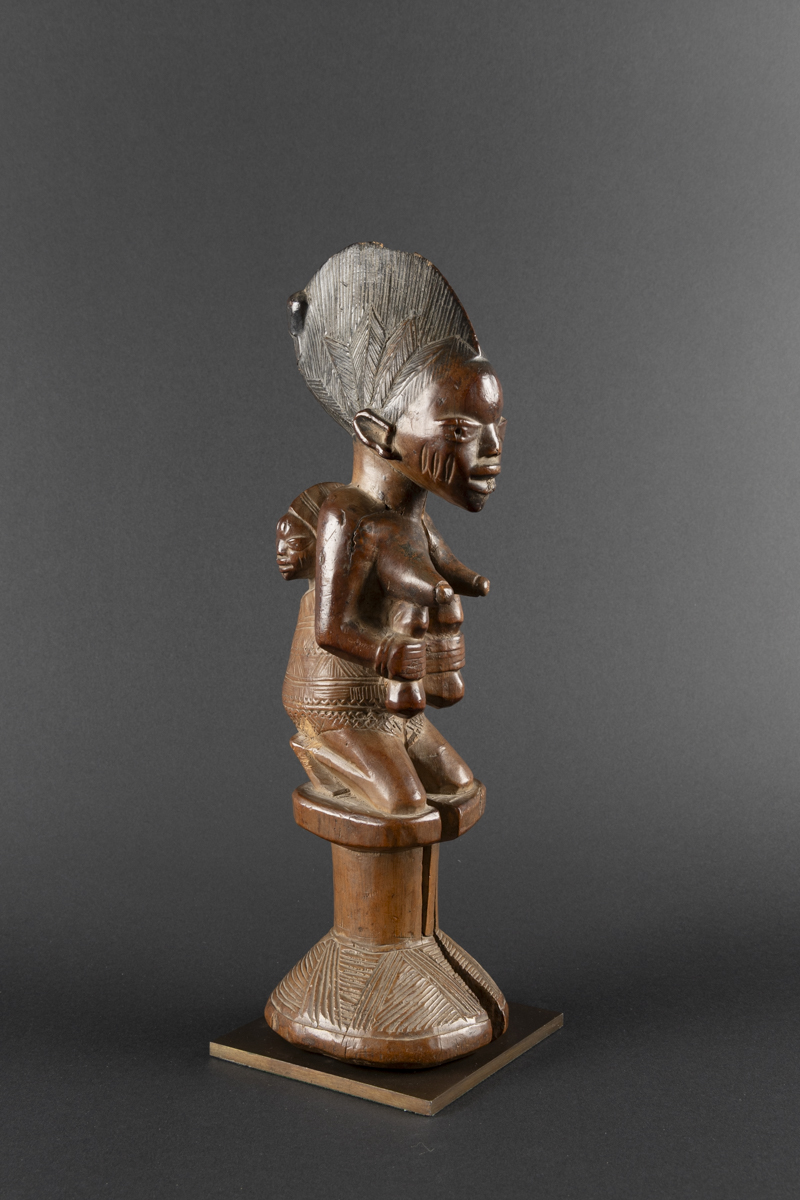
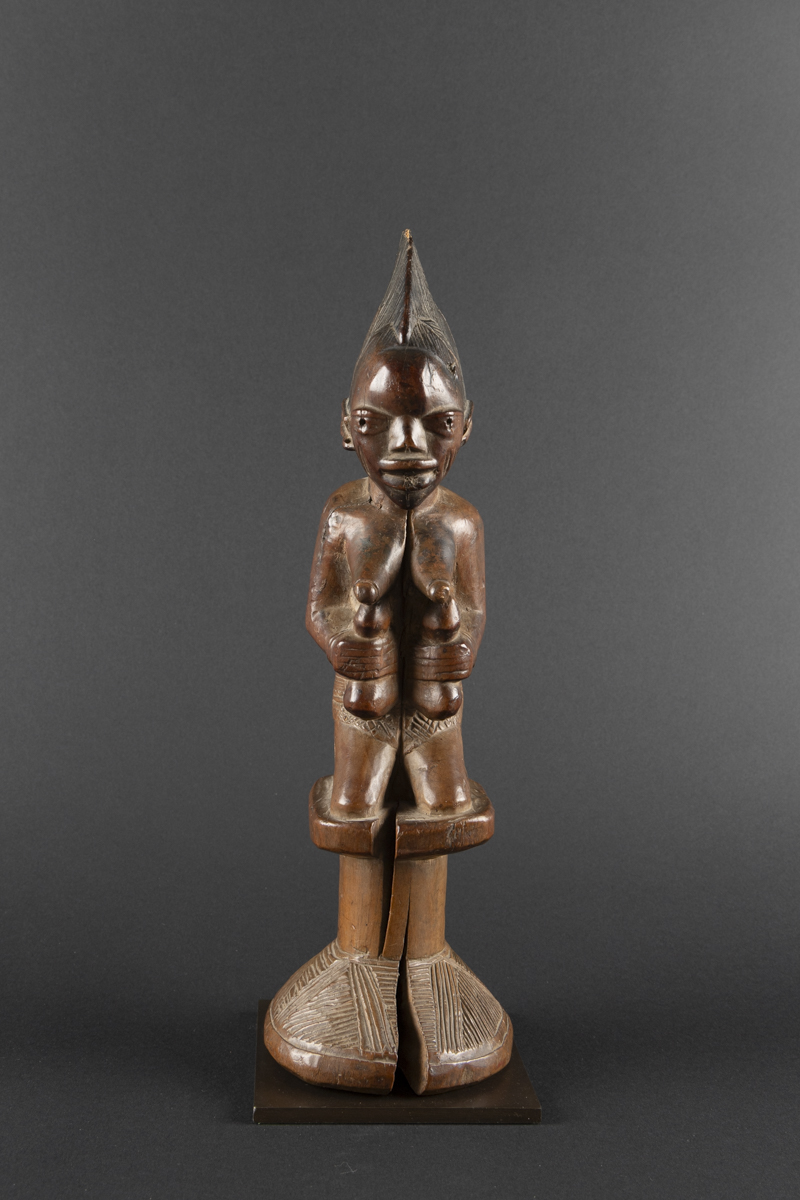
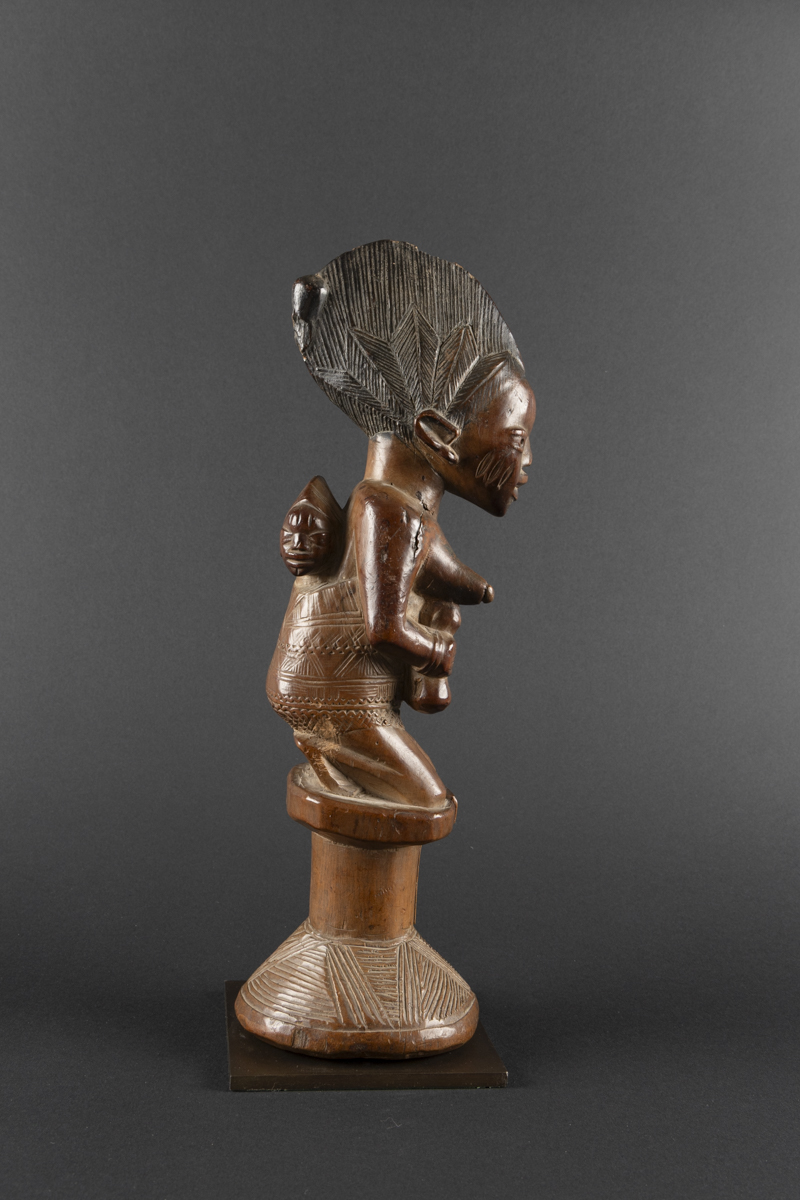
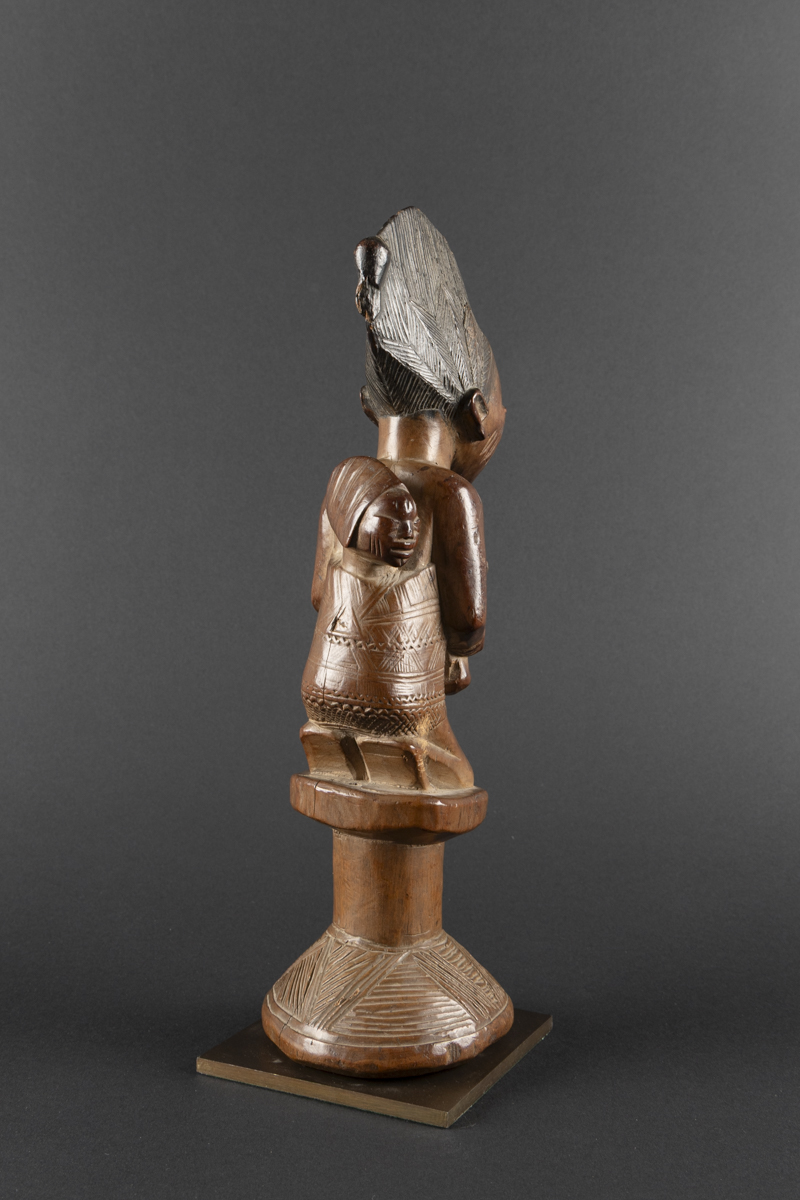
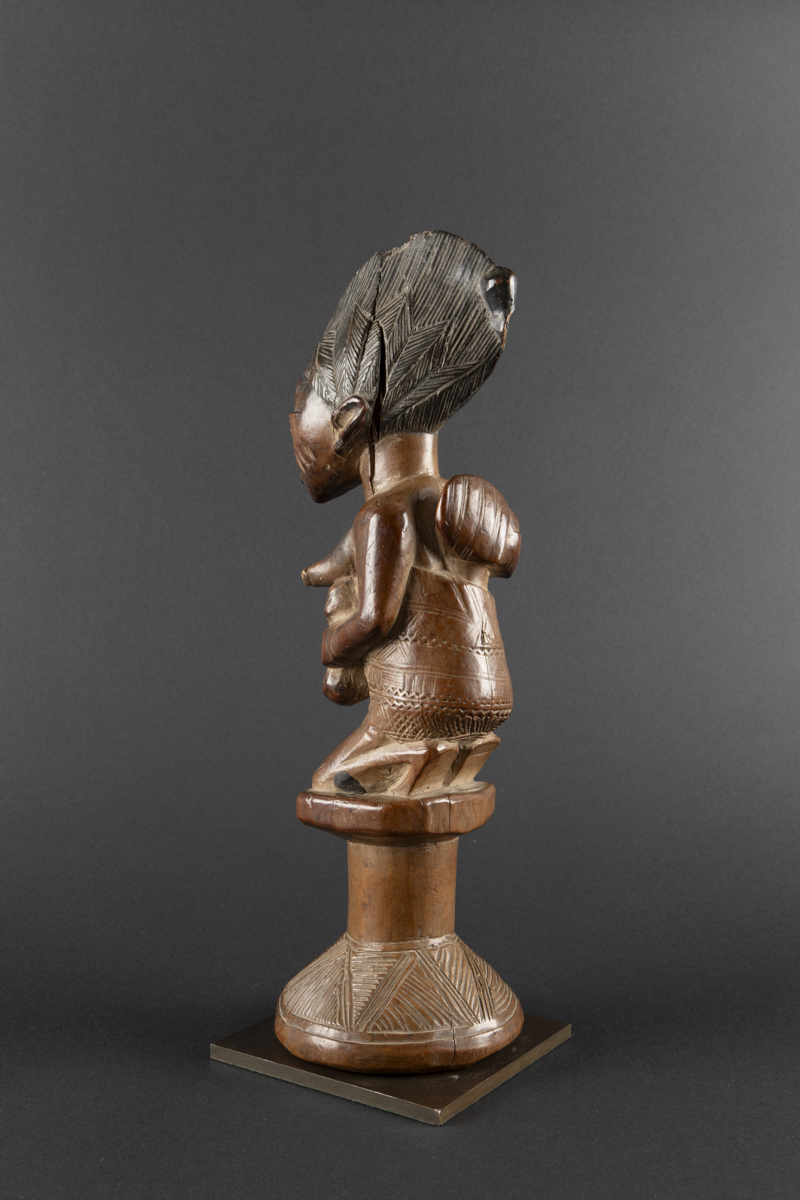
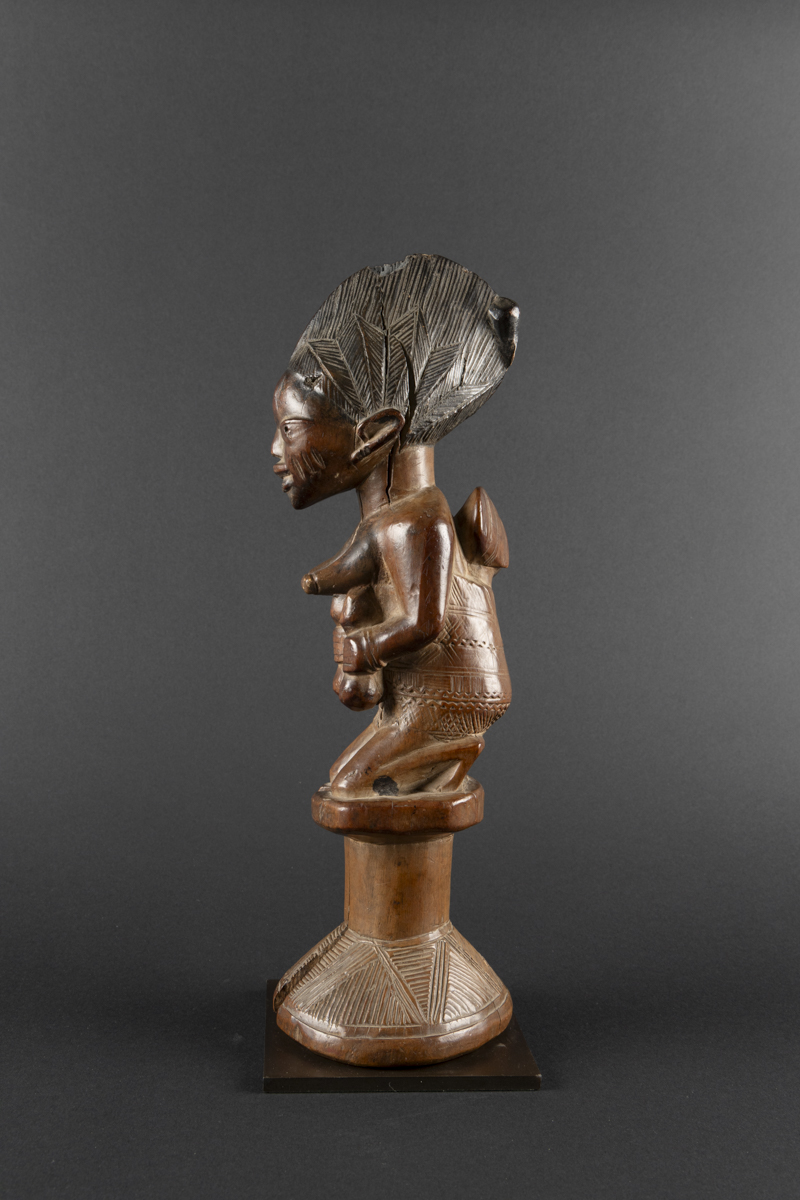
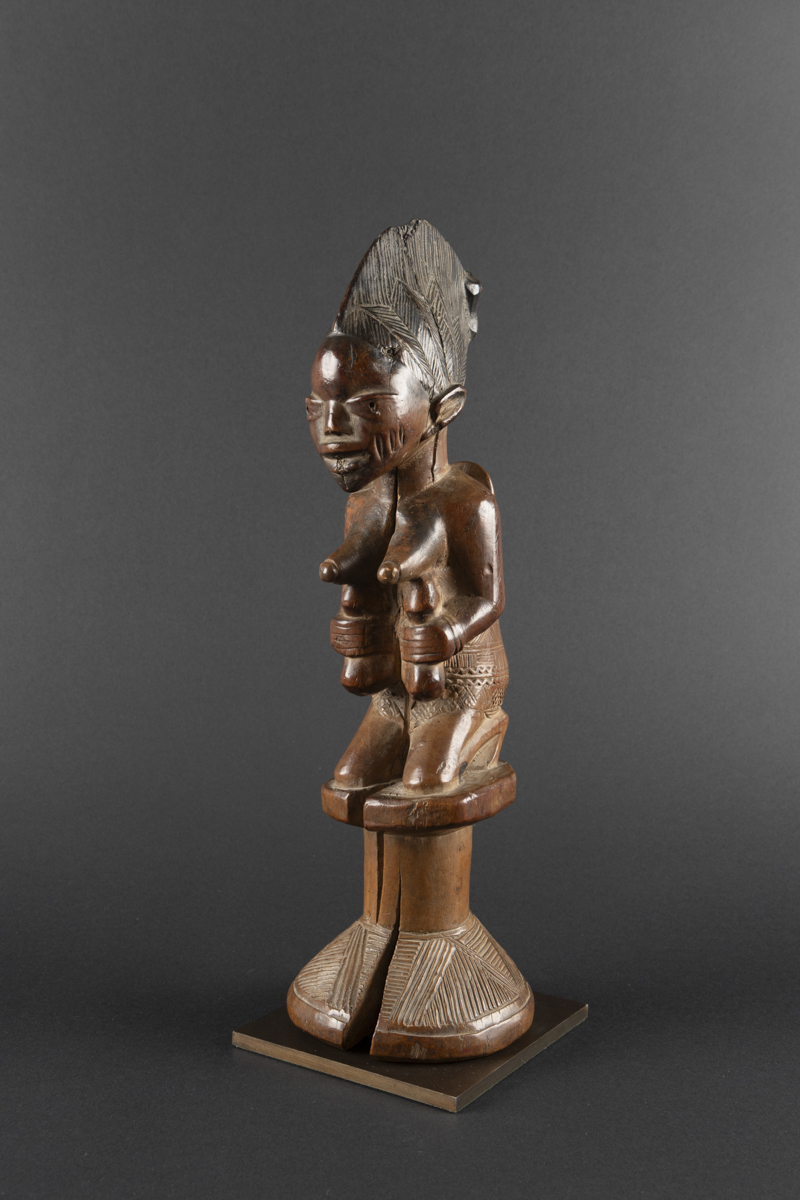
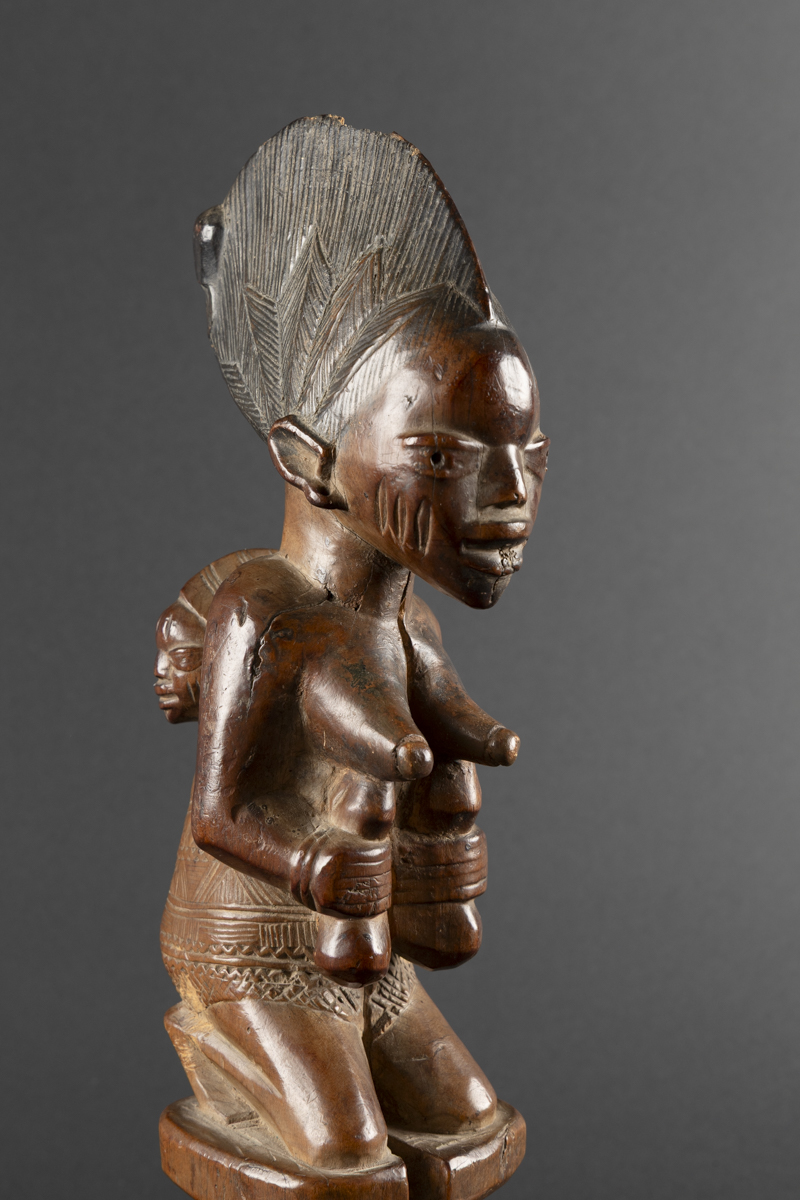
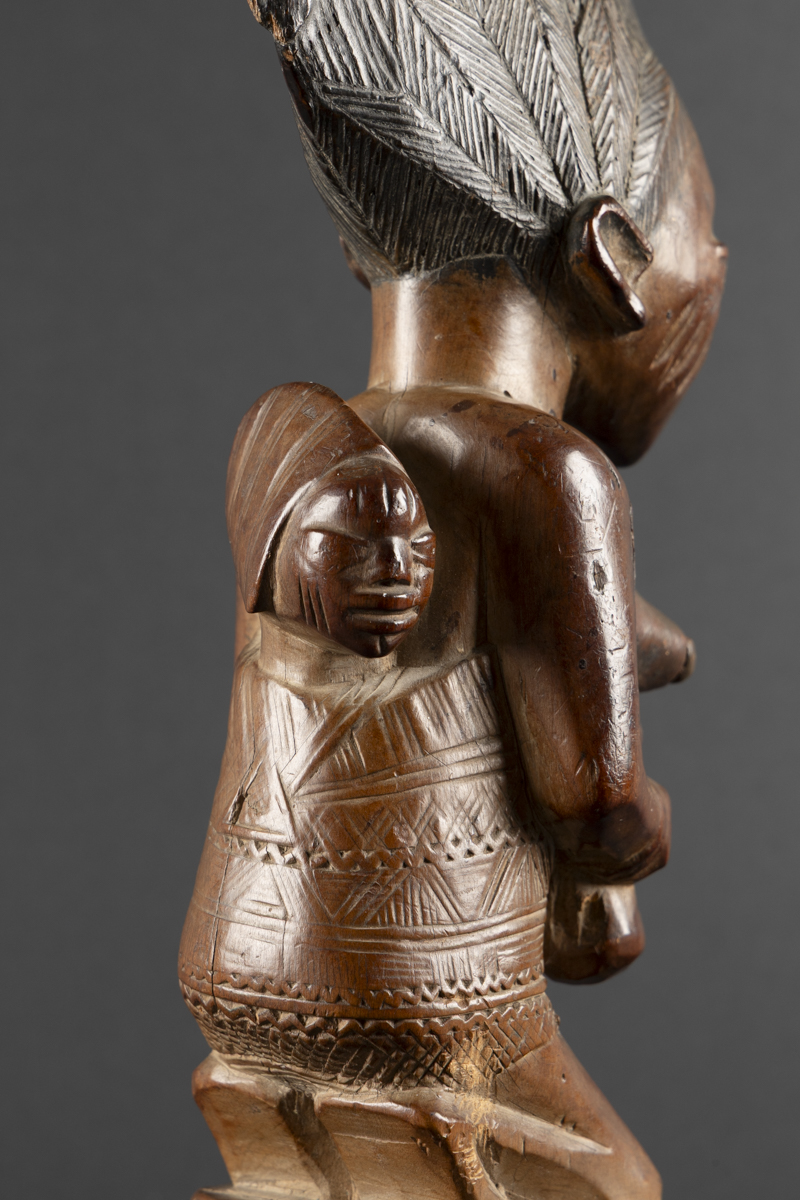
Ceremonial scepter depicting a mother and child
Ose Sango
Yoruba, Abeokuta
Egba, Nigeria
Early 20th century
Carved wood
Height: 33 cm – 13 in.
Provenance
Private collection, Paris
Yoruba Ose Sango Dance Wand 33 cm / Galerie Flak
Price: on request
This figurative staff (Ose Sango) was carried during ceremonies and ritual dances honoring Sango, the Yoruba orisha (deity) of thunder, renowned for his fiery temper and unpredictable nature.
The mother carrying her child on her back is an iconic motif within the iconography of the Sango cult. Her kneeling posture embodies the devotee's humility before the deity, while the child symbolizes the blessings bestowed by the orisha in return for the devotion of his followers. In her hands, the mother holds two rattles—ritual musical instruments used by Sango's priests to invoke his presence.
As noted by The Metropolitan Museum of Art in New York, the ritual objects associated with this cult originated in the 18th century at the royal court of Oyo, a kingdom where Sango was believed to have ruled as a legendary king before being deified. Each year, during specific ceremonial cycles, these staffs are removed from shrines to accompany the dances and prayers of the devotees.
This remarkable depiction of a mother and child embodies the quintessence of Yoruba art, in all its power and refinement.
The mother carrying her child on her back is an iconic motif within the iconography of the Sango cult. Her kneeling posture embodies the devotee's humility before the deity, while the child symbolizes the blessings bestowed by the orisha in return for the devotion of his followers. In her hands, the mother holds two rattles—ritual musical instruments used by Sango's priests to invoke his presence.
As noted by The Metropolitan Museum of Art in New York, the ritual objects associated with this cult originated in the 18th century at the royal court of Oyo, a kingdom where Sango was believed to have ruled as a legendary king before being deified. Each year, during specific ceremonial cycles, these staffs are removed from shrines to accompany the dances and prayers of the devotees.
This remarkable depiction of a mother and child embodies the quintessence of Yoruba art, in all its power and refinement.
Explore the entire collection