North America | Arizona
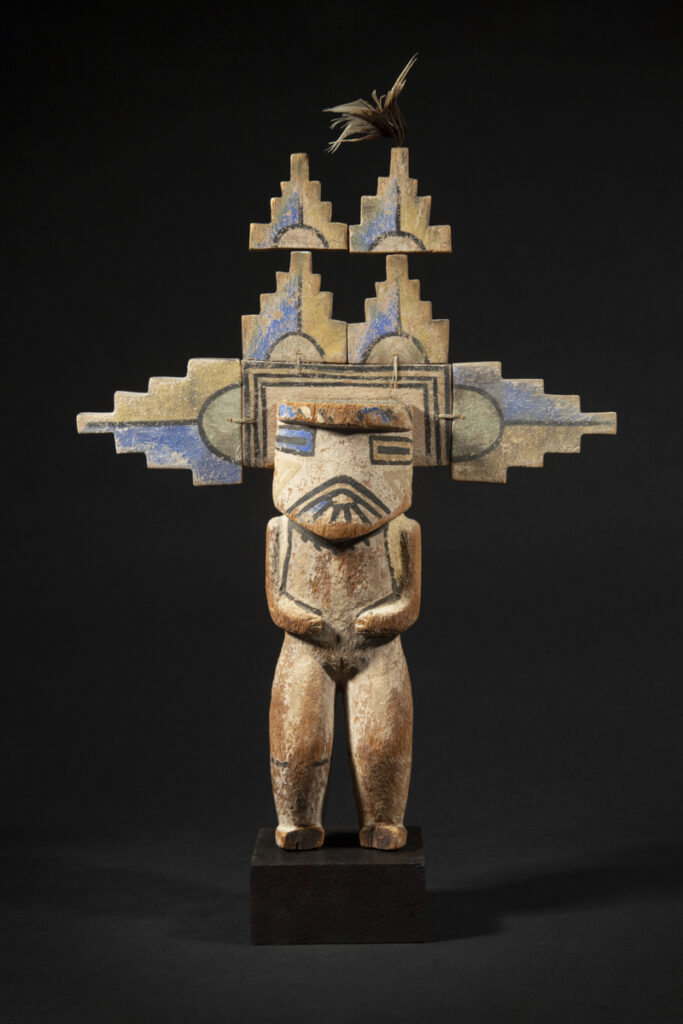
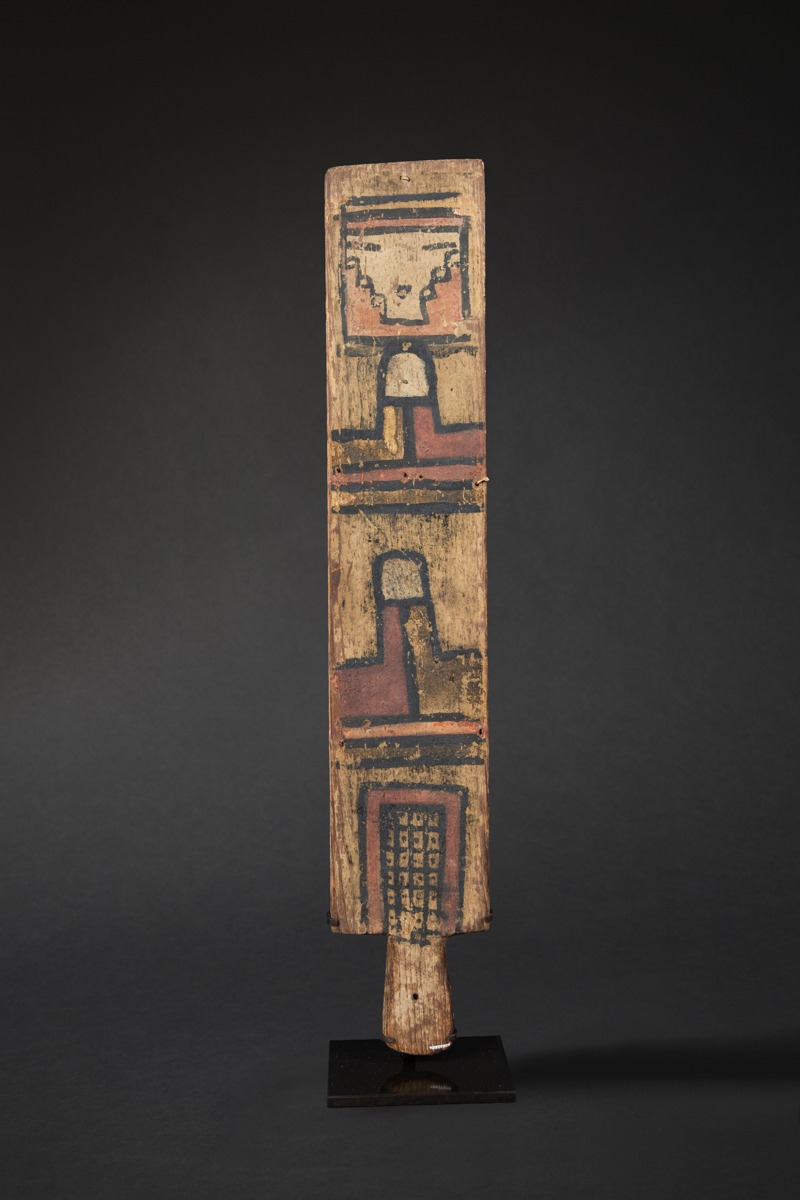
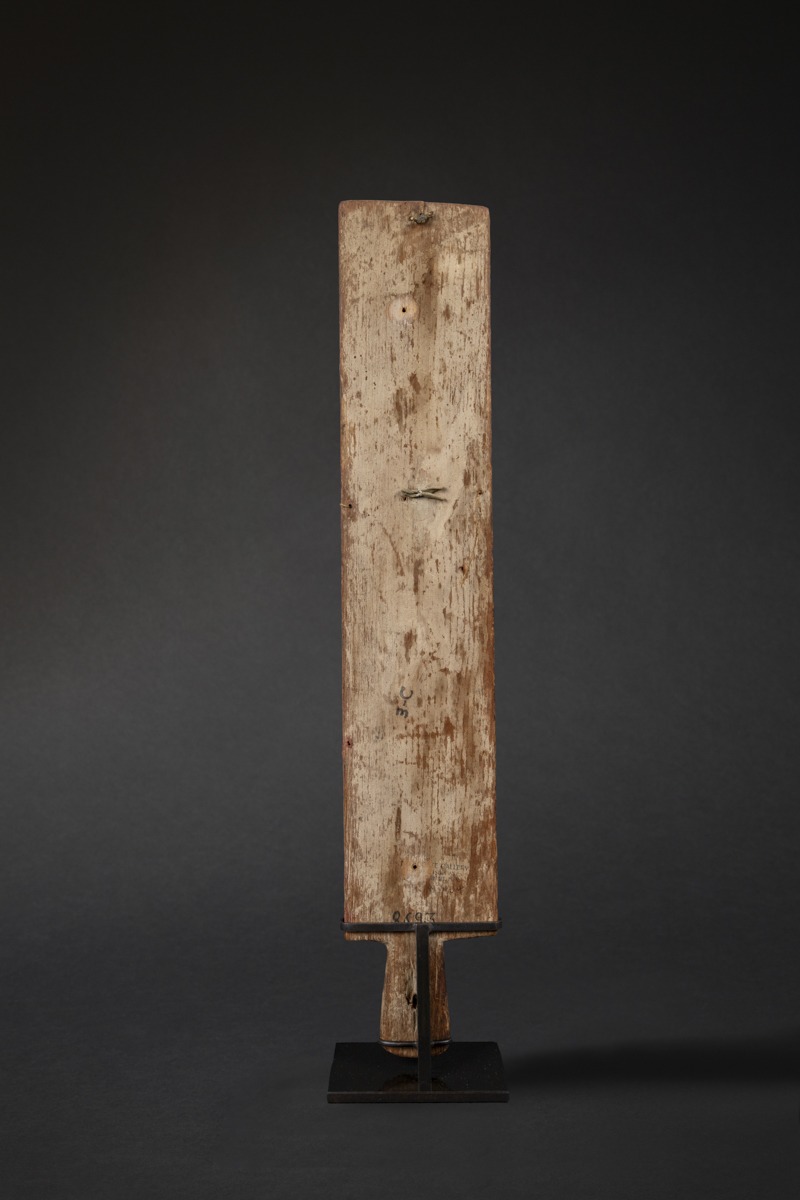
Hopi Dance Wand
Arizona
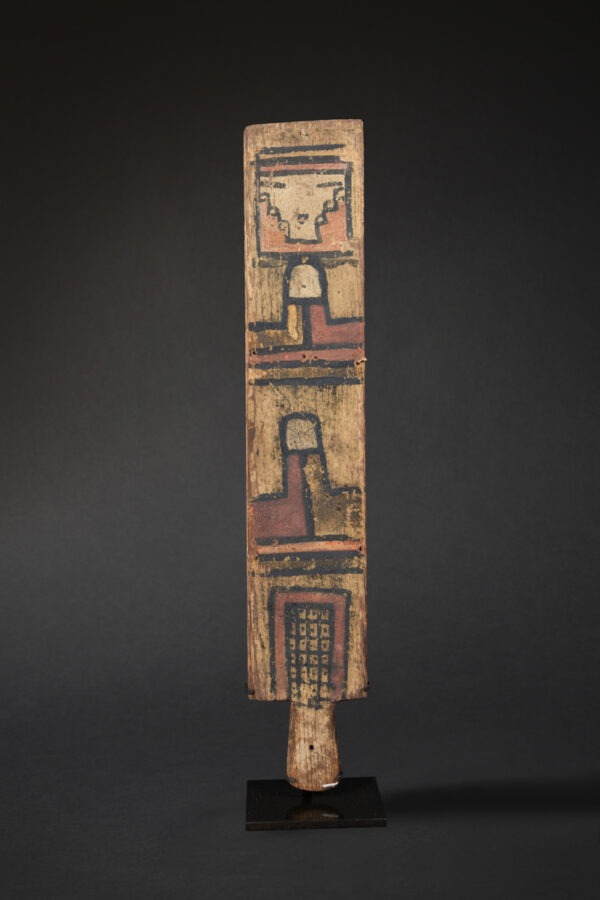
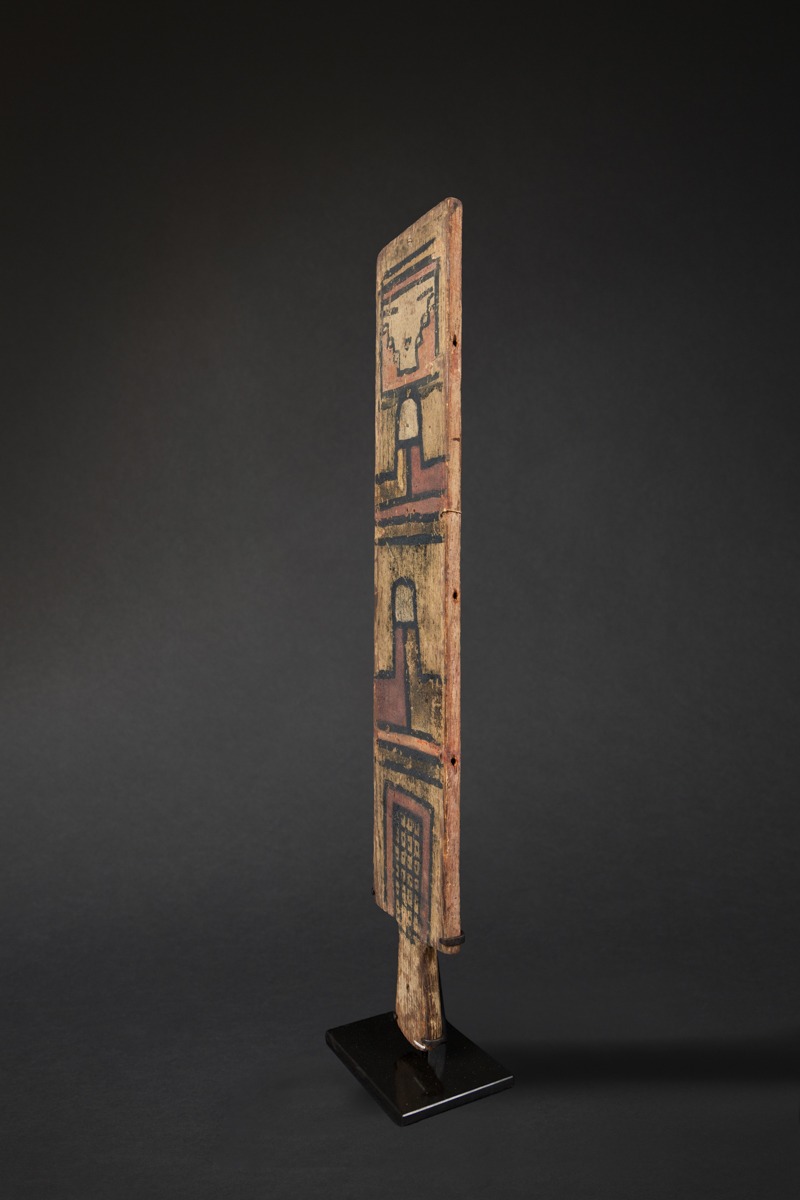
Dance Wand for a Katsina Ceremony
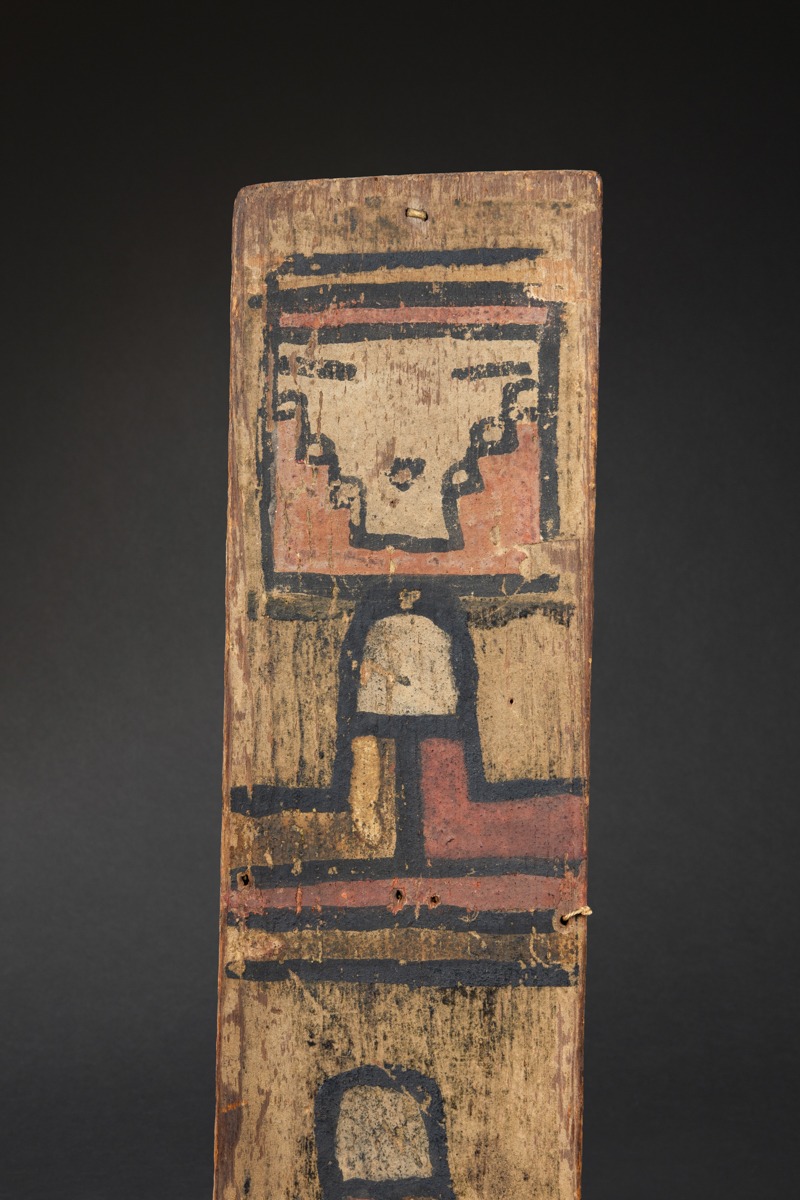
Poos’hum Katsina Paho
Hopi
Arizona, USA
Circa 1900
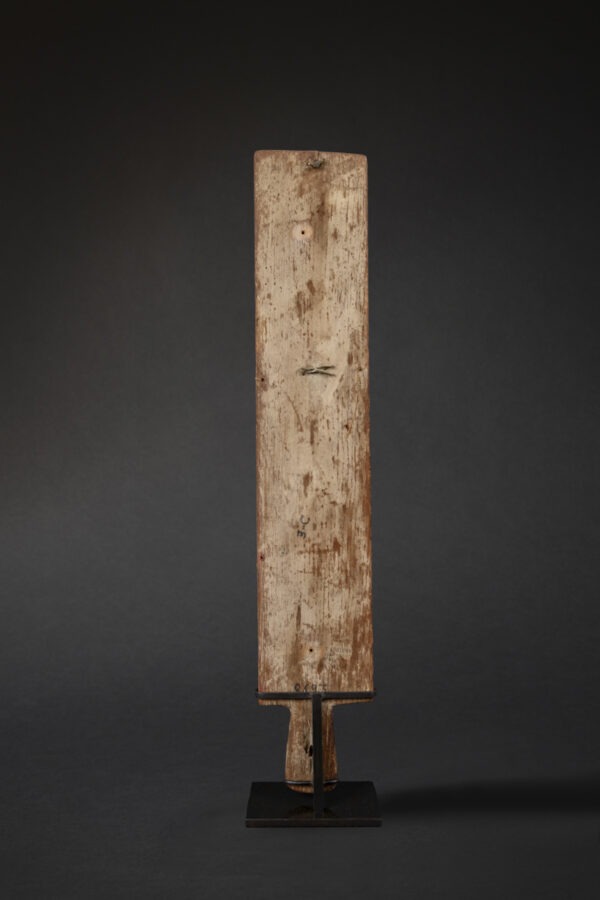
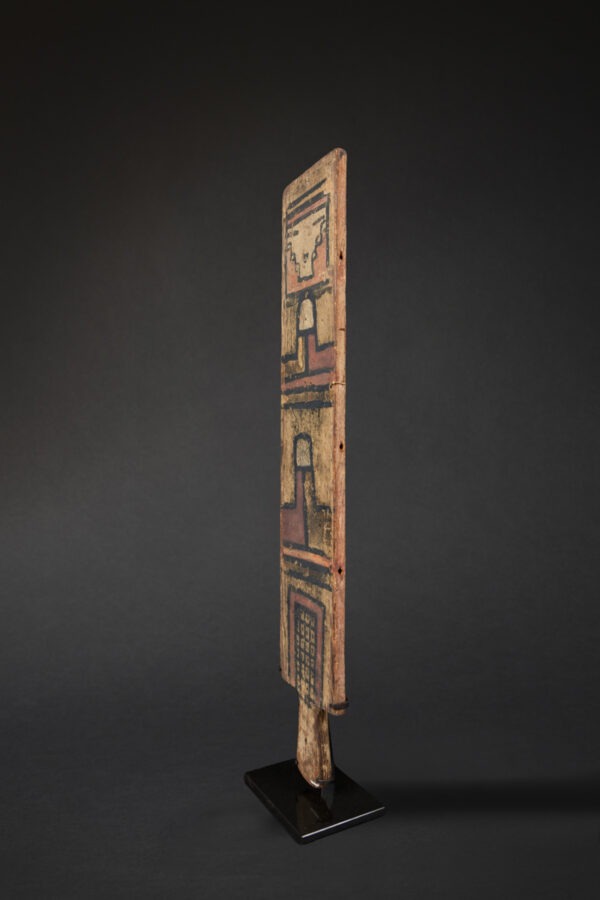
Carved wood and pigments
Height: 53.5 cm – 21 in.
Provenance
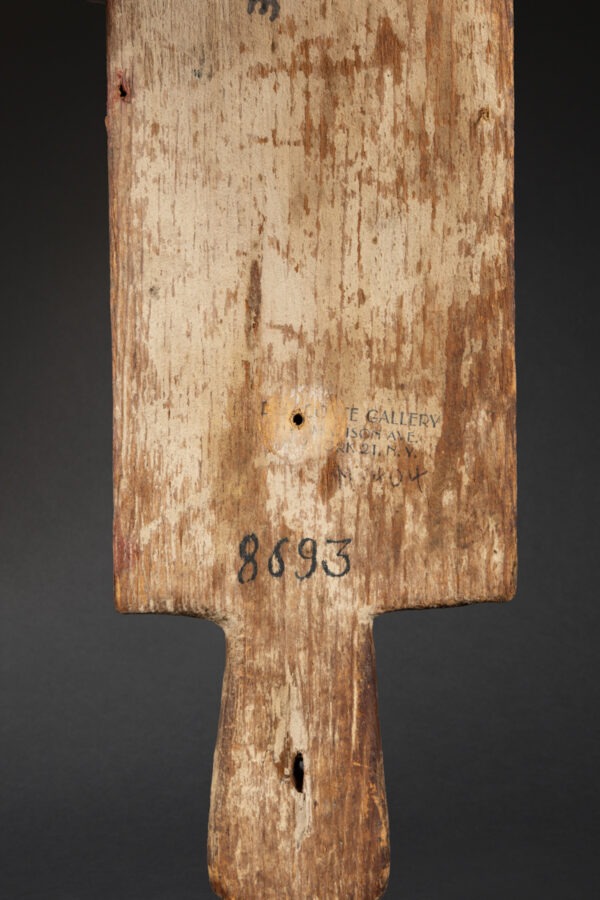
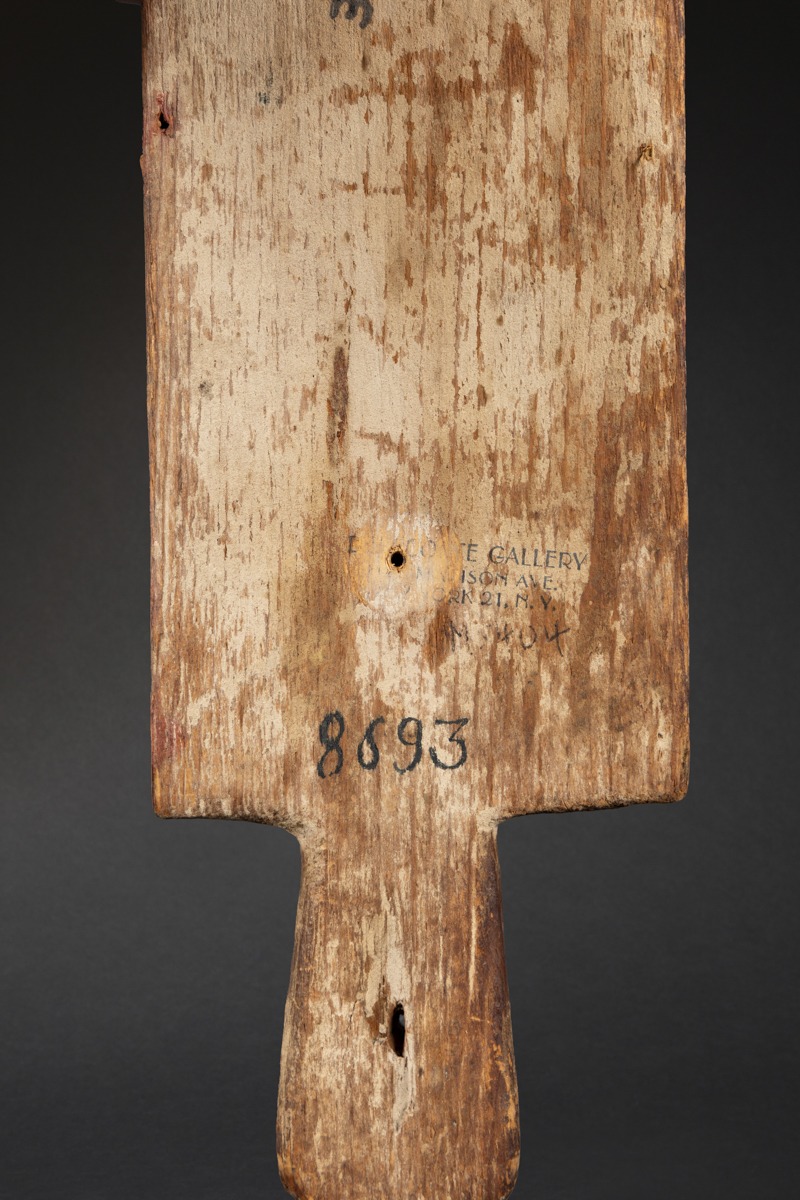
Inventory numbers: 8693, M(-)404 & 3-C
Delacorte Gallery, New York
Collection of the Surrealist artist Enrico Donati (1909–2008), New York
Sotheby’s, New York, “Important American Indian, African, Oceanic and Other Works of Art from the Studio of Enrico Donati”, 14 May 2010, lot 16
Collection Sheikh Saoud Al-Thani, Qatar
Hopi Dance Wand Donati / Galerie Flak
Price: on request
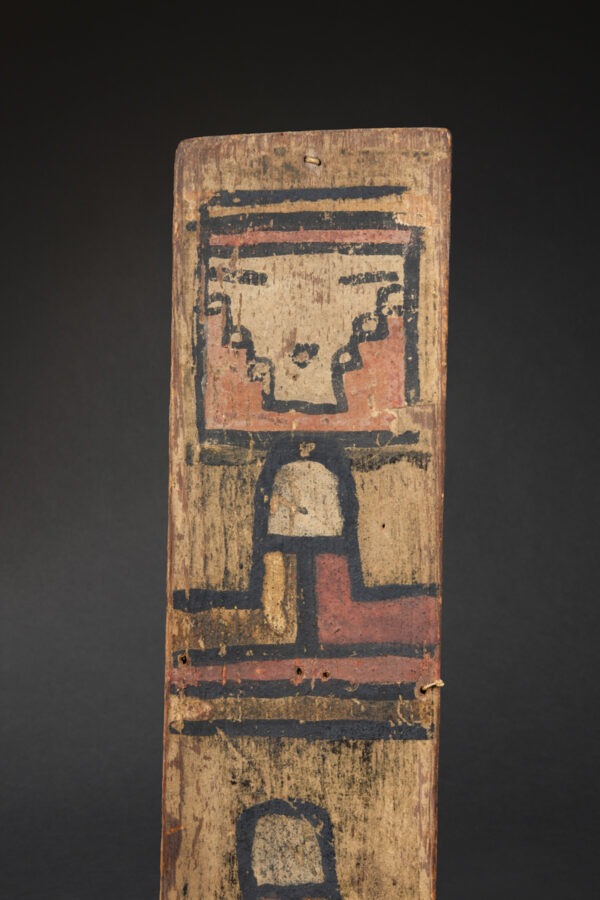
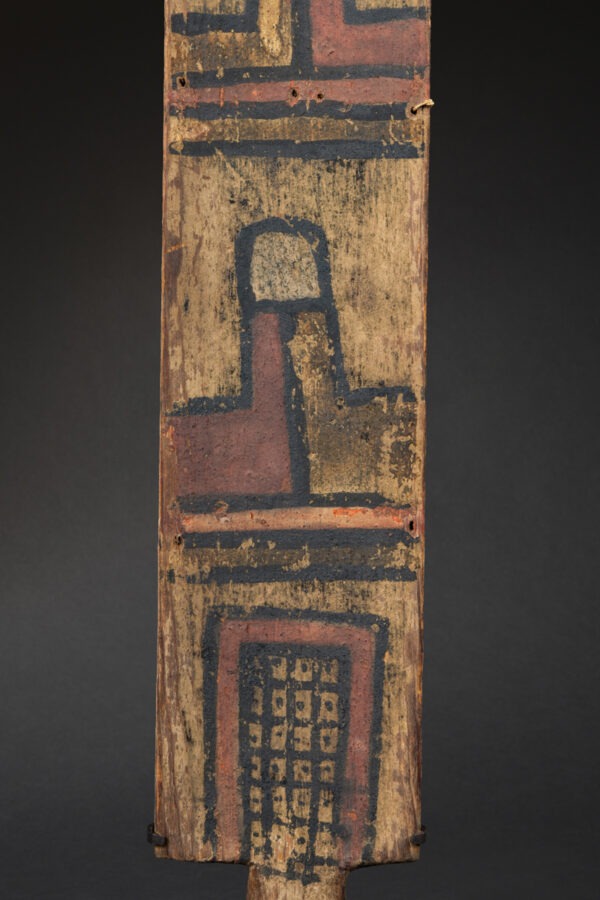
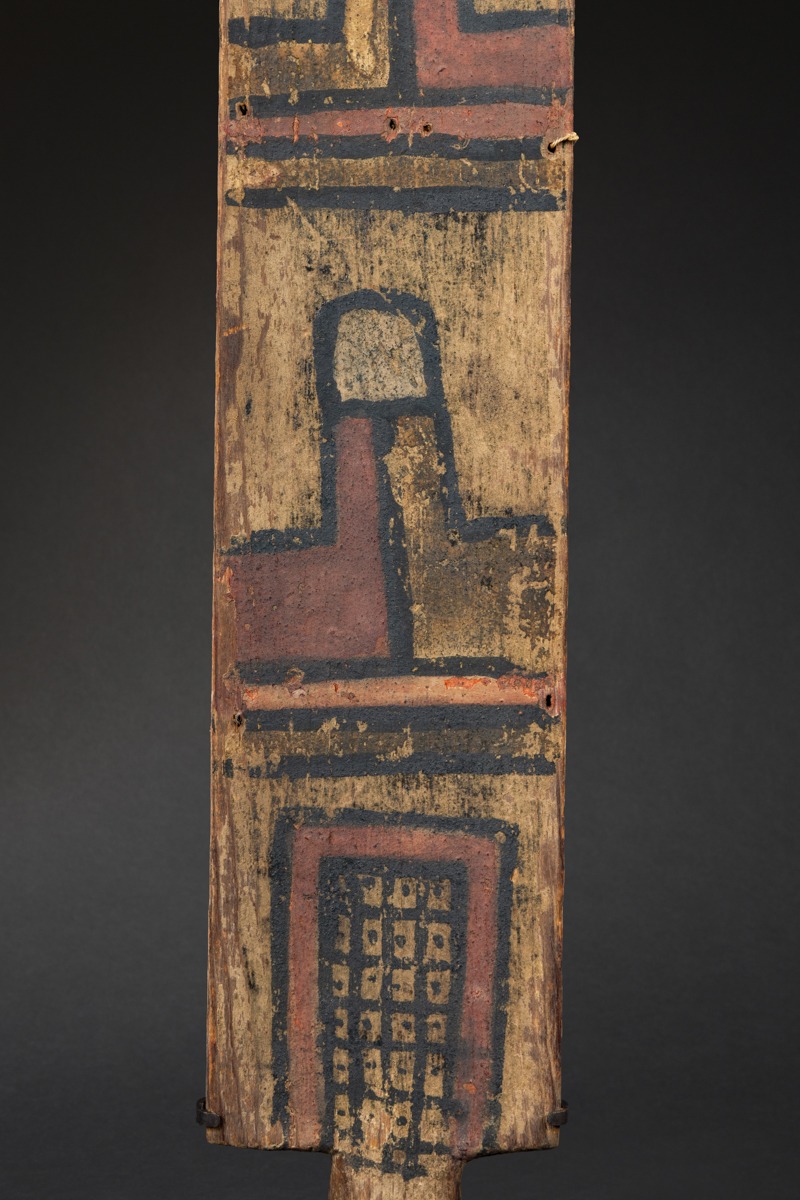
Rare and early Hopi ceremonial dance wand, featuring notably the mask of Pooshum (Seed) Katsina Spirit, associated with germination, and, on the lower part, motifs linked to maize. Beautiful mineral pigments, naturally oxidized over time.
This sculpture comes from the collection of the artist Enrico Donati (1909–2008), a prominent figure of the Surrealist movement. Initially trained in sociology and music, Donati later turned to painting. Of Italian origin, he lived in Paris and later in New York, joining the close circle of André Breton and other leading Surrealists, and brought new vitality to the movement through works imbued with mystery and organic forms.
In the 1930s, Donati developed a genuine passion for Native American art. Fascinated by ritual objects and the magical dimension of Indigenous creations, he visited Indian reservations in the American Southwest and northern Canada, spending several months among the Apache, Hopi, Zuni, and Inuit. During these stays, Donati exchanged European objects for Katsina figures, baskets, and masks, building a rich collection that left a lasting mark on his imagination.
This immersion did not lead Donati to a formal imitation of Native aesthetics, but rather to an embrace of a “primal” and magical spirit. Through matter and texture, he sought to reveal what lies beyond the visible. For him, Native American art acted as a catalyst of mysterious forces—an approach he strove to transpose into his own Surrealist works, where myths, enigmas, and symbols are in constant dialogue with the unknown.
For further insight into the importance of Native American art for Enrico Donati, see Marie Mauzé’s chapter “Surrealism and Hopimania” in "L’Appel des Kachinas – Katsina Calling" (Éditions l’Enfance de l’Art, 2024).
This sculpture comes from the collection of the artist Enrico Donati (1909–2008), a prominent figure of the Surrealist movement. Initially trained in sociology and music, Donati later turned to painting. Of Italian origin, he lived in Paris and later in New York, joining the close circle of André Breton and other leading Surrealists, and brought new vitality to the movement through works imbued with mystery and organic forms.
In the 1930s, Donati developed a genuine passion for Native American art. Fascinated by ritual objects and the magical dimension of Indigenous creations, he visited Indian reservations in the American Southwest and northern Canada, spending several months among the Apache, Hopi, Zuni, and Inuit. During these stays, Donati exchanged European objects for Katsina figures, baskets, and masks, building a rich collection that left a lasting mark on his imagination.
This immersion did not lead Donati to a formal imitation of Native aesthetics, but rather to an embrace of a “primal” and magical spirit. Through matter and texture, he sought to reveal what lies beyond the visible. For him, Native American art acted as a catalyst of mysterious forces—an approach he strove to transpose into his own Surrealist works, where myths, enigmas, and symbols are in constant dialogue with the unknown.
For further insight into the importance of Native American art for Enrico Donati, see Marie Mauzé’s chapter “Surrealism and Hopimania” in "L’Appel des Kachinas – Katsina Calling" (Éditions l’Enfance de l’Art, 2024).
Explore the entire collection