North America | U.S.A.
Calumet Pipe
U.S.A.
Calumet (Pipe)
Lakota (Sioux)
Plains, U.S.A.
Circa 1880s
Pipebowl: catlinite, inlaid metal
Pipestem: wood, quill, horsehair, hide
Length: 72.5 cm – 28 ½ in.
Inventory number on the bowl: 346 (?)
Provenance
Ex collection Michel Zerolo, Paris
Lakota calumet pipe 72.5 cm / Galerie Flak
Price on request
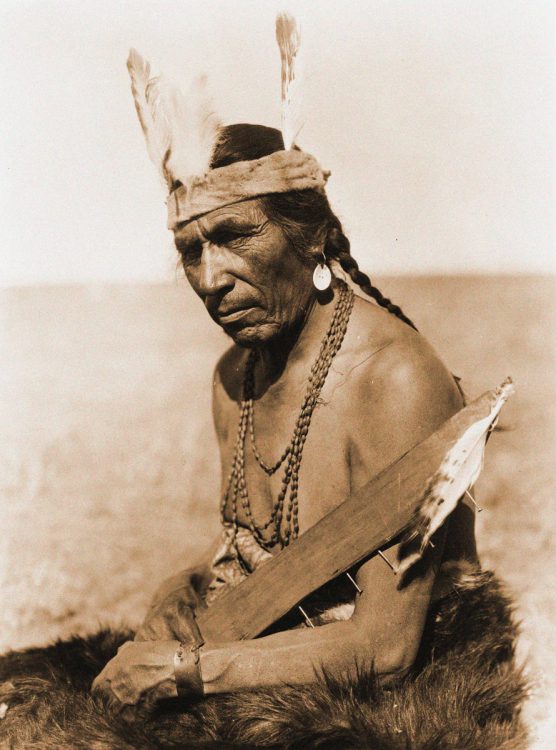
"Before we talk of holy things, we prepare ourselves by offerings. One of us fills a pipe and hands it to the other who lights it and holds it up to the sky and down to the earth. Then we smoke together. Then we are ready to talk."
Mato-Kuwapi (Chased by Bears), a Santee-Yanktonai, Sioux warrior.
The Red Stone and the Art of Quillwork
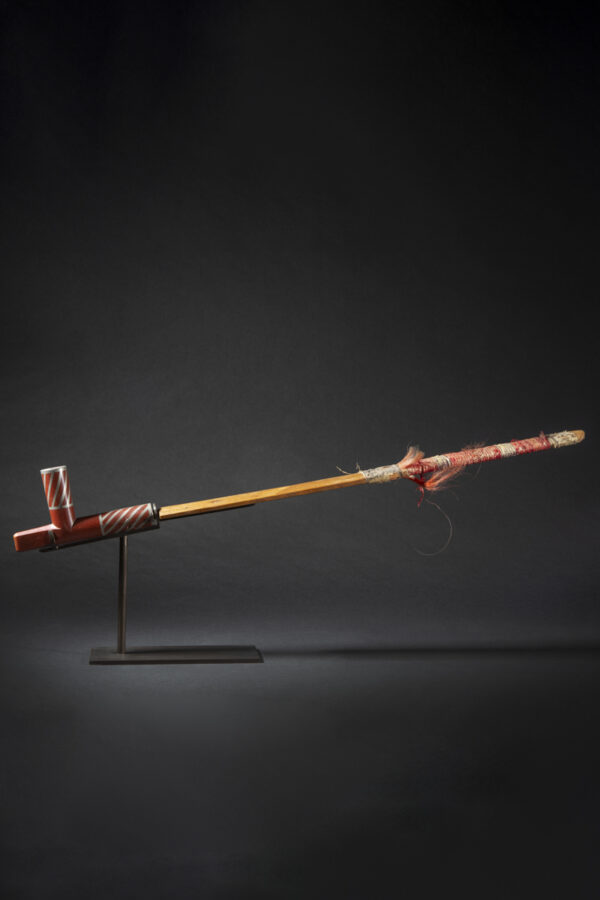
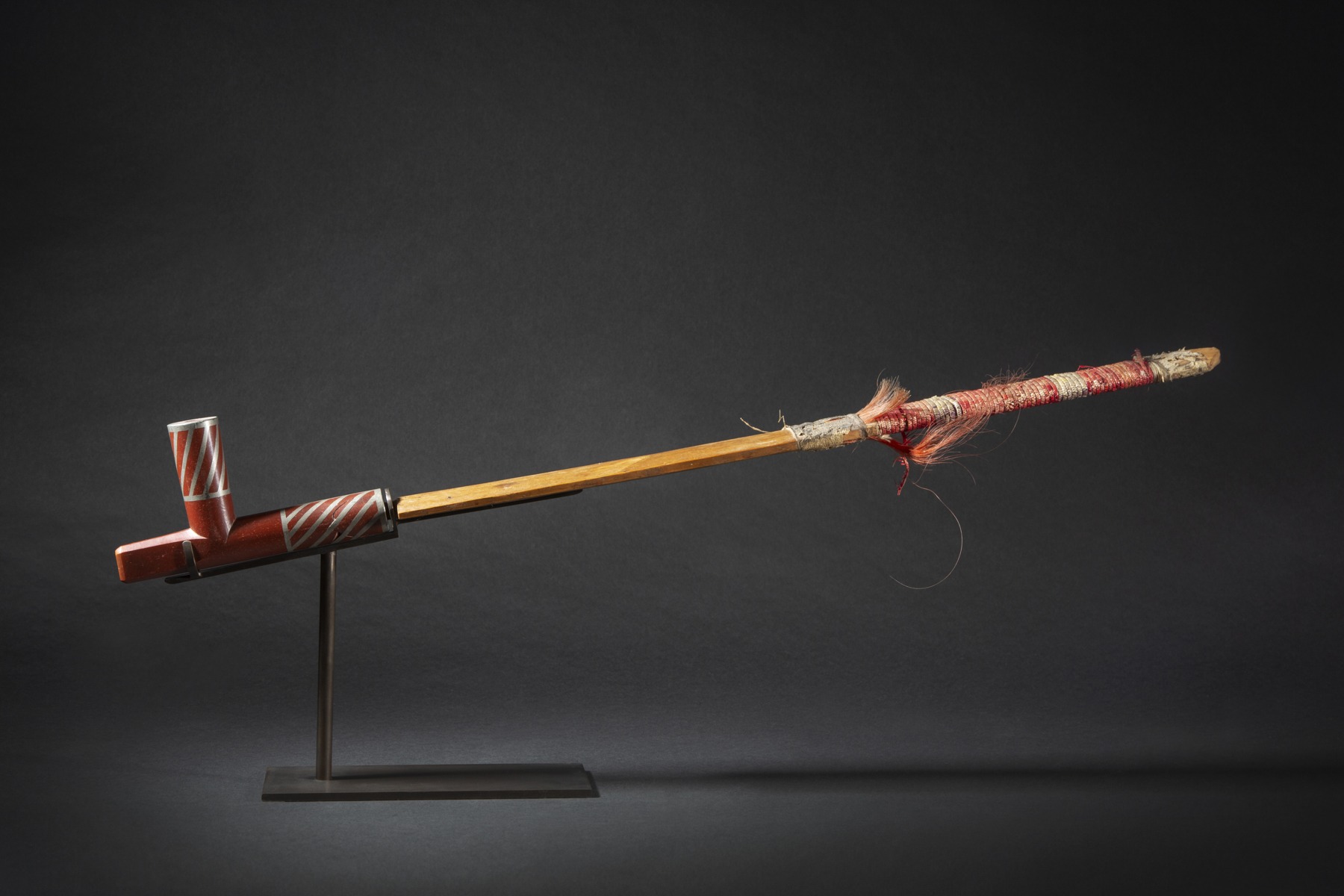
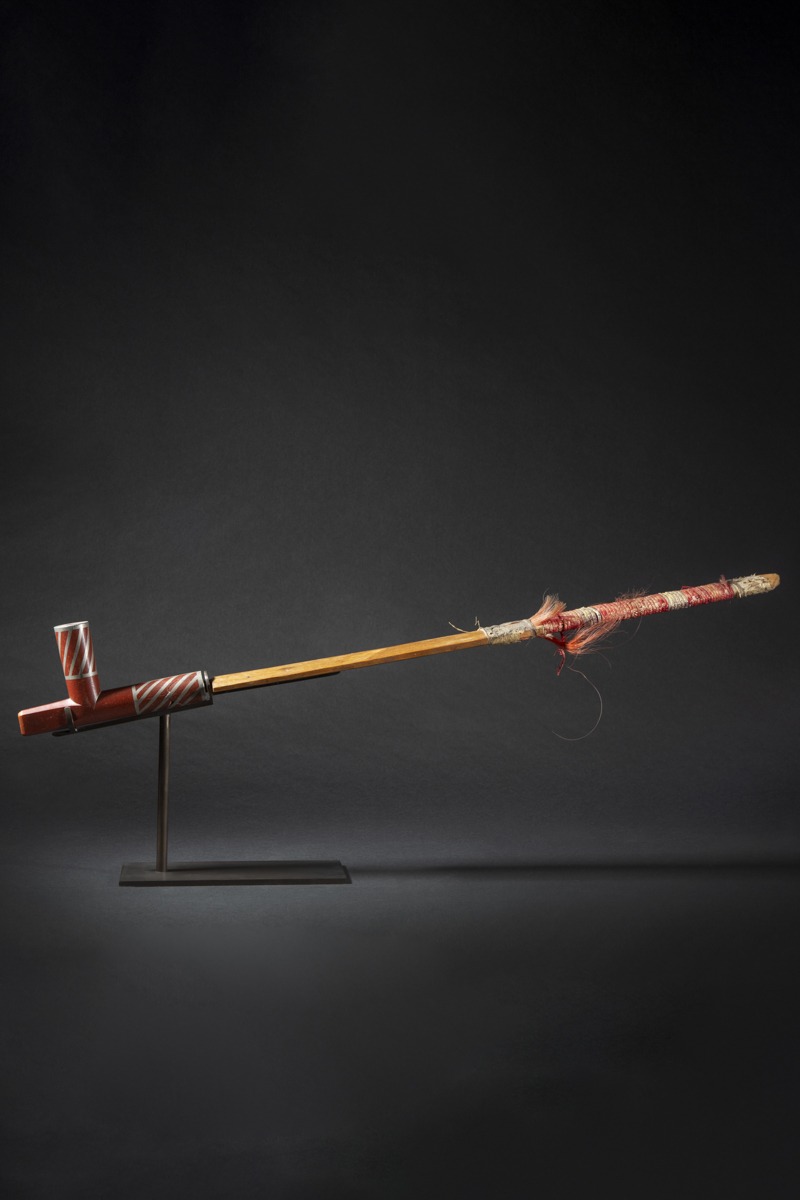
This calumet consists of two finely crafted distinct elements:
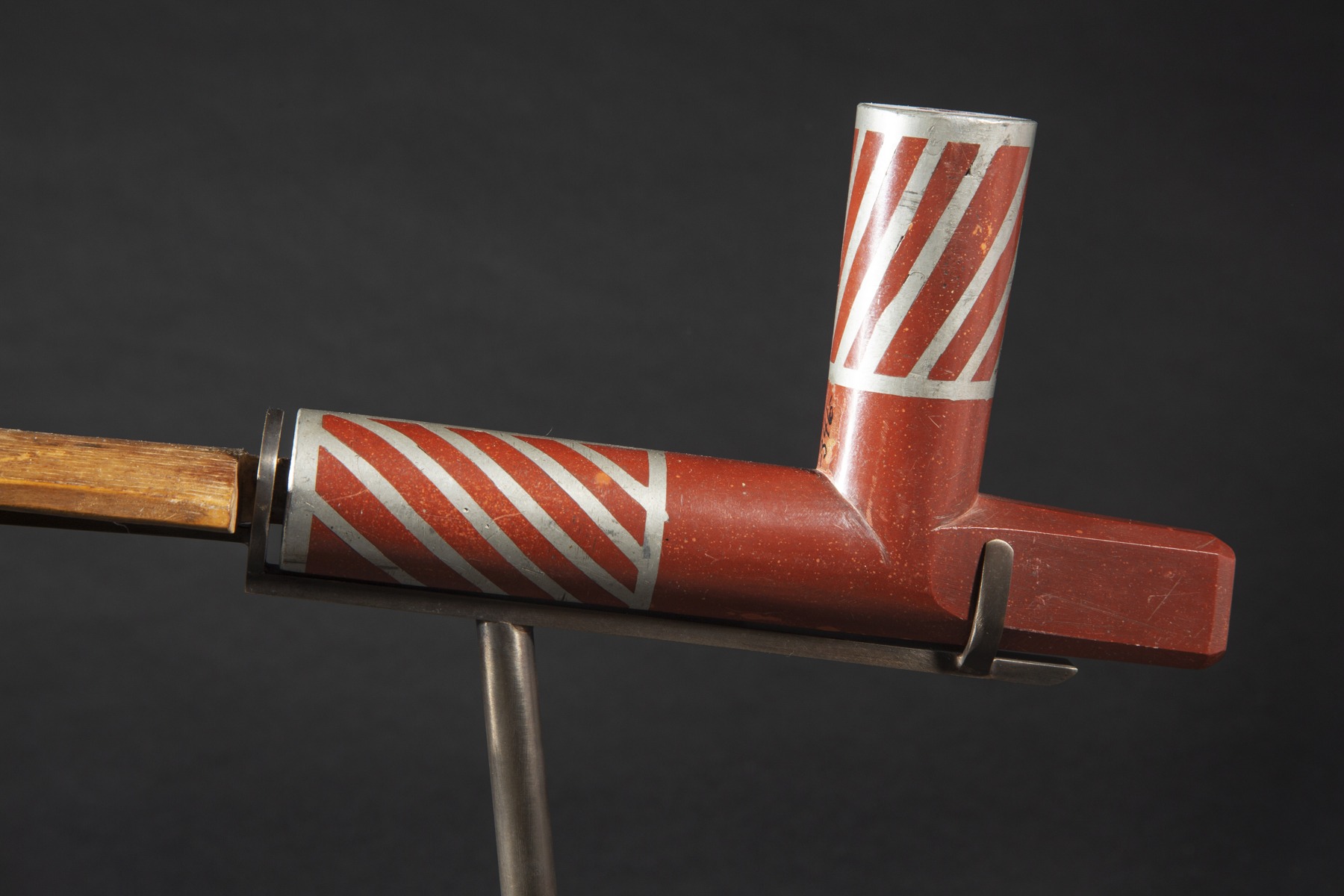
• The T-shaped pipe bowl: carved from catlinite, a soft red stone named in 1839 by the mineralogist Charles Thomas Jackson in honor of the painter George Catlin, who had visited the Minnesota quarries four years earlier, where Native Americans had been extracting the stone since at least the 17th century. The bowl shows deep, charred traces of burning, attesting to long-standing, sustained use; the circumference of the bowl and its base is adorned with delicate, parallel oblique metal inlays.
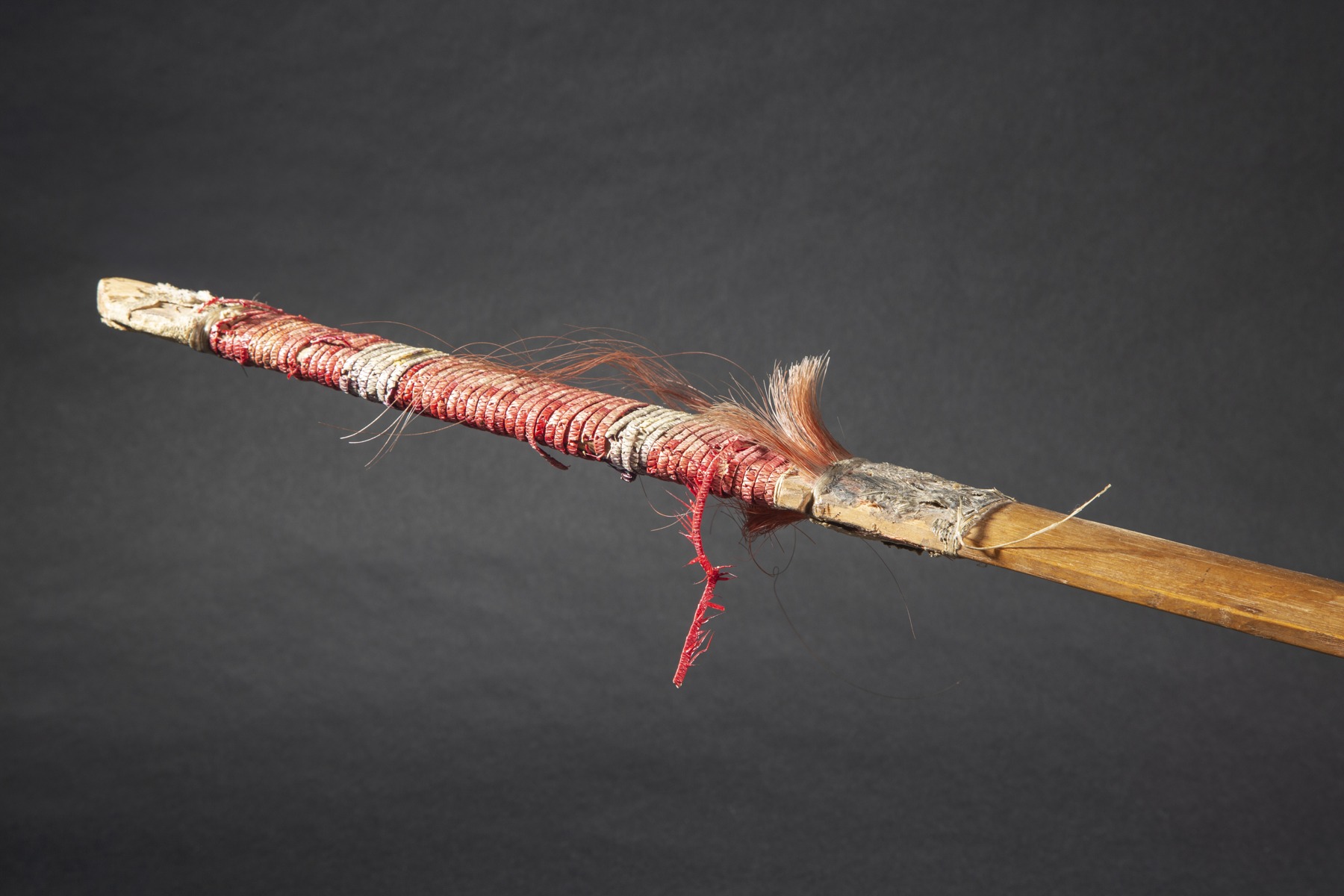
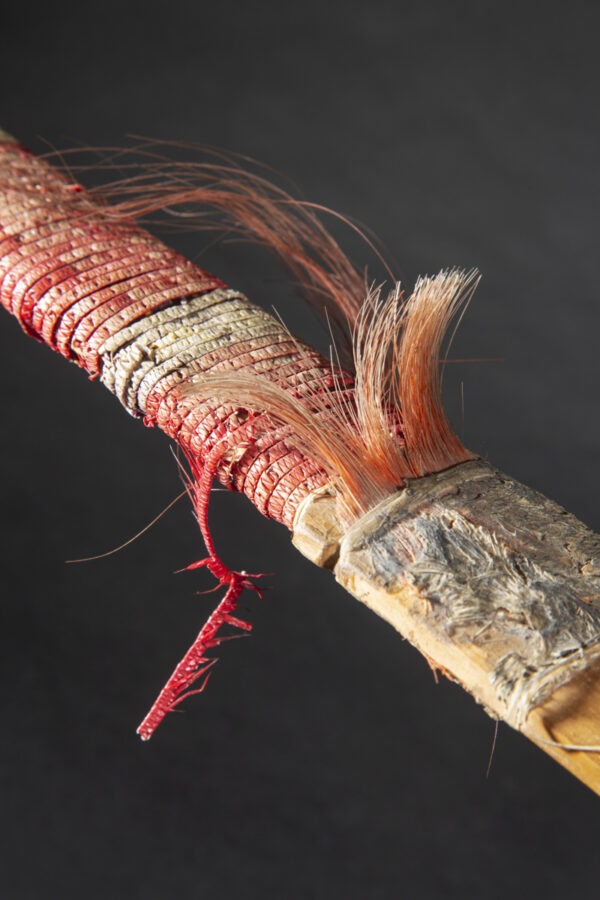
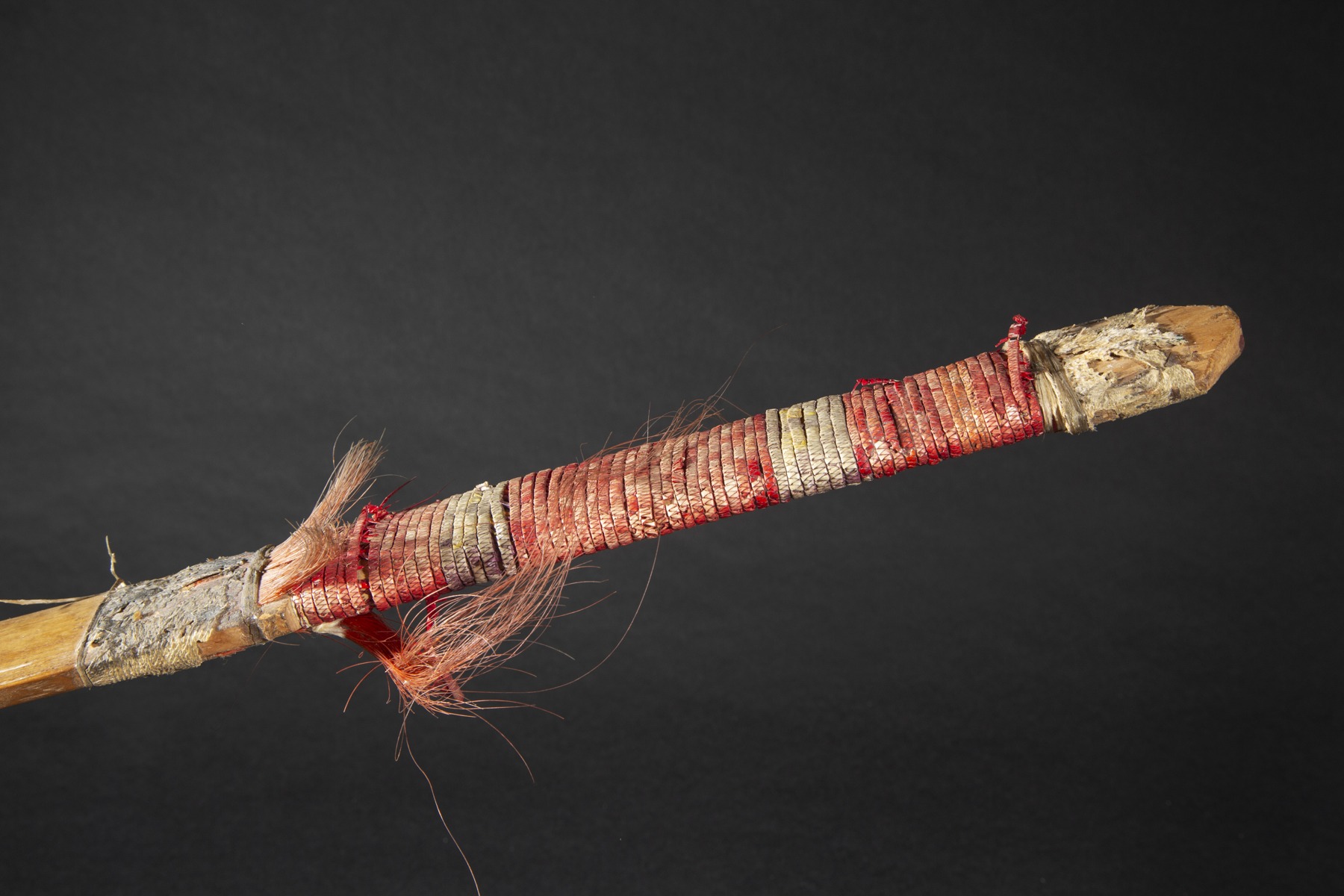
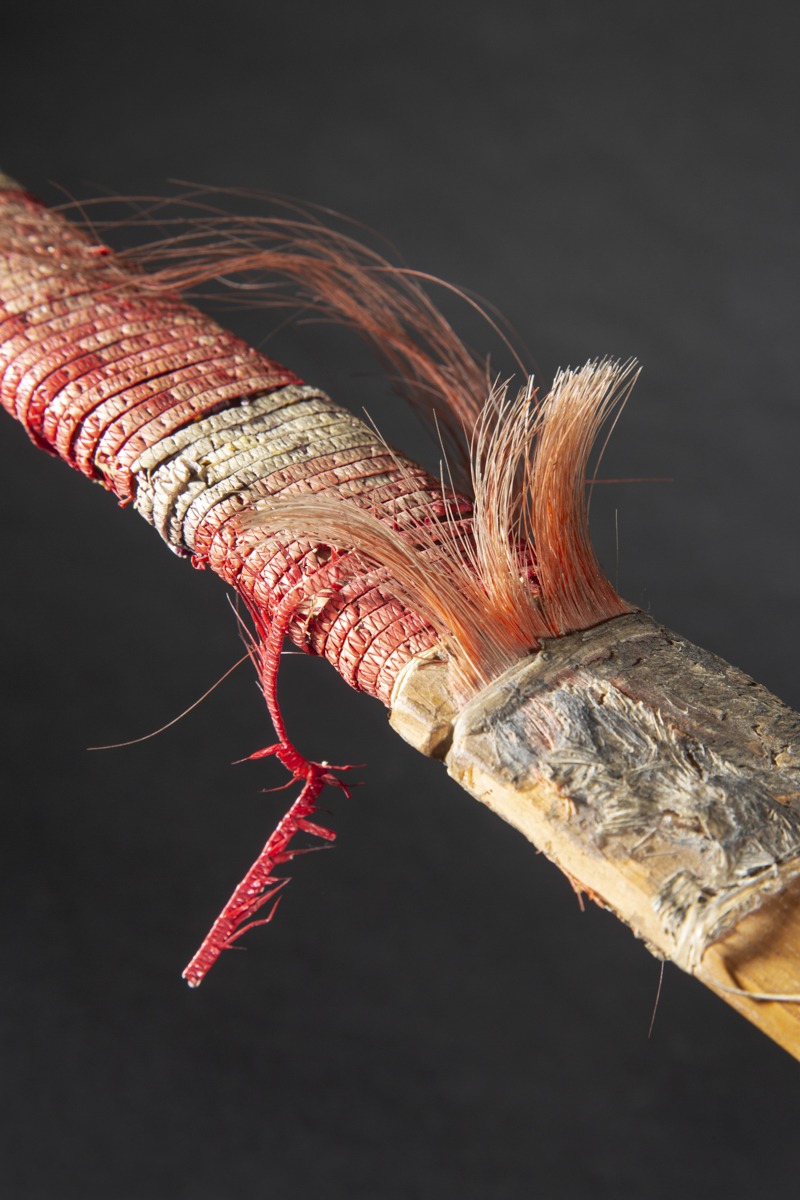
• The flat pipe stem: rectangular in section and carved from dense wood, it is adorned with red-dyed horsehair and Plains lizard skin. Its upper section is wrapped in an intricate weave of quillwork (flattened and dyed porcupine quills), an extraordinarily painstaking art traditionally reserved for the women of the tribe.
The Most Sacred Object of the Plains
As a symbol of welcome and alliance, the pipe sealed peace between tribes or formalized the adoption of a child. Beyond this social function, the calumet served above all as a spiritual vessel. Before setting out on the warpath, warriors smoked a blend of tobacco and aromatic herbs using a pipe of this type. Smoking created communion with the Great Spirit: the ascending smoke carried prayers toward the sky and invoked protection.
Mato-Kuwapi (Chased by Bears), a Santee-Yanktonai, Sioux warrior.
The Red Stone and the Art of Quillwork
This calumet consists of two finely crafted distinct elements:
• The T-shaped pipe bowl: carved from catlinite, a soft red stone named in 1839 by the mineralogist Charles Thomas Jackson in honor of the painter George Catlin, who had visited the Minnesota quarries four years earlier, where Native Americans had been extracting the stone since at least the 17th century. The bowl shows deep, charred traces of burning, attesting to long-standing, sustained use; the circumference of the bowl and its base is adorned with delicate, parallel oblique metal inlays.
• The flat pipe stem: rectangular in section and carved from dense wood, it is adorned with red-dyed horsehair and Plains lizard skin. Its upper section is wrapped in an intricate weave of quillwork (flattened and dyed porcupine quills), an extraordinarily painstaking art traditionally reserved for the women of the tribe.
The Most Sacred Object of the Plains
As a symbol of welcome and alliance, the pipe sealed peace between tribes or formalized the adoption of a child. Beyond this social function, the calumet served above all as a spiritual vessel. Before setting out on the warpath, warriors smoked a blend of tobacco and aromatic herbs using a pipe of this type. Smoking created communion with the Great Spirit: the ascending smoke carried prayers toward the sky and invoked protection.
Explore the entire collection