North America | Arizona
Katsina Doll
Arizona
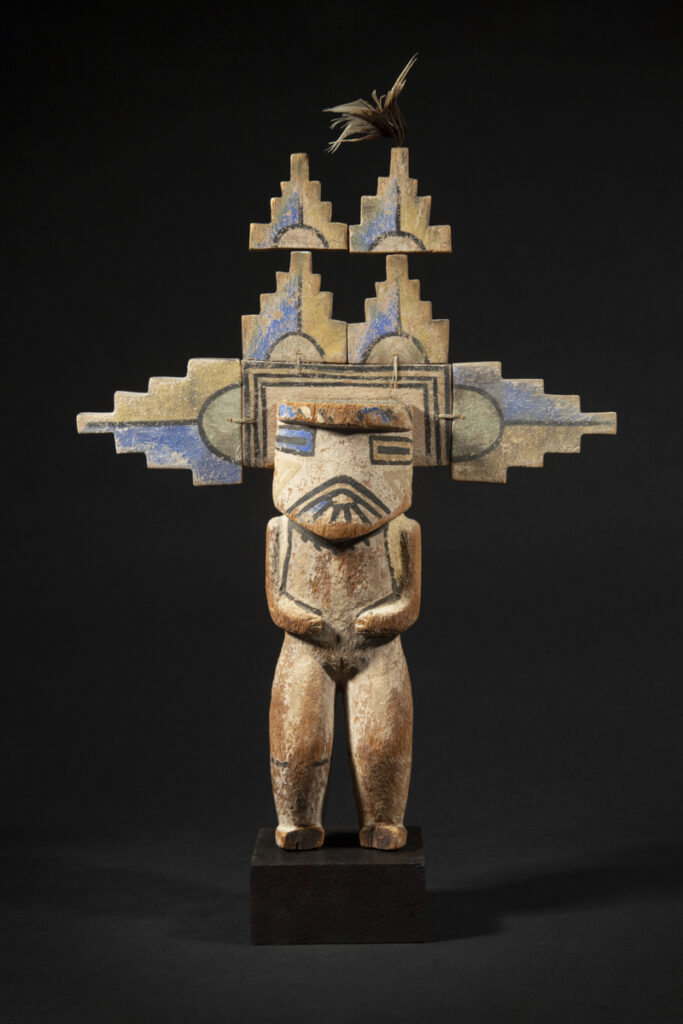
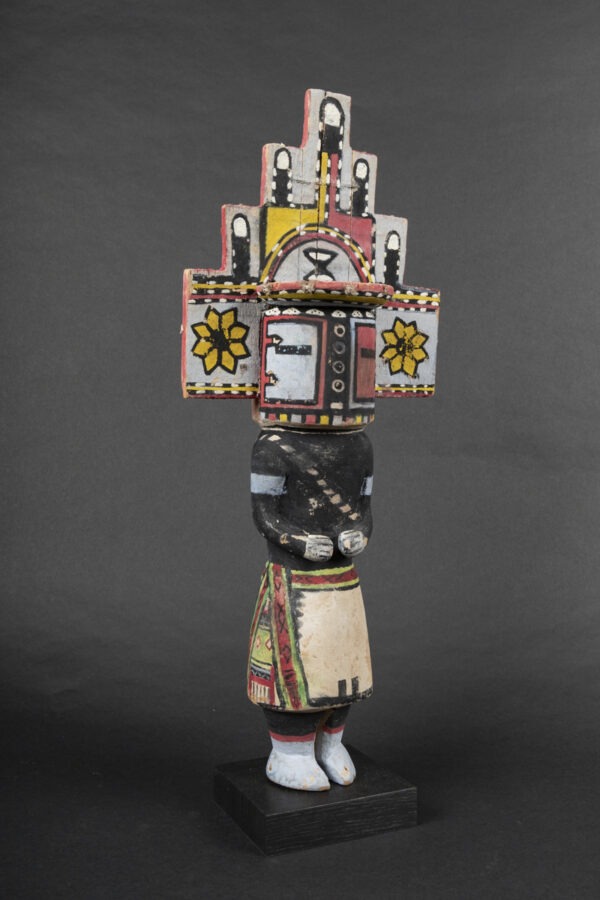
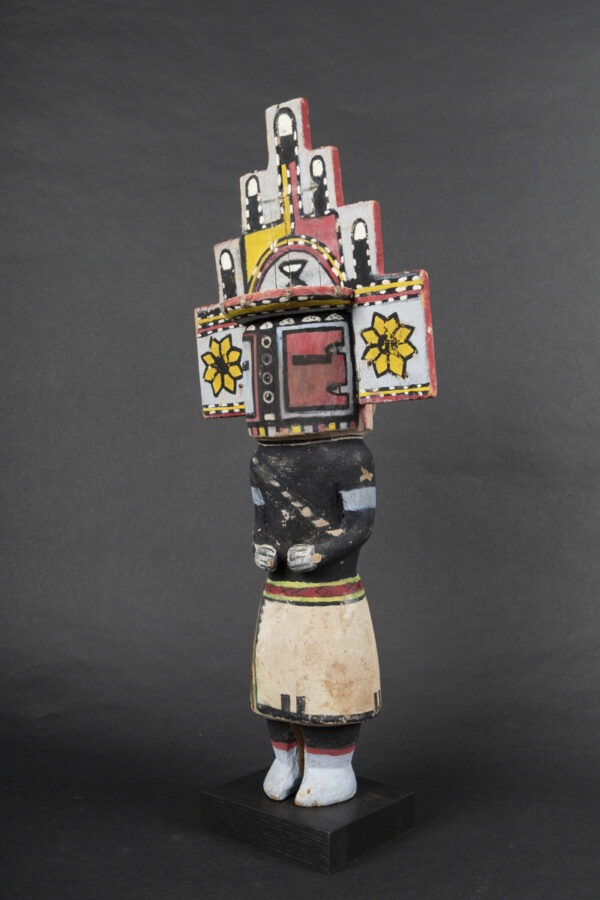
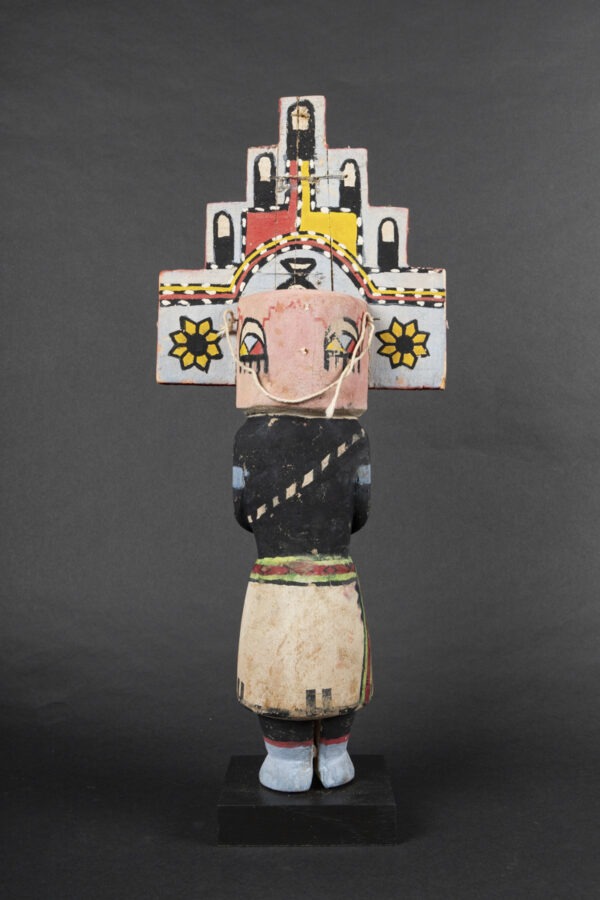
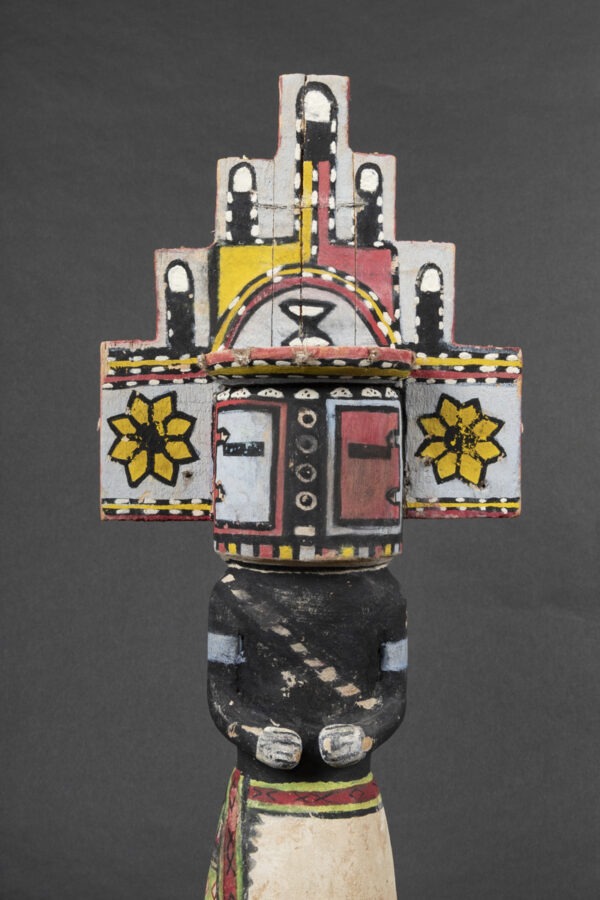
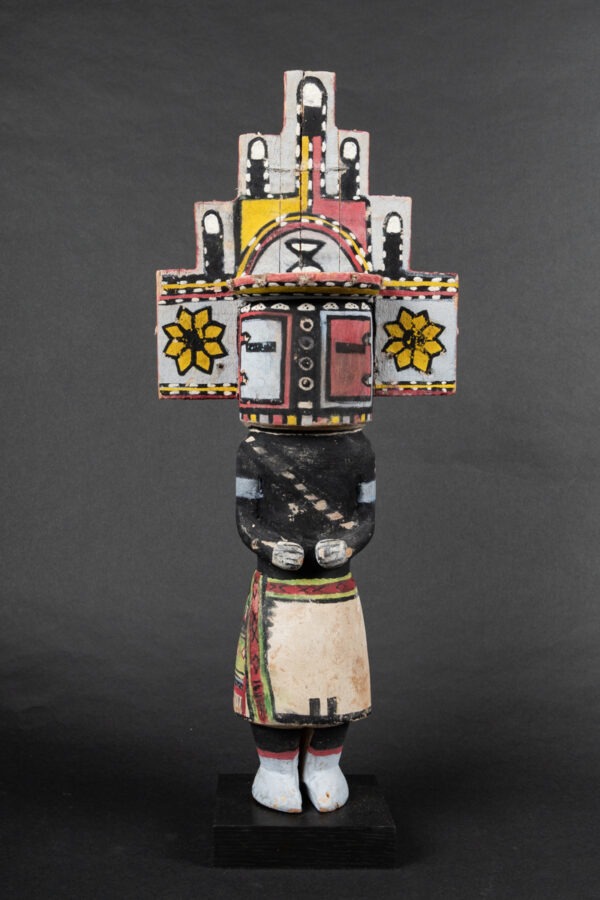
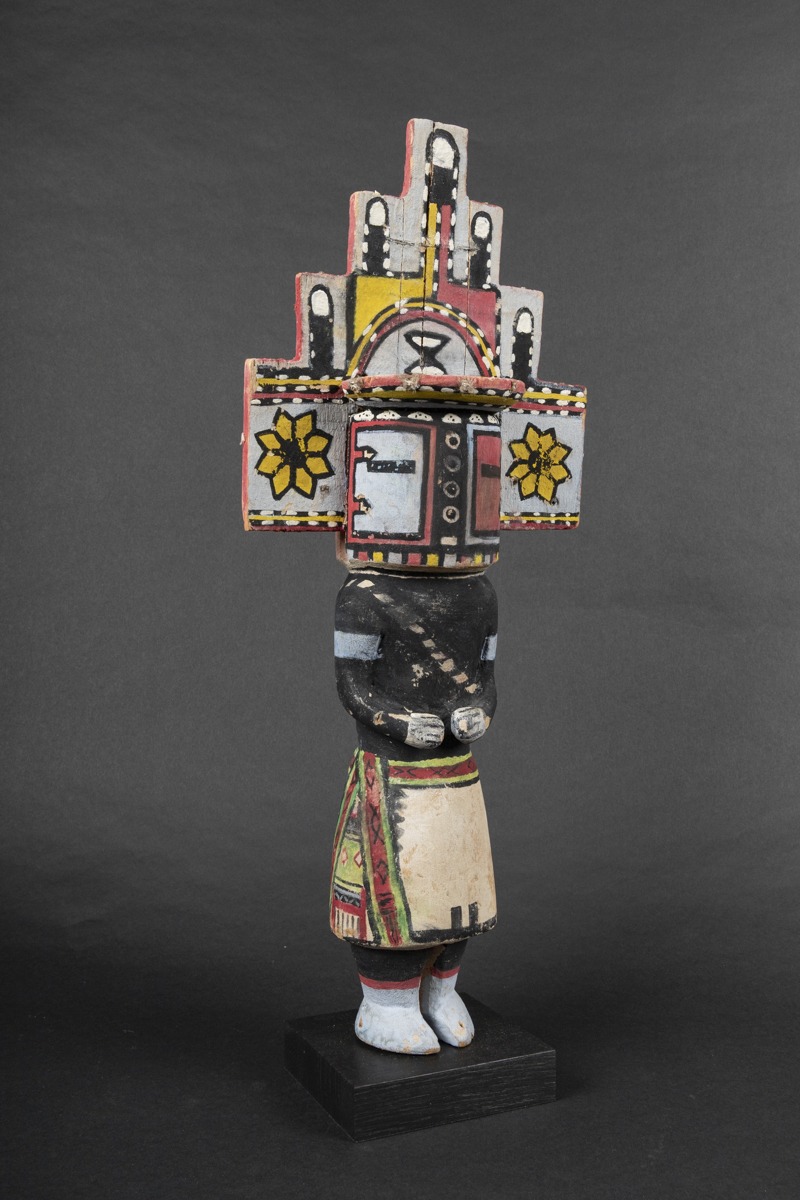
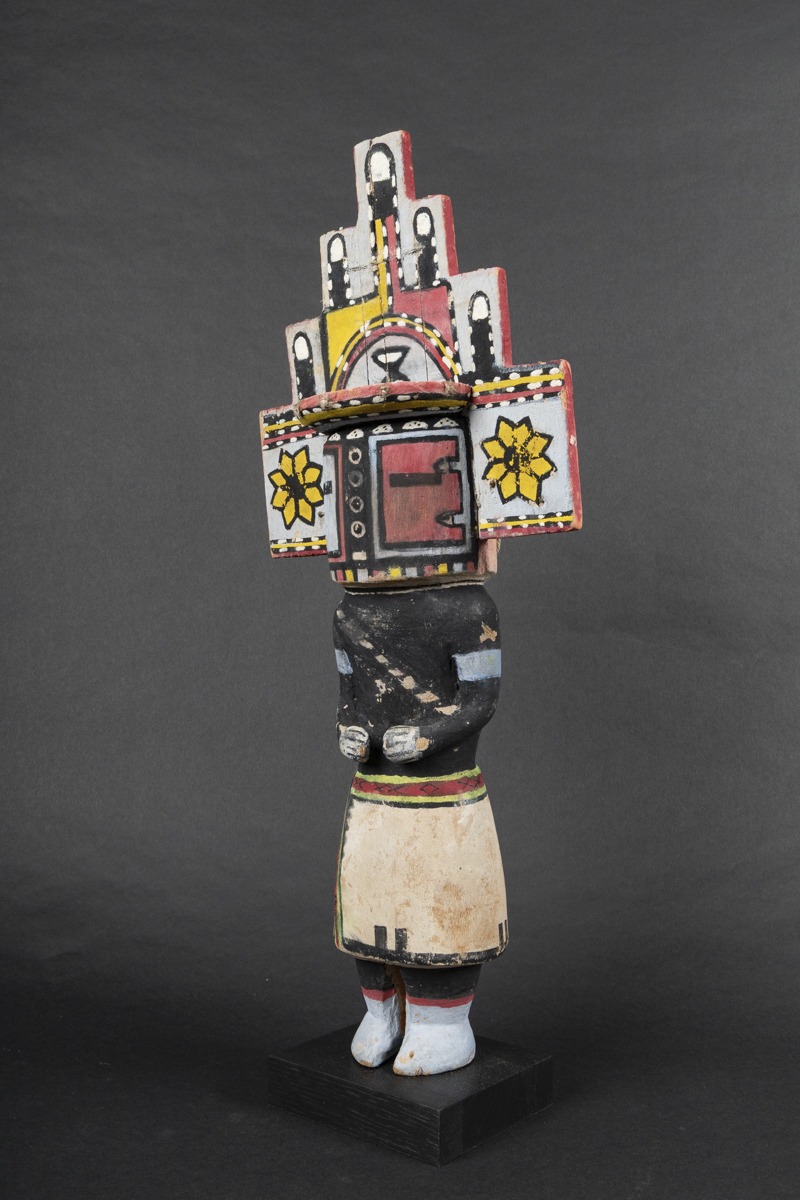
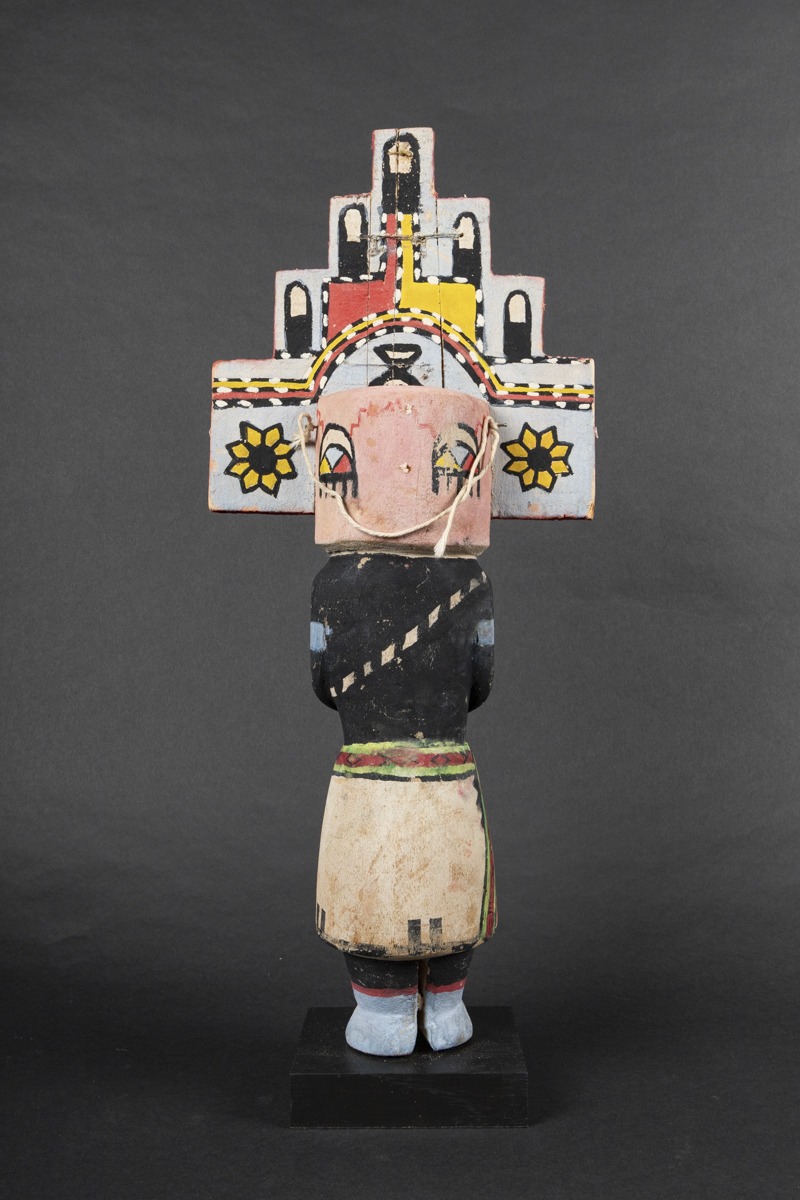
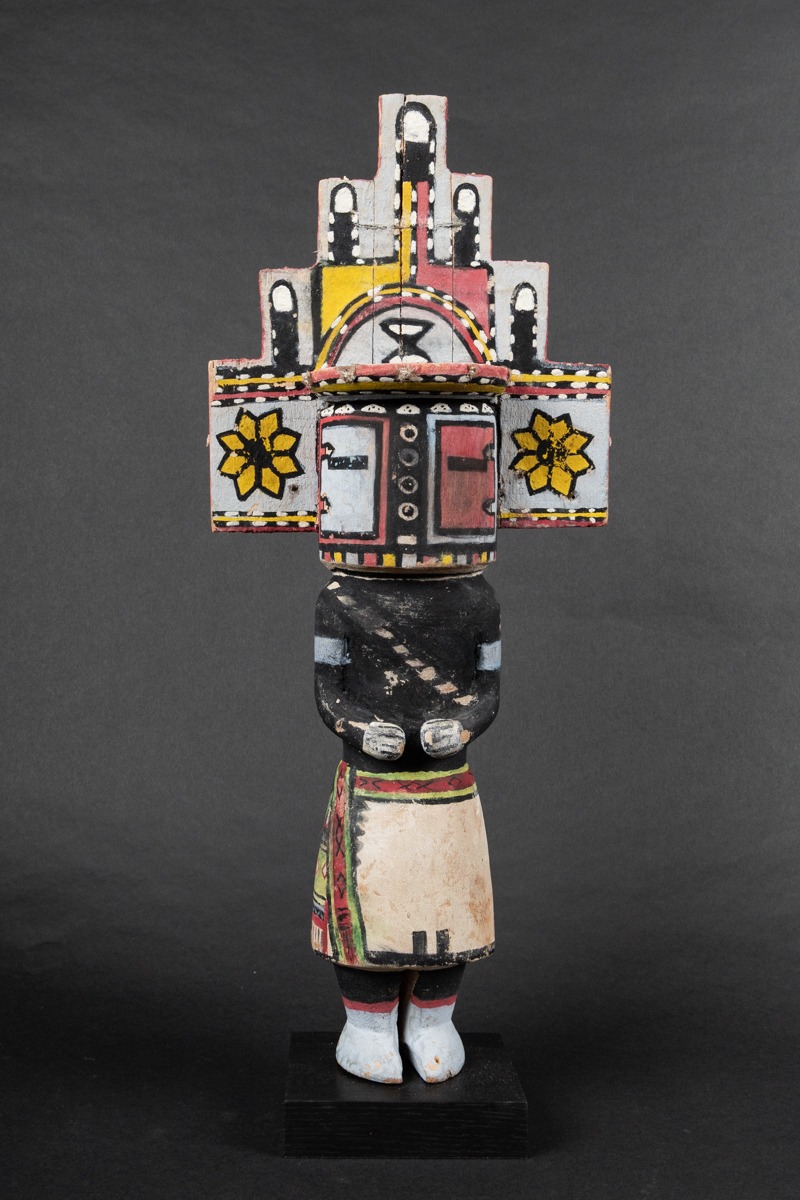
New Corn Katsina Doll
Hemis
Hopi
Arizona, USA
Circa 1930
Carved wood and pigments
Height: 49.5 cm – 19 ½ in.
Provenance
Toledo Museum of Natural History (inv. E376)
Heritage Auctions, Texas, 5 May 2012, lot 500024
Private collection, USA
Hemis Katsina Doll 49.5 cm Toledo Museum/ Galerie Flak
Price: on request
Katsina dolls (or Katsinam) represent spirits or gods from the pantheon of the Pueblo peoples in the American Southwest. Given to children, kachina dolls constituted a teaching tool allowing them to familiarize themselves with the spiritual world and perpetuating knowledge of the founding myths on which their society was based.
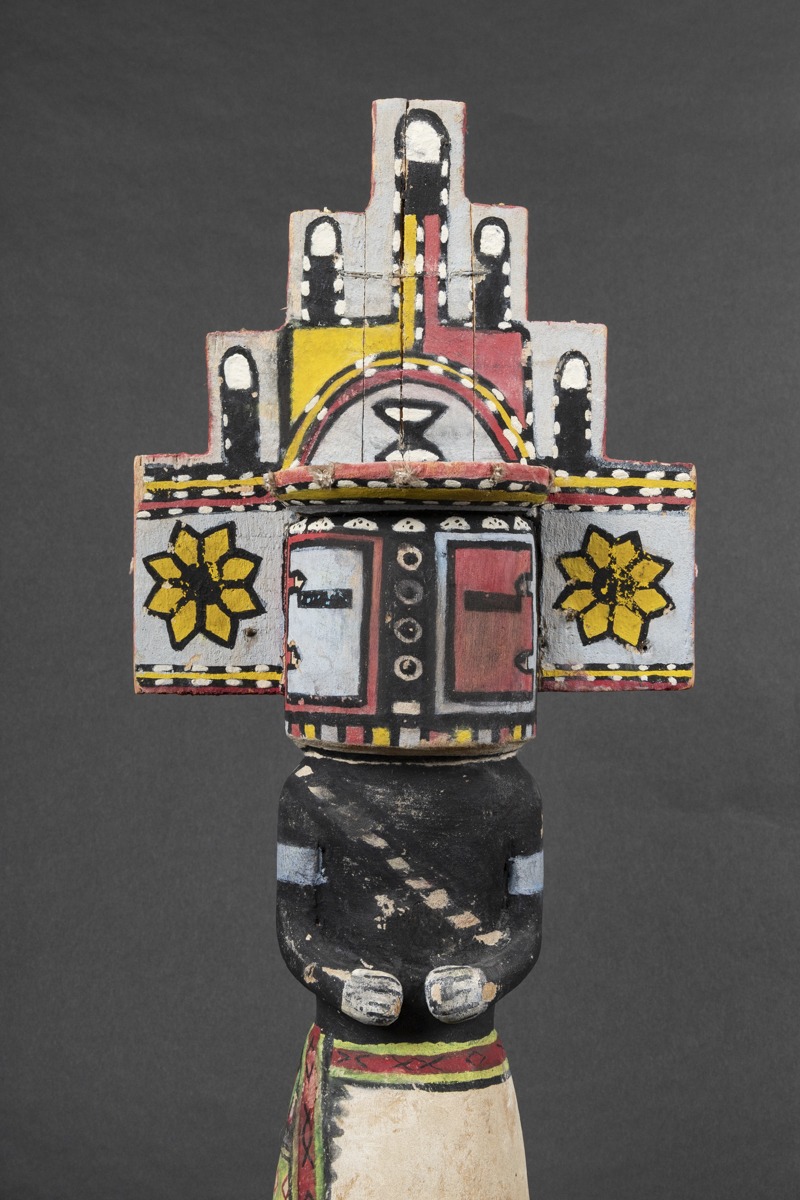
This doll, adorned with a multitude of symbols related to moisture and agriculture, represents Hemis, the New Corn or Ripening Corn Katsina. Hemis is one of the most iconic Katsinam
in the Hopi pantheon. This spirit calls forth the rains that will nurture the growth of corn, the staple food for the Hopi people. Hemis derives its name from Jemez, neighbors of the
Hopi residing along the Rio Grande.
Hemis dancers are present at the opening of the Niman dances, the Home-Going Ceremony that marks the conclusion of the Katsina season. At the end of the summer, after Niman, the Katsinam depart from the mesas, leaving the Hopi people for six long months. Hemis is one of the most fitting Katsinam for this farewell ceremony, as his presence indicates that the corn harvest is assured for the coming season. Therefore, he can leave the village with the inhabitants feeling secure, knowing that their sustenance is guaranteed.
This doll, adorned with a multitude of symbols related to moisture and agriculture, represents Hemis, the New Corn or Ripening Corn Katsina. Hemis is one of the most iconic Katsinam
in the Hopi pantheon. This spirit calls forth the rains that will nurture the growth of corn, the staple food for the Hopi people. Hemis derives its name from Jemez, neighbors of the
Hopi residing along the Rio Grande.
Hemis dancers are present at the opening of the Niman dances, the Home-Going Ceremony that marks the conclusion of the Katsina season. At the end of the summer, after Niman, the Katsinam depart from the mesas, leaving the Hopi people for six long months. Hemis is one of the most fitting Katsinam for this farewell ceremony, as his presence indicates that the corn harvest is assured for the coming season. Therefore, he can leave the village with the inhabitants feeling secure, knowing that their sustenance is guaranteed.
Explore the entire collection