Katsina doll
Arizona
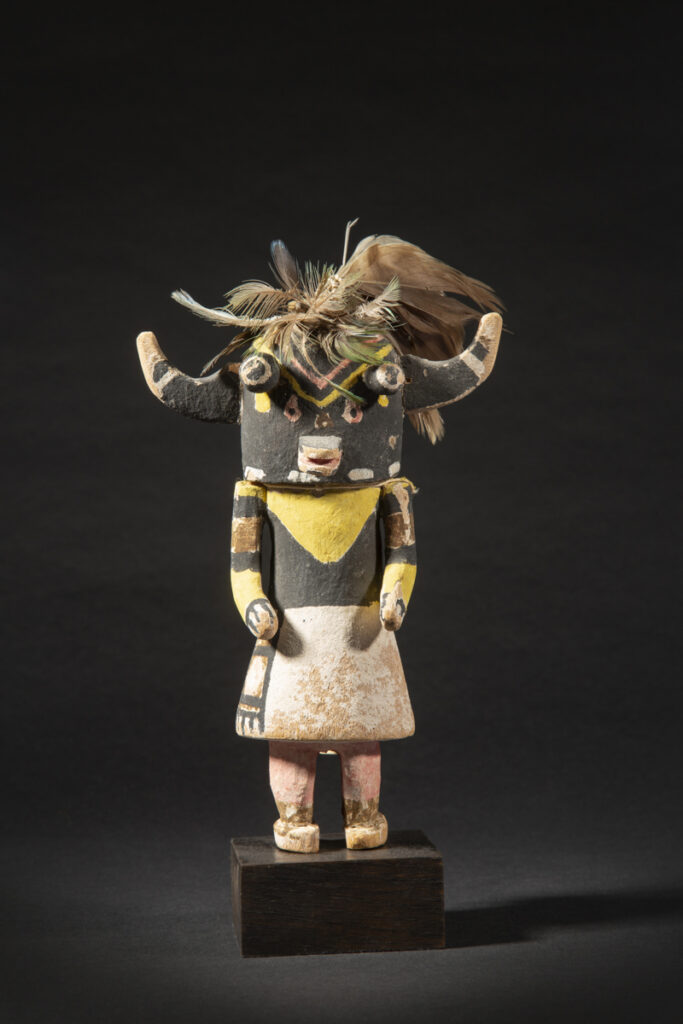
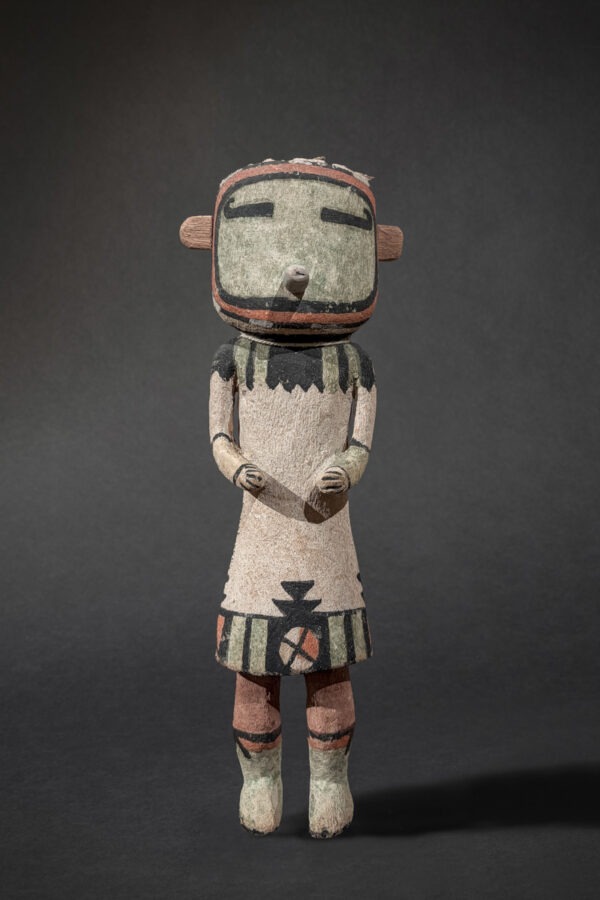
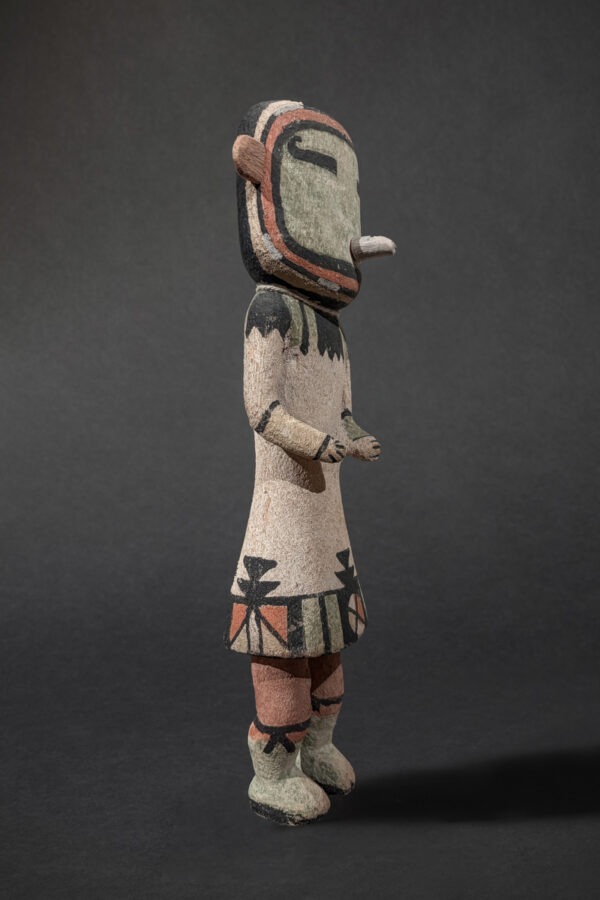
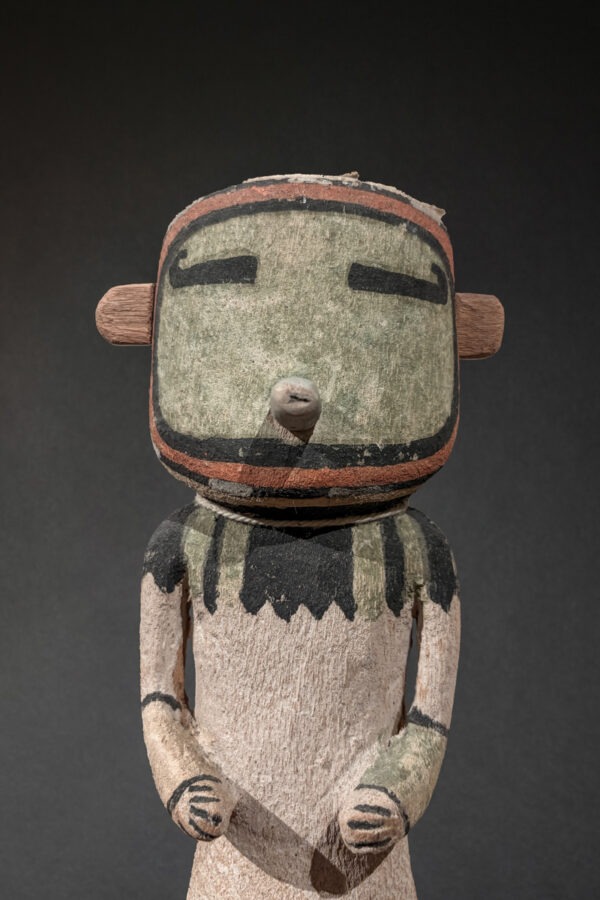
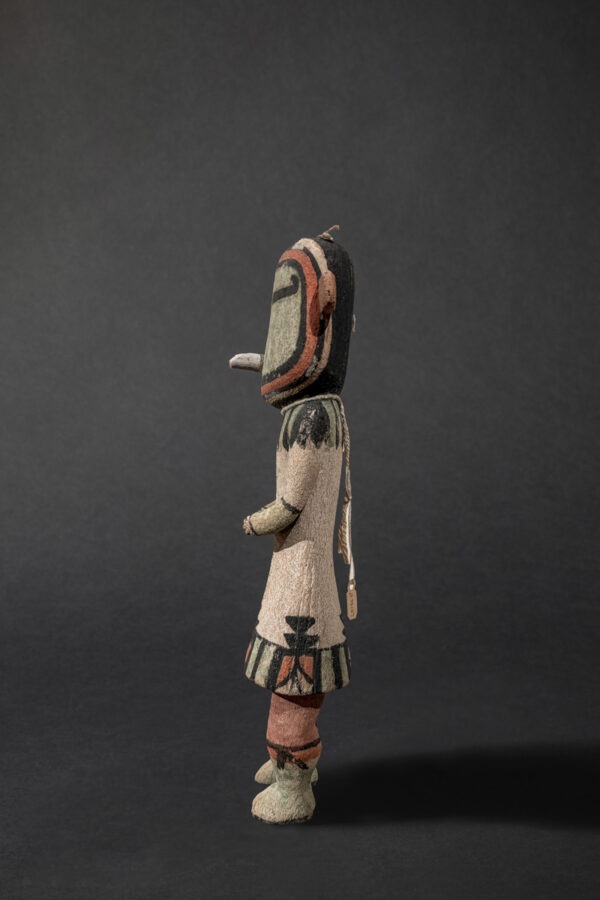
Dress Katsina Doll
Koroasta
Hopi
Arizona, USA
Circa 1890 – 1900
Carved wood (cottonwood) and natural pigments
Height: 31 cm – 12 ¼ in.
Provenance
Collection Joseph Jacinto Mora (1876-1947), Monterey, acquired during his stay in the Hopi village of Oraibi between 1904 and 1906
Collection Jo N. Mora Jr, Monterey, by descent
Collection George Terasaki (1931 – 2010), New York acquired from the above in March 1972
Sotheby’s New York, « Sculpture from the collection of George Terasaki », 19 Nov. 2019, lot 35
Private collection, California, acquired at the above sale
Publication
« Kachina: George Terasaki Collection », Alexandra Pascassio & George Terasaki, Paris, 2008, page 38
« Classic Hopi and Zuni kachina figures » Barton Wright, Andrea Portago, Museum of New Mexico Press, Santa Fe, 2006, pl. 72 p. 140
Katsina dolls (or Katsinam) represent spirits or gods from the pantheon of the Pueblo peoples in the American Southwest. Given to children, Katsina dolls constituted a teaching tool allowing them to familiarize themselves with the spiritual world and perpetuating knowledge of the founding myths on which their society was based.
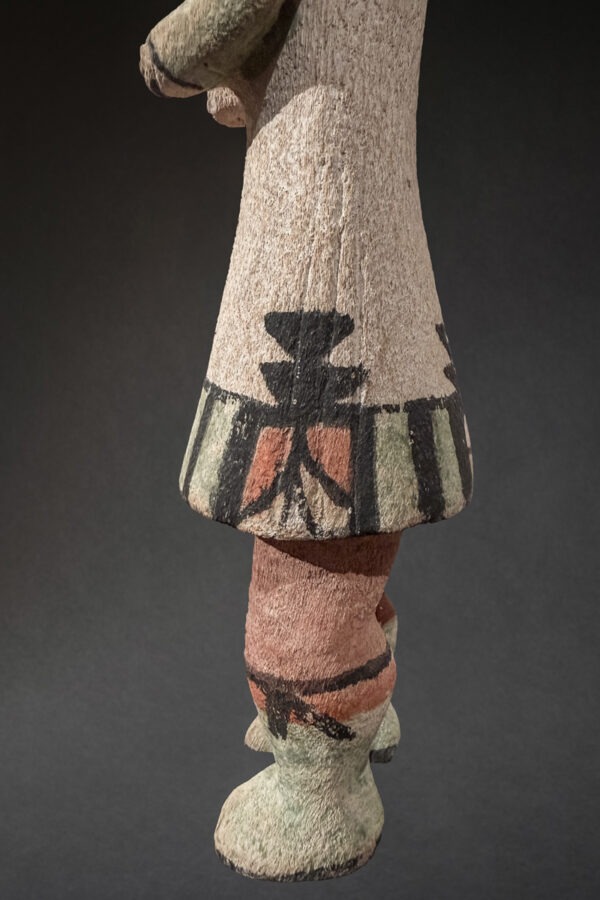
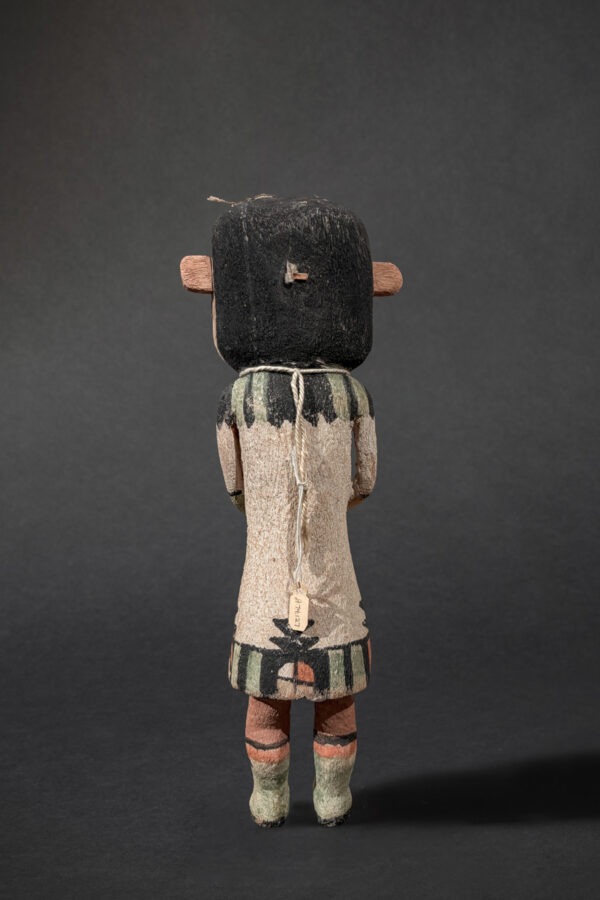
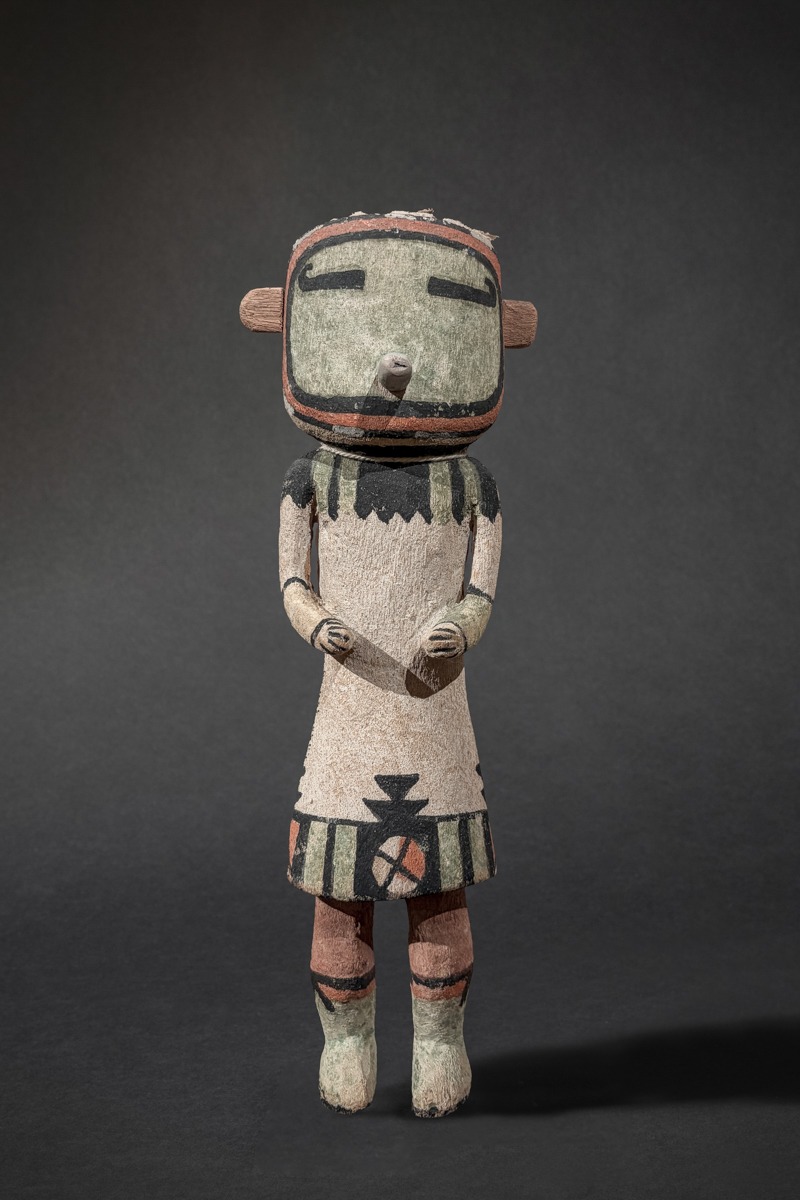
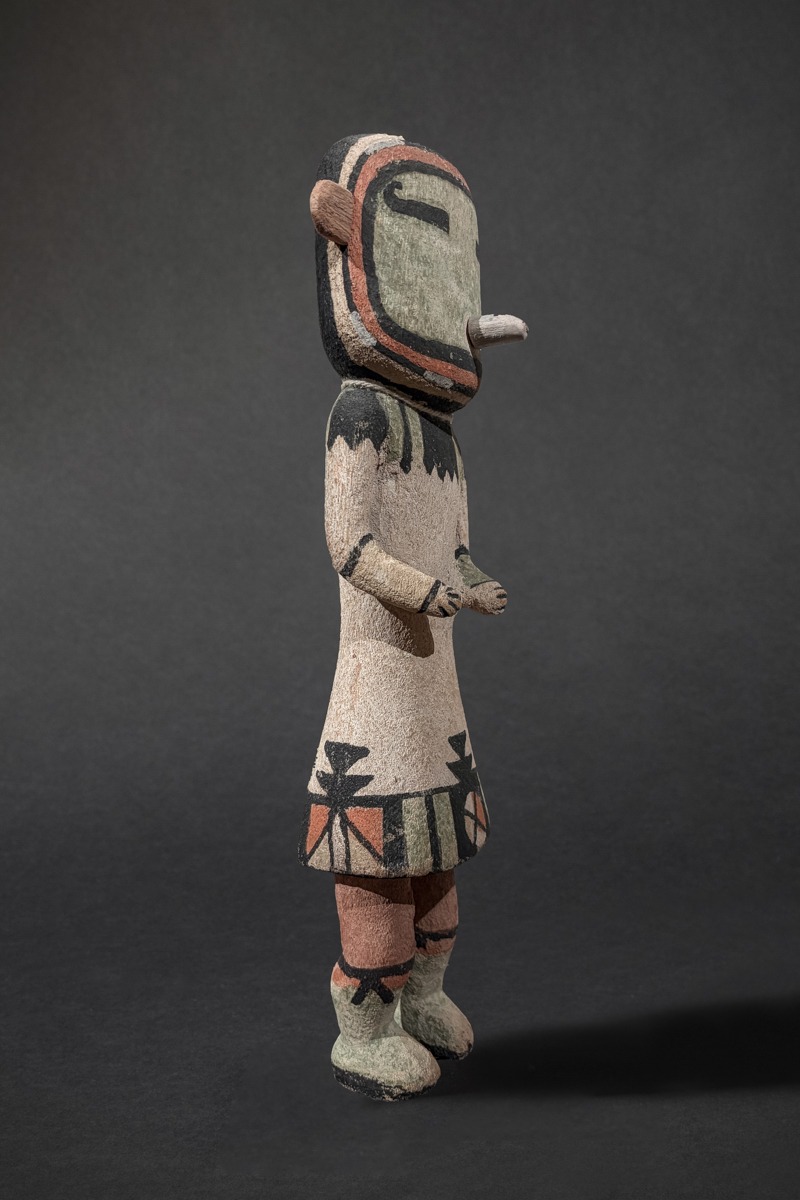
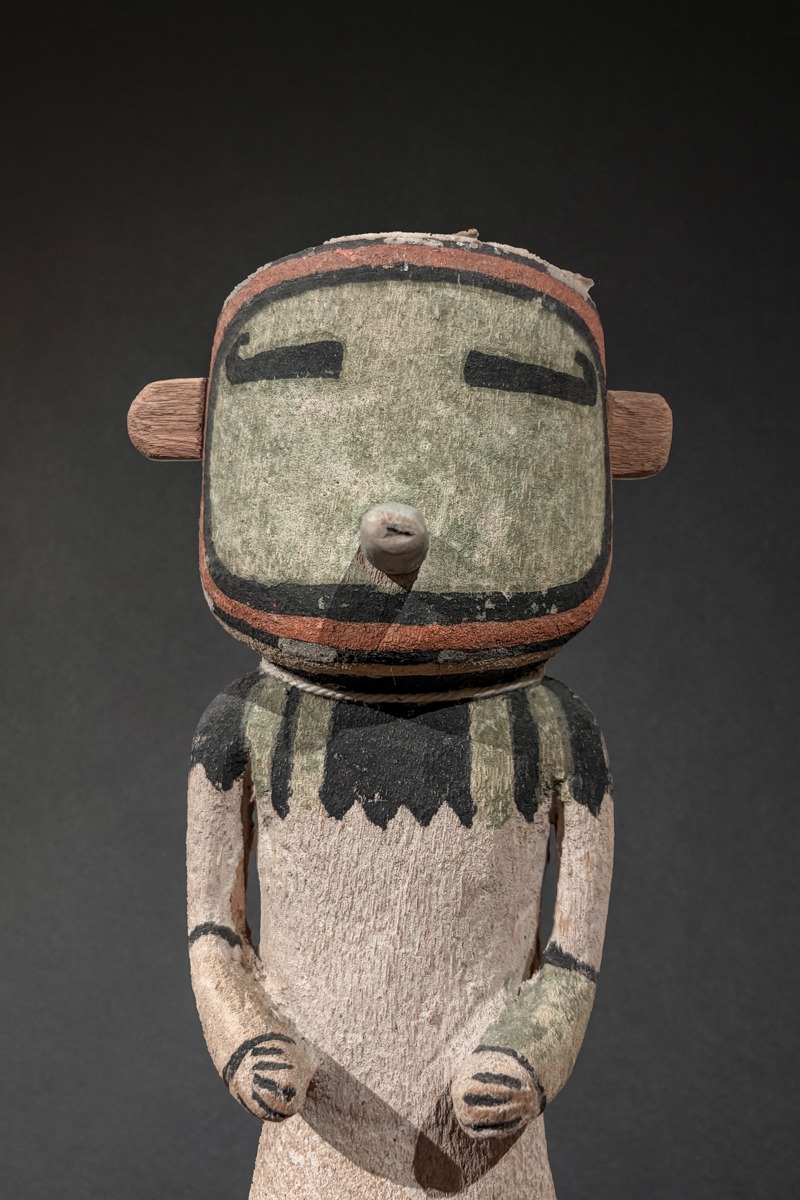
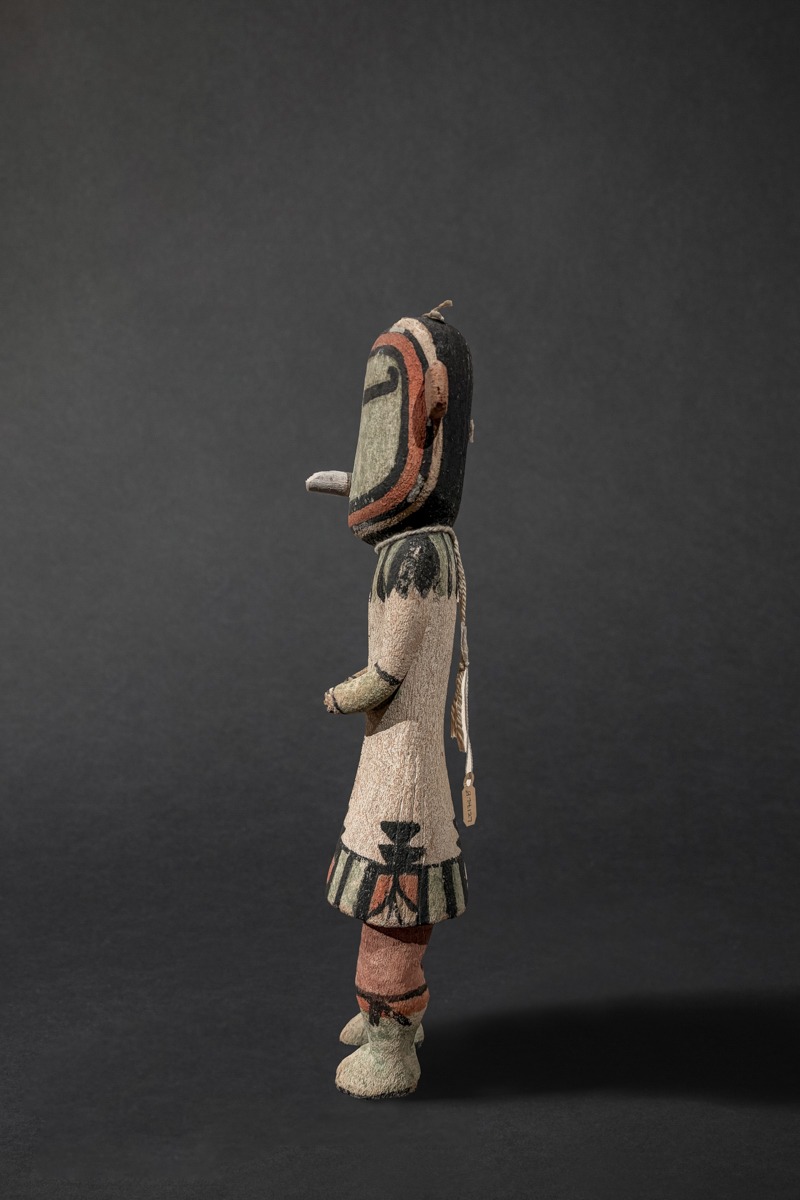
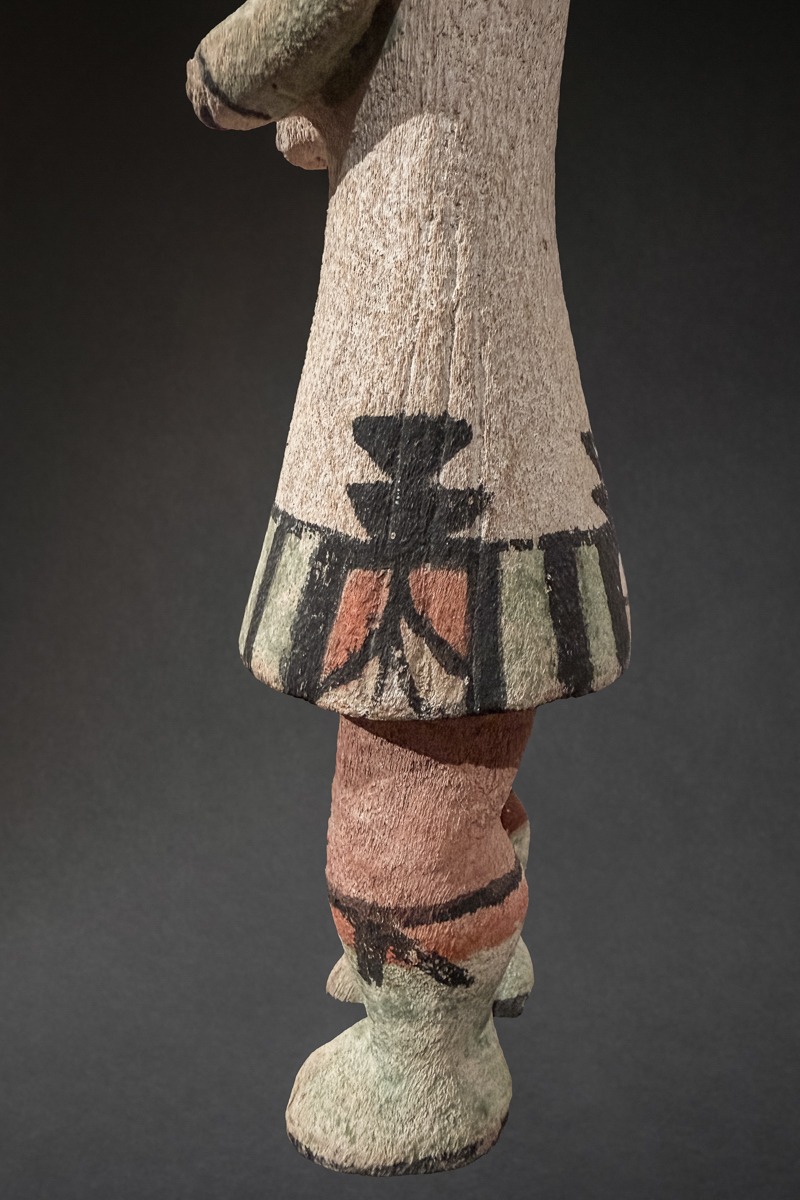
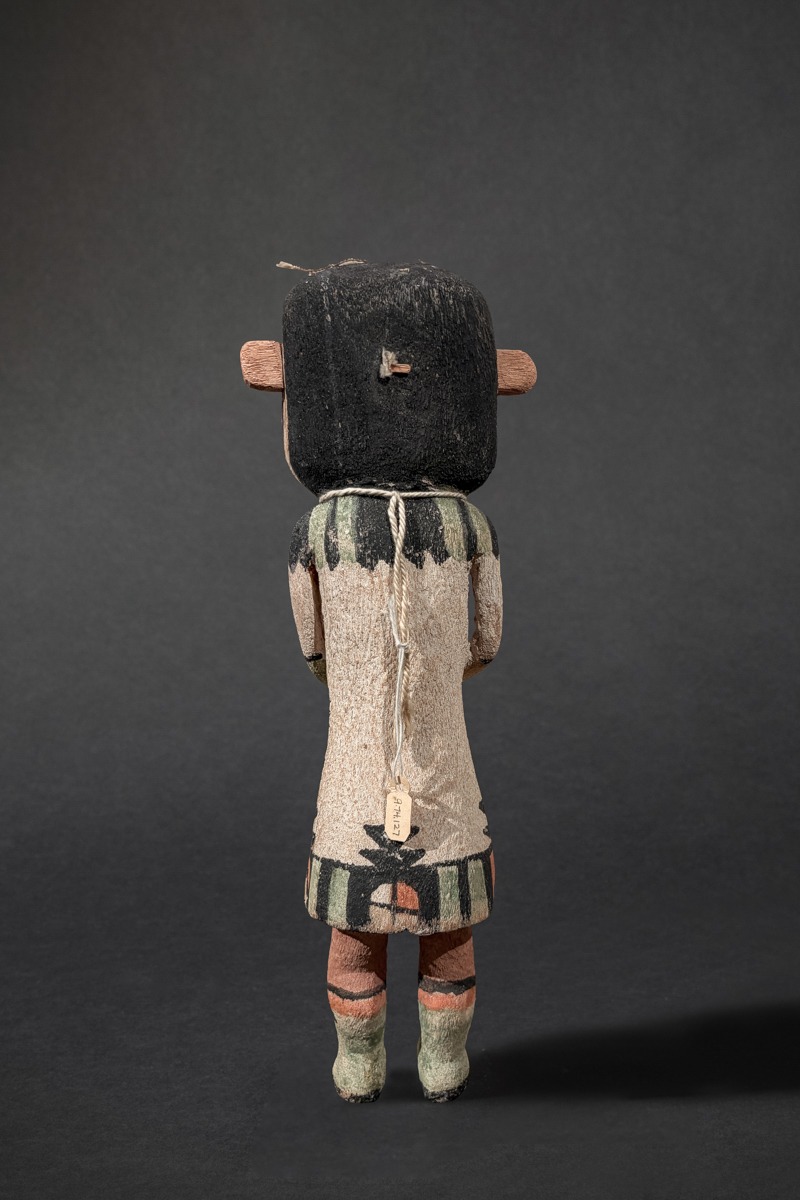
This Katsina doll is known as Koroasta, Korosoto, or Kwasaitaka, and is often referred to as the Dress Katsina doll. Among the Hopi, it corresponds to the Third Mesa sculptural form of the Zuni Koroasta (or Korosta) Katsina. The Hopi sometimes call it the Ota Katsina, named after the opening words of its song. The designation “Dress Katsina doll” derives from the fact that, although the Katsina spirit itself is considered male, it appears ceremonially dressed in a woman’s garment, typically without a belt.
One of the most distinctive features of this Katsina doll is the beak or nose, which in some examples is formed from small cornhusk packets and in others—such as the present example—is rendered as a carved beak (a later addition). Painted lines encircling the face are understood to evoke rainbow colors. In ceremonial performances, the Koroasta Katsina traditionally carries a digging stick, as well as a bag of seeds distributed to spectators. These seeds are regarded as auspicious signs of forthcoming abundant harvests, and recipients are eager to plant them.
Closely associated with the growth of corn, the Koroasta Katsina enjoyed great popularity among both the Hopi and the Zuni. Hopi Koroasta dancers perform during the Powamu ceremony on the Third Mesa.
In terms of provenance, Joseph Jacinto Mora, known as “Jo Mora,” was an artist, illustrator, photographer, sculptor, and author, born in 1876 in Montevideo, Uruguay. In the early years of the 20th century, Jo Mora traveled through California, then Arizona and New Mexico. Between 1904 and 1906, he lived among the Hopi near the village of Oraibi. He learned the language, shared their daily life, and attended ceremonies. He was granted rare permission to document a world that was then largely closed to outside observers. The body of photographs, watercolors, sketches, and written accounts that resulted from this experience—particularly those devoted to Hopi ceremonies and Katsina dances—remains a key reference to this day.
A photograph in the archives of the Northern Arizona University, NAU.PH.86.1.414, shows that this Katsina figure was already part of the collection of Joseph Jacinto Mora as early as 1906.
Passed down by descent to his son, Jo N. Mora Jr., this sculpture was acquired in March 1972 by the legendary dealer, connoisseur, and photographer George Terasaki (1931–2010). Terasaki assembled a collection worthy of the great ethnographic museums, and his encyclopedic knowledge made him a central figure in the field of indigenous arts and especially in the arts of North America. In November 2019, Sotheby’s New York dispersed the collection of George Terasaki.
Documentation
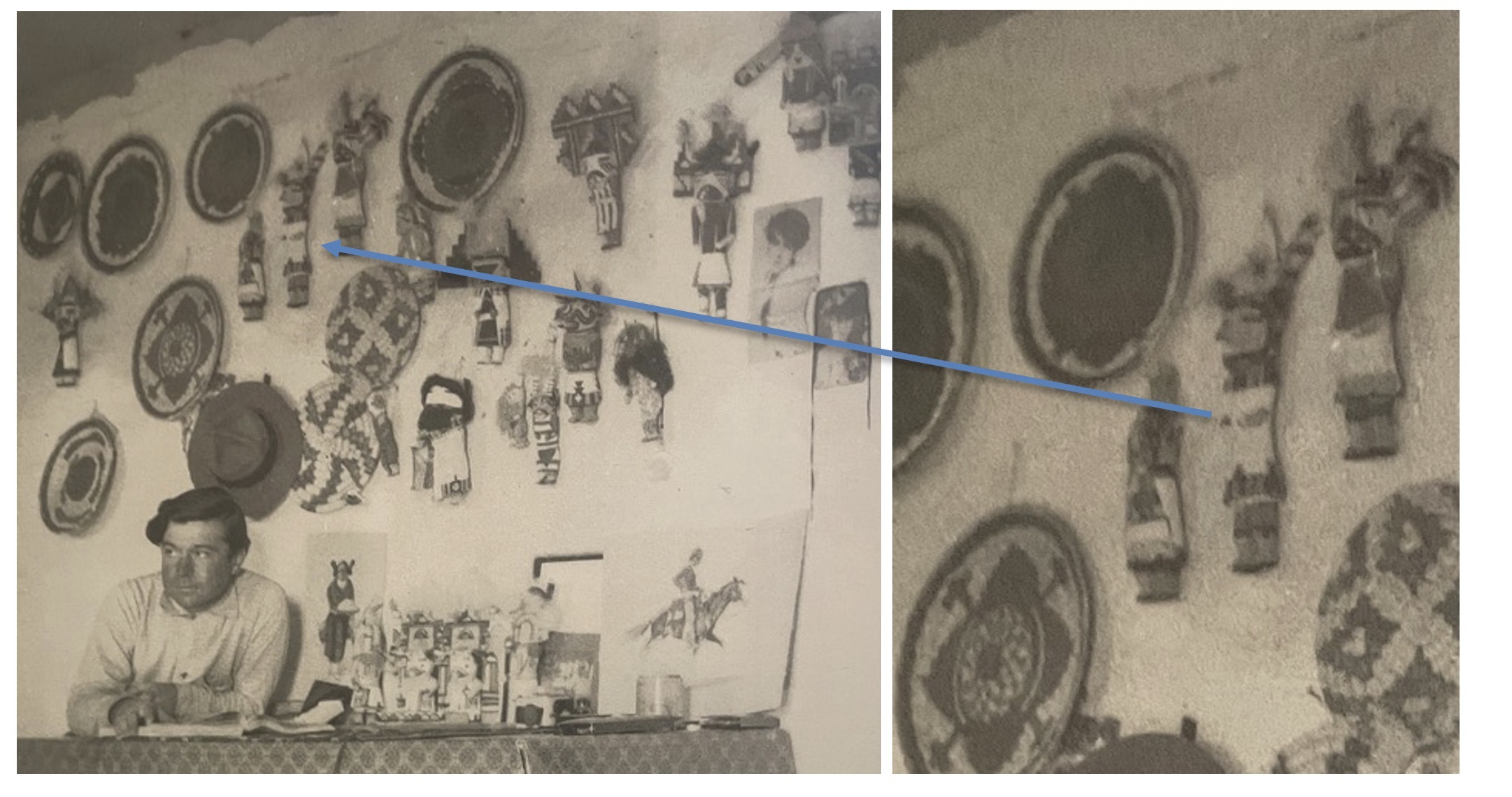
“Portrait of Jo Mora with his collection of Katsina dolls, Oraibi circa 1906”
The Koroasta Katsina doll can be seen in the upper left corner (blue arrow)
Northern Arizona University, Cline Library (Jo Mora Collection), NAU.PH.86.1.414