North America | Arizona
Katsina doll
Arizona
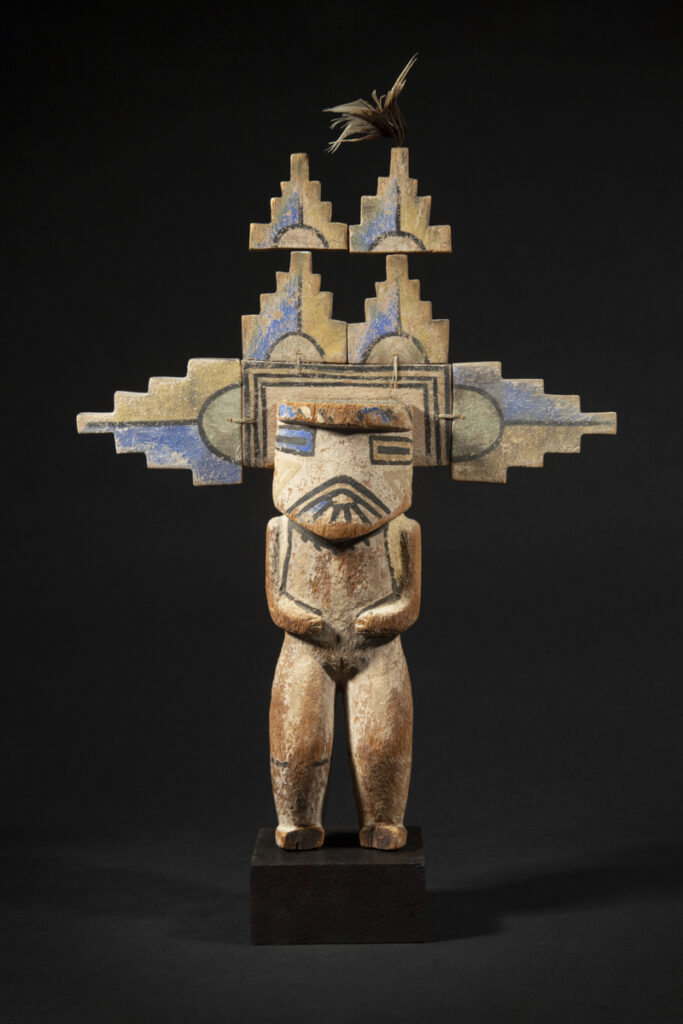
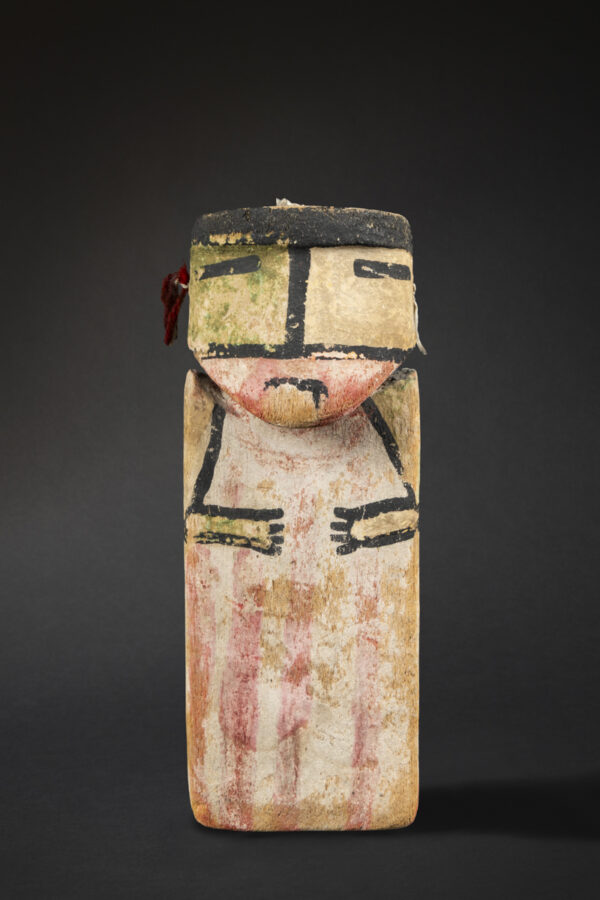
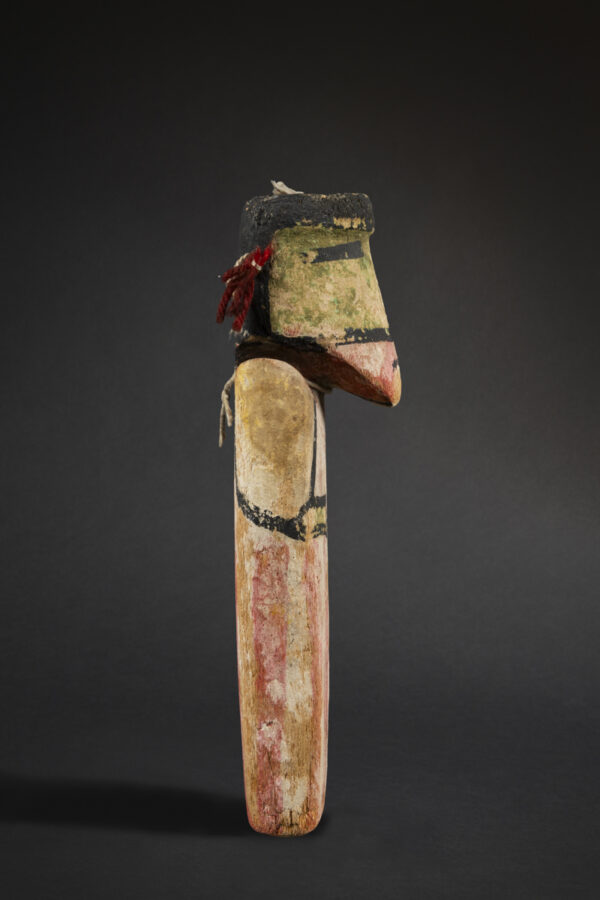
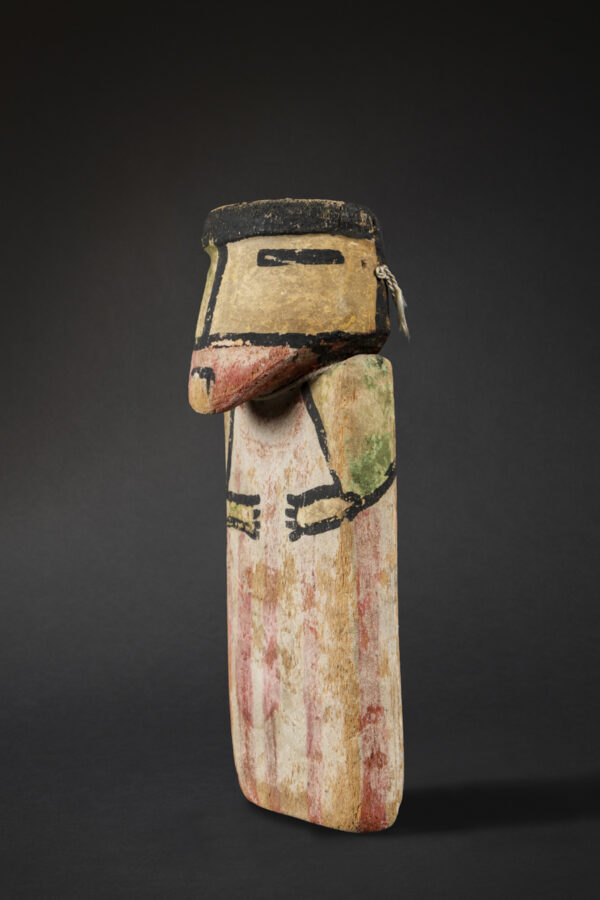
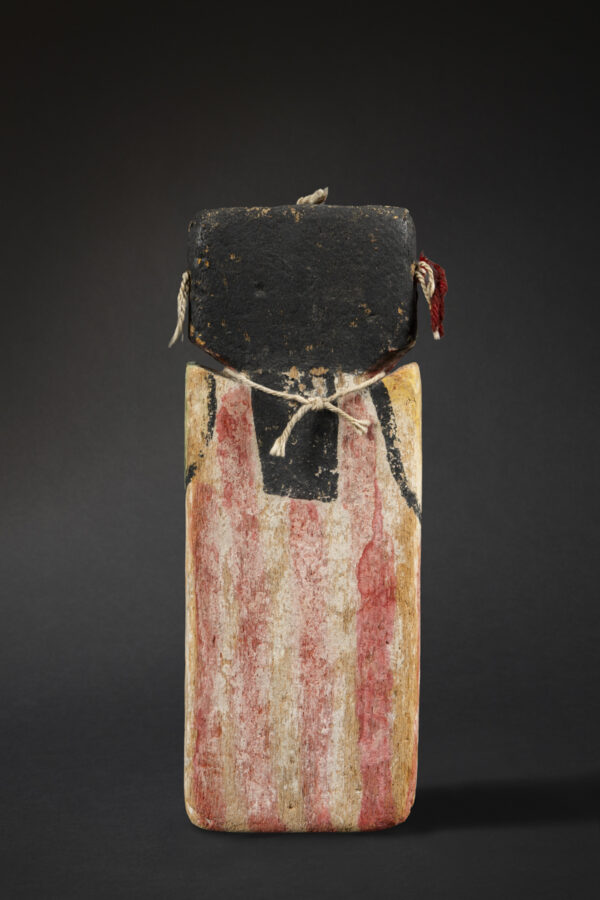
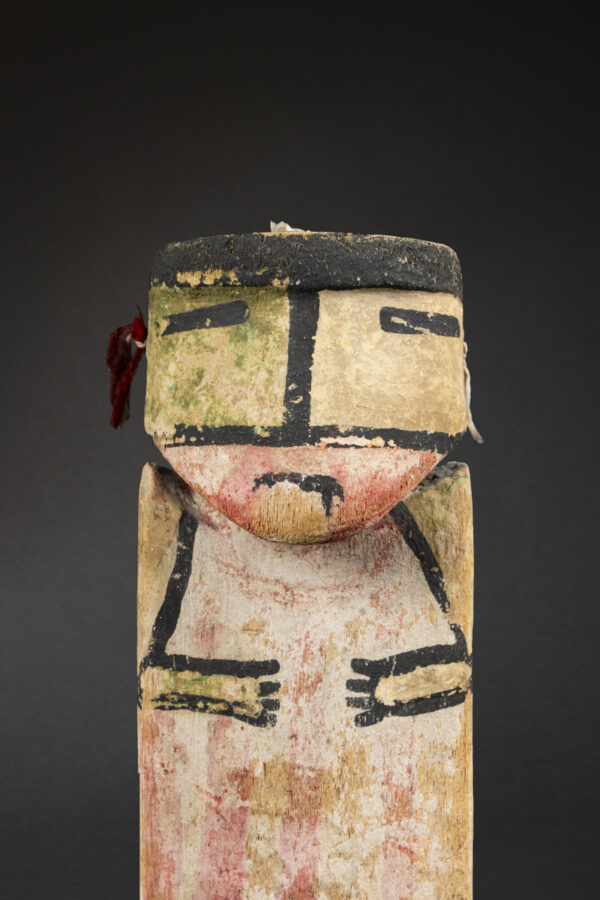
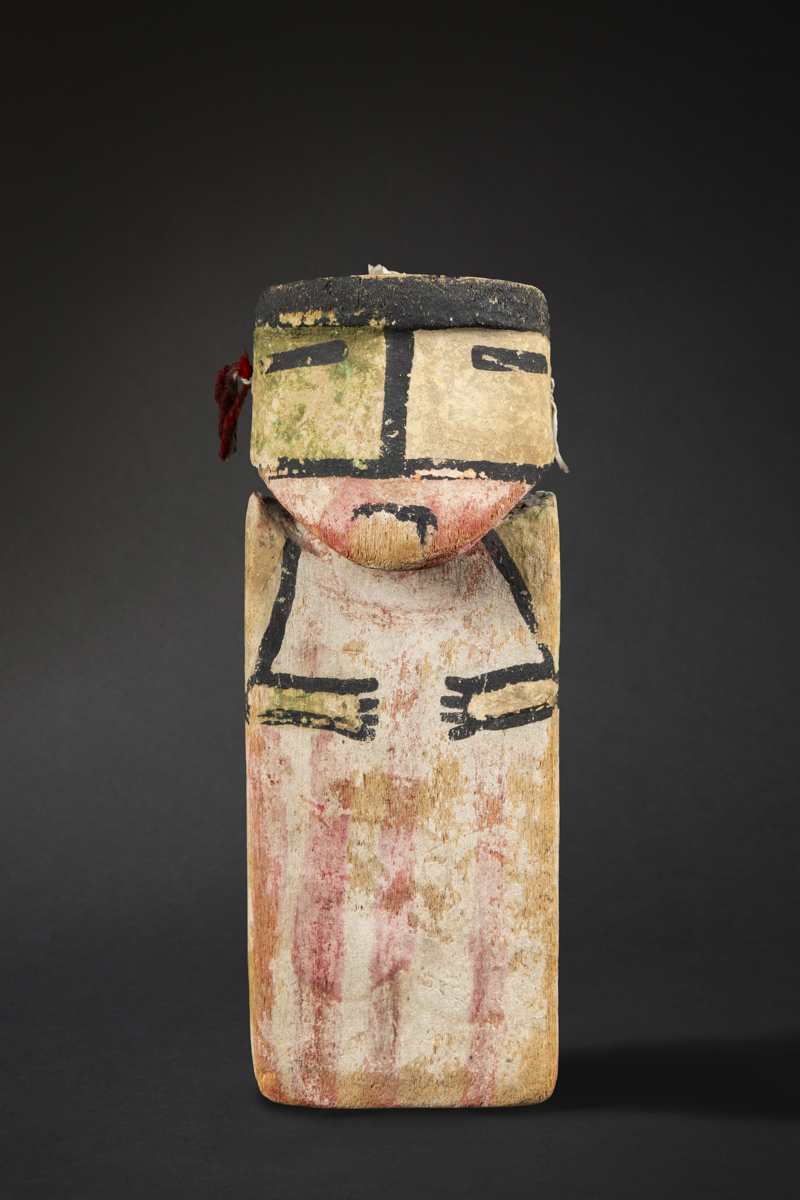
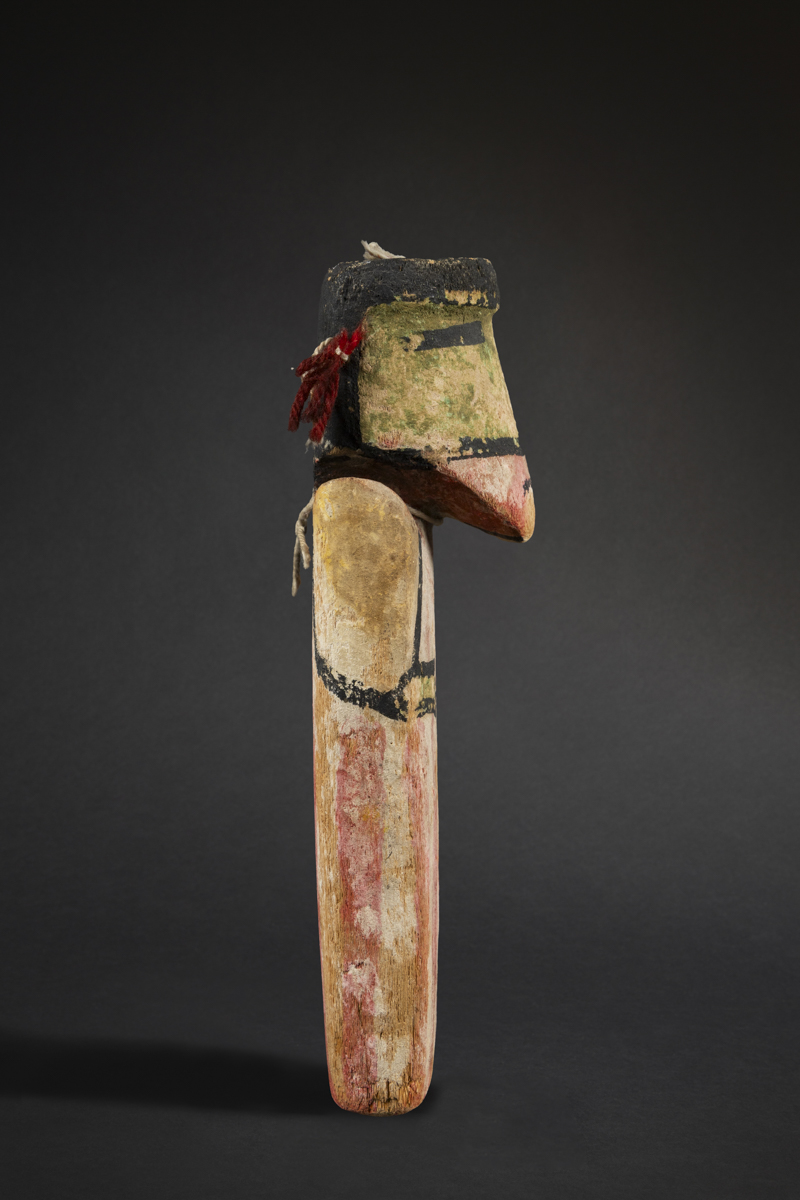
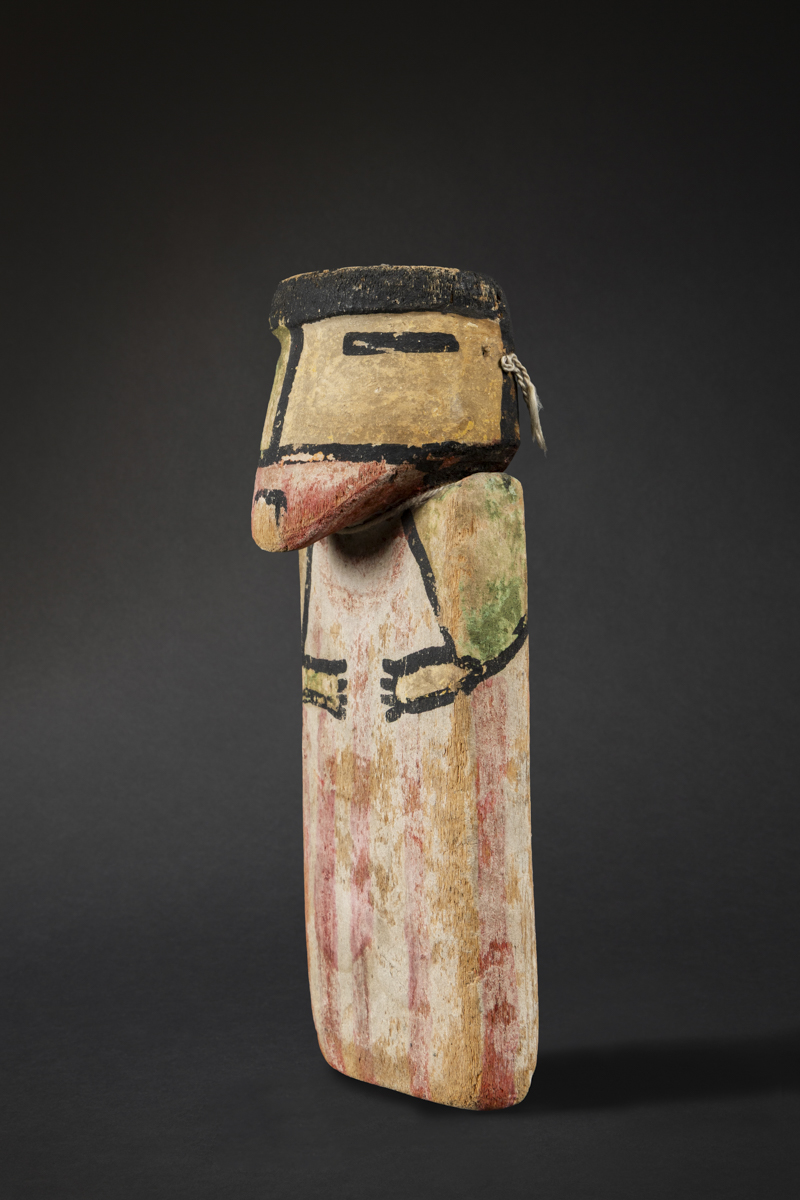
Tumauyi Katsina – White Chin Kastina doll
Hopi
Circa 1900 or earlier
Carved wood (cottonwood), pigments, wool
Height: 21.5 cm – 8 ½ in.
Provenance
Collection Christopher Selser, Santa Fe
Tumauyi flat-type Katsina doll 21.5 cm / Galerie Flak
Price: on request
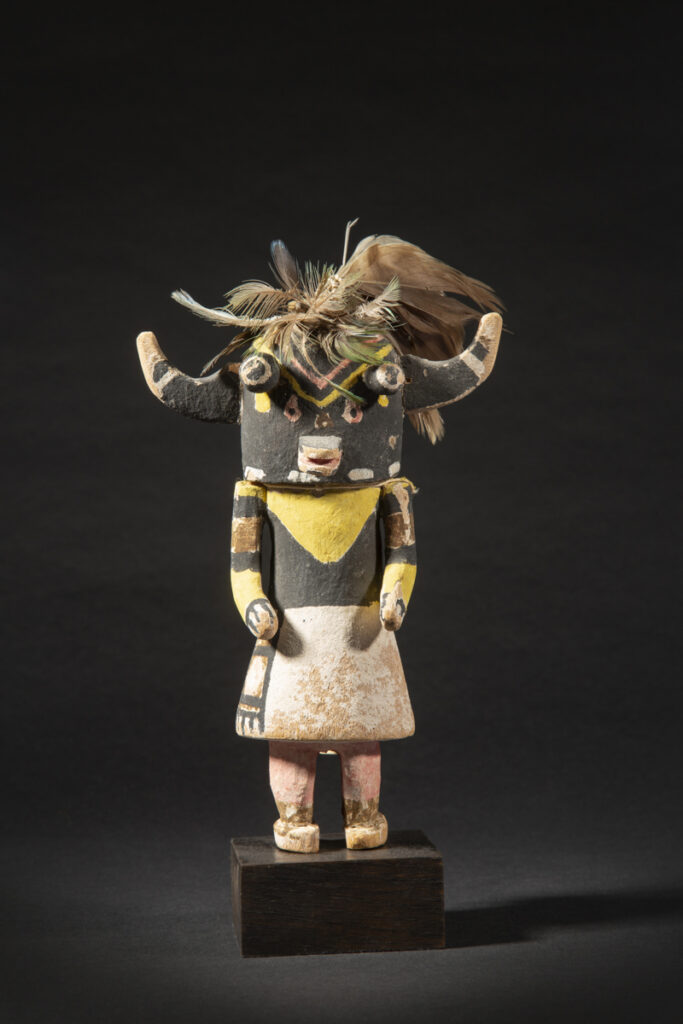
Katsina dolls (or Katsinam) represent spirits or gods from the pantheon of the Pueblo peoples in the American Southwest. Given to children, Katsina dolls constituted a pedagogical tool allowing them to familiarize themselves with the spiritual world and perpetuating knowledge of the founding myths on which their society was based.
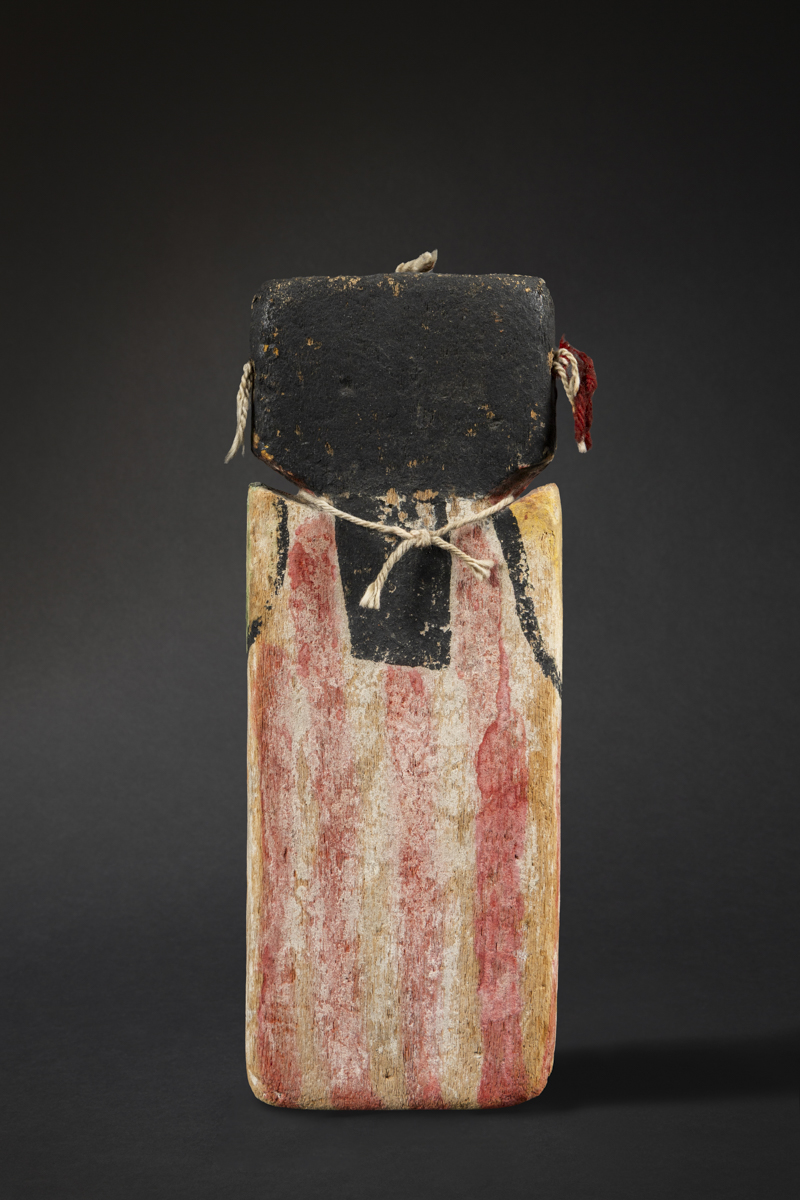
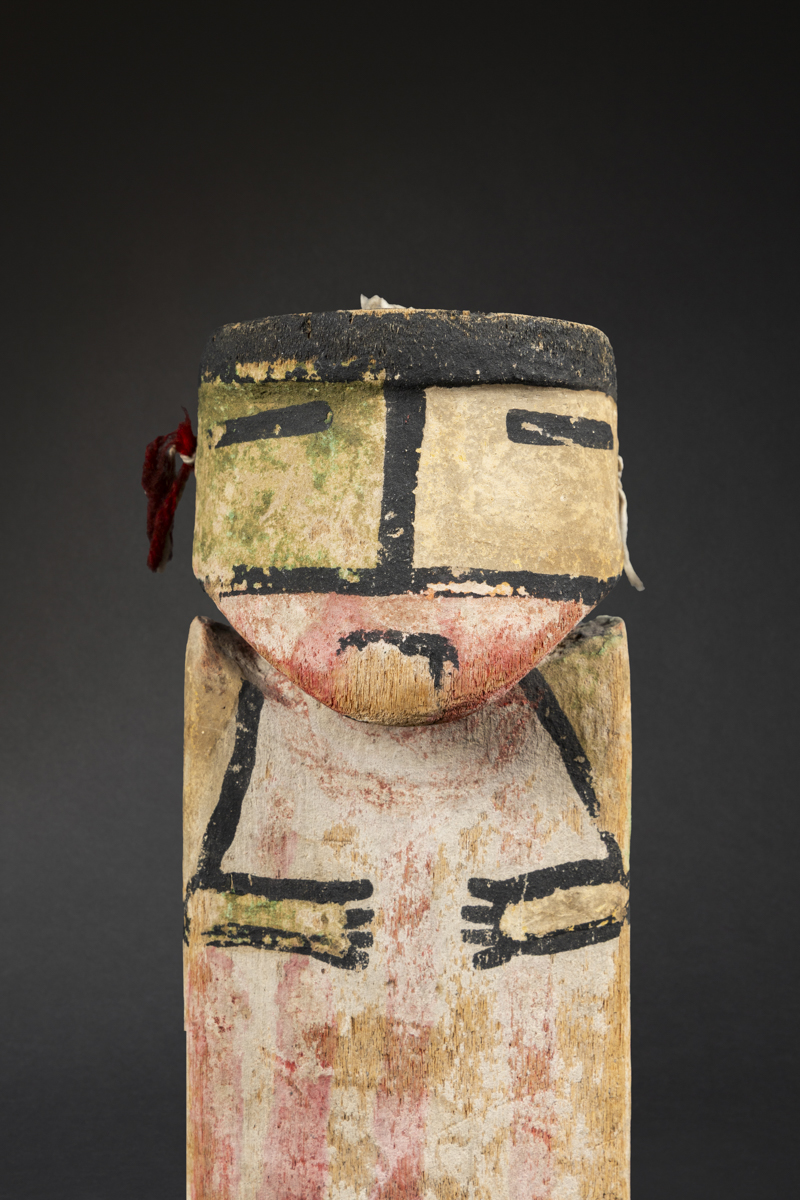
The remarkable Katsina doll here is known as Tumauyi (the White-Chin Katsina). This specific figure disappeared very early from Hopi ceremonial dances, and its exact ritual role remains somewhat elusive to ethnologists. We do know, however, that the appearance of this Katsina served as a call for rain. Its costume traditionally featured a white square at the neck or chin—giving the deity its name.
Flat-type Katsinam (Püch Tihu) like the present example are among the earliest known styles of carved figures among the Hopi. Flat and carved from a single piece of wood, the arms remain an integral part of the torso and the legs are not depicted. While carving canons for Katsina figures became increasingly standardized toward the end of the 19th century—featuring separated lower limbs and three-dimensional forearms—the Hopi and Zuni peoples continued to carve Püch Tihu in later years. These were traditionally reserved for very young children, hence their name: 'Cradle Katsinam'."
The remarkable Katsina doll here is known as Tumauyi (the White-Chin Katsina). This specific figure disappeared very early from Hopi ceremonial dances, and its exact ritual role remains somewhat elusive to ethnologists. We do know, however, that the appearance of this Katsina served as a call for rain. Its costume traditionally featured a white square at the neck or chin—giving the deity its name.
Flat-type Katsinam (Püch Tihu) like the present example are among the earliest known styles of carved figures among the Hopi. Flat and carved from a single piece of wood, the arms remain an integral part of the torso and the legs are not depicted. While carving canons for Katsina figures became increasingly standardized toward the end of the 19th century—featuring separated lower limbs and three-dimensional forearms—the Hopi and Zuni peoples continued to carve Püch Tihu in later years. These were traditionally reserved for very young children, hence their name: 'Cradle Katsinam'."
Explore the entire collection