North America | Arizona
Katsina Doll
Arizona
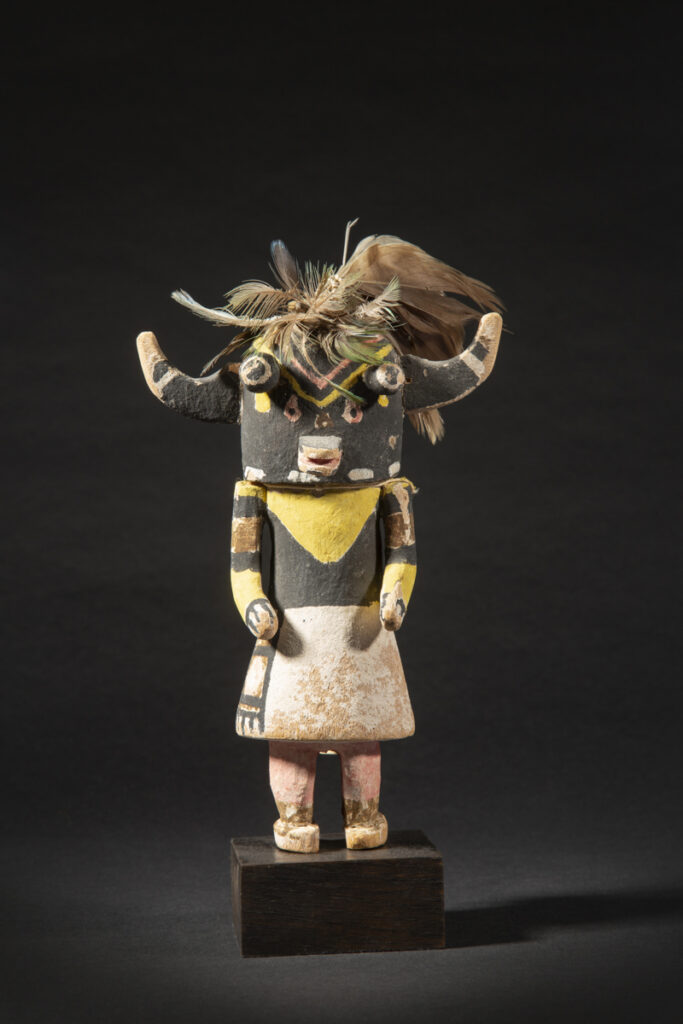
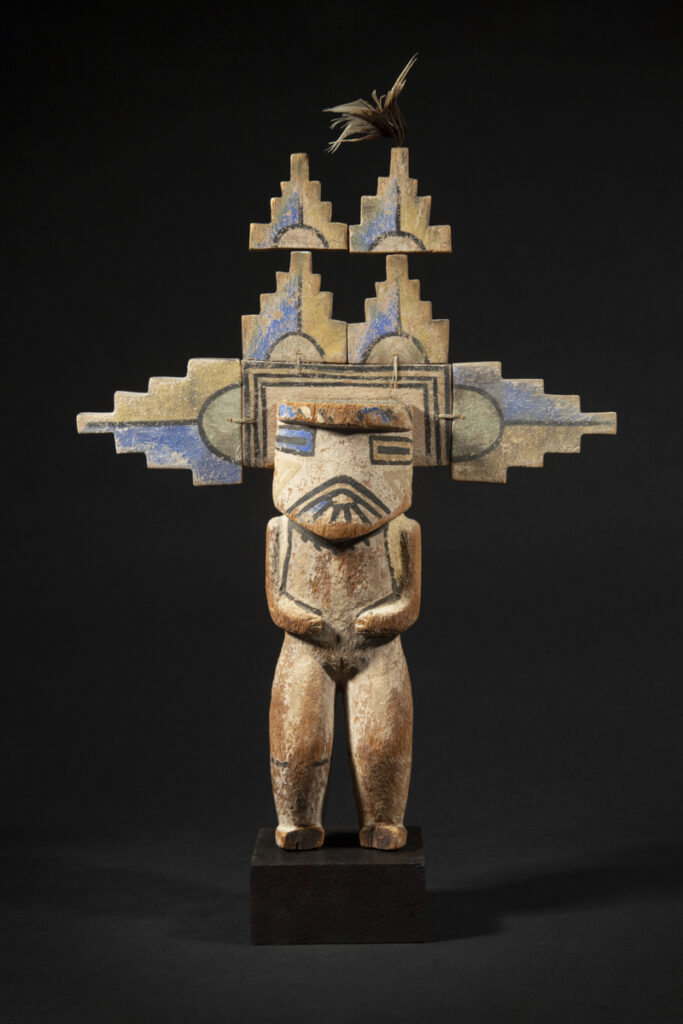
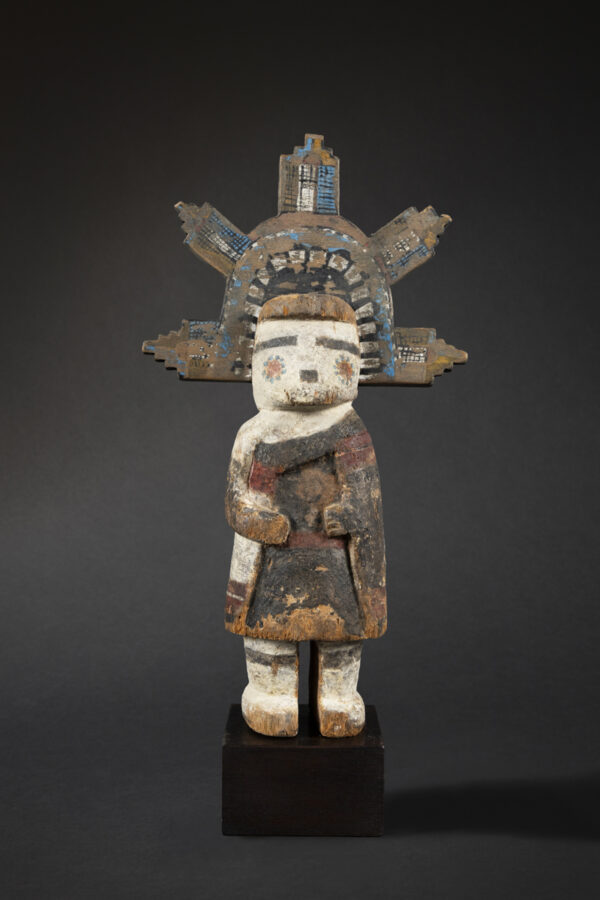
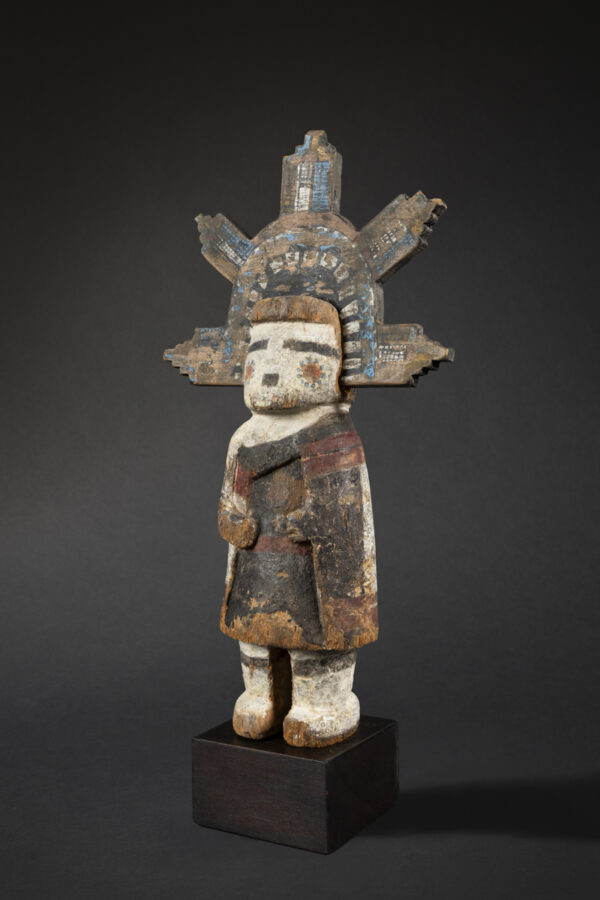
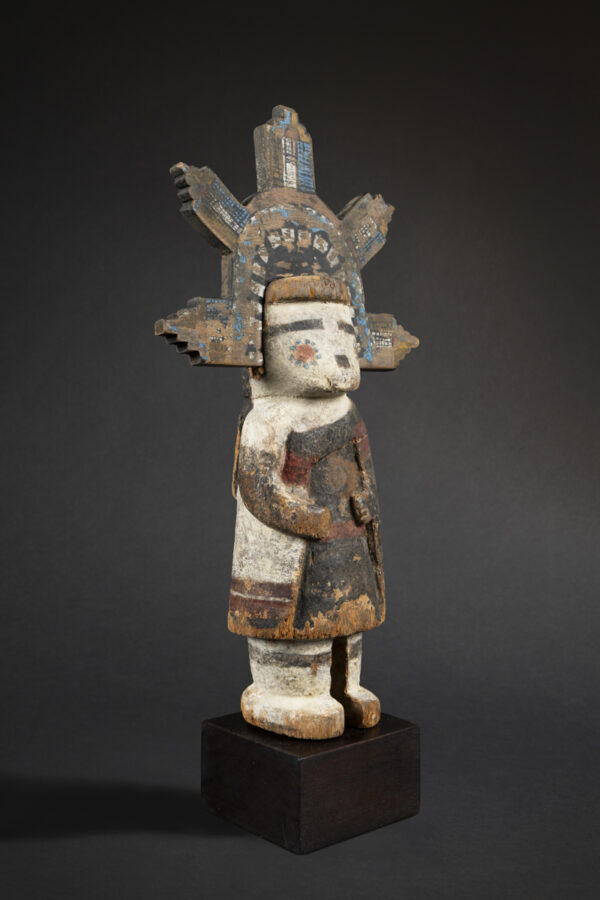
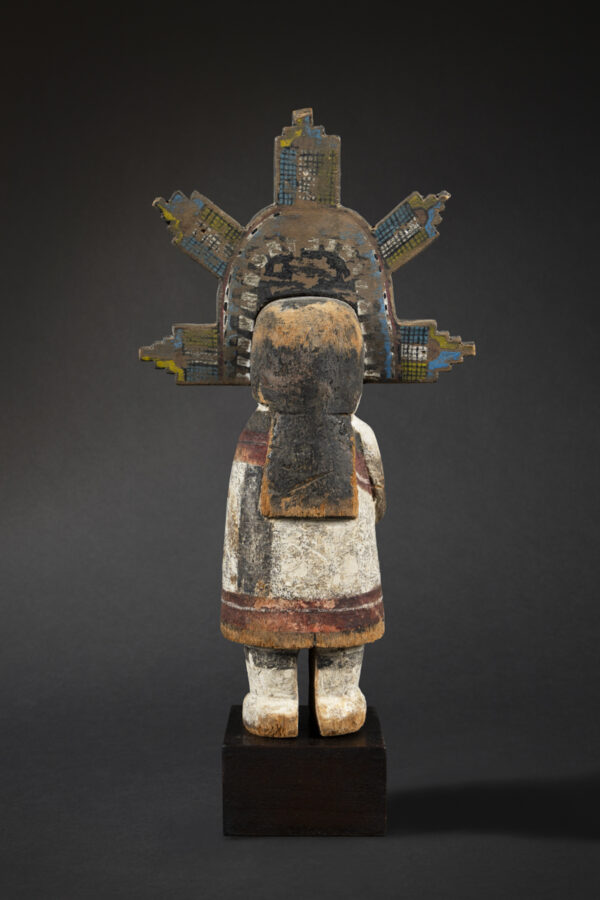
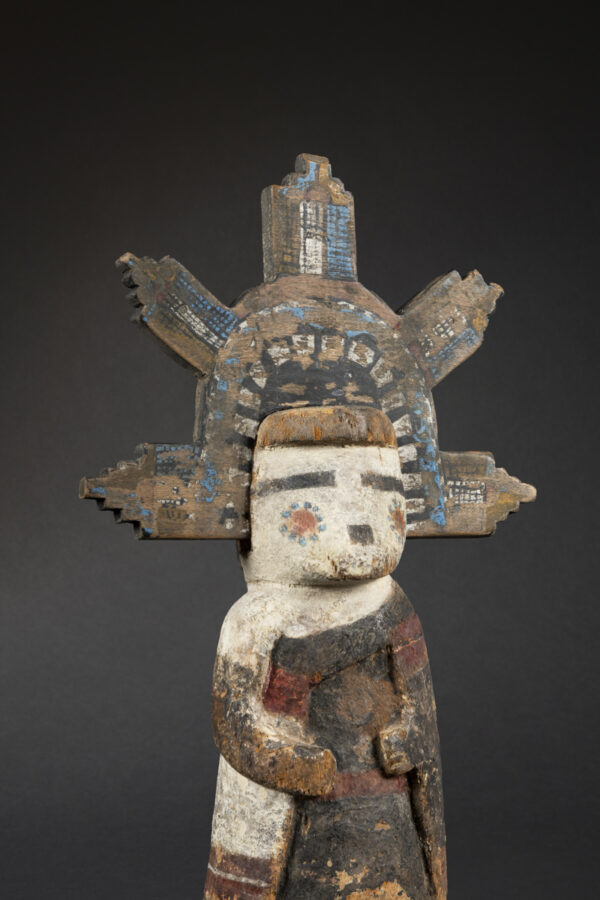
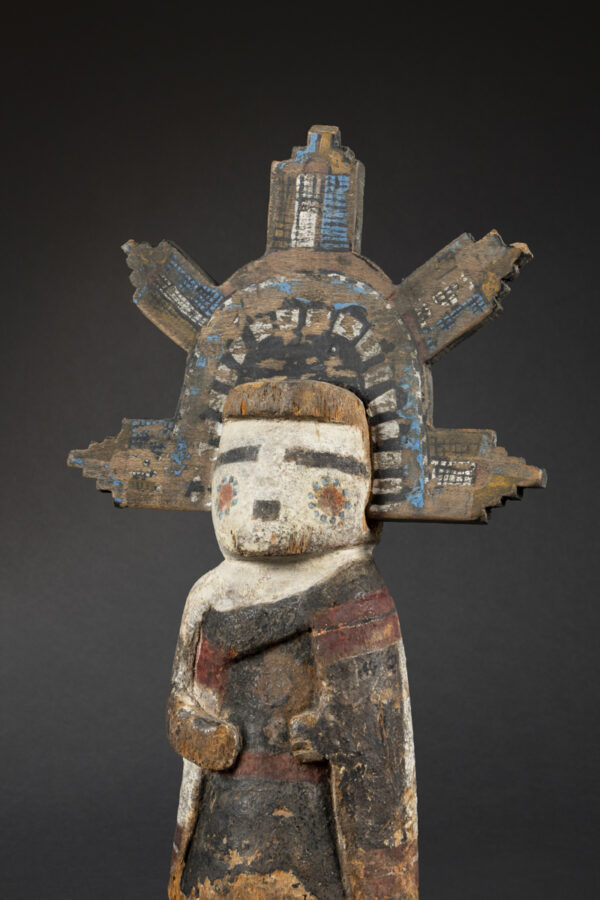
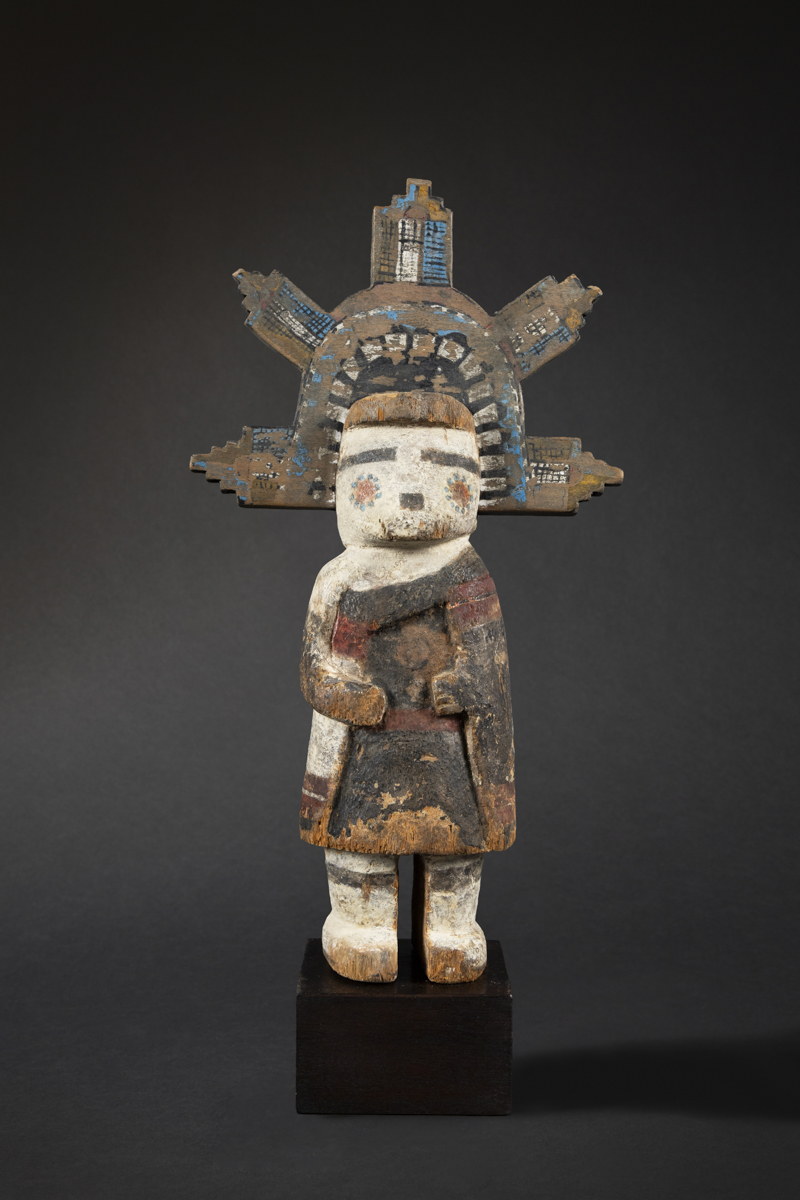
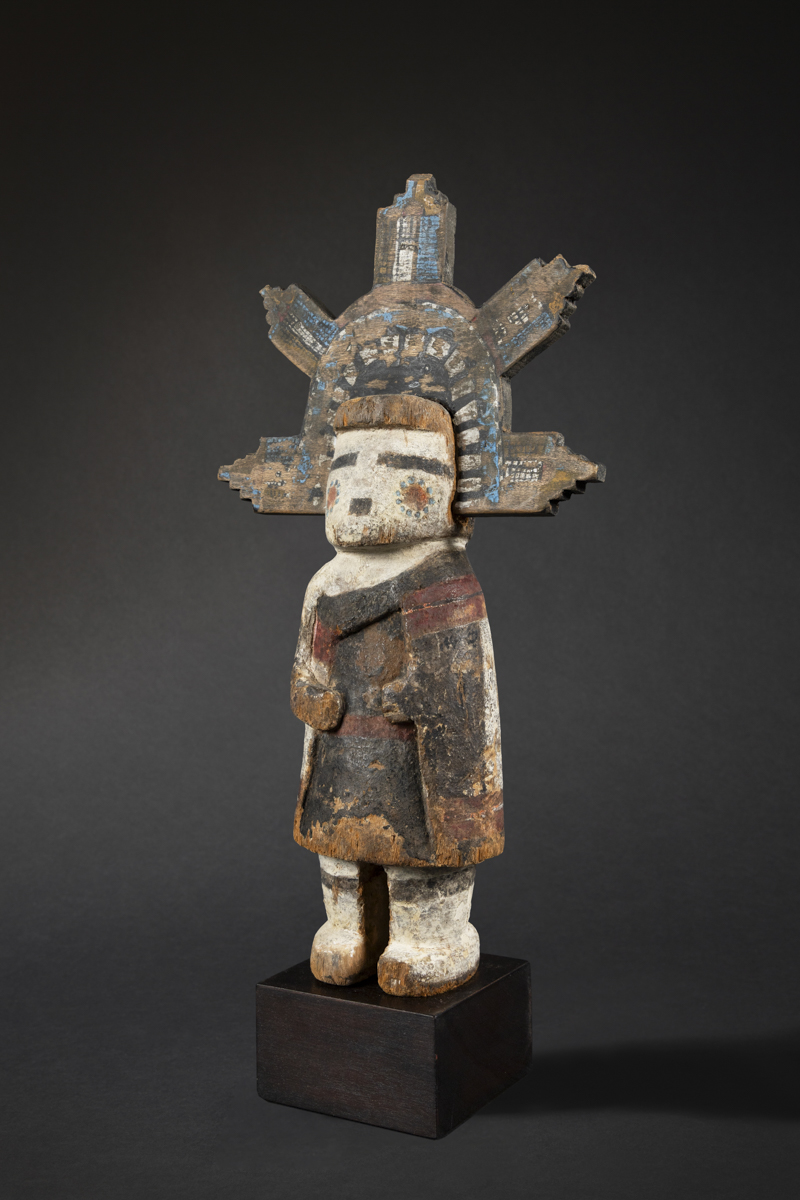
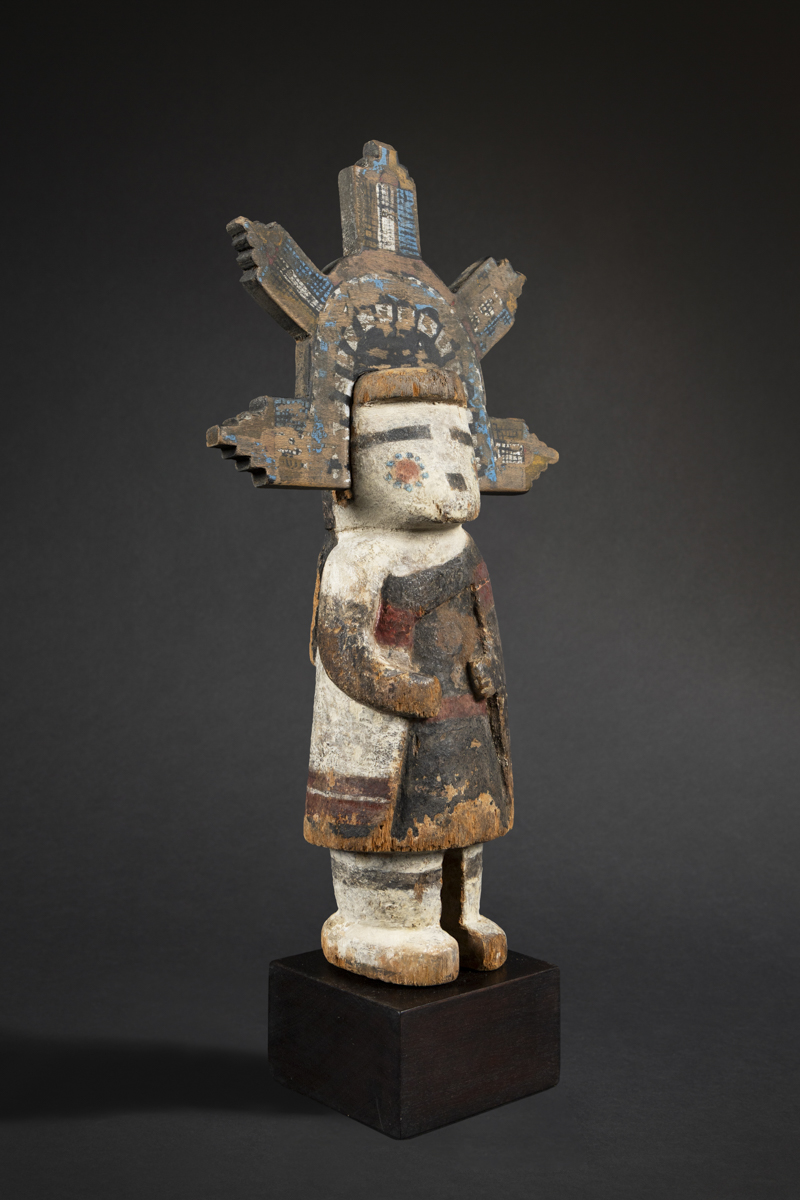
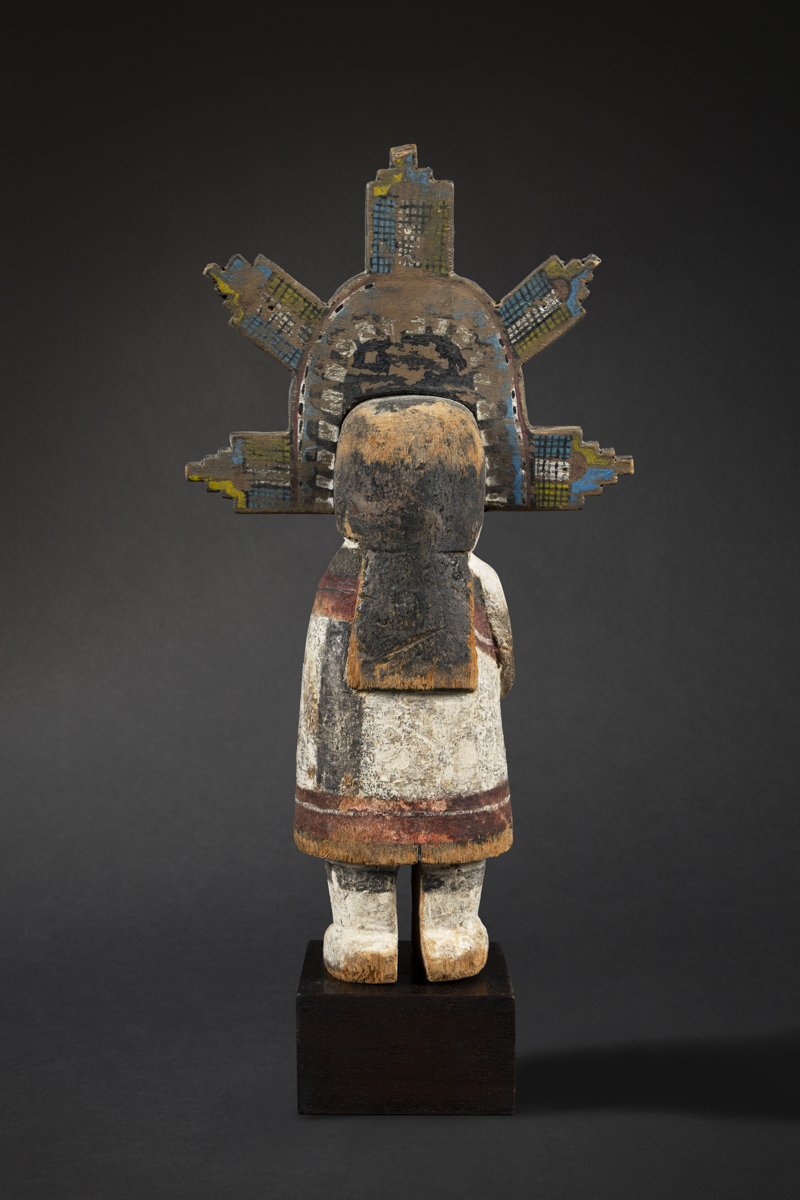
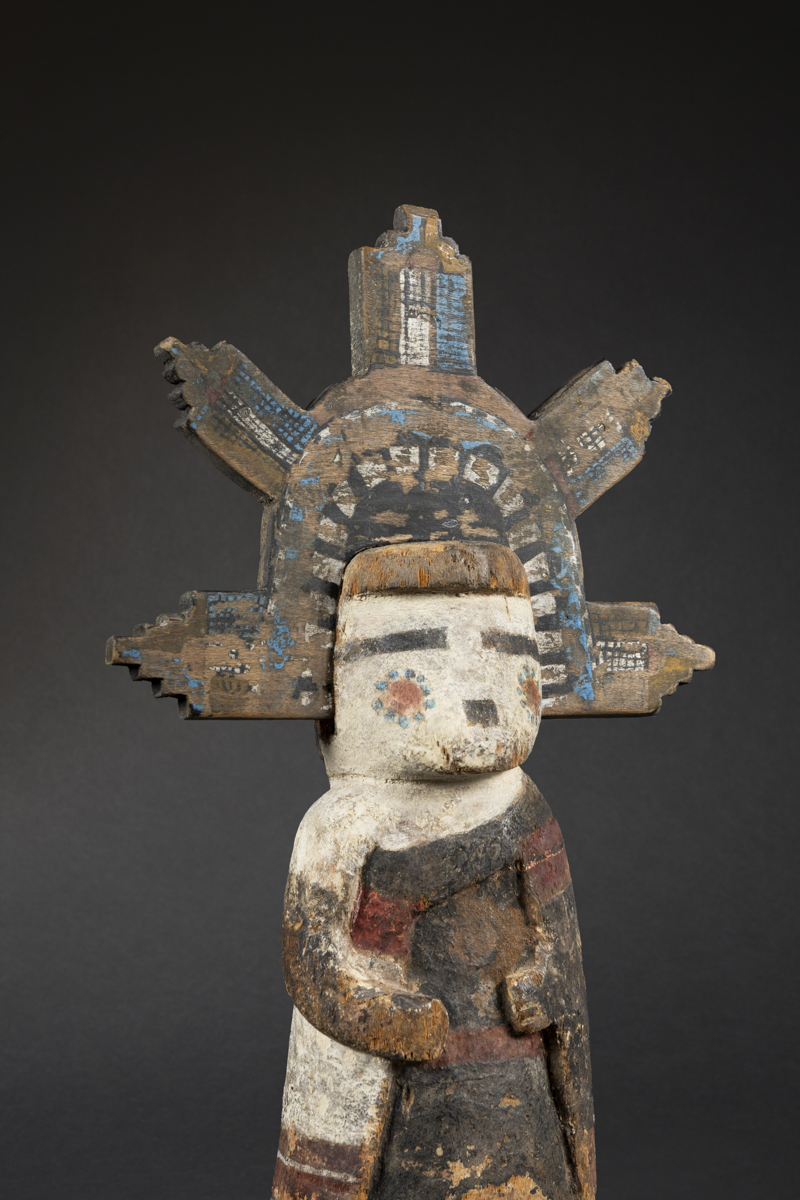
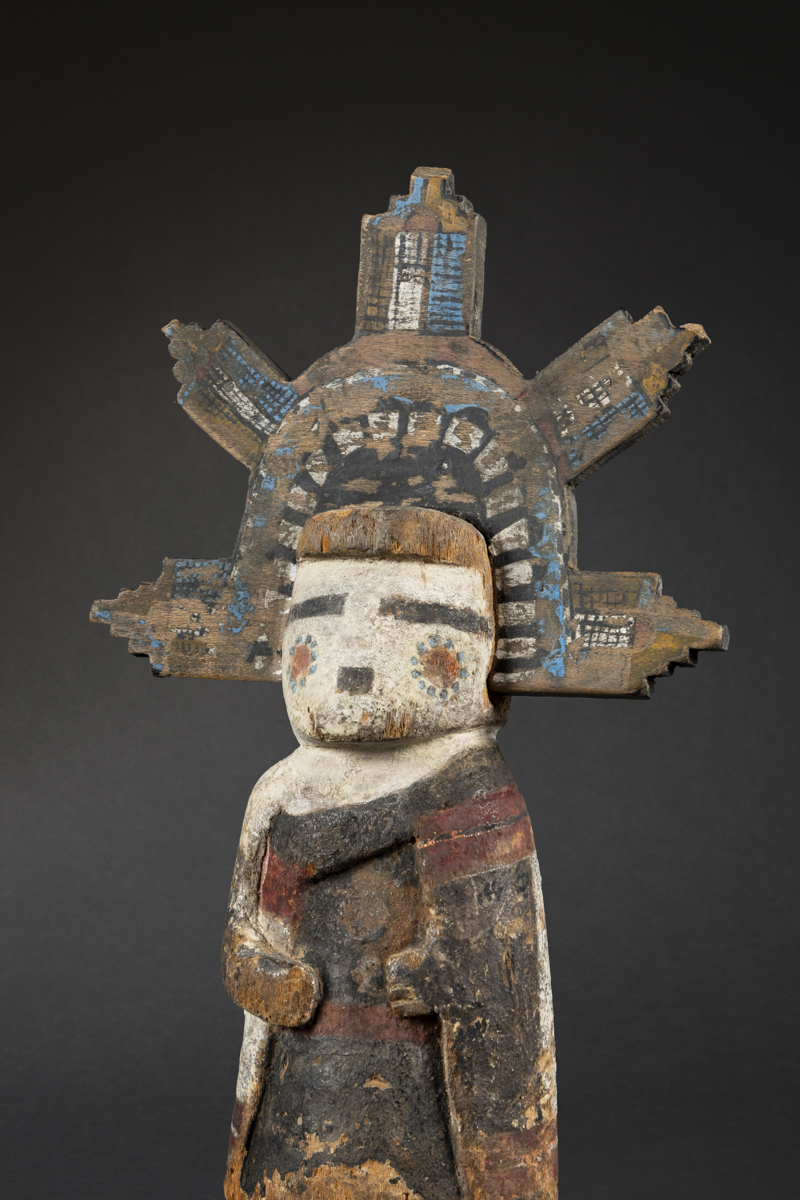
Pahlik Mana Katsina – Maiden Butterfly Katsina doll (variant)
Hopi
Circa 1900
Cottonwood and pigments
Height: 31.5 cm – 12 ½ in.
Provenance
Collection Menil, Houston / New York
Galerie Flak, Paris before 2000
Collection Bodrero, acquired from the above in April 2000
By family descent
Pahlik Mana Katsina doll (variant) 31.5 cm / Galerie Flak
Price: on request
"This Hopi doll represents the goddess of maize. In the crenelated frame around the head, you’ll see the clouds over the mountains; in the small chequerboard at the centre of the forehead, the ear of maize; and around the mouth, the rainbow [...]. Is this not poetry as we continue to hear it?”
(André Breton, Le Littéraire, 1946)
Katsina dolls (or katsinam) represent spirits or gods from the pantheon of the Pueblo peoples in the American Southwest. Given to children, Katsina dolls constituted a pedagogical tool allowing them to familiarize themselves with the spiritual world and perpetuating knowledge of the founding myths on which their society was based.
In the Hopi pantheon, Pahlik Mana is known as the Butterfly Maiden or the Corn-Grinding Maiden.
This female Katsina figure appears at various times during the Hopi ceremonial year. Her performances are colorful dances who are seen as prayers for rain and bountiful harvests.
Alph H. Secakuku notes in “Hopi Kachina Tradition: Following the Sun & Moon” that when Pahlik Mana appears, certain key Kiva members must fast and abstain from contact with the opposite sex. The fasting achieves spiritual concentration and dedication through self-purification of the mind and spirit.
(André Breton, Le Littéraire, 1946)
Katsina dolls (or katsinam) represent spirits or gods from the pantheon of the Pueblo peoples in the American Southwest. Given to children, Katsina dolls constituted a pedagogical tool allowing them to familiarize themselves with the spiritual world and perpetuating knowledge of the founding myths on which their society was based.
In the Hopi pantheon, Pahlik Mana is known as the Butterfly Maiden or the Corn-Grinding Maiden.
This female Katsina figure appears at various times during the Hopi ceremonial year. Her performances are colorful dances who are seen as prayers for rain and bountiful harvests.
Alph H. Secakuku notes in “Hopi Kachina Tradition: Following the Sun & Moon” that when Pahlik Mana appears, certain key Kiva members must fast and abstain from contact with the opposite sex. The fasting achieves spiritual concentration and dedication through self-purification of the mind and spirit.
Explore the entire collection