oceania | Papua New Guinea
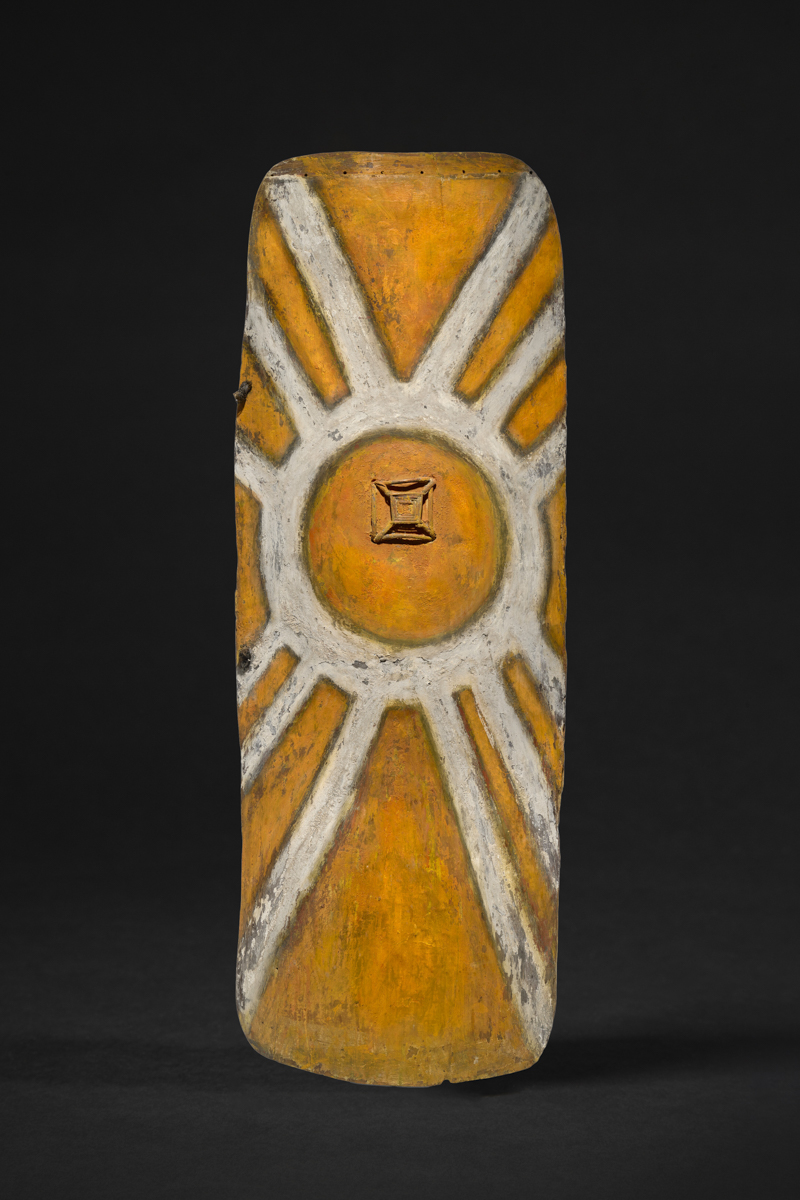
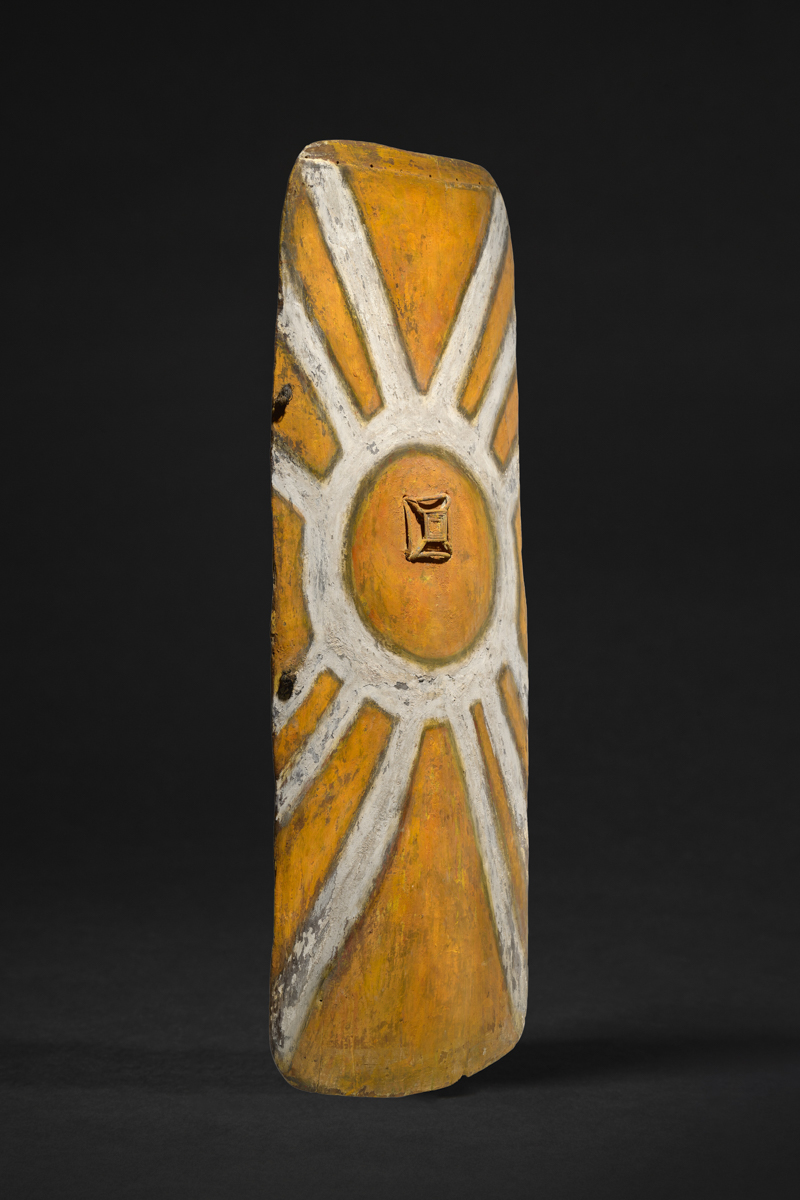
War Shield
Papua New Guinea
War Shield
Western Highlands, Papua New Guinea
Circa 1930
Wood and pigments
Height: 142 cm – 56 in.
Length: 55 cm – 21 ½ in.
Provenance
Collection Chris Boylan, Sydney
The Jolika Collection, Marcia & John Friede, Rye, New York
Collection Franck Marcelin, Aix-en-Provence
Publication
Fine Arts Museums of San Francisco, De Young, 2017, “New Guinea Highlands. Art From the Jolika Collection”, p.134, ill.6.25
Highlands Shield 142 cm / Galerie Flak
Price on request
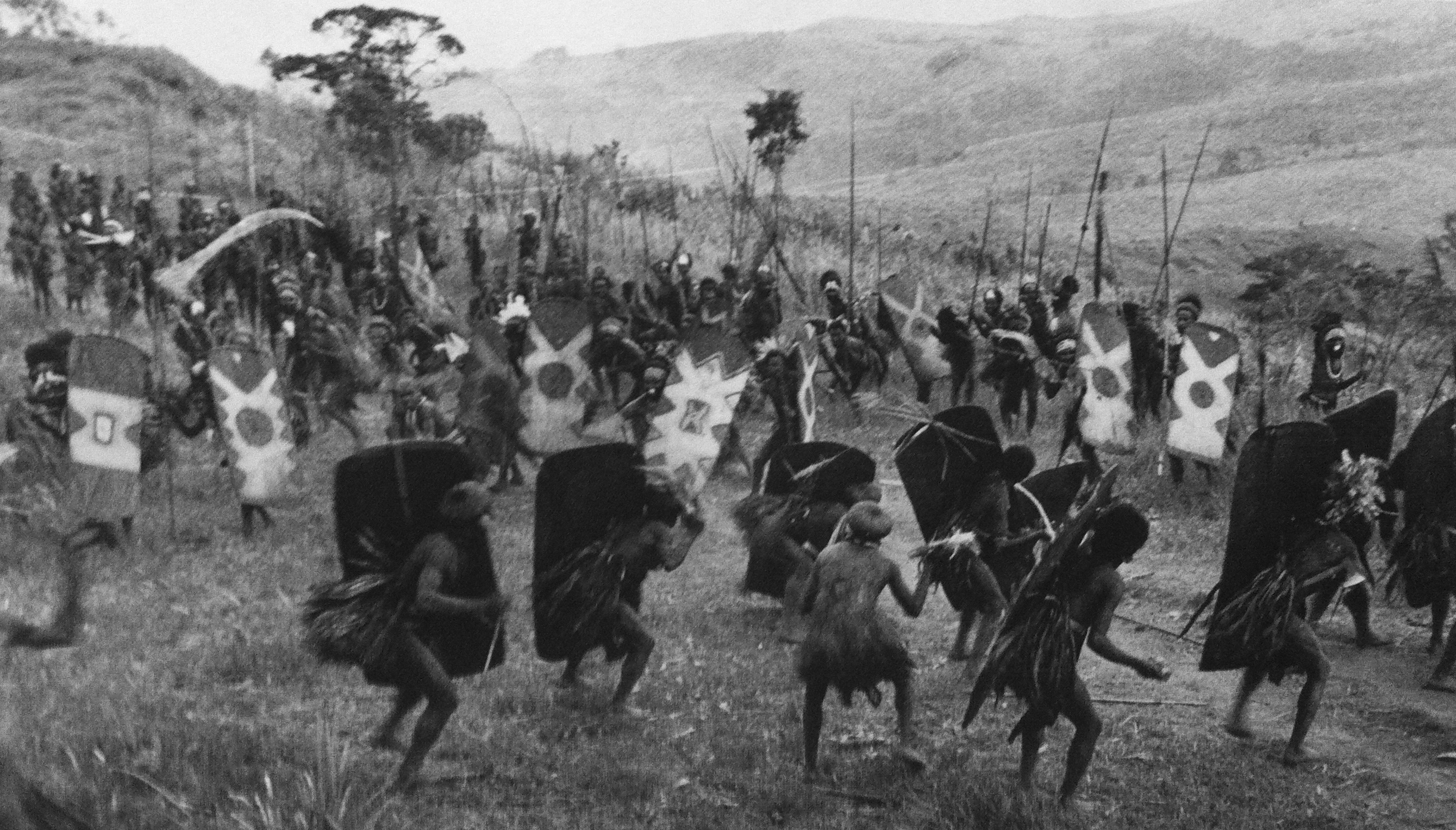
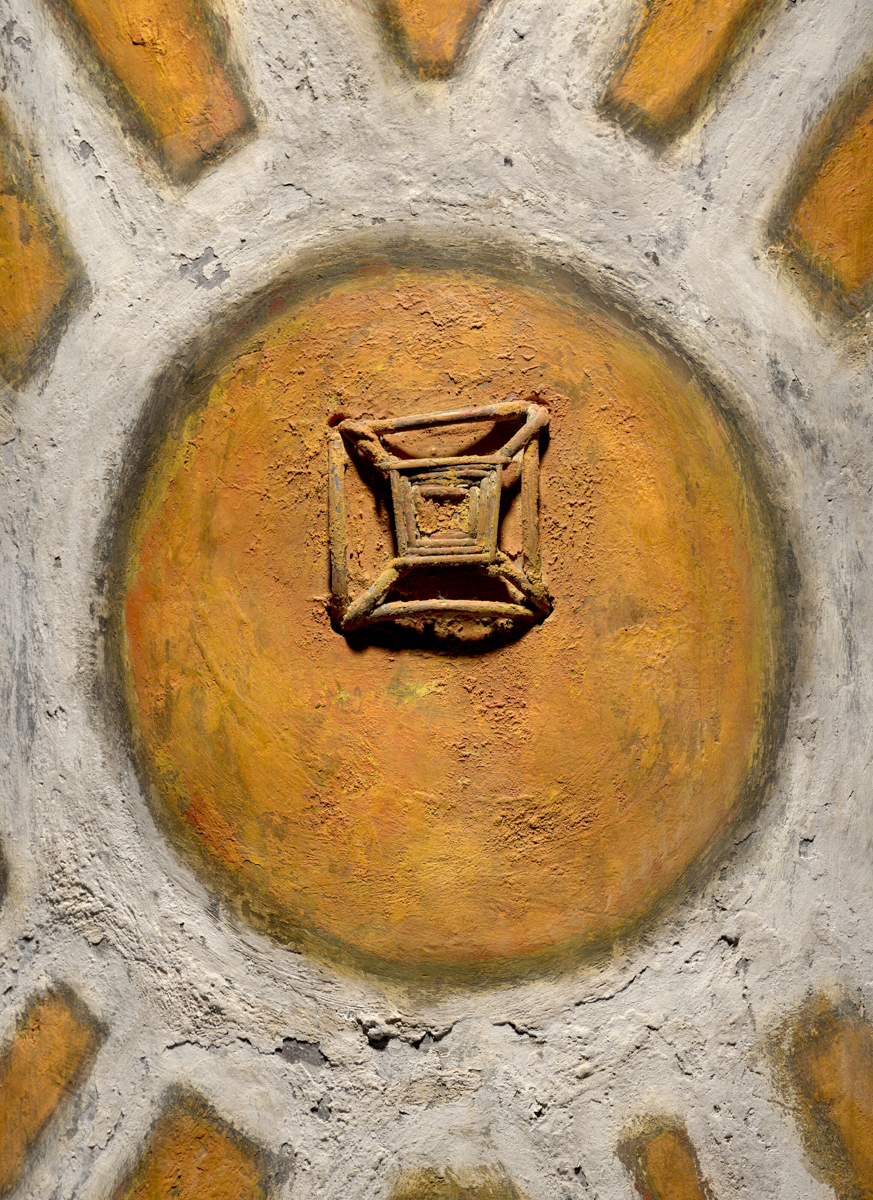
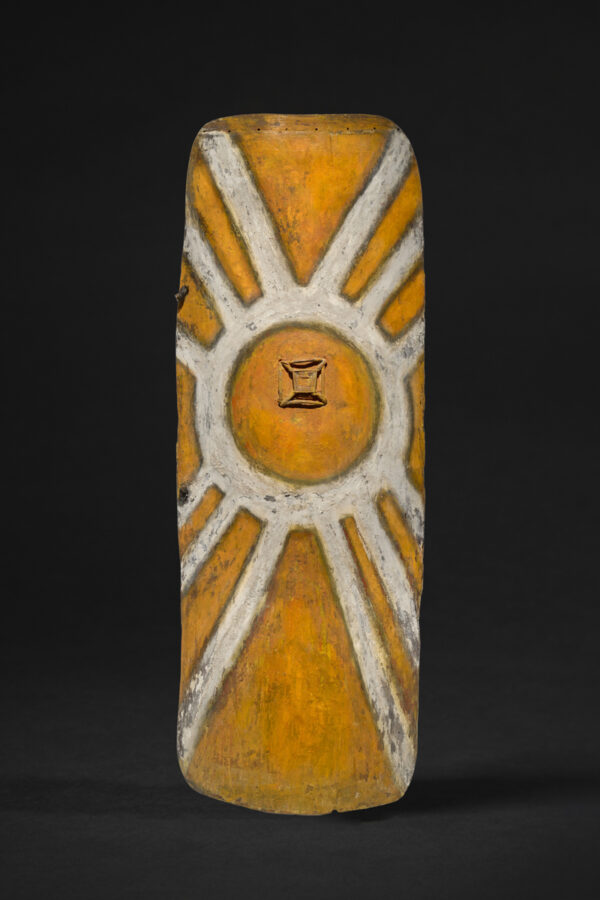
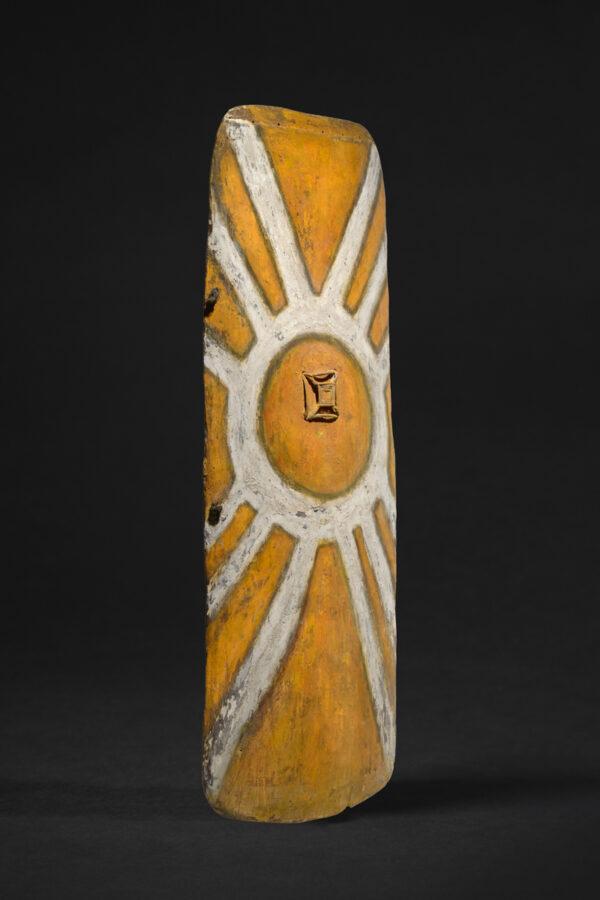
Warfare has been at the center of Highlands life since immemorial times. The shield has always been considered an extension of the warrior himself.
When warfare was expected, warriors repainted their shields to ensure that the colors shone brilliantly against the sun to dazzle and threaten the opposing side. In the western Pacific, shields bore the name of warriors, and possessed a life force, or spirit, that connected them to their ancestors.
As stated by Chris Boylan who previously owned this sculpture, shields from this region are generally painted in simple bold designs that incorporate circles and semi-circles in meaningful but abstract designs. This is one of the rarer examples which depicts an anthropomorphic figure. When figures are painted on shields, they usually represent ancestors, not spirits, who lend protective power to the warrior using the shield.
Red is the color of victory (and blood), and most often the major color on shields of the region: it hopes to pre-ordain victory over the enemy. The background is white clay, painted to further emphasize the red figure.
It is carving from a timber called war – hence the name for a shield, warrumbi: meaning literally “wall of the war tree”.
When warfare was expected, warriors repainted their shields to ensure that the colors shone brilliantly against the sun to dazzle and threaten the opposing side. In the western Pacific, shields bore the name of warriors, and possessed a life force, or spirit, that connected them to their ancestors.
As stated by Chris Boylan who previously owned this sculpture, shields from this region are generally painted in simple bold designs that incorporate circles and semi-circles in meaningful but abstract designs. This is one of the rarer examples which depicts an anthropomorphic figure. When figures are painted on shields, they usually represent ancestors, not spirits, who lend protective power to the warrior using the shield.
Red is the color of victory (and blood), and most often the major color on shields of the region: it hopes to pre-ordain victory over the enemy. The background is white clay, painted to further emphasize the red figure.
It is carving from a timber called war – hence the name for a shield, warrumbi: meaning literally “wall of the war tree”.
Explore the entire collection