oceania | Papua New Guinea
Bouclier de guerre
Papua New Guinea
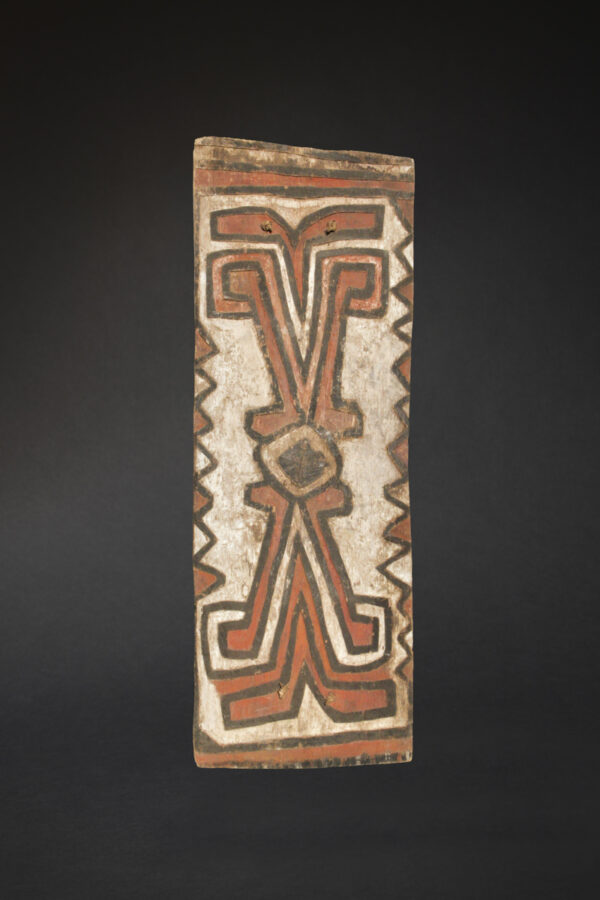
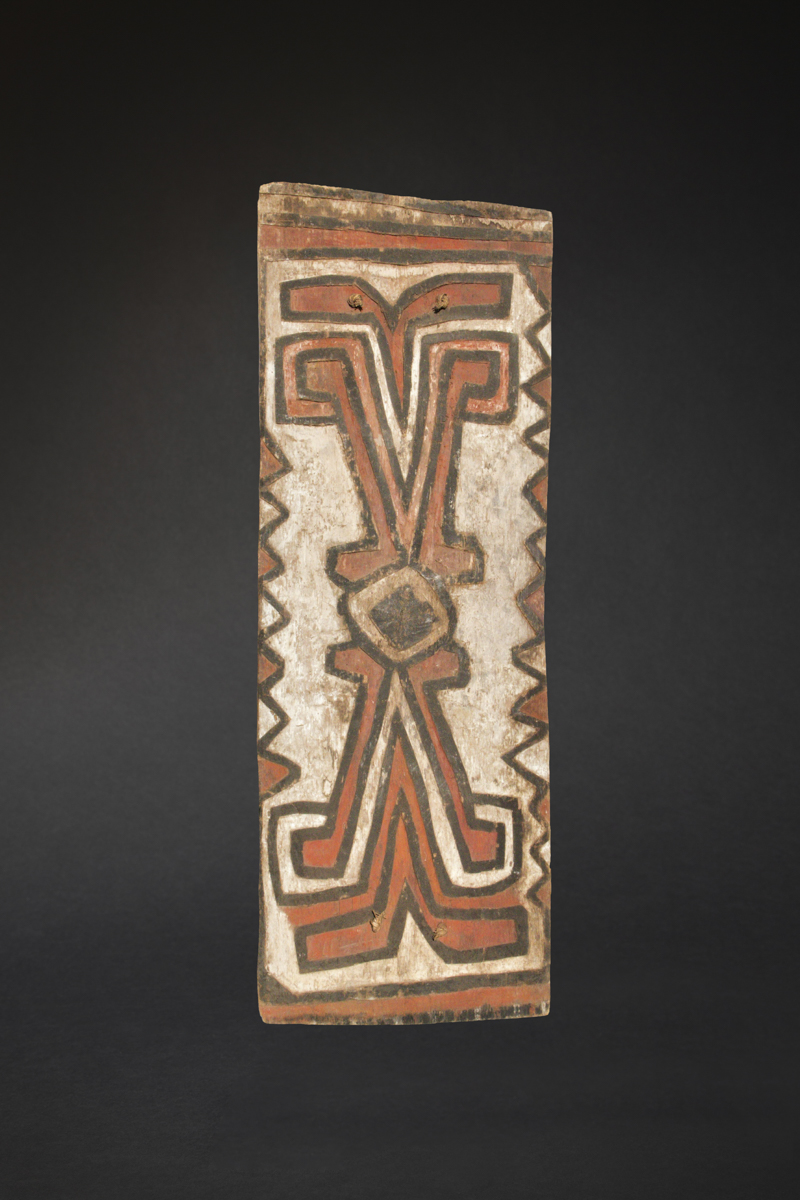
Atkom War Shield
Telefomin
Ok. Mountains, Central Highlands, Papua New Guinea
Mid 20th century
Carved wood, pigments, rattan
Height: 154 cm – 60 ½ in.
Length: 56 cm – 22 in.
Provenance
Collected by an Australian pilot in the 1960s
Collection Bill Evans, Paddington
Collection Chris Boylan, Sydney
Collection Daniel Vigne, Paris, Uzes
Collection Franck Marcelin, Aix-en-Provence
Exhibition
“Shields of Papua New Guinea. Animated by Spirits”. Cavin-Morris Gallery, New York 2012, pl. N°11
Telefomin War Shield 154 cm / Galerie Flak
Price on request
Warfare has been at the center of Highlands life since immemorial times. The shield has always been considered an extension of the warrior himself.
When warfare was expected, warriors repainted their shields to ensure that the colors shone brilliantly against the sun to dazzle and threaten the opposing side. In the western Pacific, shields bore the name of warriors, and possessed a life force, or spirit, that connected them to their ancestors.
Recognizable by their geometrical patterns in the shape of an "X", the Ok Mountain shields have the same decoration as the engraved and painted doors of the ceremonial houses of this region.
According to Barry Craig (The Shields of Melanesia. 2005. Page 125), "the X pattern represents a stylized human figure, probably embodying an ancestor. The diamond point in the center is called matup bubil and represents his heart. The zigzag pattern represents a snake called durulian, a symbol among the telefolmin of humanity's lost opportunity for immortality."
These war shields could be used in magical rituals that took place before each battle.
They were kept in the men's house, alongside the skulls of ancestors. Sometimes a small bag containing human bones was attached to the shield. This same bag was carried by the warrior in battle.
When warfare was expected, warriors repainted their shields to ensure that the colors shone brilliantly against the sun to dazzle and threaten the opposing side. In the western Pacific, shields bore the name of warriors, and possessed a life force, or spirit, that connected them to their ancestors.
Recognizable by their geometrical patterns in the shape of an "X", the Ok Mountain shields have the same decoration as the engraved and painted doors of the ceremonial houses of this region.
According to Barry Craig (The Shields of Melanesia. 2005. Page 125), "the X pattern represents a stylized human figure, probably embodying an ancestor. The diamond point in the center is called matup bubil and represents his heart. The zigzag pattern represents a snake called durulian, a symbol among the telefolmin of humanity's lost opportunity for immortality."
These war shields could be used in magical rituals that took place before each battle.
They were kept in the men's house, alongside the skulls of ancestors. Sometimes a small bag containing human bones was attached to the shield. This same bag was carried by the warrior in battle.
Explore the entire collection