oceania | New Caledonia
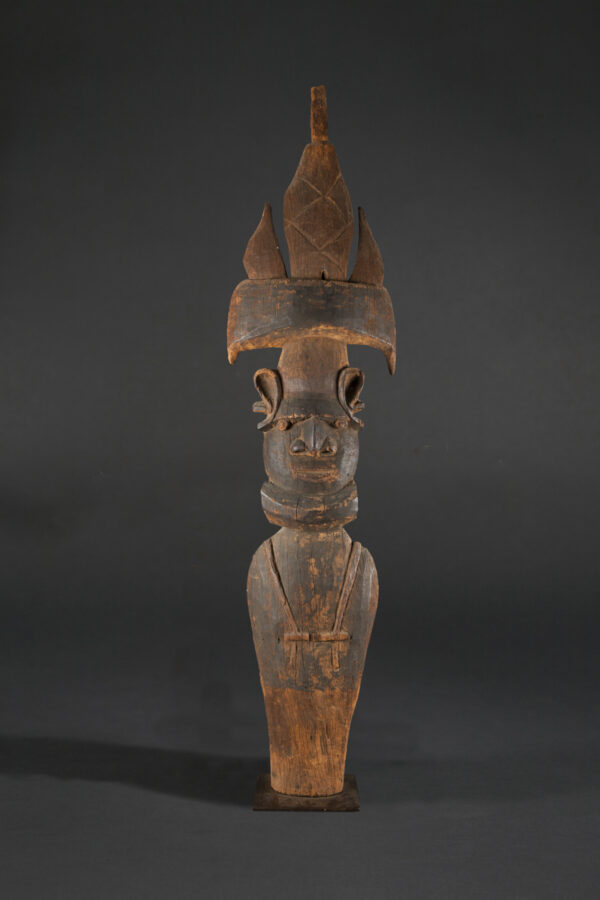
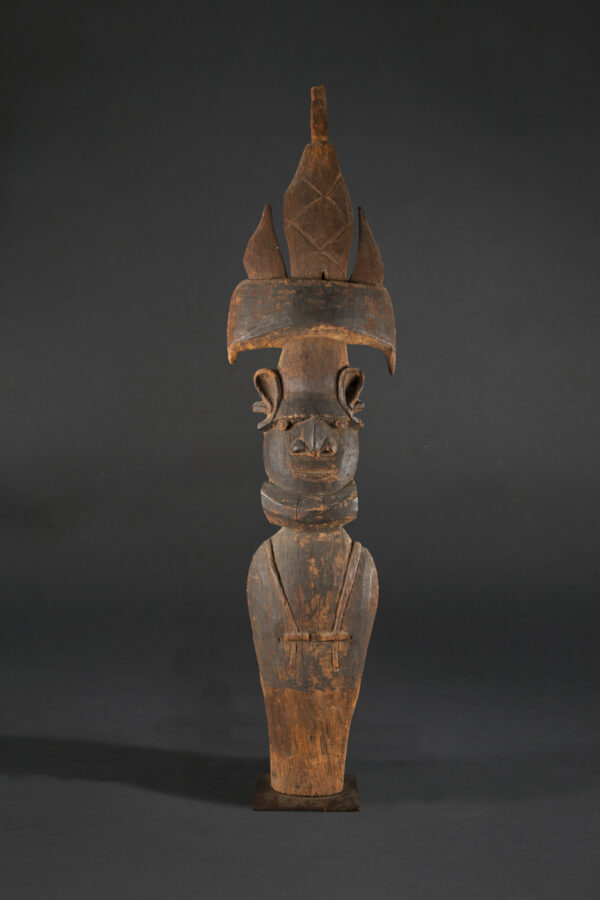
Kanak Roof Finial
New Caledonia
Roof Finial
Kanak
New Caledonia
19th century
Carved wood
Height: 140 cm – 55 in.
Provenance
Collection Marc Perpitch, Paris
Collection Stéphane Mangin, Paris
Collection Olivier Vanuxem, Niort
Publication & Exhibition
“L’Art ancestral des Kanak”, Musée des Beaux-Arts de Chartres, 2009, p. 59
Kanak Roof Finial / Galerie Flak
Price: on request
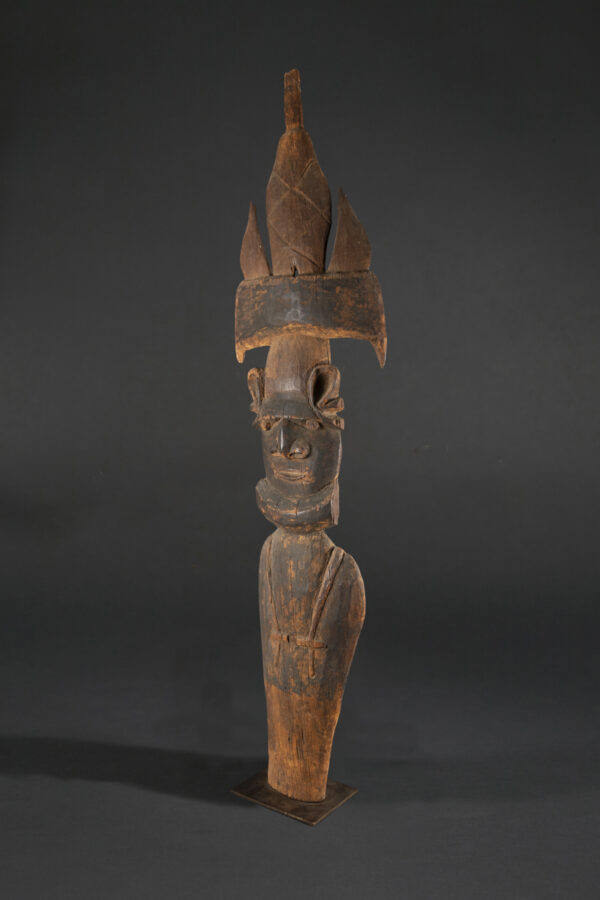
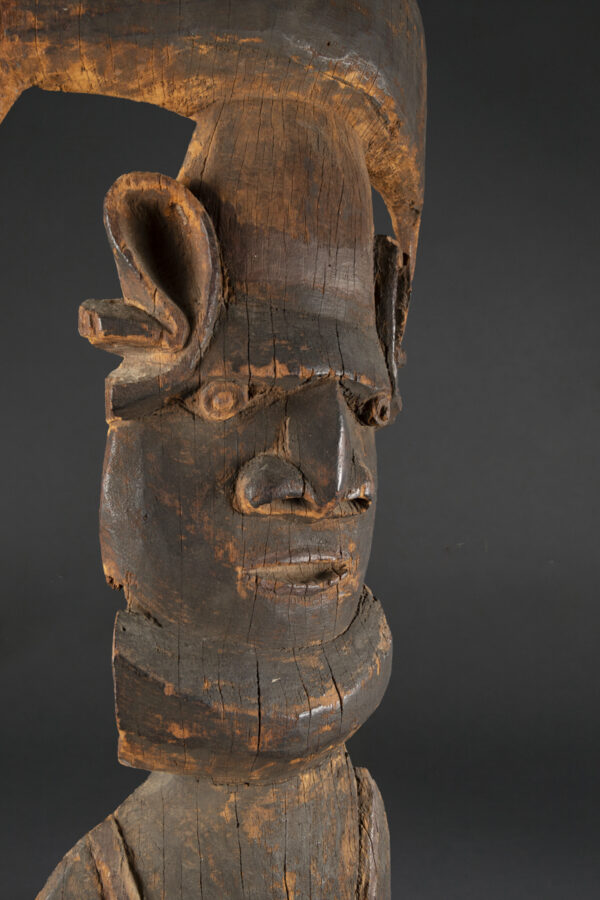
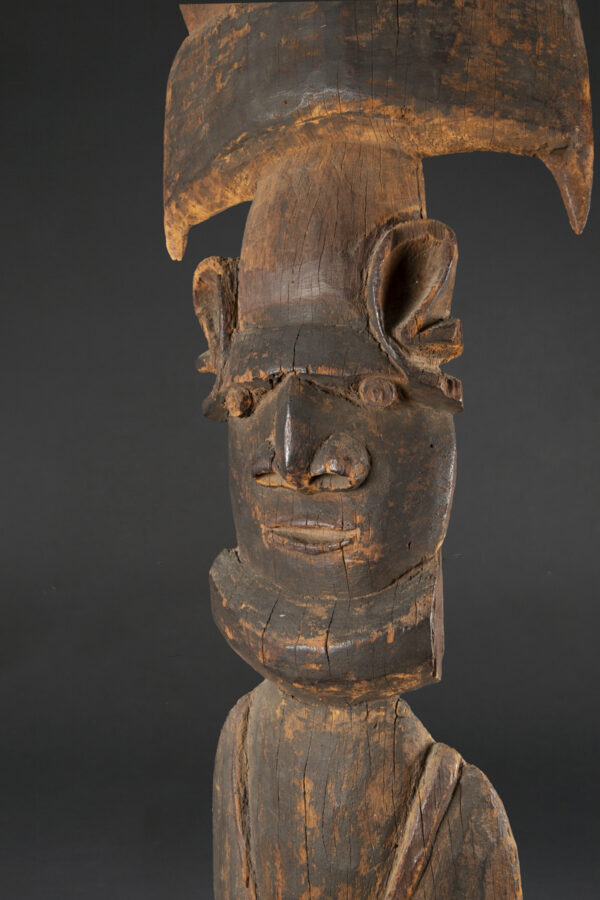
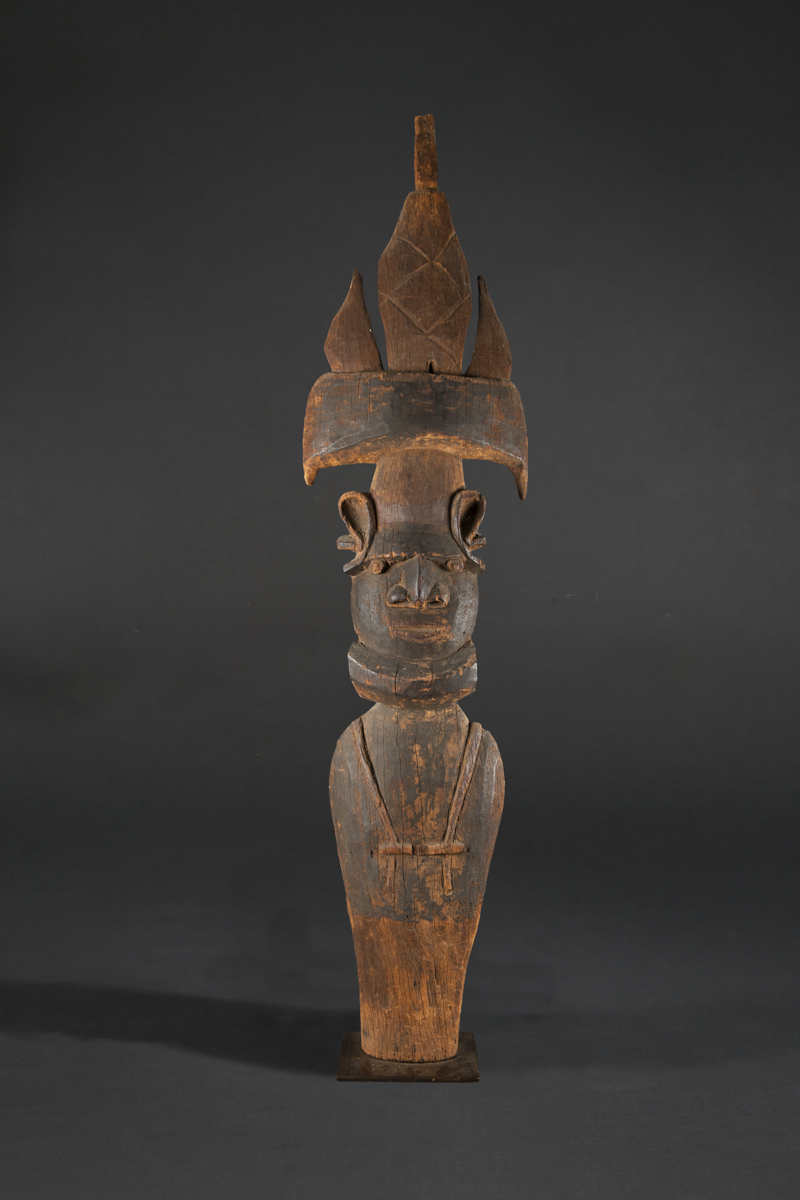
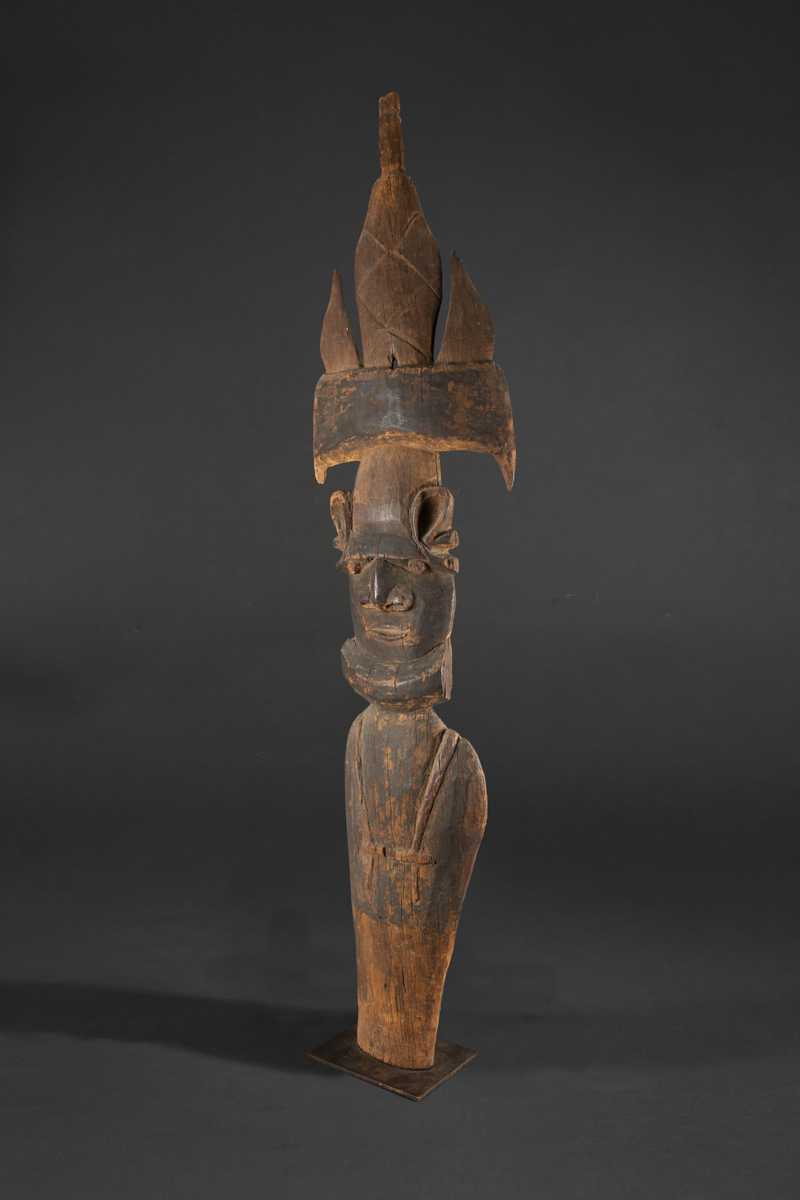
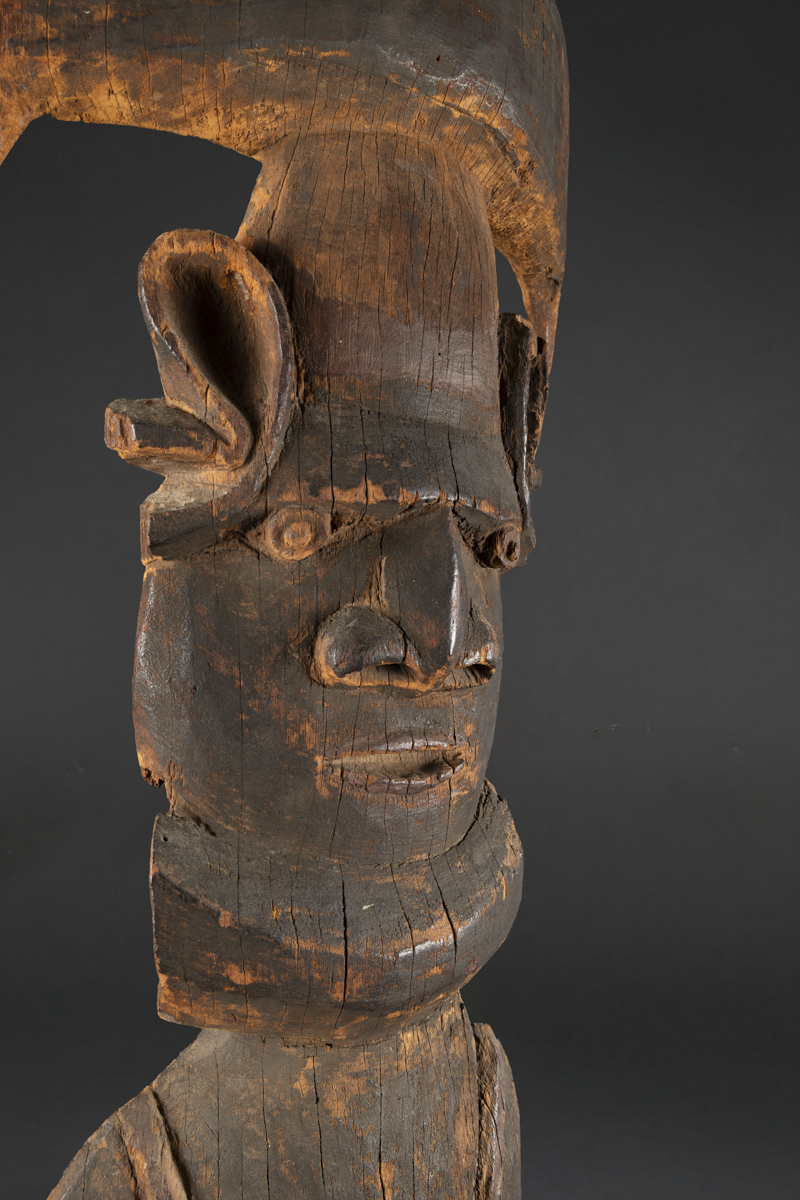
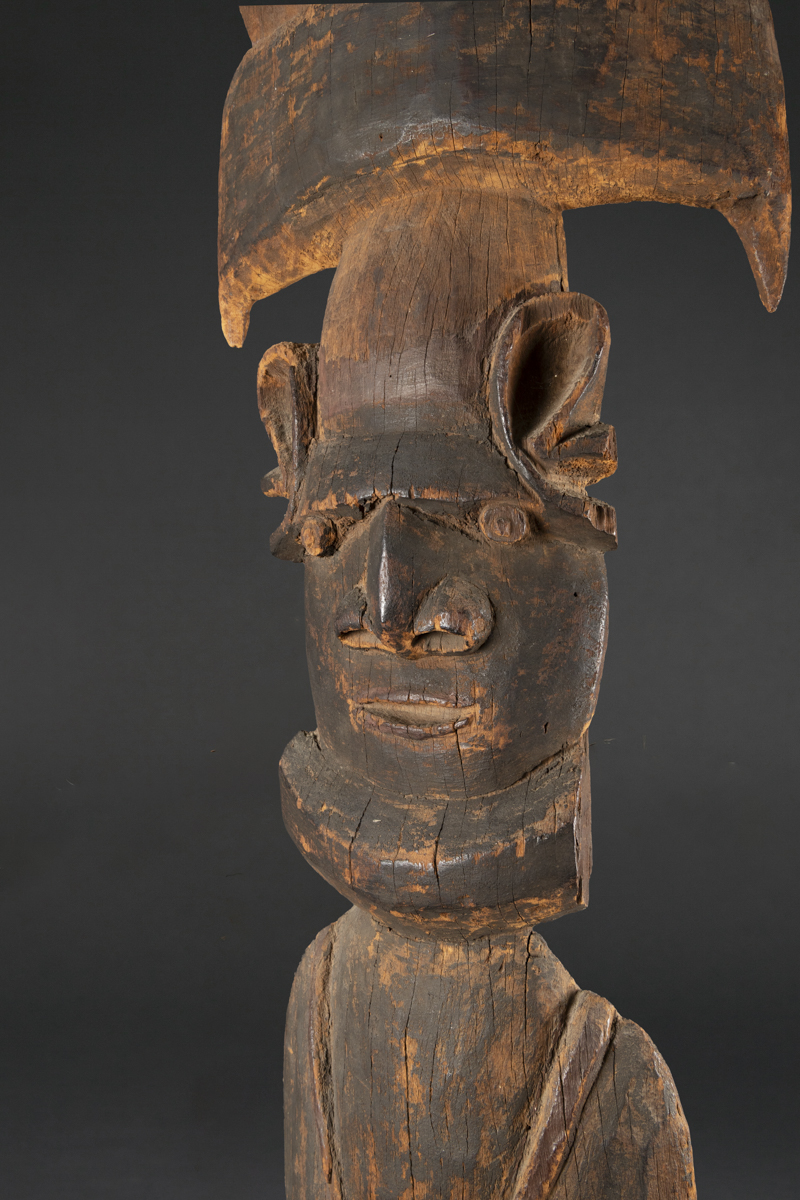
An emblematic element of New Caledonian art, the roof finial (flèche faîtière) crowned the conical thatched roof of the Grande Case, the ceremonial heart of the chiefdom. Far more than an architectural ornament, it embodies the spirit of the ancestors, symbolizing the clan's unity and authority.
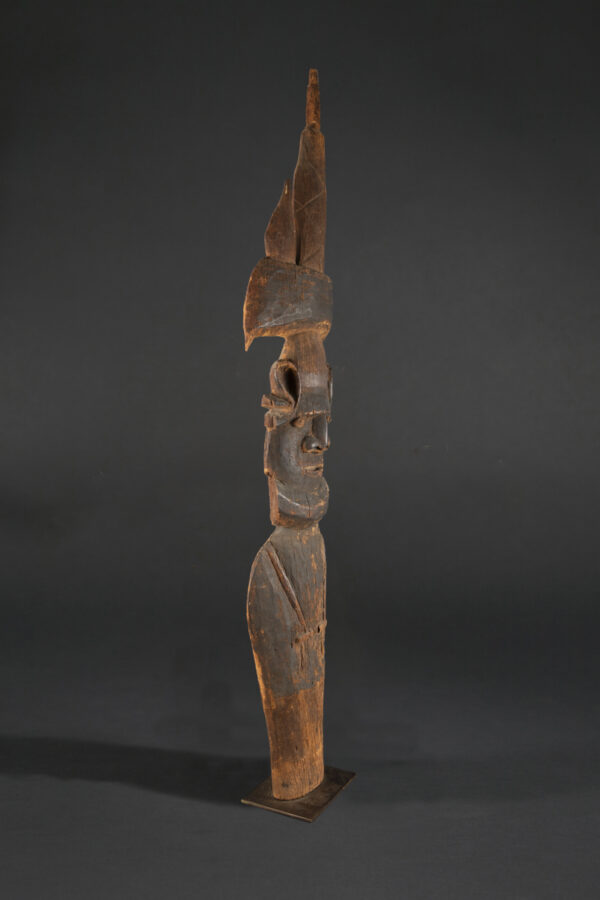
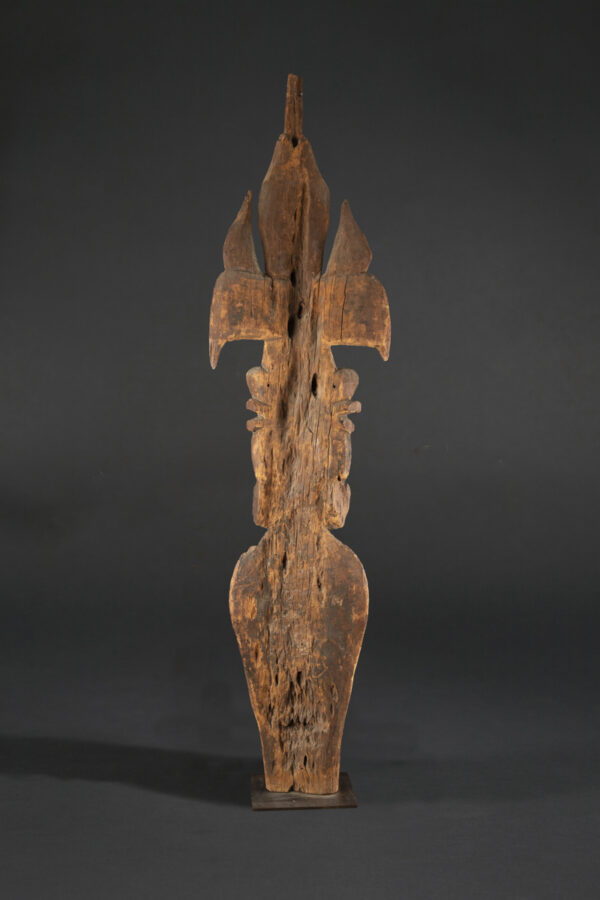
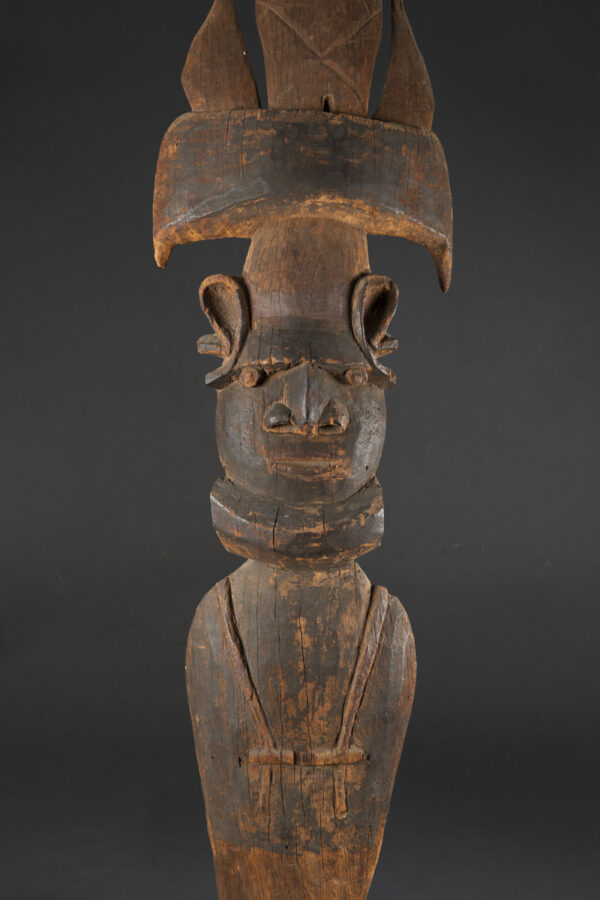
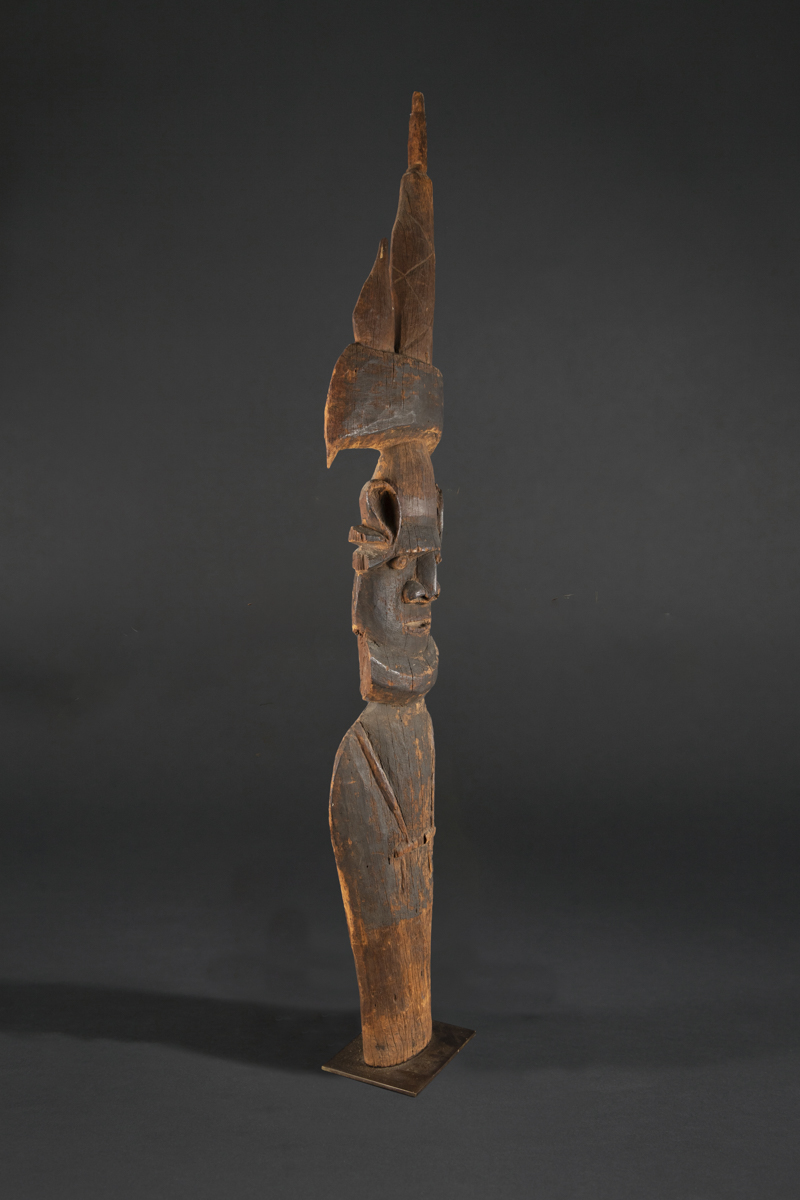
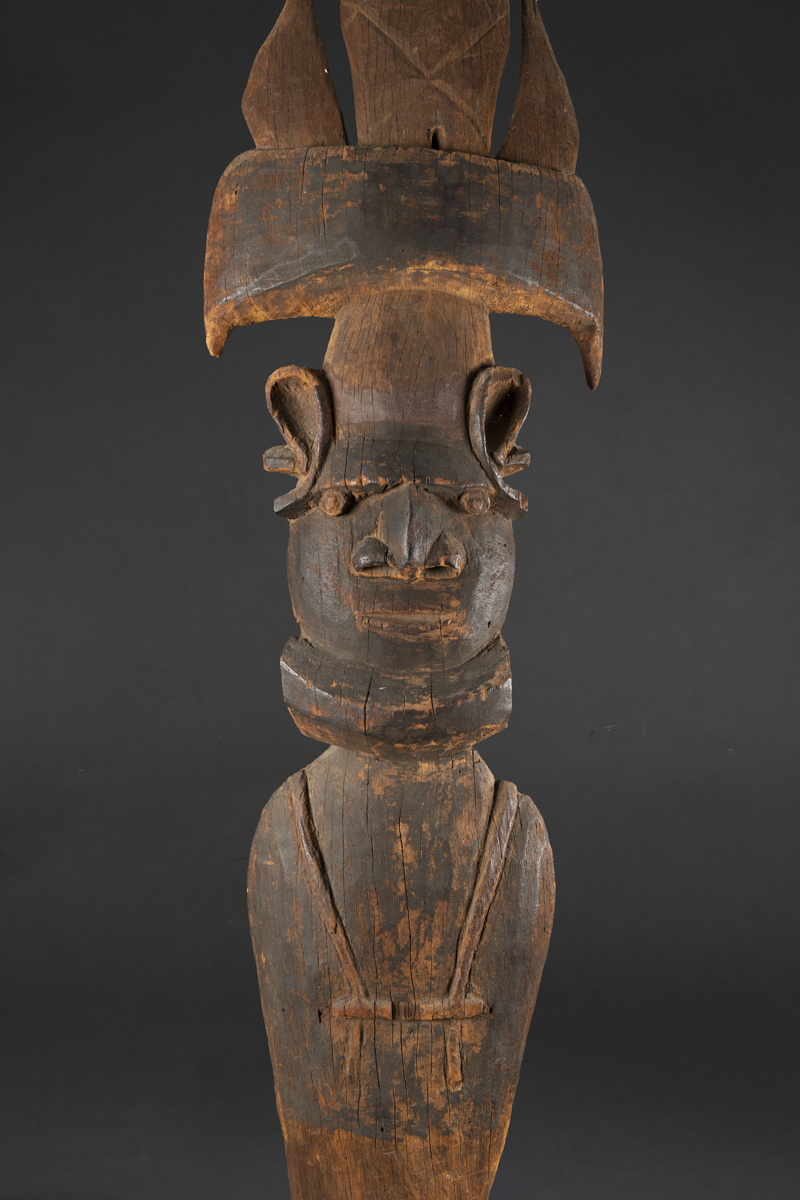
Known as "pwamabaï" or "gomoa", this anthropomorphic sculpture traditionally consists of three parts: a base anchored to the central pillar, a middle section depicting the ancestor with a prominent nose and stylized hairstyle, and a top point originally adorned with large shells.
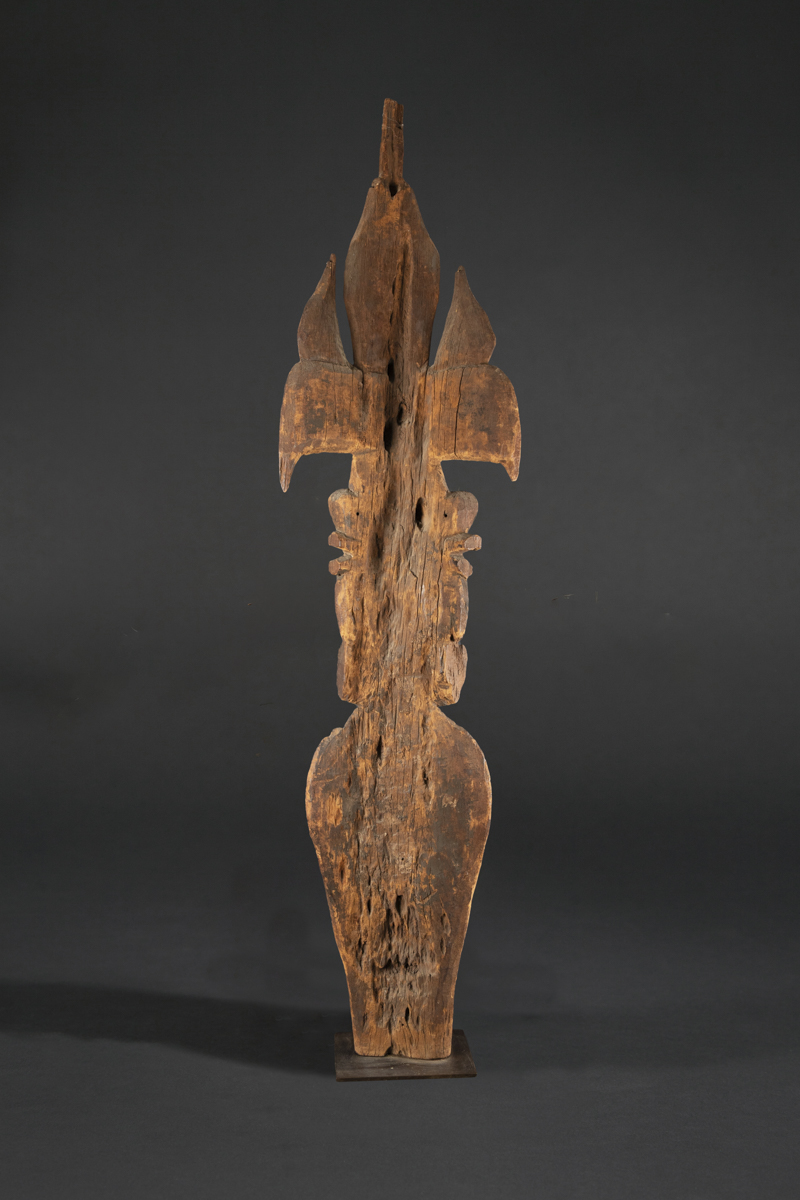
Carved from a single block of Houp wood (Montrouziera cauliflora)—a rot-resistant species endemic to Grande Terre—it represents a specific ancestor from the chief's maternal clan, guaranteeing protection and legitimacy.
Remarkable for the expressive force of its face, the sharp modeling of the nose, and the relief motif on its torso (a necklace or "magic pouch"), this piece is an extraordinary example of Kanak ritual art.
Known as "pwamabaï" or "gomoa", this anthropomorphic sculpture traditionally consists of three parts: a base anchored to the central pillar, a middle section depicting the ancestor with a prominent nose and stylized hairstyle, and a top point originally adorned with large shells.
Carved from a single block of Houp wood (Montrouziera cauliflora)—a rot-resistant species endemic to Grande Terre—it represents a specific ancestor from the chief's maternal clan, guaranteeing protection and legitimacy.
Remarkable for the expressive force of its face, the sharp modeling of the nose, and the relief motif on its torso (a necklace or "magic pouch"), this piece is an extraordinary example of Kanak ritual art.
Explore the entire collection