oceania | New Caledonia
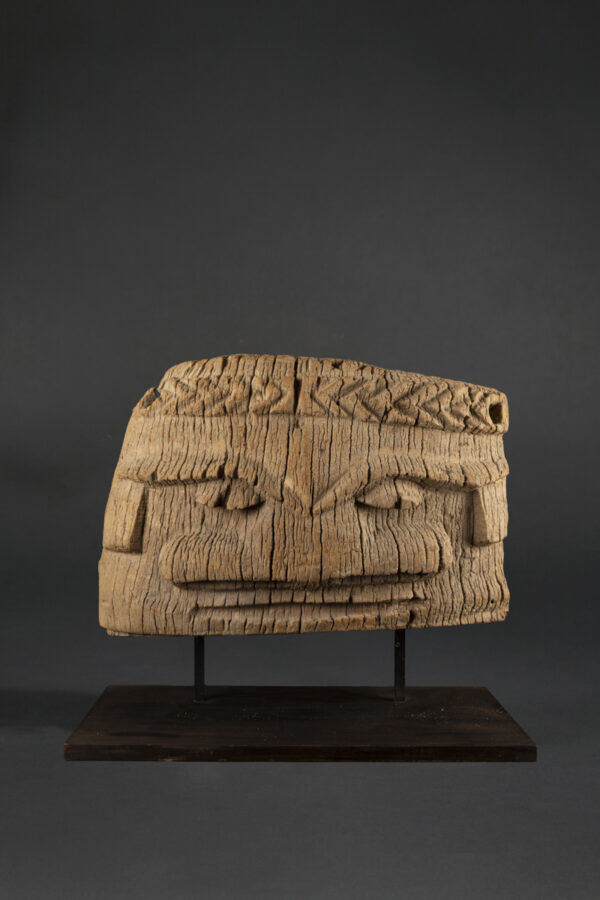
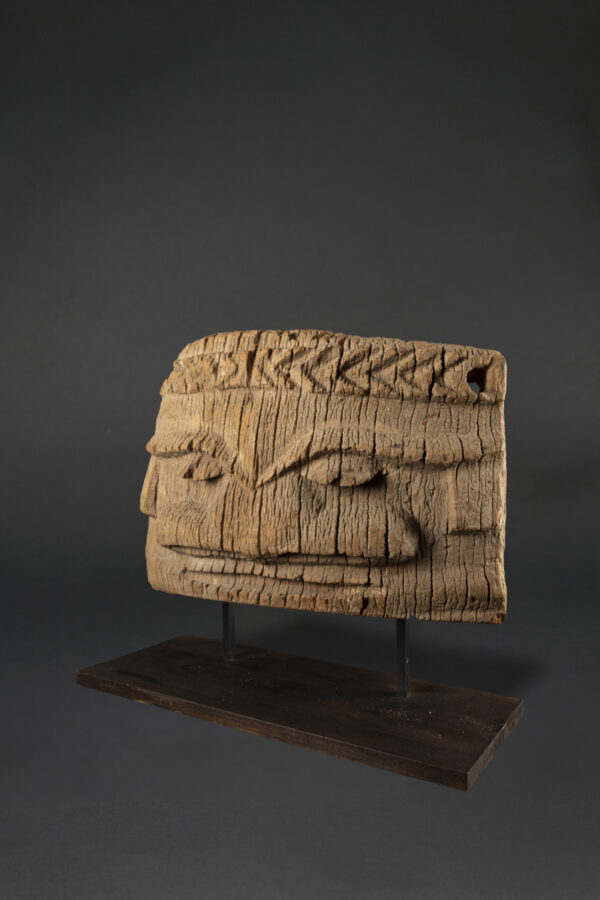
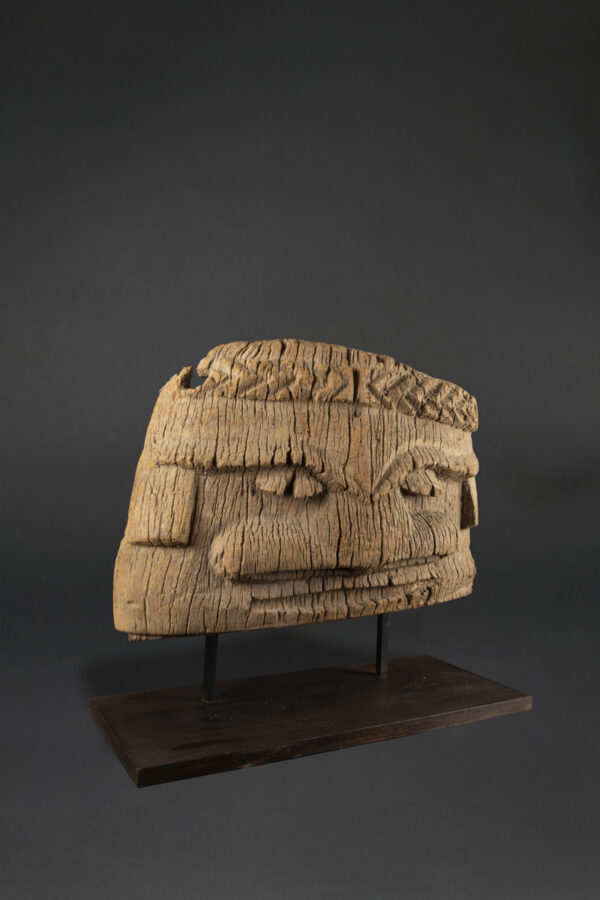
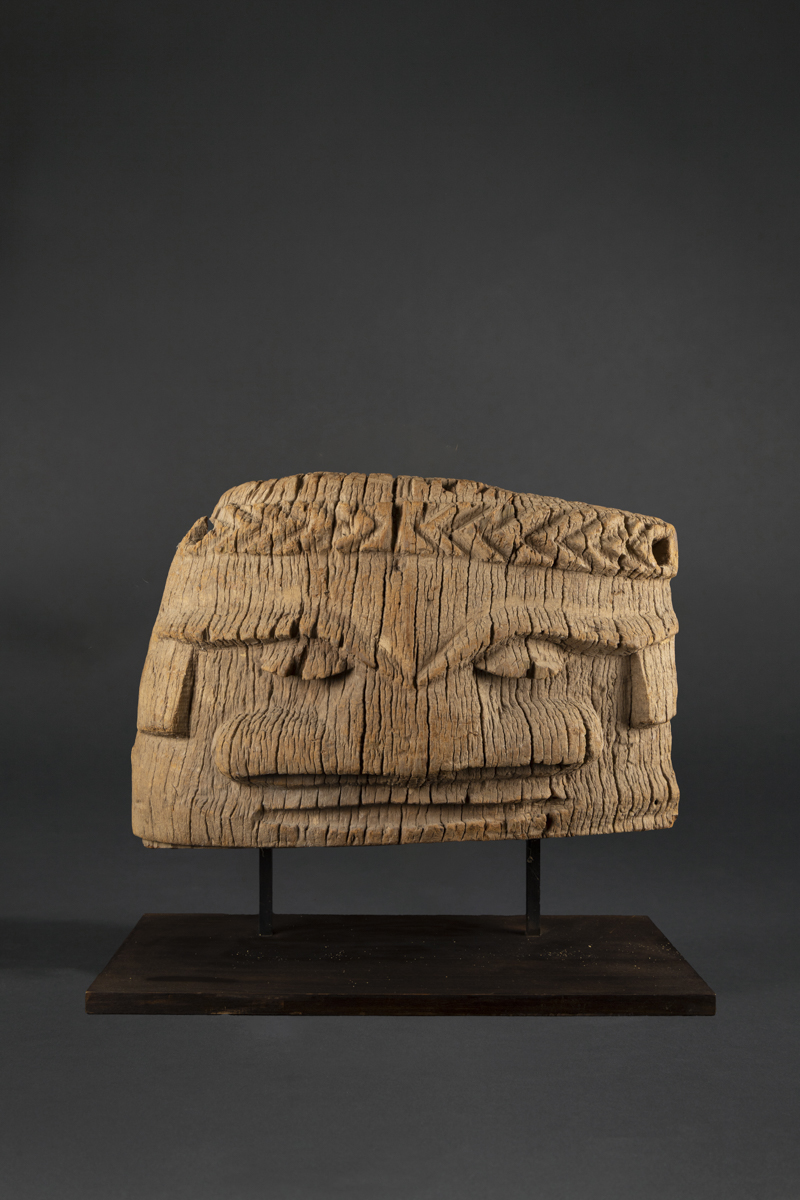
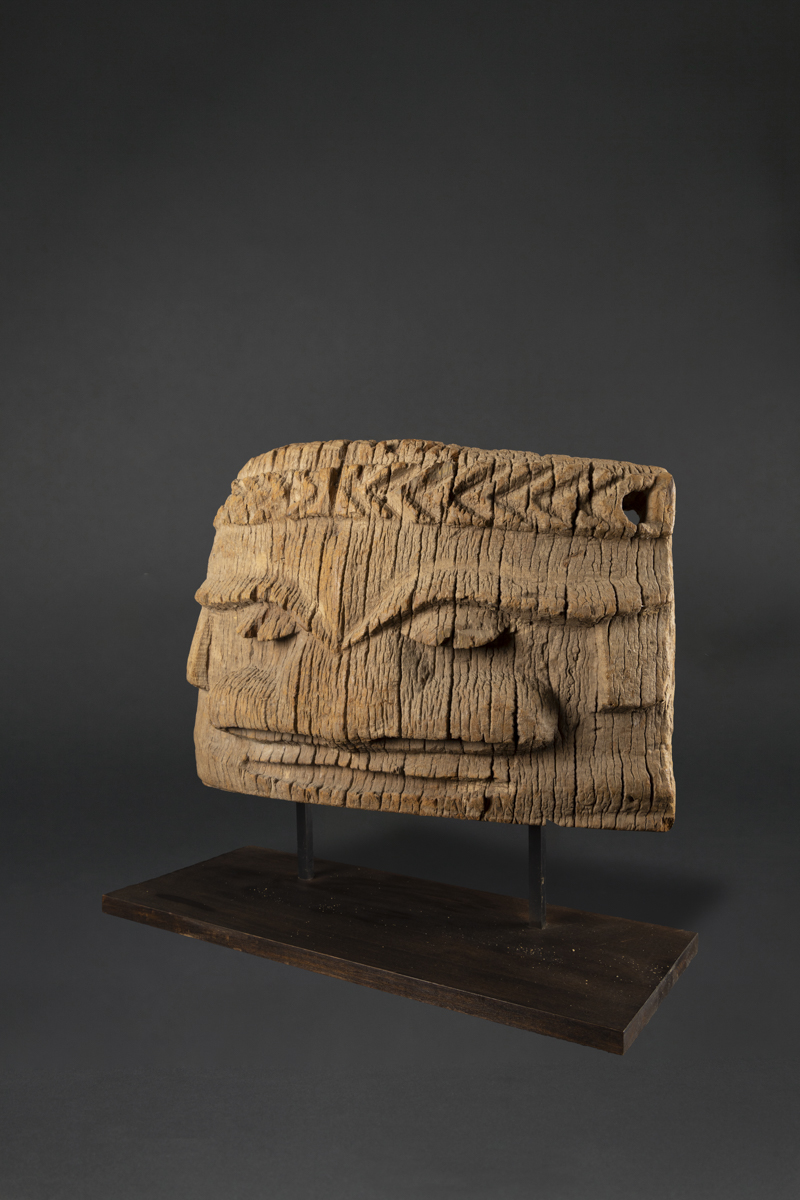
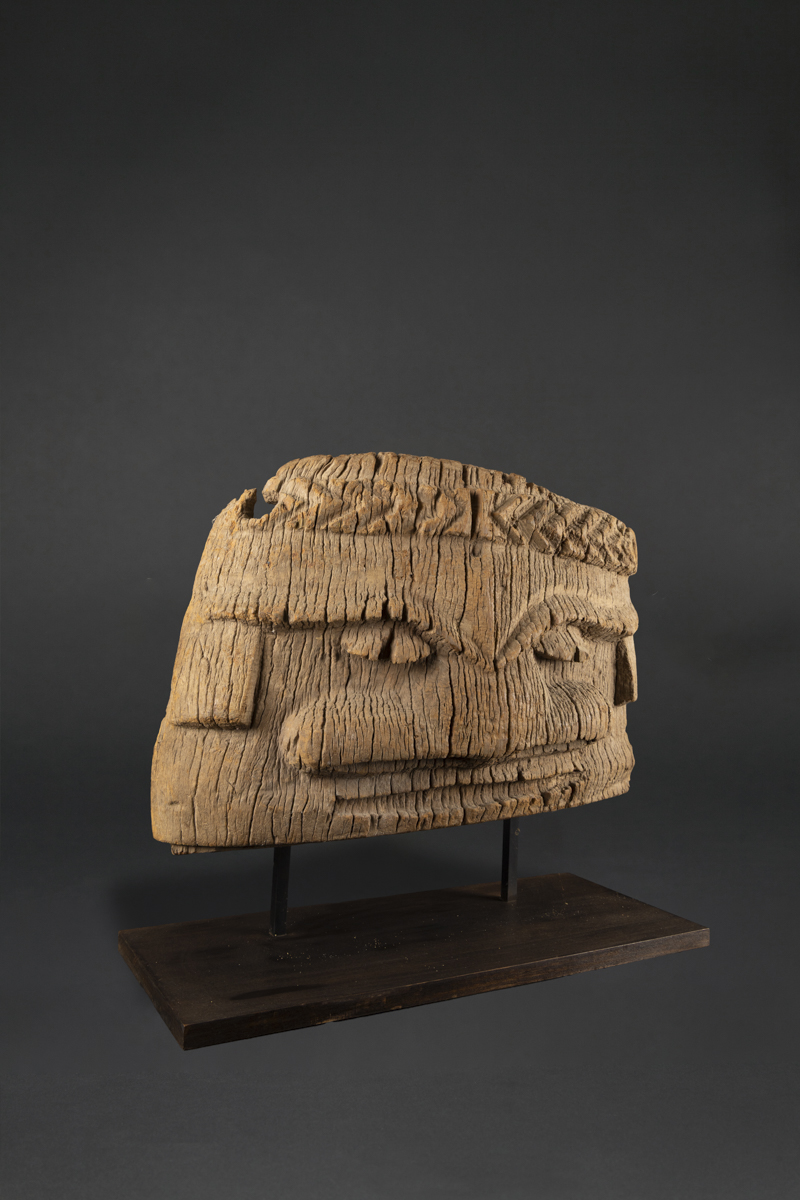
Kanak Large Head
New Caledonia
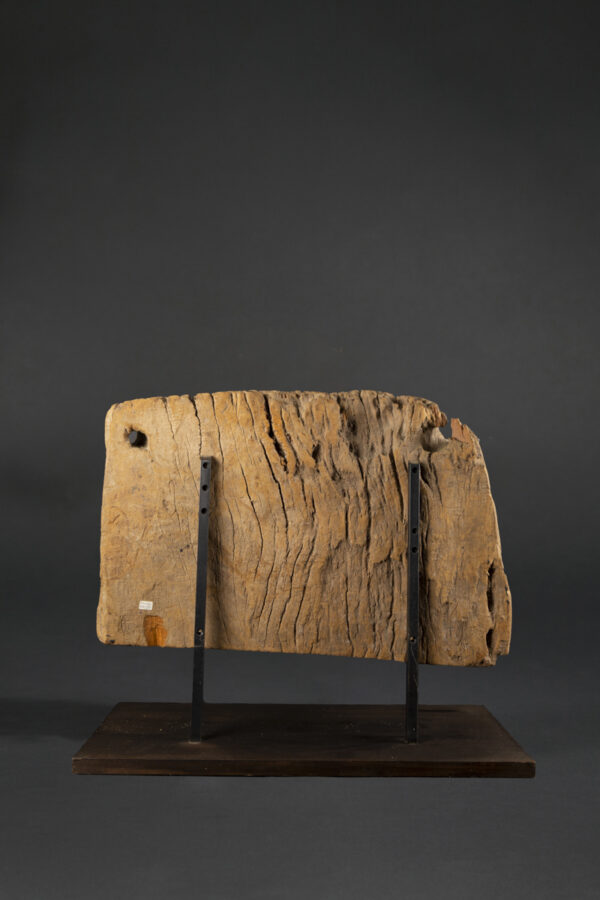
Top of a Talé Door Board
Kanak
New Caledonia
19th Century
Carved wood
Height: 38 cm – 15 in.
Width: 68 cm – 26 ¾ in.
Provenance
Probably from the Pierre and Claude Vérité Collection, Paris
Collection Yann Ferrandin, Paris
Collection Olivier Vanuxem, Niort
Publication & Exhibition
“L’Art ancestral des Kanak”, Musée des Beaux-Arts de Chartres, 2009, p. 71
Kanak Tale Door Jamb 38 cm / Galerie Flak
Price on request
Positioned on either side of the entrance to the traditional house, Kanak door boards combine an essential architectural function with major spiritual significance: carved following the natural curvature of Houp wood trunks, these pieces directly personify a protective clan ancestor.
According to early writings, notably those of Fritz Sarasin, a direct witness to these practices in the early 20th century ("L’Ethnographie des kanak de Nouvelle-Calédonie et des Îles Loyauté, 1911–1912"), elements of the chief’s house—particularly the door boards—could be intentionally mutilated or destroyed as a sign of mourning after the death of the chief for whom they were carved. This may explain why only the head of this remarkable sculpture survives today:
"In Caledonia, the houses of the deceased are left to fall into ruin, or they are intentionally destroyed. In many villages, one encounters ruined or abandoned houses of deceased individuals. In Yambé (Oubatche), I saw left to decay on the ground, mutilated, the two large carved door boards of the ruined house of a deceased village chief […] It was a sign of mourning, according to the statements of the deceased's son, who no longer knew the real reason for it or did not wish to say."
Rendered in low relief, door boards adhere to precise aesthetic codes, featuring a top section carved with an anthropomorphic face, while the lower section is adorned with geometric patterns specific to their region of origin in New Caledonia.
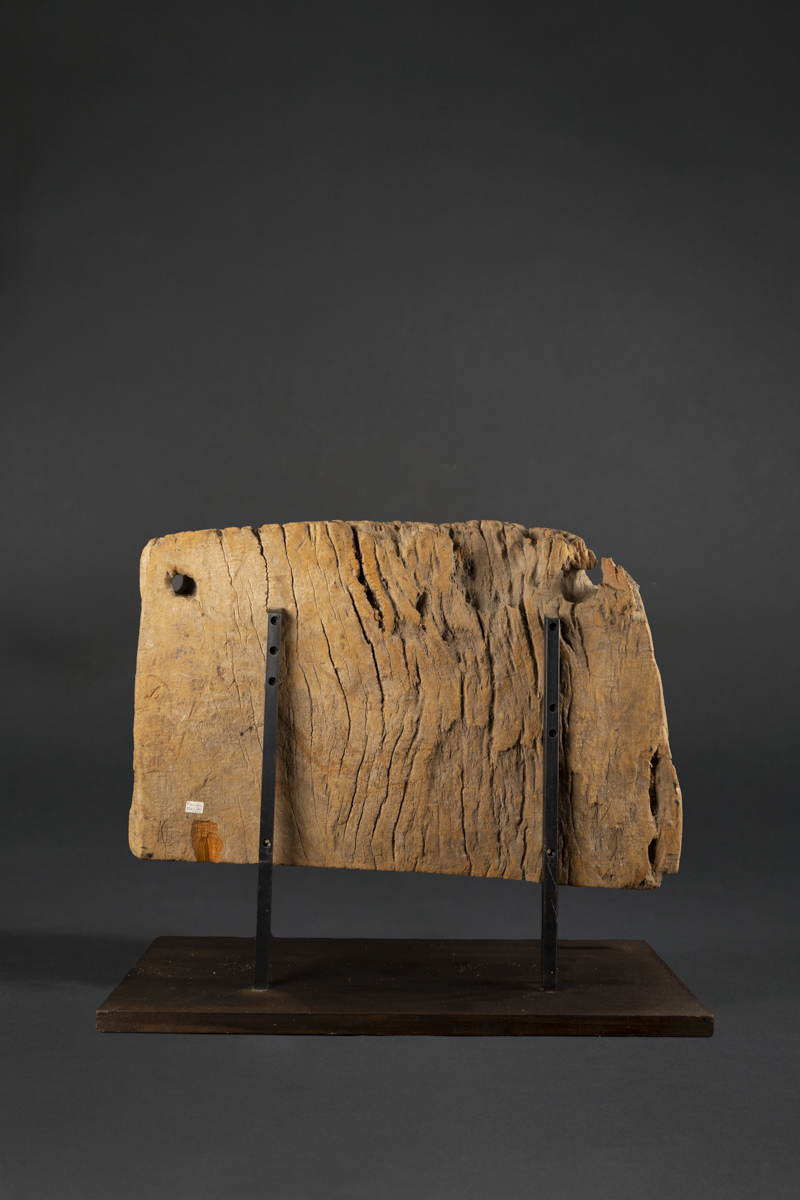
The hole visible above the head allowed the board to be secured to the entrance post using plant-fiber ropes, while its base was buried in the ground of the house.
Known as "jovo" or "talé" depending on the region, these door boards served as symbolic guardians for the residence of the individual for whom they were carved. As such, they played an active role during mourning rituals following the death of a chief or an important member of the clan. Mourners would strike the door boards before they were abandoned, ritually mutilated, or occasionally repurposed as door sills or elements of sarcophagi.
Exceptional in its raw power and expressiveness, this fragment is reduced solely to its upper section.
This monumental face retains all the more strength to convey the voice of the ancestors.
Art is a spoken word…
According to early writings, notably those of Fritz Sarasin, a direct witness to these practices in the early 20th century ("L’Ethnographie des kanak de Nouvelle-Calédonie et des Îles Loyauté, 1911–1912"), elements of the chief’s house—particularly the door boards—could be intentionally mutilated or destroyed as a sign of mourning after the death of the chief for whom they were carved. This may explain why only the head of this remarkable sculpture survives today:
"In Caledonia, the houses of the deceased are left to fall into ruin, or they are intentionally destroyed. In many villages, one encounters ruined or abandoned houses of deceased individuals. In Yambé (Oubatche), I saw left to decay on the ground, mutilated, the two large carved door boards of the ruined house of a deceased village chief […] It was a sign of mourning, according to the statements of the deceased's son, who no longer knew the real reason for it or did not wish to say."
Rendered in low relief, door boards adhere to precise aesthetic codes, featuring a top section carved with an anthropomorphic face, while the lower section is adorned with geometric patterns specific to their region of origin in New Caledonia.
The hole visible above the head allowed the board to be secured to the entrance post using plant-fiber ropes, while its base was buried in the ground of the house.
Known as "jovo" or "talé" depending on the region, these door boards served as symbolic guardians for the residence of the individual for whom they were carved. As such, they played an active role during mourning rituals following the death of a chief or an important member of the clan. Mourners would strike the door boards before they were abandoned, ritually mutilated, or occasionally repurposed as door sills or elements of sarcophagi.
Exceptional in its raw power and expressiveness, this fragment is reduced solely to its upper section.
This monumental face retains all the more strength to convey the voice of the ancestors.
Art is a spoken word…
Explore the entire collection