North America | Arizona
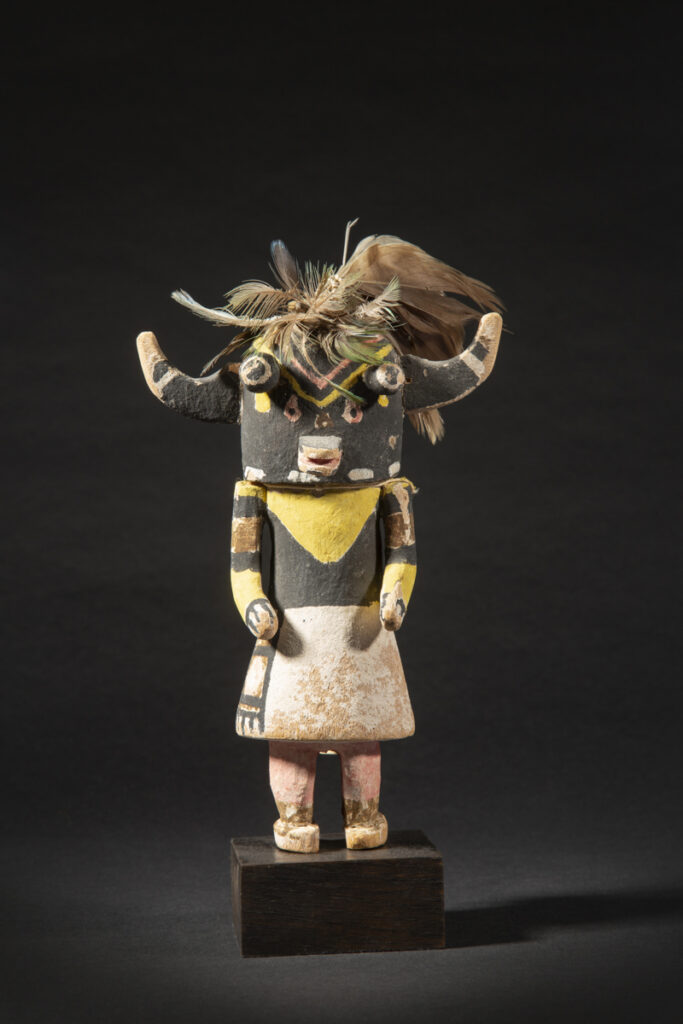
Katsina doll
Arizona
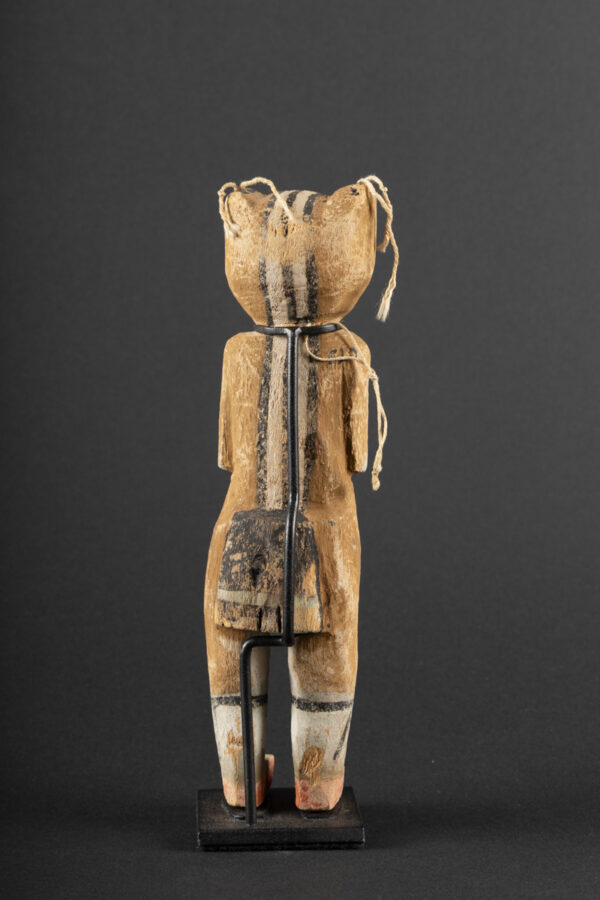
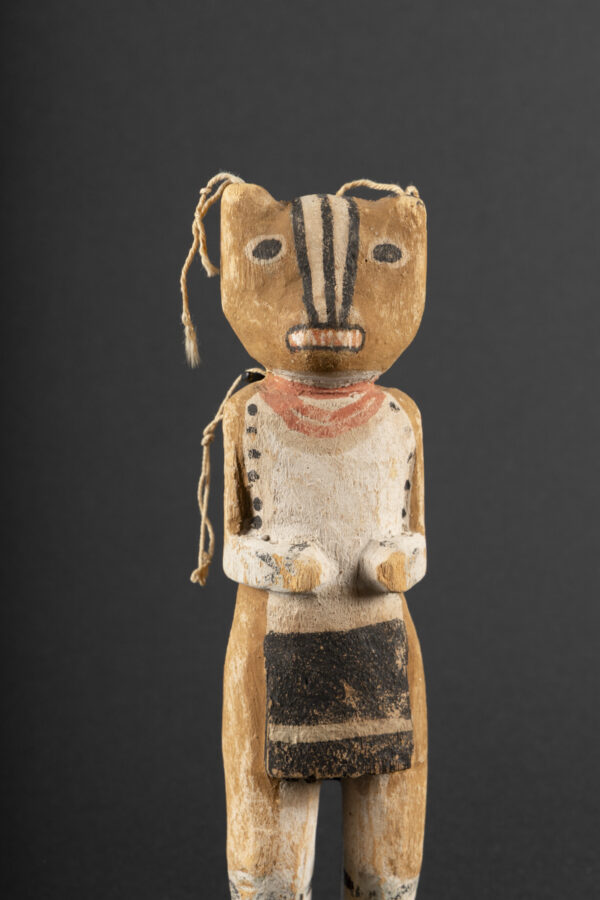
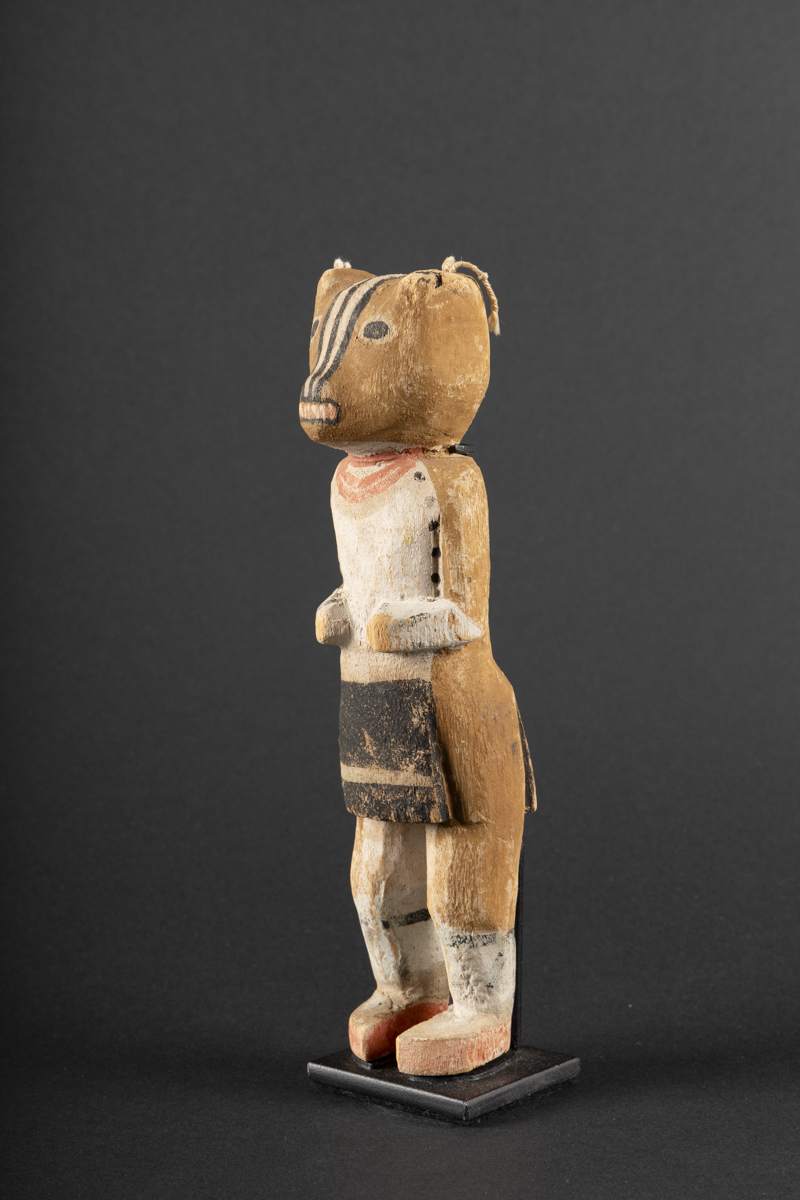
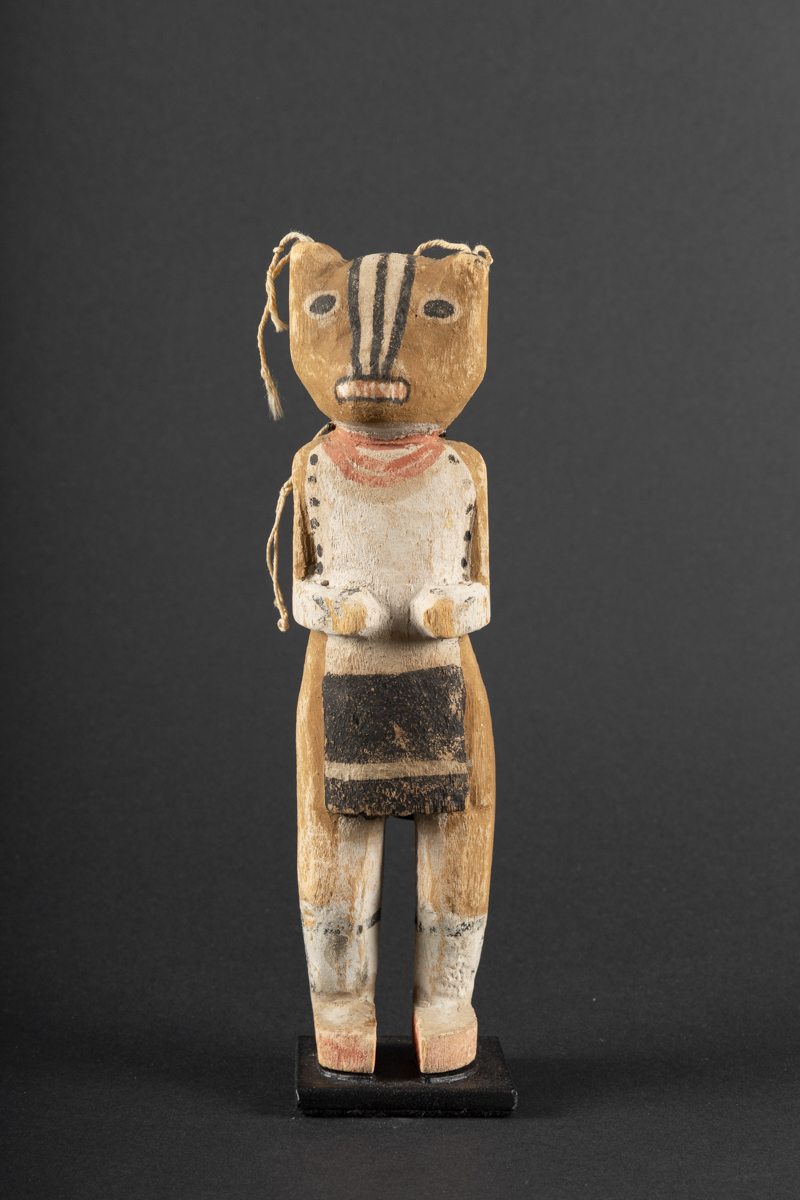
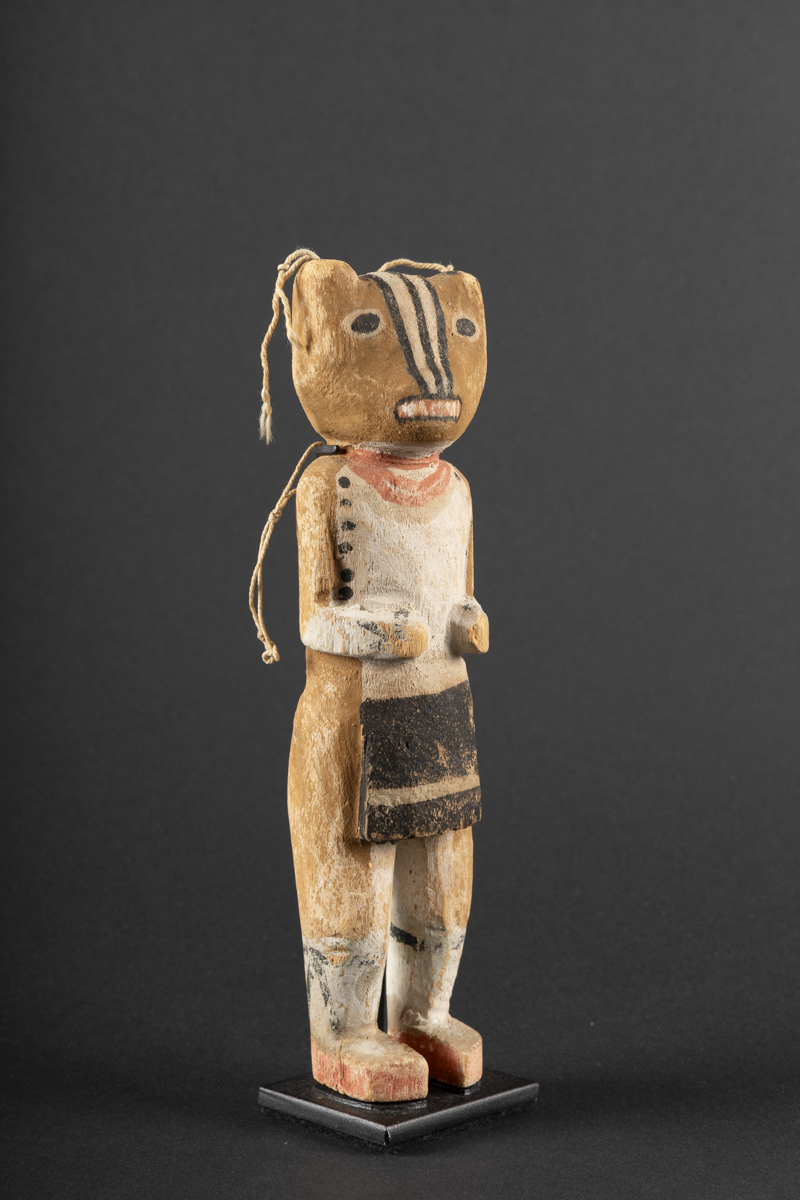
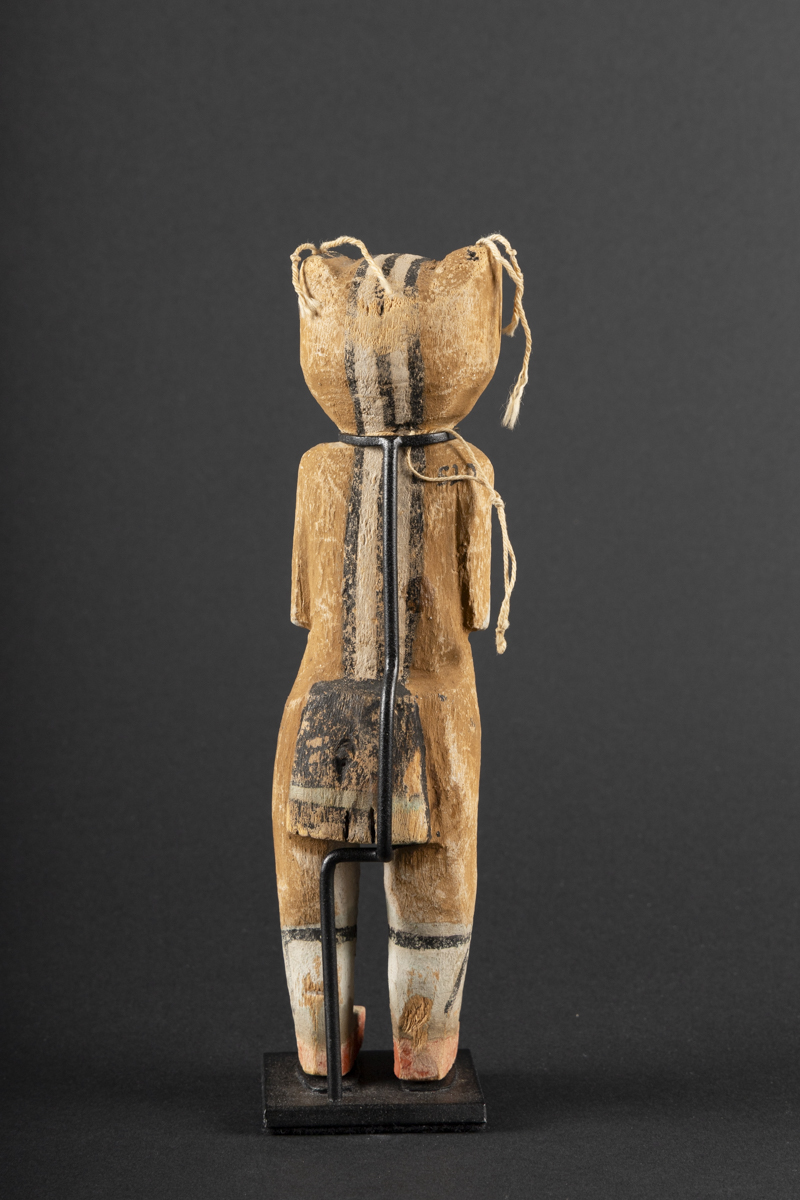
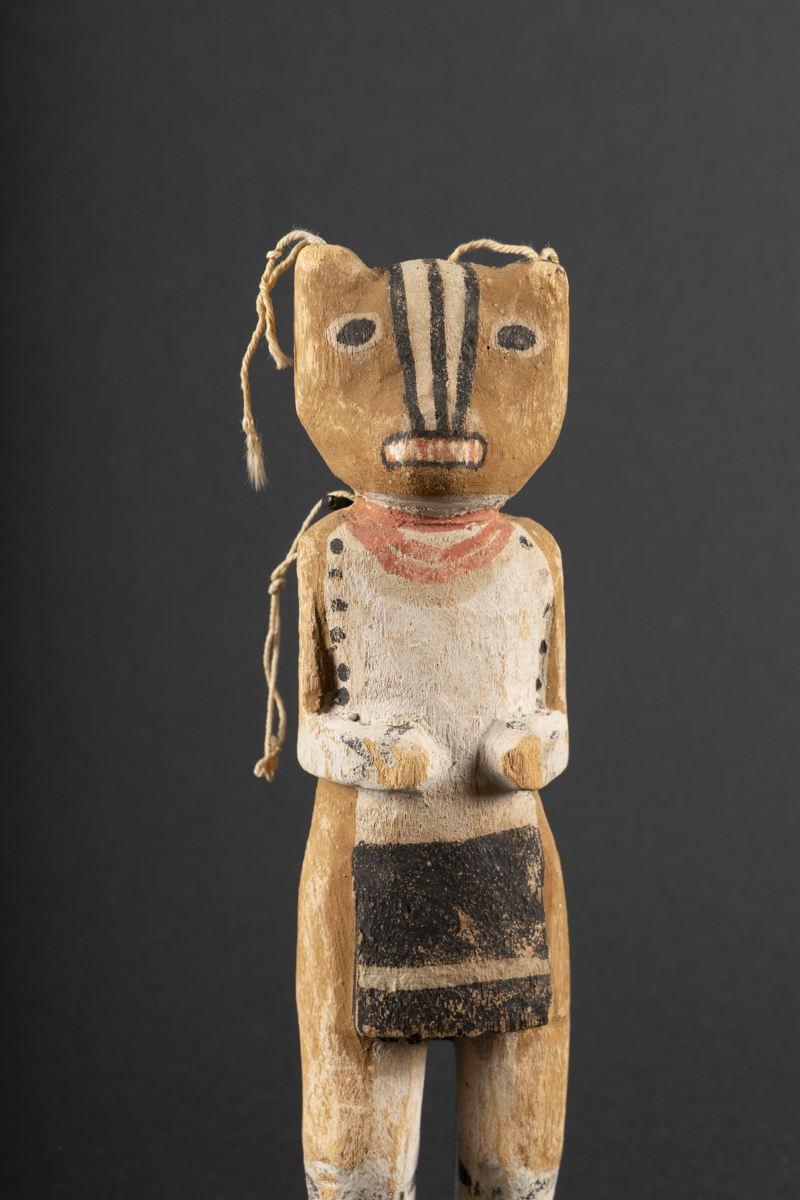
Chipmunk Katsina – Kona Katsina
Hopi
Arizona, USA
Circa 1900
Carved wood (cottonwood), pigments
Height: 20 cm – 7 ¾ in.
Inventory Number: 520
Provenance
Collection of physical anthropologist Morris Steggerda (1900-1950)
acquired from his estate around 1950
Bonhams, Los Angeles, 8 December, 2022, lot 8
Collection Barry Walsh, USA
Chipmunk Katsina doll 20 cm / Galerie Flak
Price on request
Katsina dolls (or katsinam) represent spirits or gods from the pantheon of the Pueblo Indians in the American Southwest. Given to children, katsina dolls constituted a pedagogical tool allowing them to familiarize themselves with the spiritual world and perpetuating knowledge of the founding myths on which their society was based.
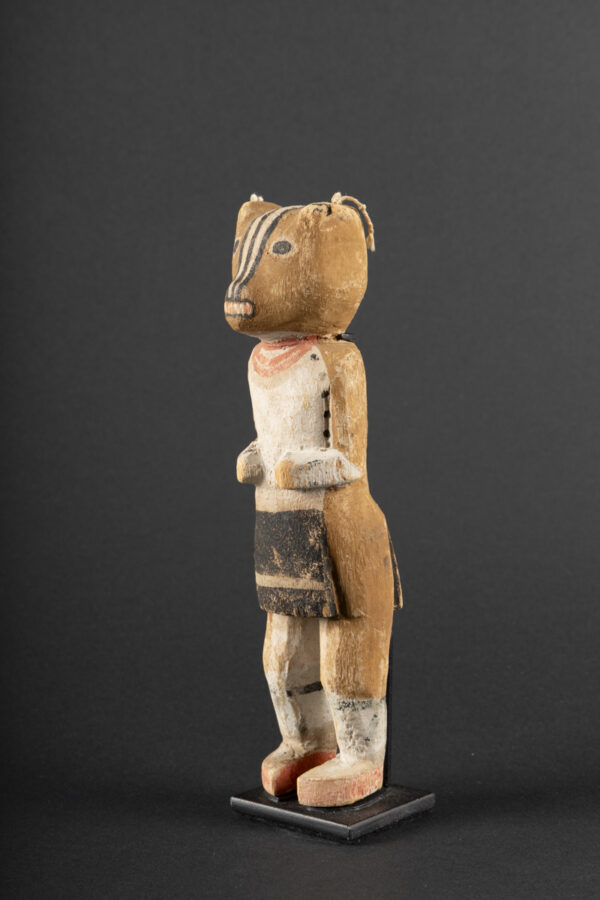
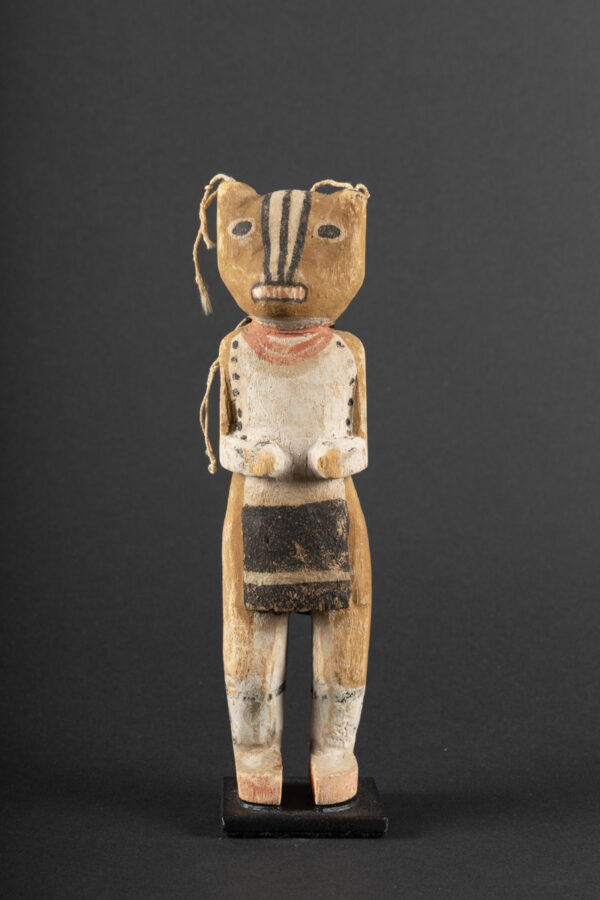
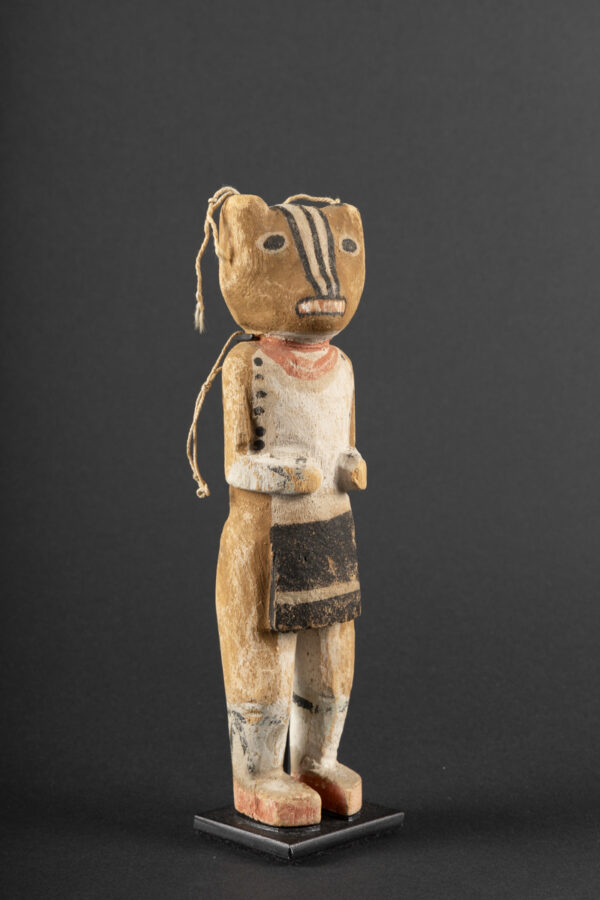
This naturalistic depiction, featuring a light-colored costume, stands out for its dynamic posture—as if the figure is poised to spring forward—perfectly reflecting the character's nature as a Runner Katsina.
This Katsina doll represents Kona (the Chipmunk). Animal Katsinam act as messengers, healers, and bringers of rain. The Kona Katsina belongs to a distinct group known as the Wawash or Runner Katsinam who appear in the village plaza during pauses in the main dances. Easily recognized by their minimalist costumes and specialized masks designed for effortless breathing and vision while running, these figures challenge spectators or clowns to a race. Winners receive a prize, while losers face immediate punishments ranging from a yucca whip strike to having their clothes torn, hair shorn, or face smudged with soot.
While these spirited races provoke great merriment among the crowd, they also serve a deeper, serious purpose. As documented by Barton Wright in Kachinas: the Barry Goldwater Collection at the Heard Museum, this ritual episode functions both as a communal reinforcement of physical running habits and as a symbolic, ritual encouragement for the Katsinam to hasten to the pueblo with their vital blessings, most notably water.
This naturalistic depiction, featuring a light-colored costume, stands out for its dynamic posture—as if the figure is poised to spring forward—perfectly reflecting the character's nature as a Runner Katsina.
This Katsina doll represents Kona (the Chipmunk). Animal Katsinam act as messengers, healers, and bringers of rain. The Kona Katsina belongs to a distinct group known as the Wawash or Runner Katsinam who appear in the village plaza during pauses in the main dances. Easily recognized by their minimalist costumes and specialized masks designed for effortless breathing and vision while running, these figures challenge spectators or clowns to a race. Winners receive a prize, while losers face immediate punishments ranging from a yucca whip strike to having their clothes torn, hair shorn, or face smudged with soot.
While these spirited races provoke great merriment among the crowd, they also serve a deeper, serious purpose. As documented by Barton Wright in Kachinas: the Barry Goldwater Collection at the Heard Museum, this ritual episode functions both as a communal reinforcement of physical running habits and as a symbolic, ritual encouragement for the Katsinam to hasten to the pueblo with their vital blessings, most notably water.
Explore the entire collection