North America | Alaska
Snow Goggles
Alaska
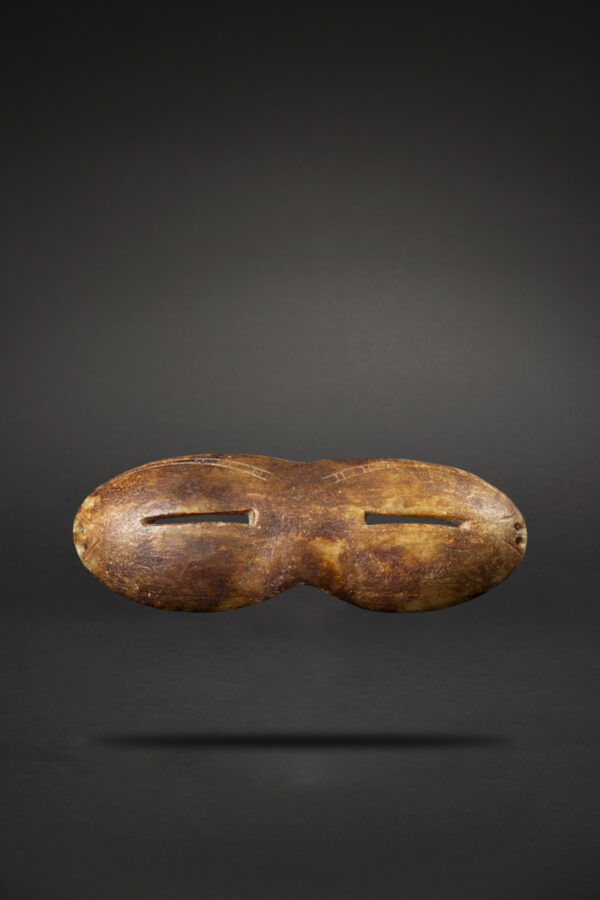
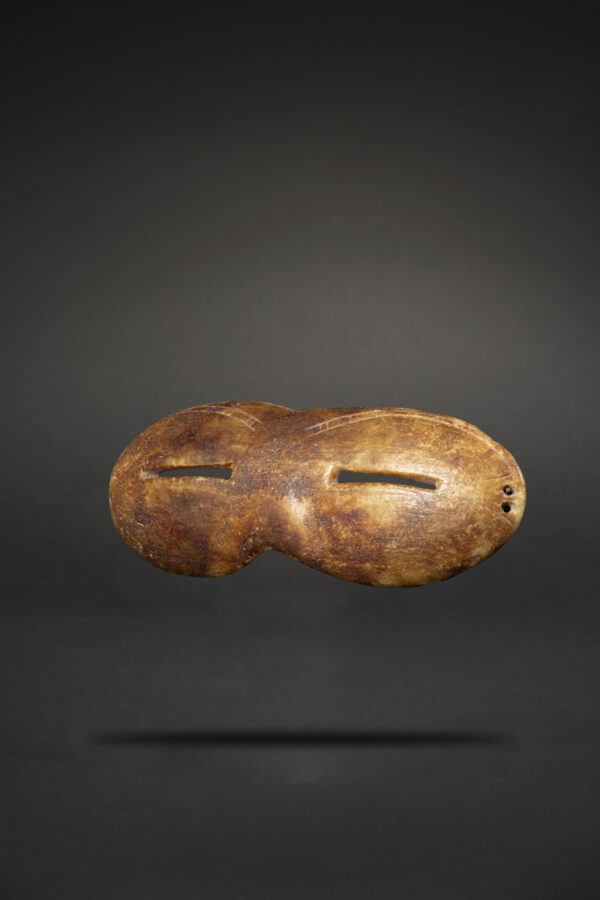
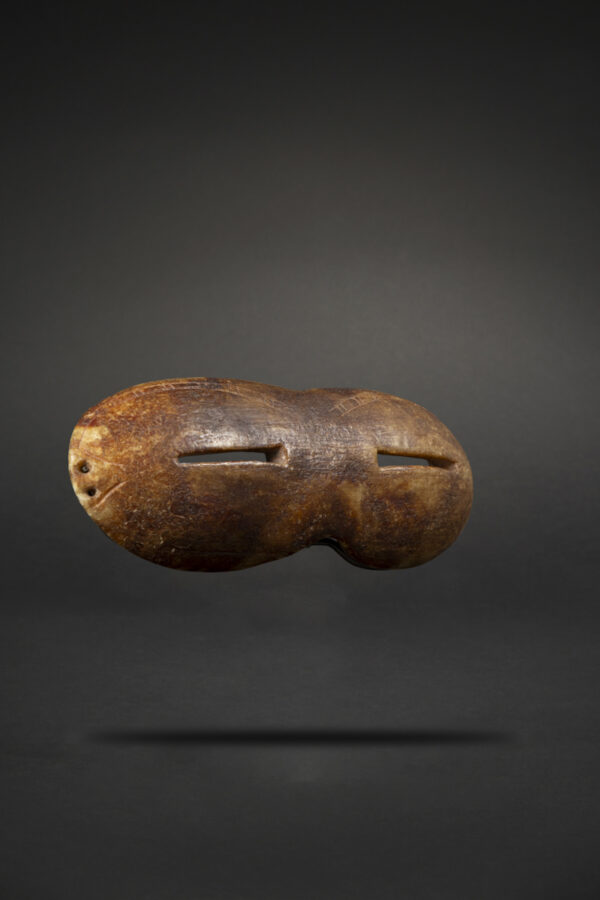
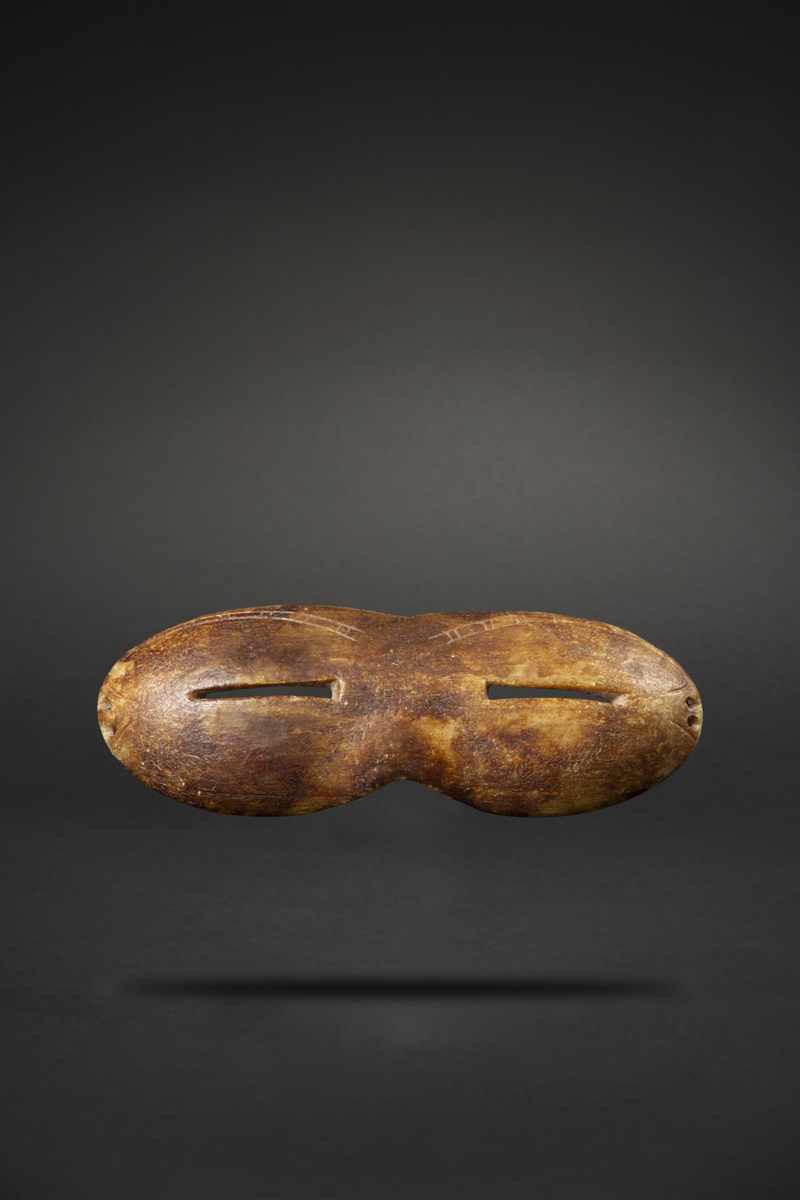
Exceptional pair of Snow Goggles
Punuk Culture, Archaic Eskimo
Alaska
800-1200 AD
Carved walrus tooth
Length: 14 cm – 5 ½ in.
Provenance
Collection Patrick Mestdagh, Brussels
Collection Craig Finch, London
Punuk Snow Goggles 14 cm / Galerie Flak
Price: on request
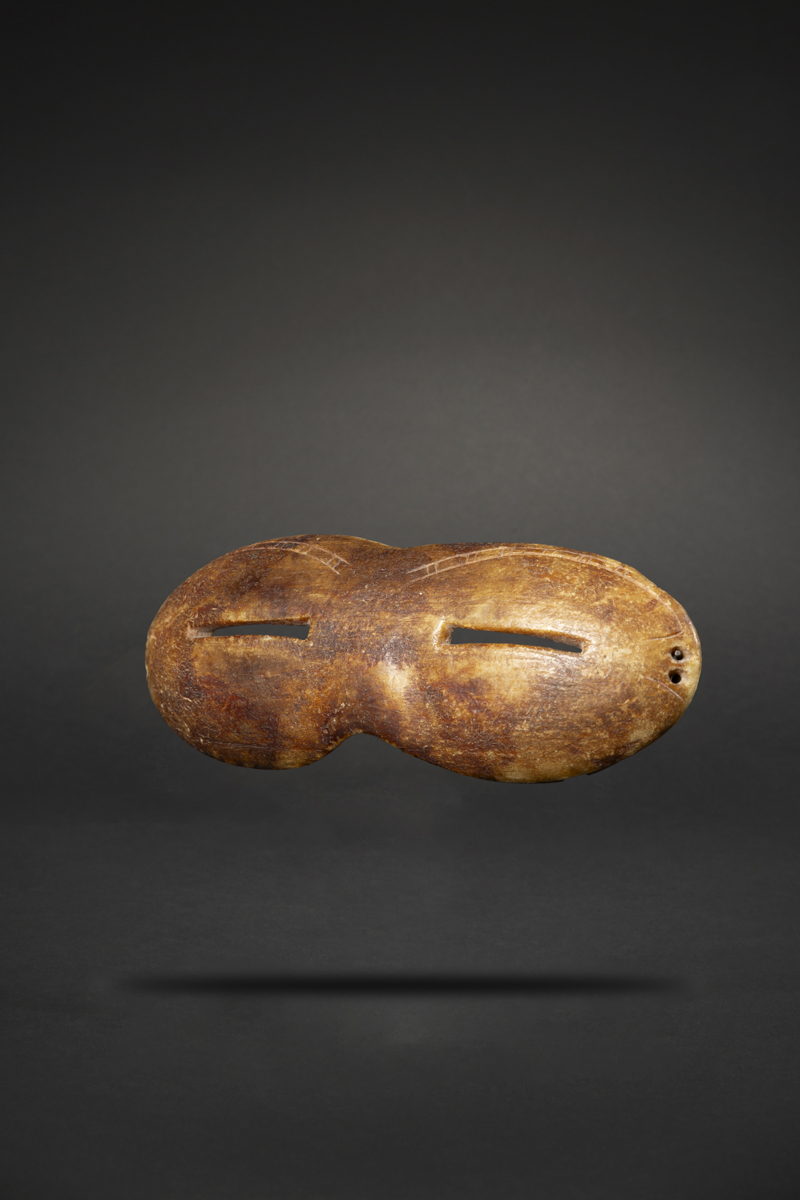
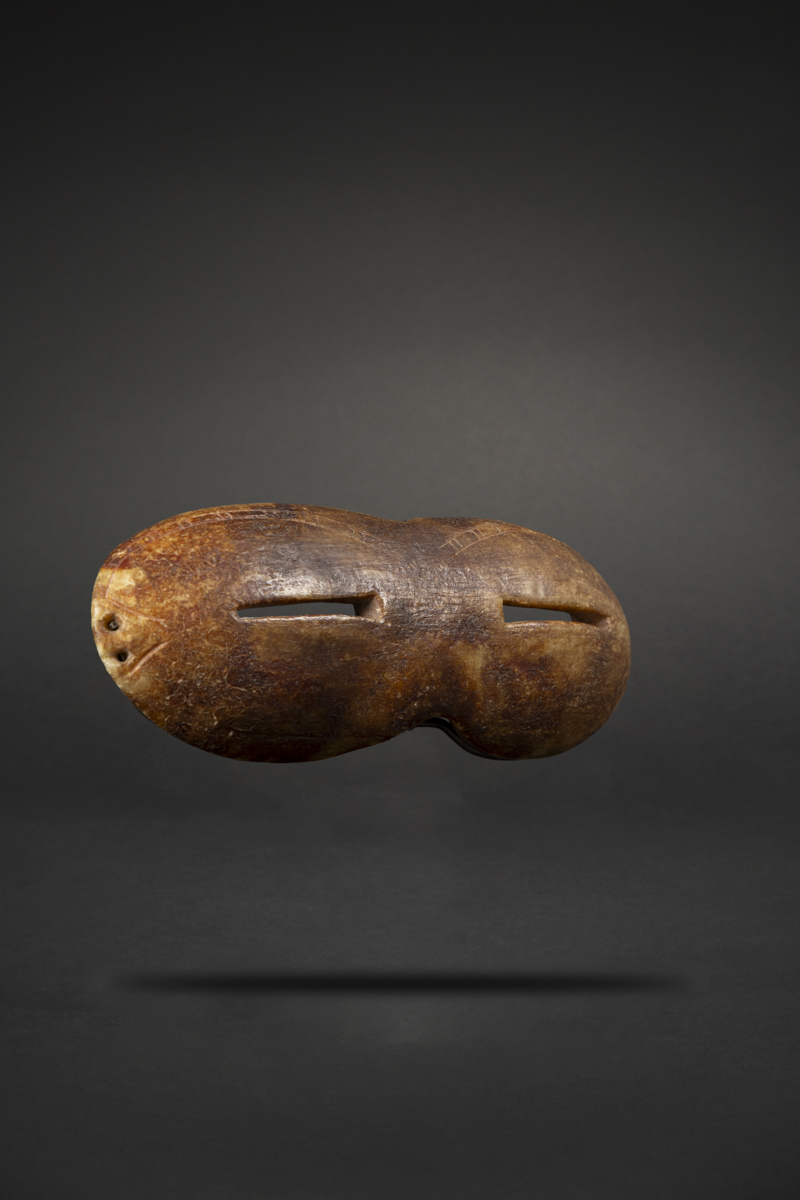
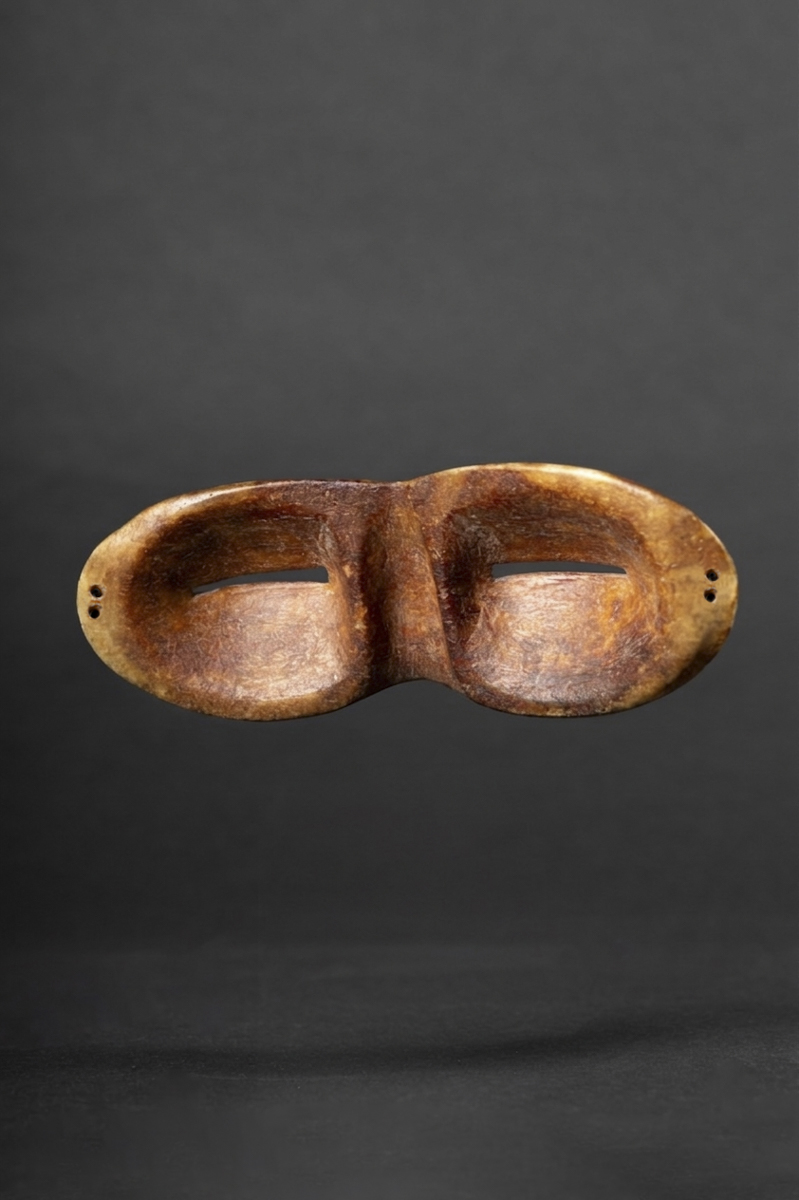
These hunter's goggles, carved from marine ivory (partially fossilized walrus tusk), were designed to reduce brightness and protect against the glare of the sun's rays reflecting off the frozen Arctic ground.
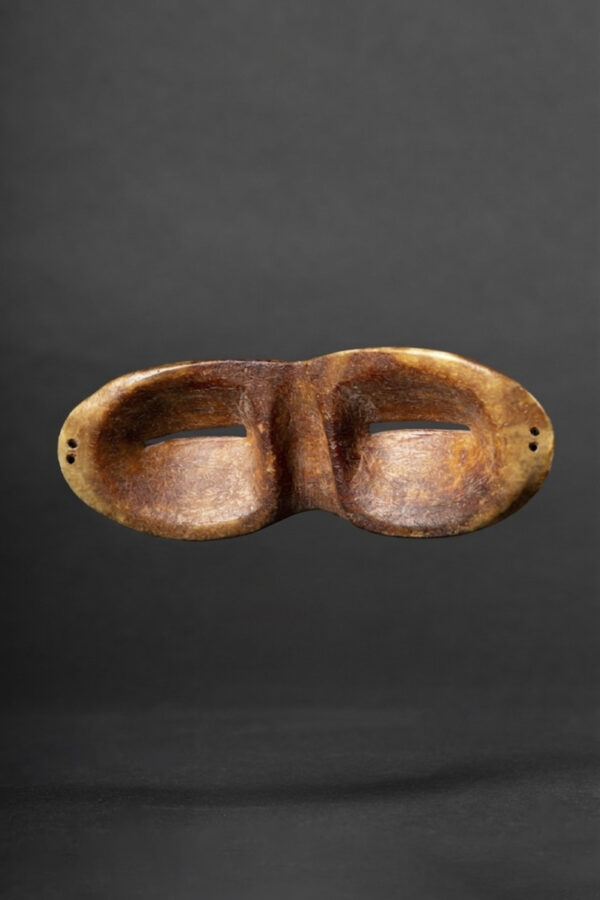
One will note the superb stylization of the goggles' form. Two horizontal slits serve as the openings for vision. Lateral attachment holes allow a cord to pass through, securing the goggles to the face.
The upper portion is adorned with a delicate network of engraved linear patterns, characteristic of Punuk styles.
These goggles called "igauget" or "nigauget" in the Yup'ik dialects of Alaska, were carved so as to echo as closely as possible the shape of the face, and minimize luminosity to a maximum – hence the narrowness of the openings for the eyes. The width of these openings had a direct influence on the wearer’s visual field. The more the visual field was reduced, the more visual acuity was accentuated.
Goggles with slits of different sizes were chosen to match climatic conditions (in particular according to the incidence and intensity of the sun’s rays as they varied with the seasons over the course of the year).
Around the beginning of March the returning sun begins to produce a glare on the snow covered Arctic landscape especially north of the tree line. By late April the country acts like a giant mirror reflecting ever more direct bright light.
The goggles varied according to the locality in which they were made and could be carved of wood, often driftwood collected on the shoreline, or whalebone or from the tusk of a walrus.
As noted by Bill Wolf, the harsh Arctic climate presented some unique impediments to the Eskimo hunter. The high latitude left the sun low on the horizon through much of the year, and the resulting glare was compounded by the highly reflective snow or water that covered the area. Without protection, a hunter’s eyes were left vulnerable to a painful and often serious condition known as snow blindness, similar to a sunburn. Ivory or wood snow goggles alleviated this effect by allowing the wearer to peer through narrow openings, while shading him from the excessive glare. Additionally, they afforded protection from wind, sleet, etc. while traveling.
This thousand-year-old utilitarian object is here elevated to the rank of a work of art. The apparent modernity of its form is striking.
One will note the superb stylization of the goggles' form. Two horizontal slits serve as the openings for vision. Lateral attachment holes allow a cord to pass through, securing the goggles to the face.
The upper portion is adorned with a delicate network of engraved linear patterns, characteristic of Punuk styles.
These goggles called "igauget" or "nigauget" in the Yup'ik dialects of Alaska, were carved so as to echo as closely as possible the shape of the face, and minimize luminosity to a maximum – hence the narrowness of the openings for the eyes. The width of these openings had a direct influence on the wearer’s visual field. The more the visual field was reduced, the more visual acuity was accentuated.
Goggles with slits of different sizes were chosen to match climatic conditions (in particular according to the incidence and intensity of the sun’s rays as they varied with the seasons over the course of the year).
Around the beginning of March the returning sun begins to produce a glare on the snow covered Arctic landscape especially north of the tree line. By late April the country acts like a giant mirror reflecting ever more direct bright light.
The goggles varied according to the locality in which they were made and could be carved of wood, often driftwood collected on the shoreline, or whalebone or from the tusk of a walrus.
As noted by Bill Wolf, the harsh Arctic climate presented some unique impediments to the Eskimo hunter. The high latitude left the sun low on the horizon through much of the year, and the resulting glare was compounded by the highly reflective snow or water that covered the area. Without protection, a hunter’s eyes were left vulnerable to a painful and often serious condition known as snow blindness, similar to a sunburn. Ivory or wood snow goggles alleviated this effect by allowing the wearer to peer through narrow openings, while shading him from the excessive glare. Additionally, they afforded protection from wind, sleet, etc. while traveling.
This thousand-year-old utilitarian object is here elevated to the rank of a work of art. The apparent modernity of its form is striking.
Explore the entire collection