Archives | Canada
Totem Pole
Canada
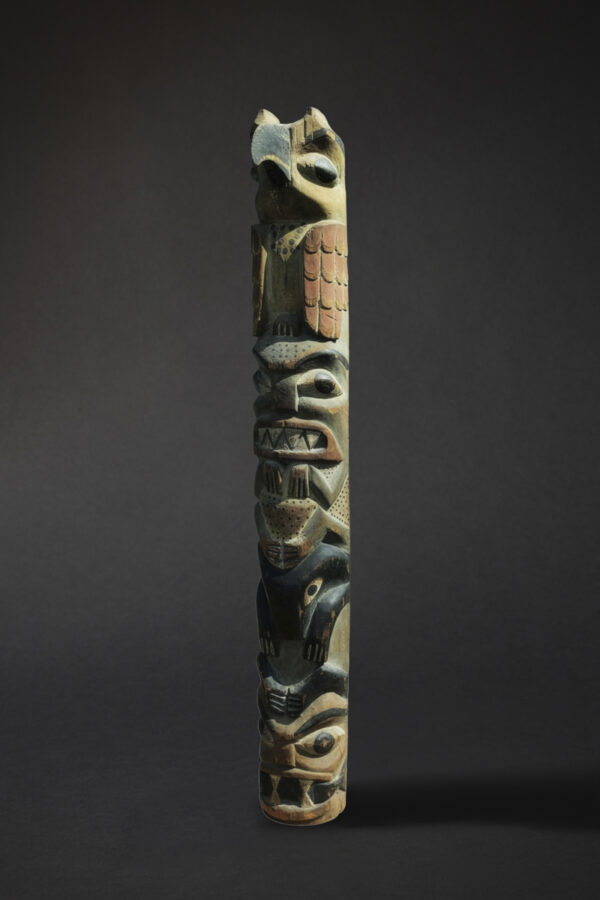
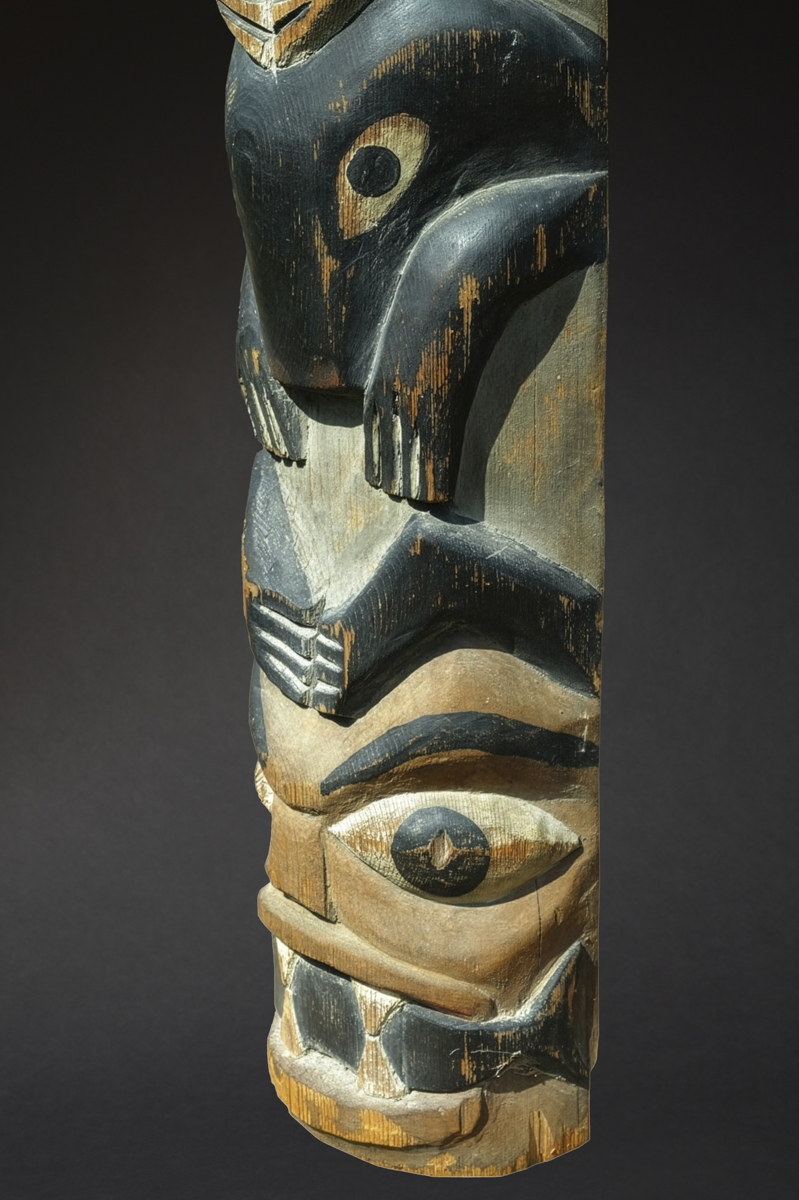
Large Model Totem Pole
Haida or neighboring cultures
Queen Charlotte Islands, British Columbia,
Northwest Coast, Canada
Circa 1880s
Wood and pigments
Height: 124.5 cm – 49 in.
Provenance
Private collection, Hawaï, USA
Thomaston Place Auction Galleries, Maine, USA
Collection Dr. James Tait Goodrich (1946-1920), New York
Collection Franck Marcelin, Aix-en-Provence
Sold
Monumental memorial poles (often referred to as "totem poles"), found all along the Northwest Coast of Canada and as far south as Alaska, symbolize the origins, wealth, and prestige of a family clan. Their iconography traces a clan's lineage or pays tribute to important figures such as historical chiefs or shamans.
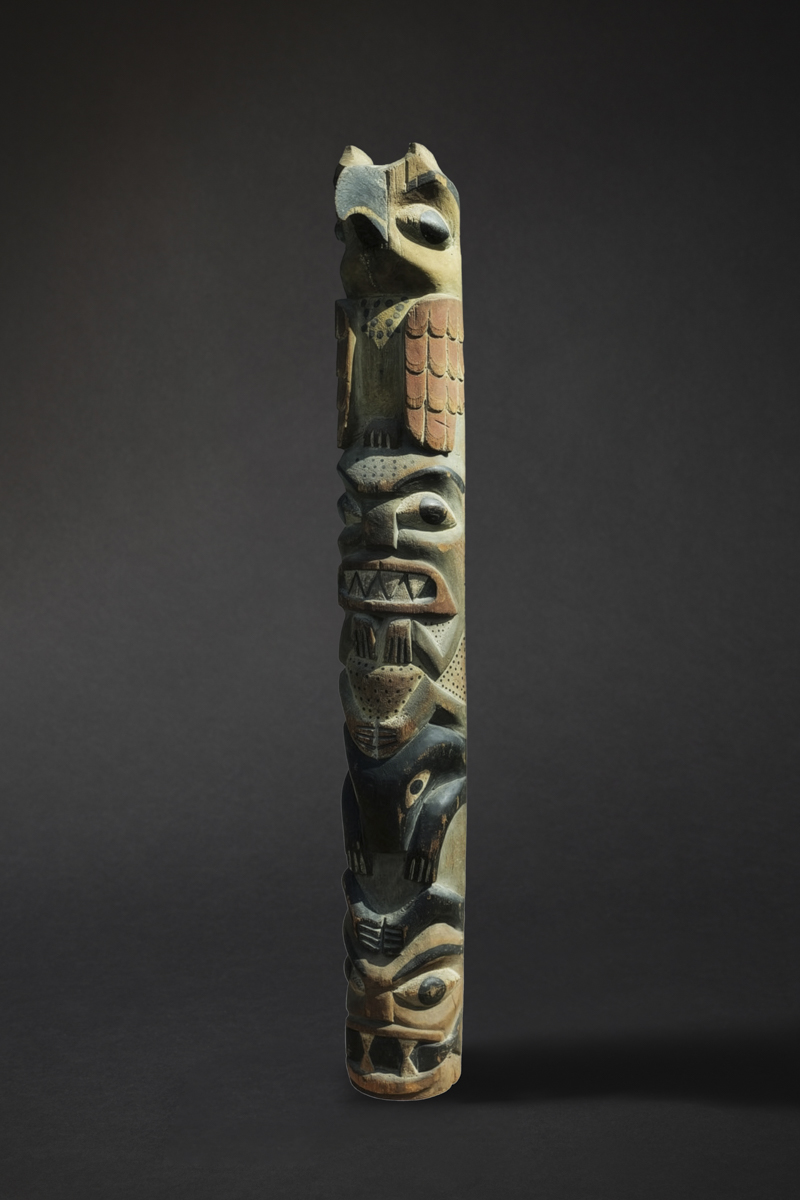
The example presented here, standing 49 in. tall, belongs to the period regarded as the golden age of Northwest Coast art, which flourished for nearly half a century, from the 1850s through the early 20th century. According to Steven C. Brown ("Native Visions, Evolution in Northwest Coast Art from the 18th through the 20th Century", Seattle Art Museum, p. 101), "between 1865 and 1929, [following the depopulation caused by epidemics and deculturation], those who carried the knowledge tied to esoteric traditions did everything in their power to keep these visions alive, both on objects used in a traditional context and on those intended for exchange within developing colonial economies." The tradition of monumental sculpture was thus abandoned, and carvers began miniaturizing their work, creating model houses or, as here, heraldic poles.
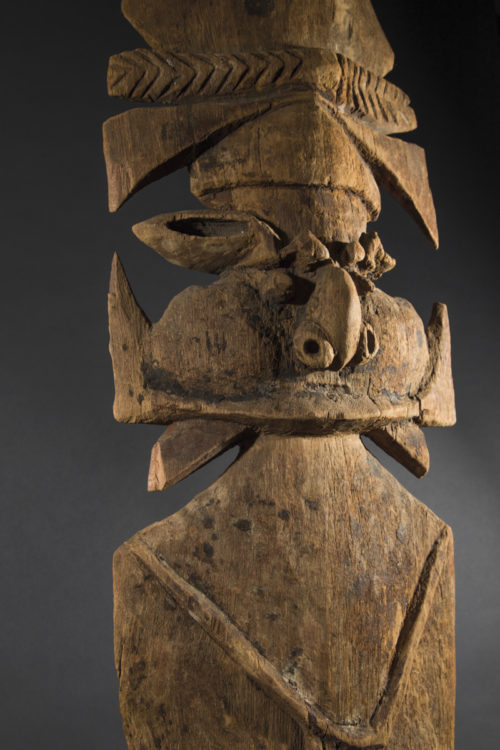
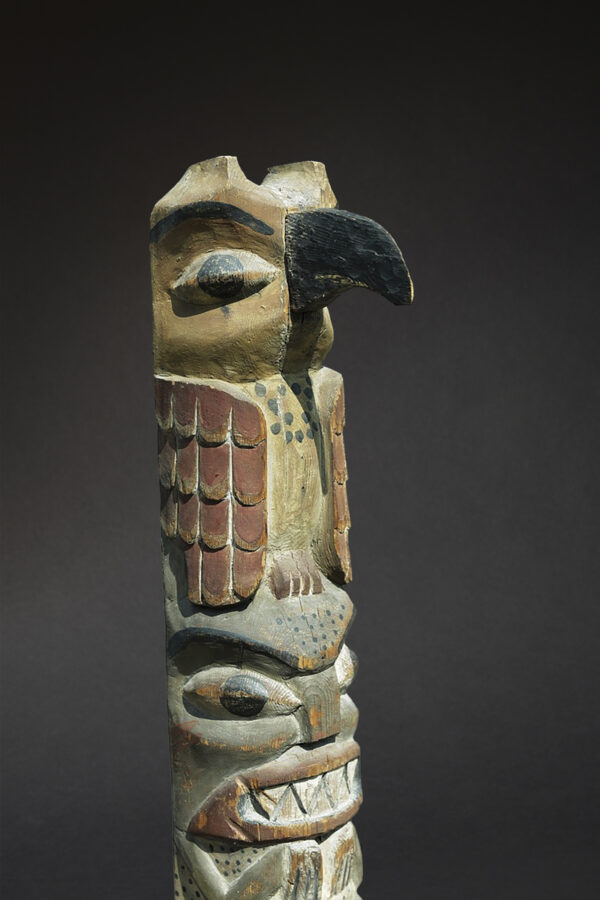
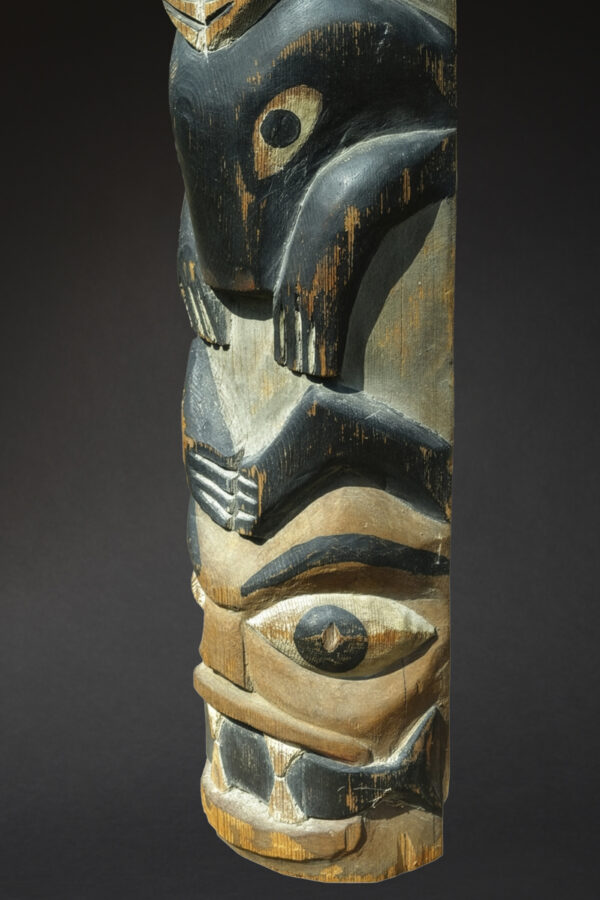
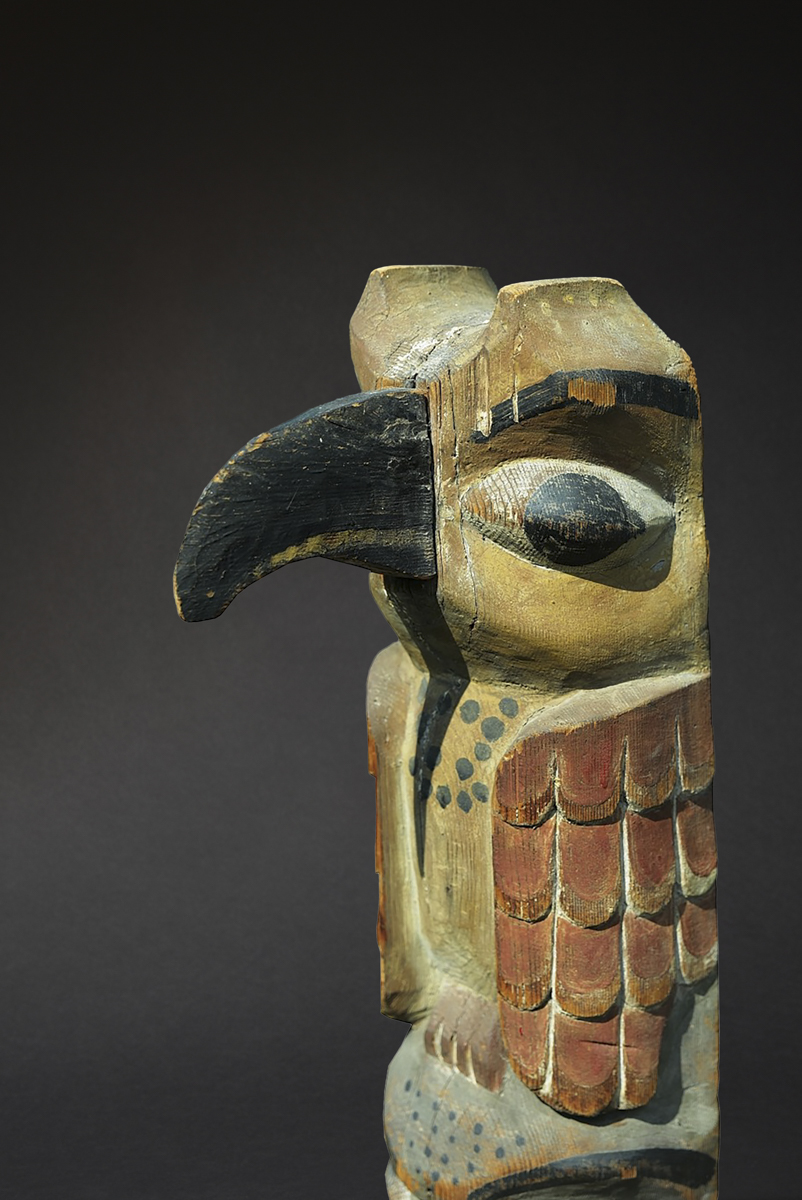
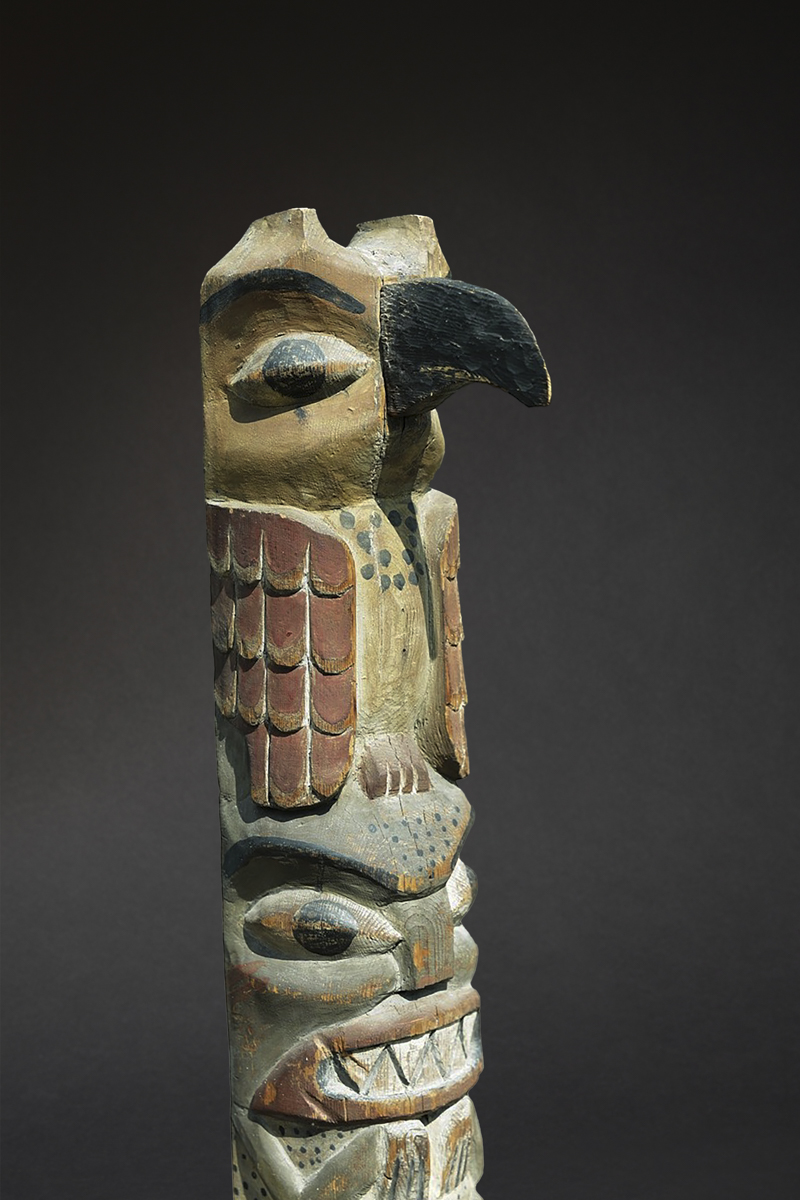
This sculpture features a vertical succession of three zoomorphic figures embodying the guardian animals of the ancestors, the whole surmounted by an eagle with folded wings.
For two similar examples, see "The Cole Collection of Pacific Northwest Coast Art", Sotheby's London, November 8, 1977, lots 49 and 51, from the Pitt Rivers Collection, acquired in 1892.
The example presented here, standing 49 in. tall, belongs to the period regarded as the golden age of Northwest Coast art, which flourished for nearly half a century, from the 1850s through the early 20th century. According to Steven C. Brown ("Native Visions, Evolution in Northwest Coast Art from the 18th through the 20th Century", Seattle Art Museum, p. 101), "between 1865 and 1929, [following the depopulation caused by epidemics and deculturation], those who carried the knowledge tied to esoteric traditions did everything in their power to keep these visions alive, both on objects used in a traditional context and on those intended for exchange within developing colonial economies." The tradition of monumental sculpture was thus abandoned, and carvers began miniaturizing their work, creating model houses or, as here, heraldic poles.
This sculpture features a vertical succession of three zoomorphic figures embodying the guardian animals of the ancestors, the whole surmounted by an eagle with folded wings.
For two similar examples, see "The Cole Collection of Pacific Northwest Coast Art", Sotheby's London, November 8, 1977, lots 49 and 51, from the Pitt Rivers Collection, acquired in 1892.
Explore the entire collection