Archives | Irian Jaya
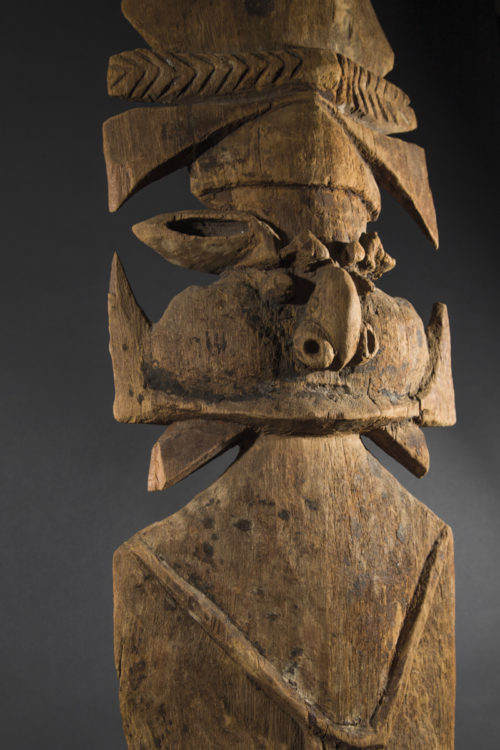
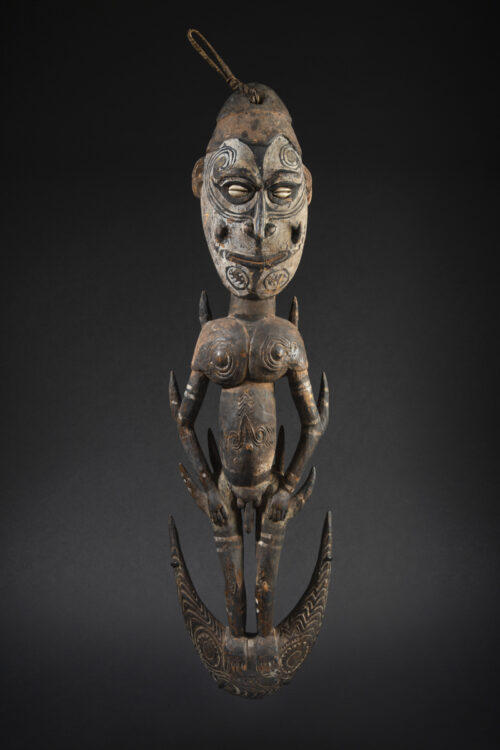
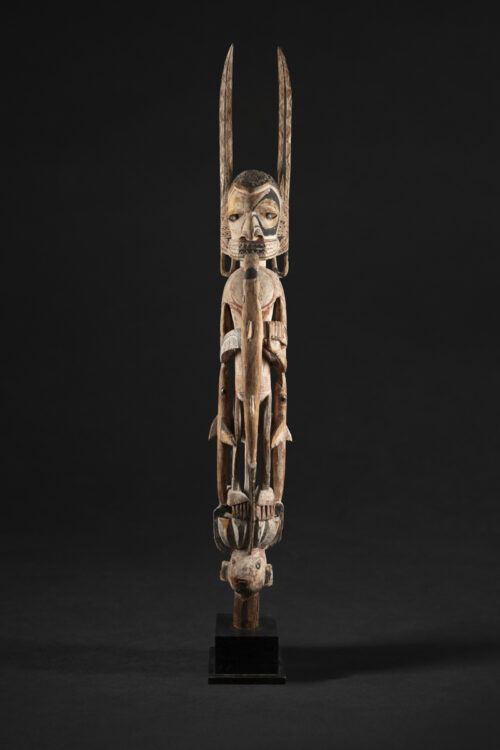
Asmat figure
Irian Jaya
Male Figure
Asmat (Irian Jaya), Papua Indonesia, Indonesia
Early 20th century
Wood and pigments, red seeds, fiber
Height: 102 cm – 40 ¼ in.
Provenance
Collection Th. P. P. van Emden, The Netherlands, 1950s
Collection Michael Woerner, Bangkok
Publication and Exhibition
« Asmat – Art from Southwest New Guinea »
H.C. Renselaar, Amsterdam, Royal Tropical Institute,
No. CXXI, Dept of Cultural and Physical Anthropology No. 55. 1961, fig. 7-8.
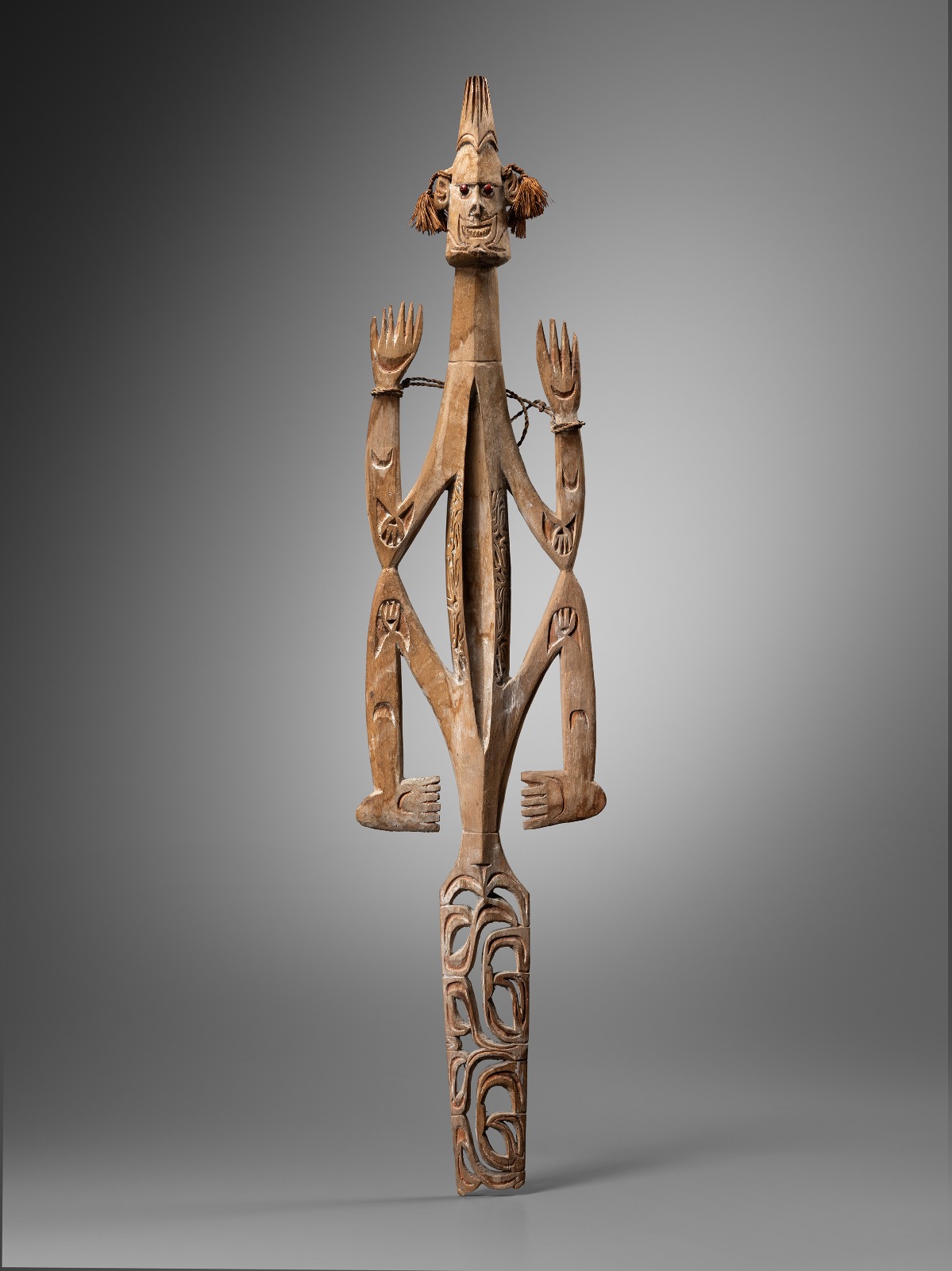
his figure depicts a seated man with his elbows resting on his knees. His open hands rise on either side of an elongated torso that evokes the shape of a dugout canoe, while the body rests on an openwork base adorned with scrollwork.
As highlighted by both the Metropolitan Museum of Art in New York and the Art Gallery of New South Wales (Melanesian art: redux, 2018–2019), this posture refers to the founding myth of Fumeripits (or Fumeripitsj). According to the legend, the creator hero built the first ceremonial house (jeu). To overcome his solitude, he carved human figures out of tree trunks and crafted a drum. At the beat of the drum, the statues came to life: their elbows detached from their knees, they began to dance, and thus the first Asmat people were born. To this day, during ceremonies such as the consecration of a new ceremonial house, dancers maintain their elbows against their knees, reenacting this transformation from wood into flesh. The silhouette also echoes the praying mantis, a traditional symbol of headhunting among the Asmat.
For the Asmat, the human body is a tree: the legs and feet form the roots, the torso the trunk, the arms and hands the branches, and the head the fruit. These figures bear the names of recently deceased ancestors, though they are not literal portraits. They honor the departed while reminding the community of their duty to avenge their death. They were crafted by master carvers (wowipitsj), whose prestige was surpassed only by that of great warriors.
Explore the entire collection