Archives | American Southwest
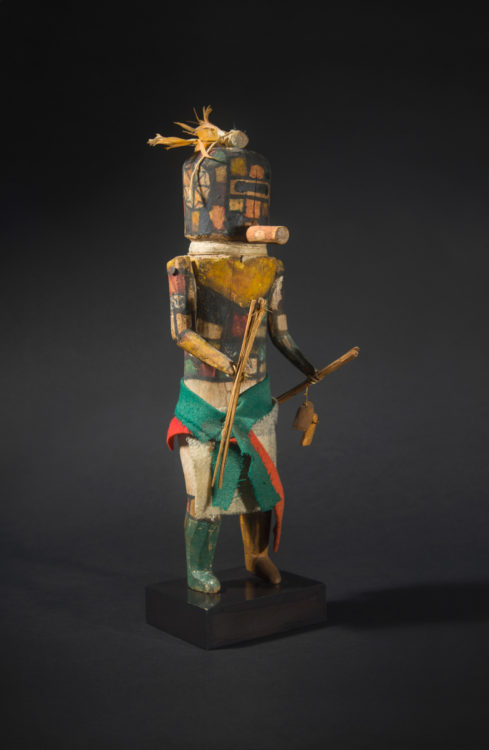
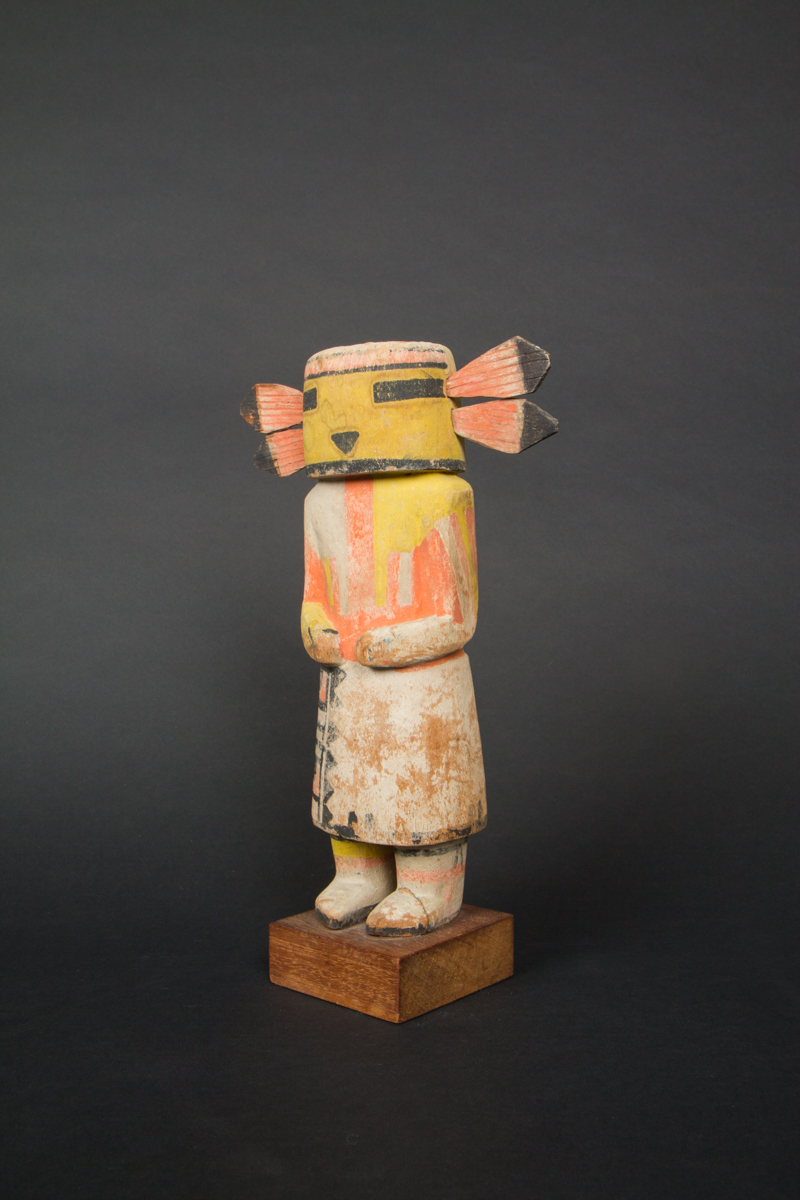
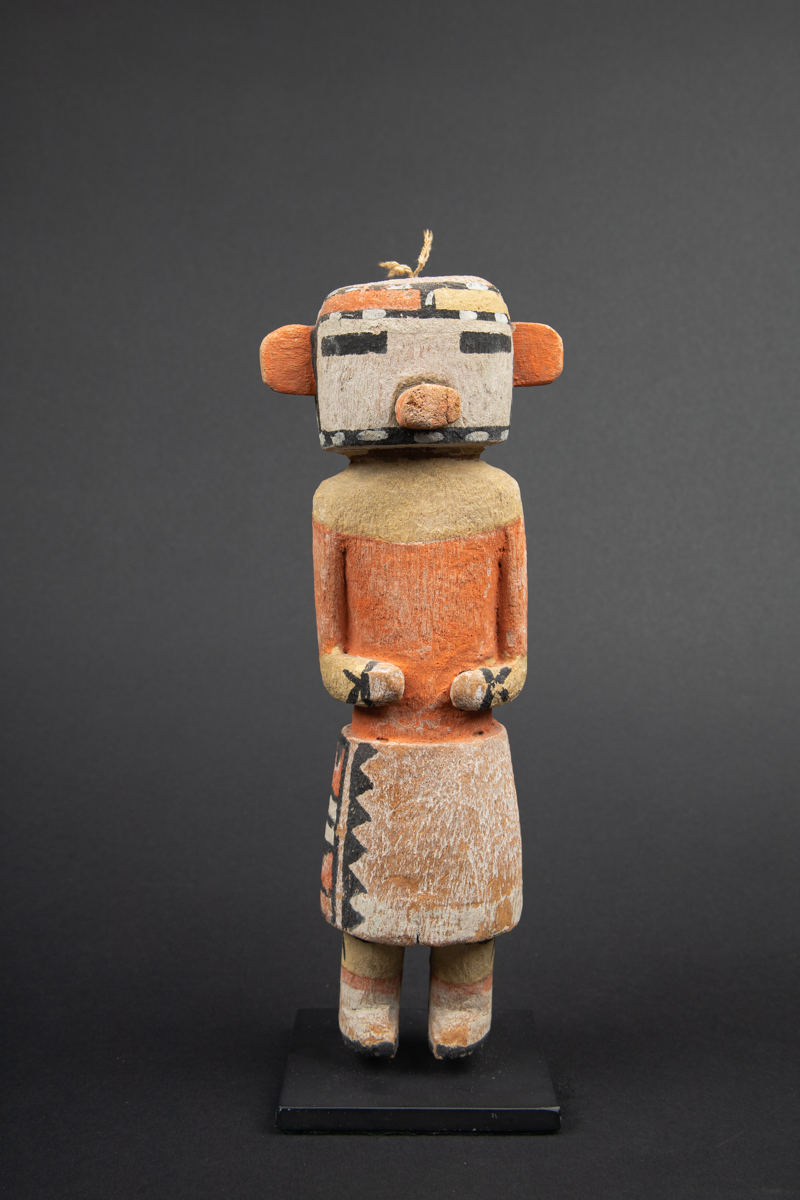
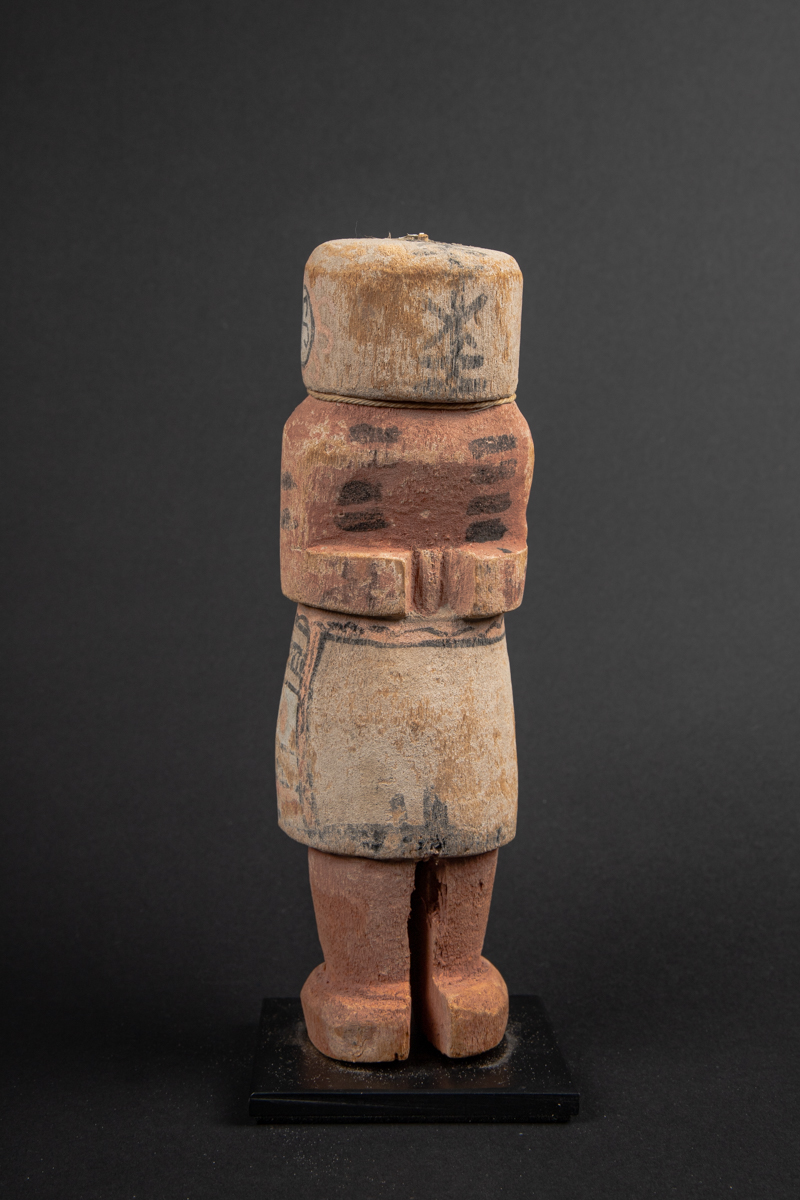
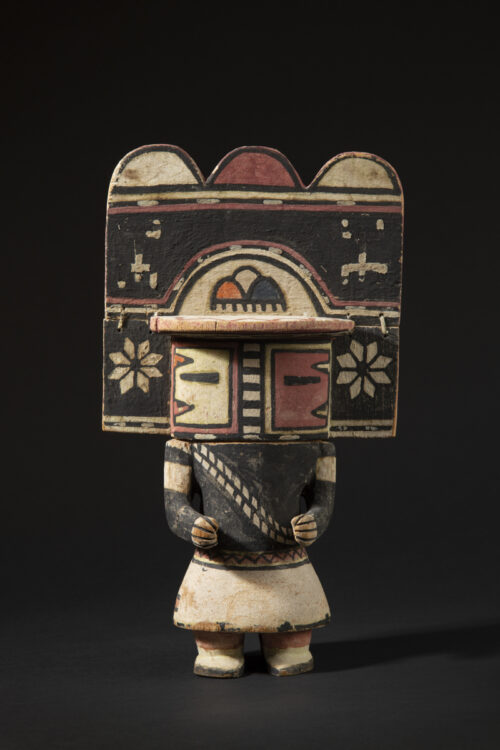
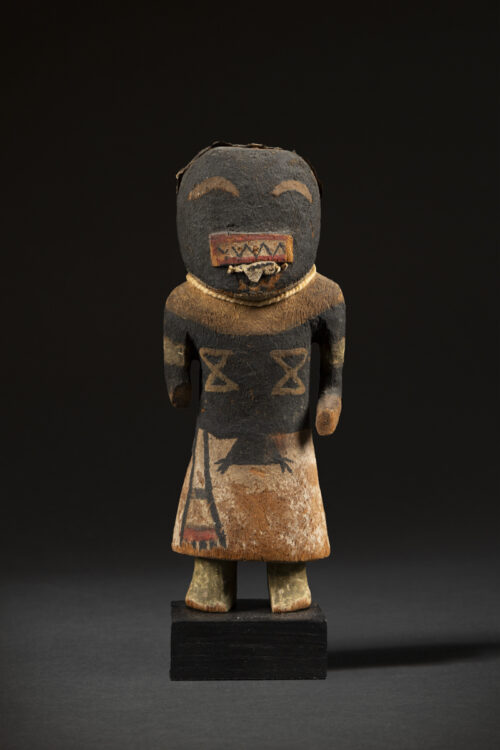
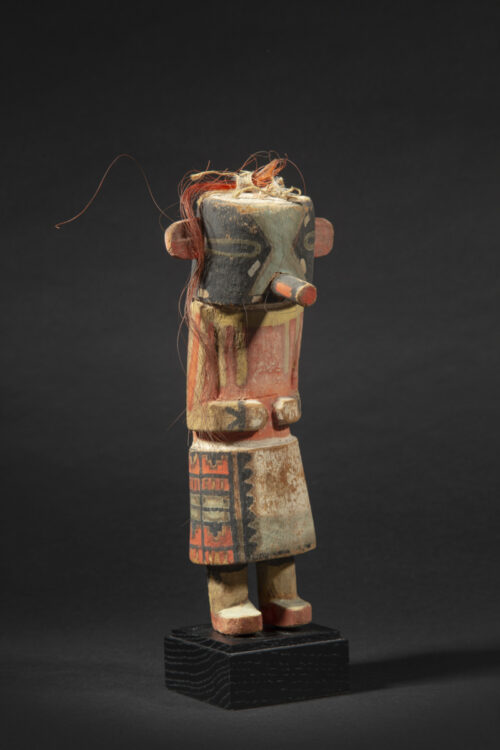
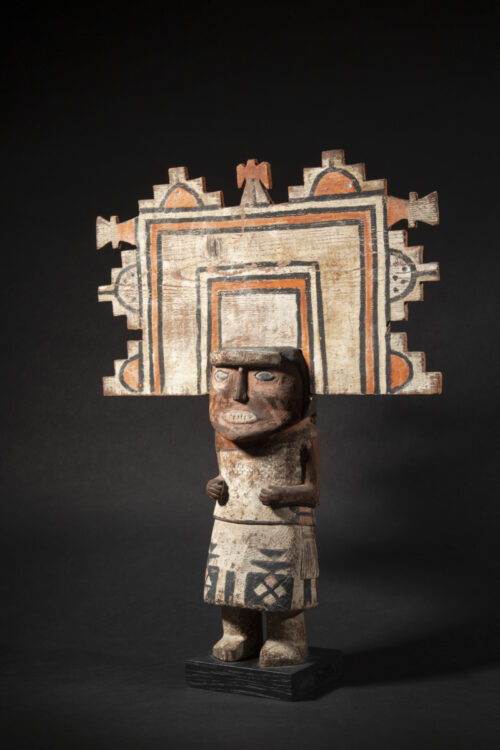
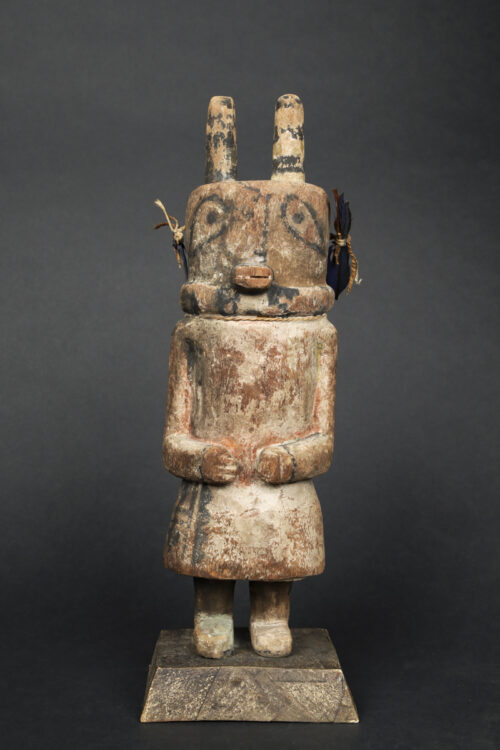
Katsina doll
American Southwest
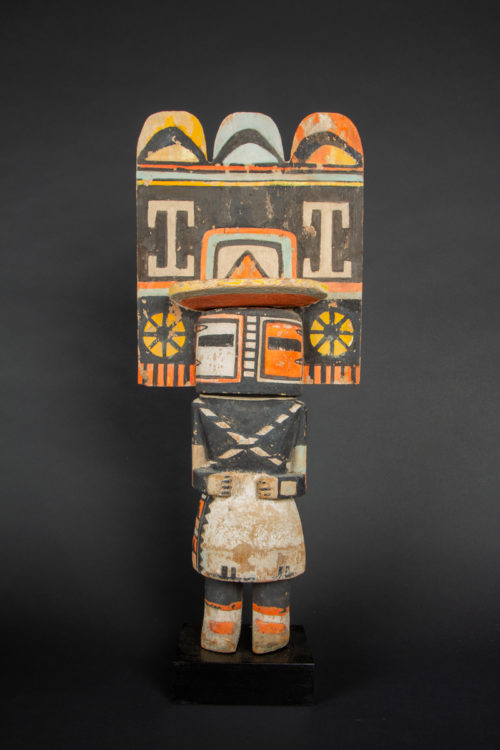
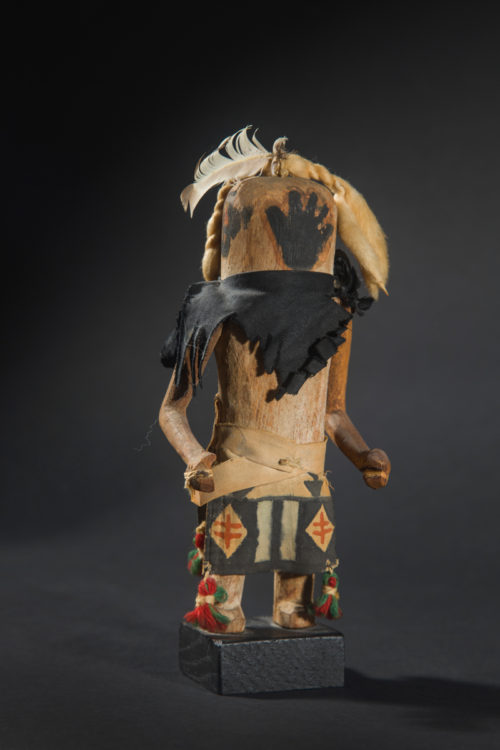
Eagle Katsina – Kwahu Katsina
Hopi or Zuni
Arizona or New Mexico, USA
Circa 1900
Cottonwood, pigments, fabric, feathers
Height: 20.5 cm – 8 in.
Provenance
Galerie Flak collection, Paris, prior to 2003
Private collection
Christie’s Paris, 14 June 2011, lot 118
Jean-Paul Morin collection, France
Giquello & Associés, “Les Kachinas de la collection Jean-Paul Morin”, 6 Nov. 2025, lot 17
Claude Parisot collection, France
Exhibition and Literature
“Esprit Kachina”, 2003, page 84
Sold
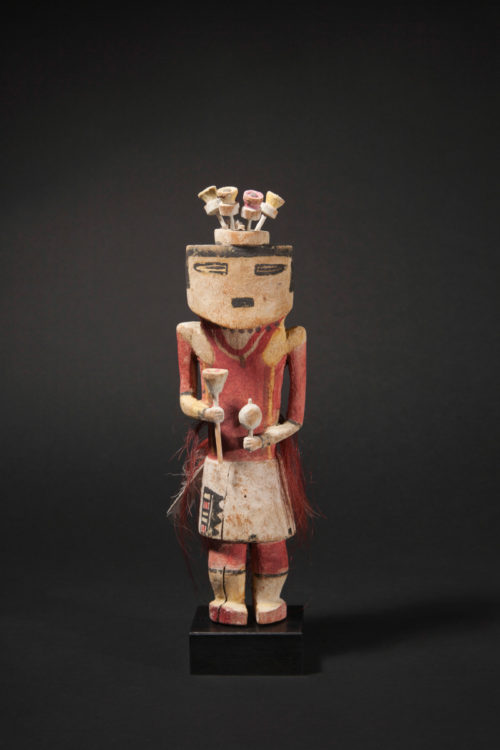
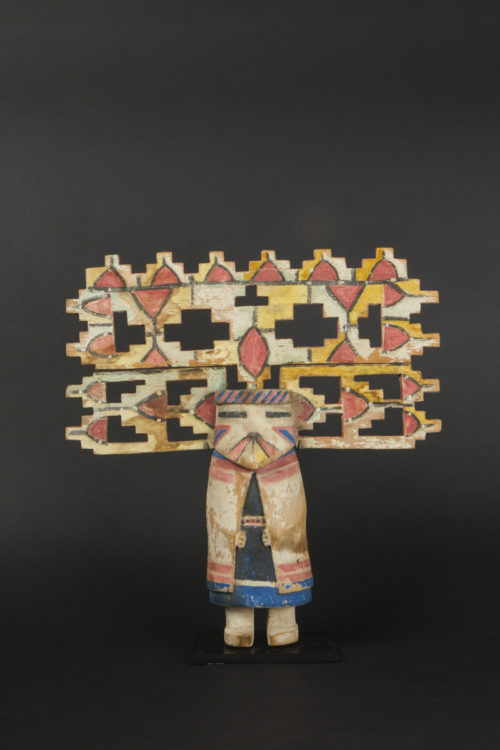
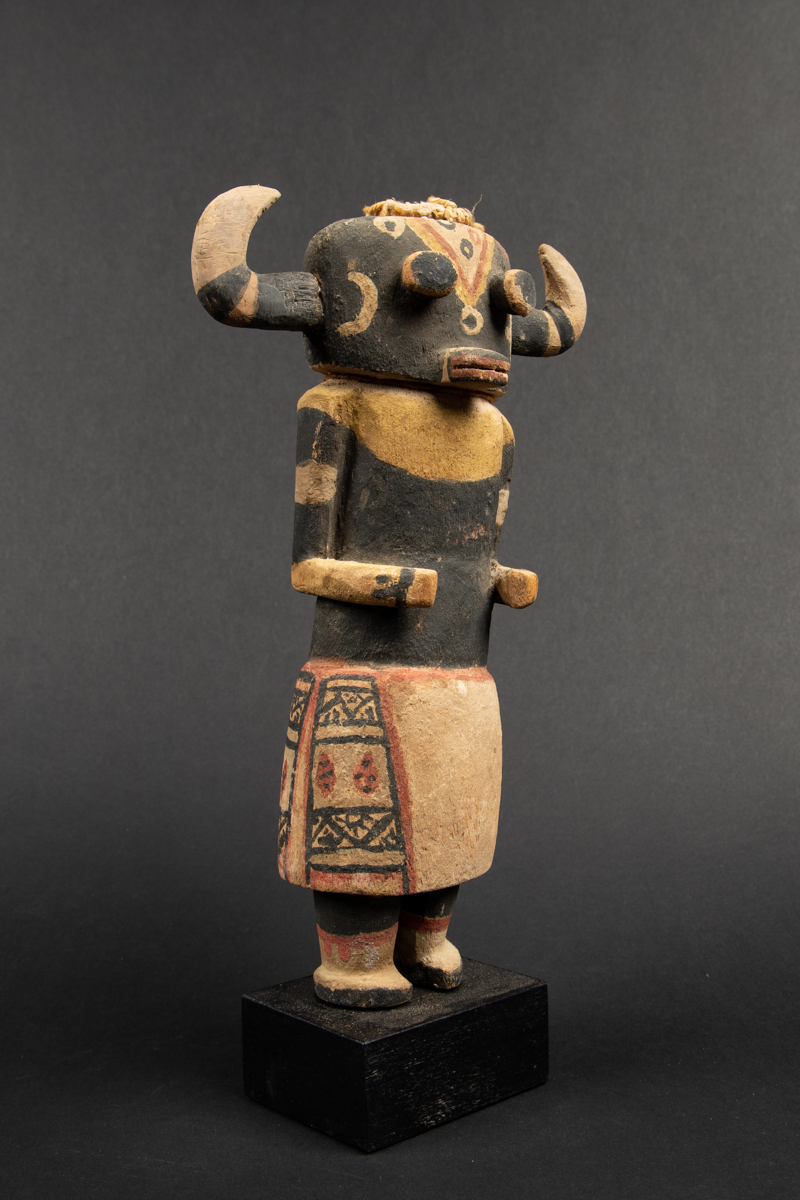
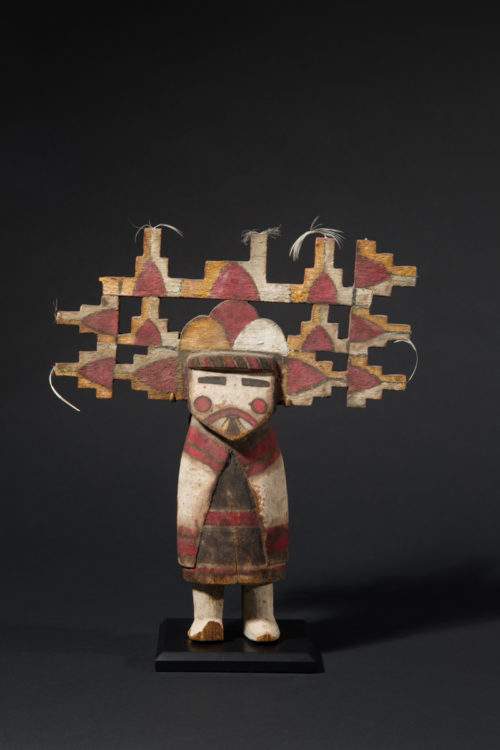
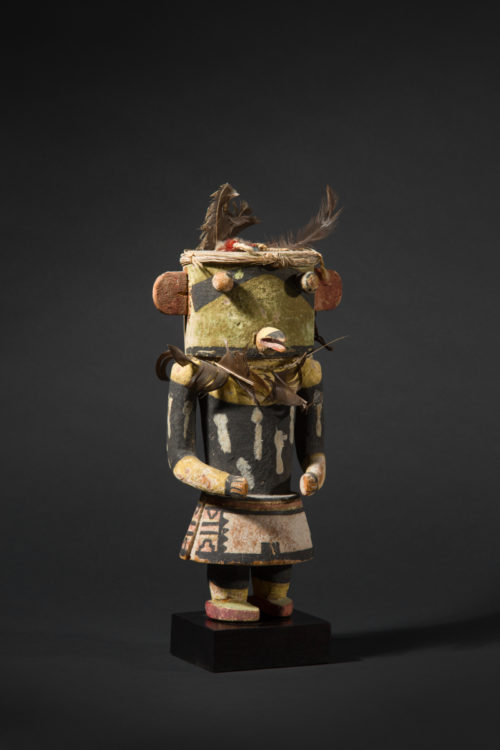
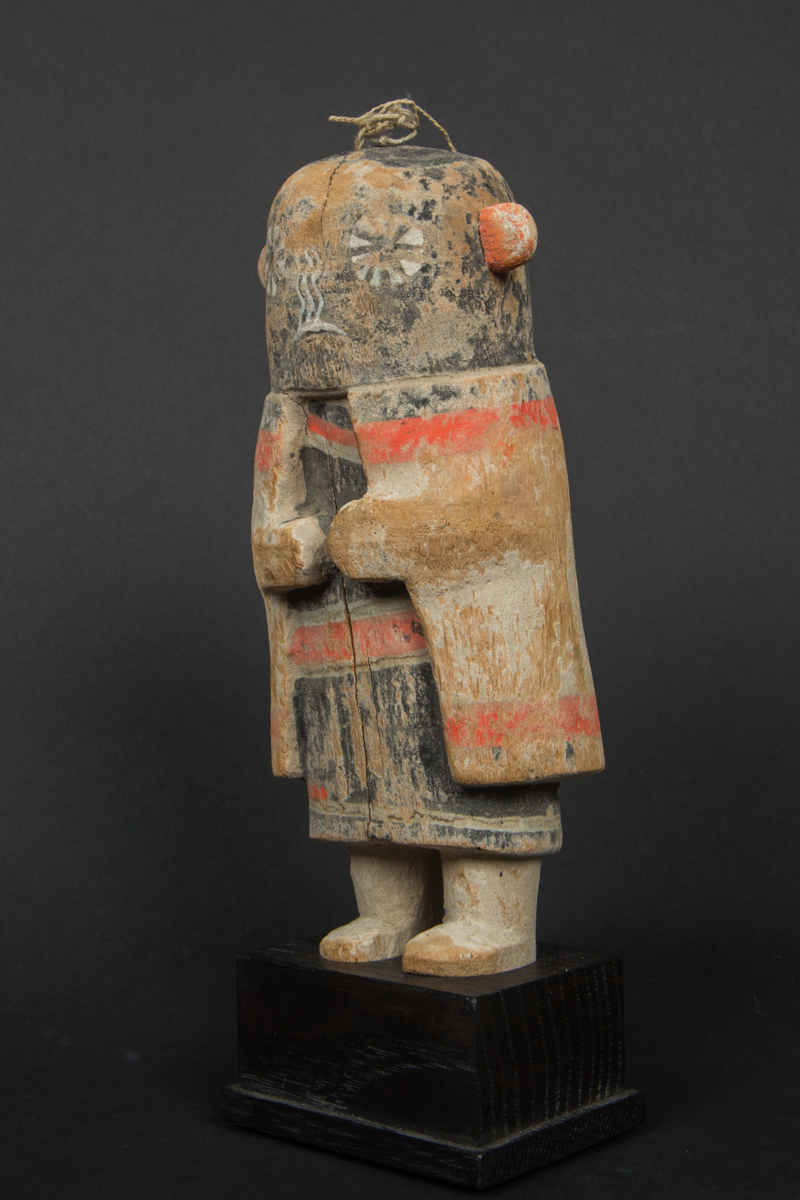
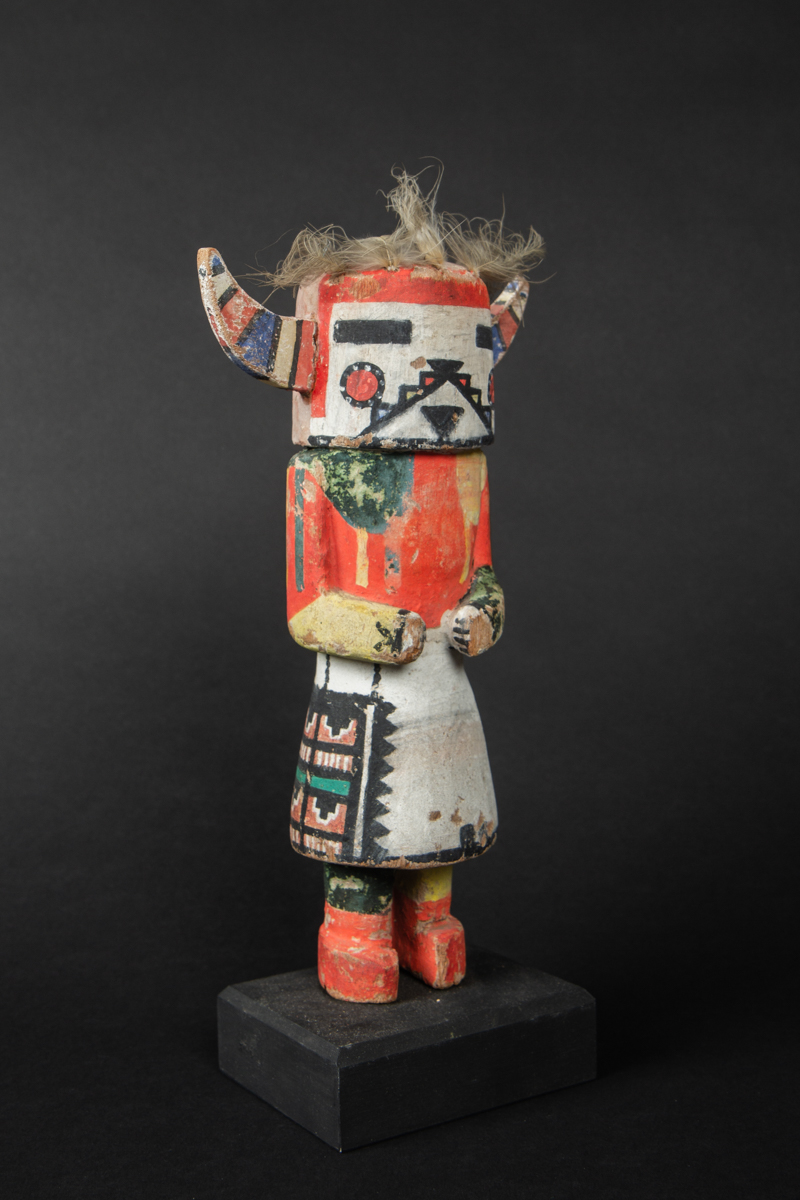
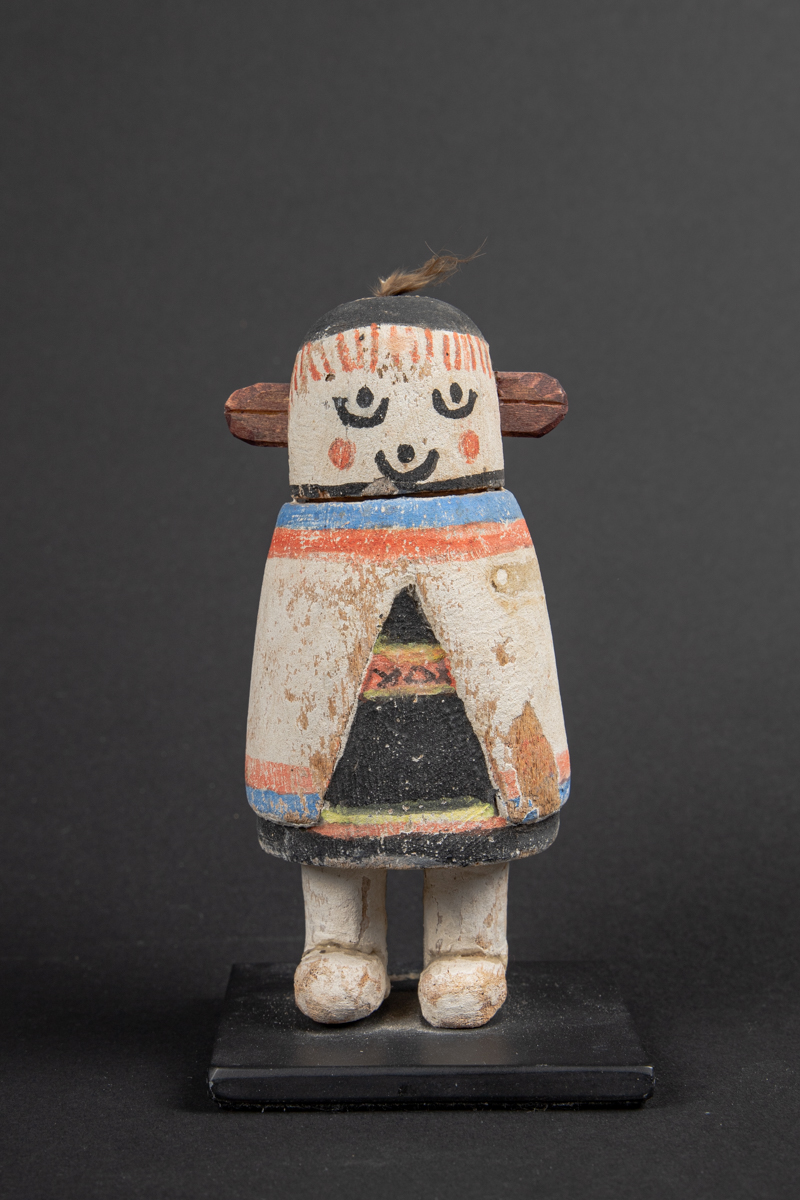
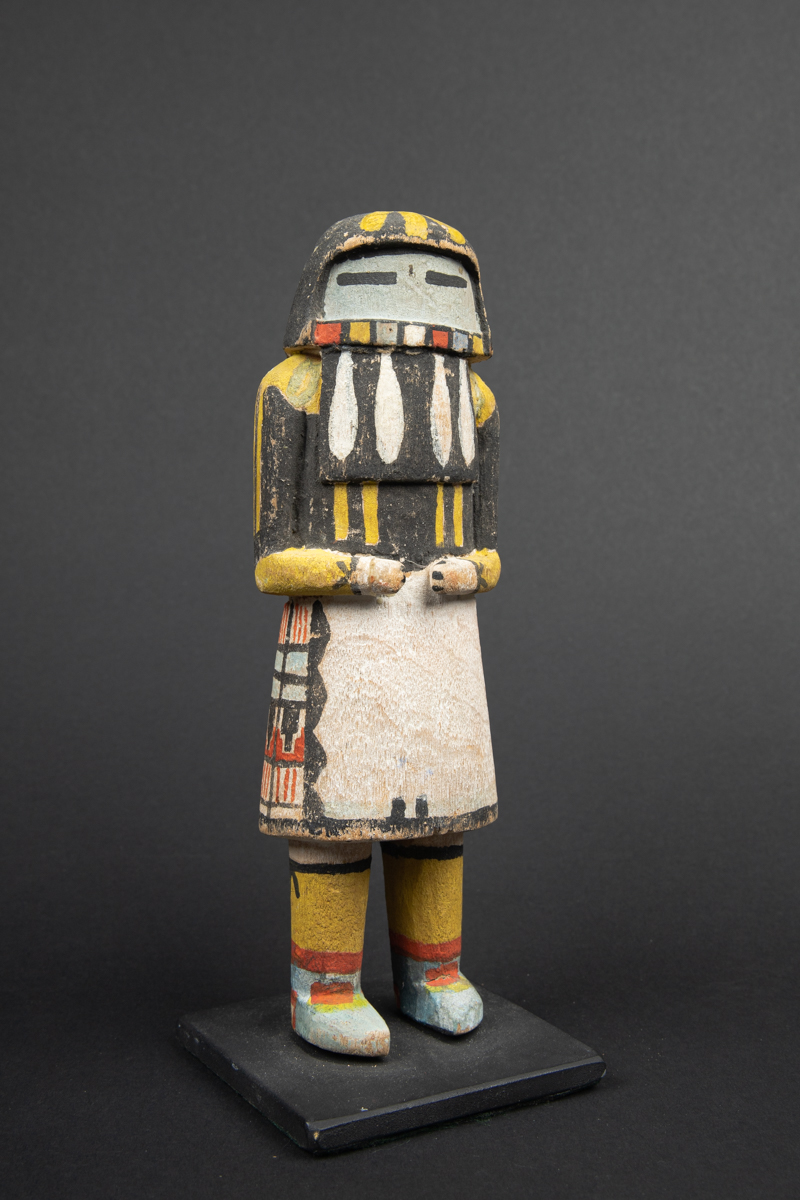
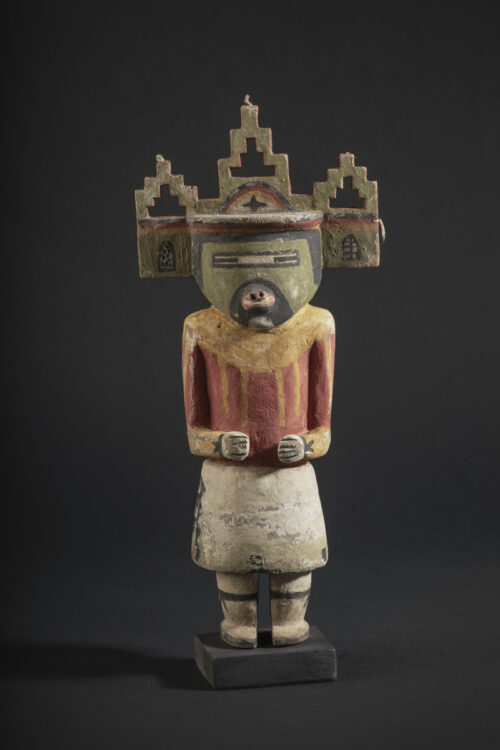
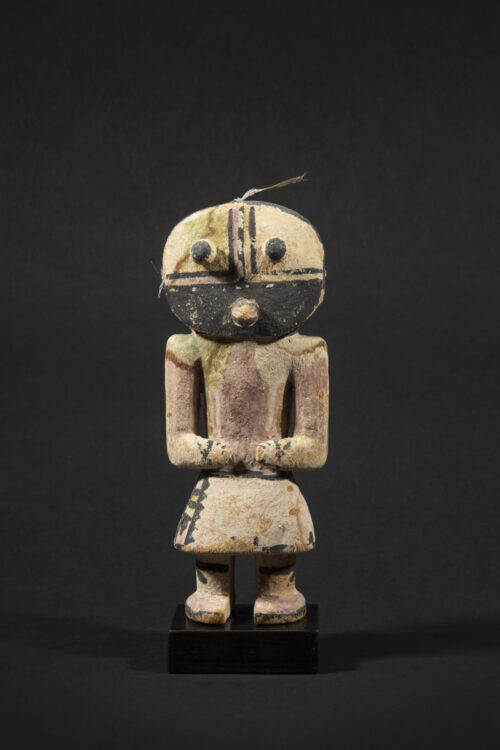
Katsina dolls (or katsinam) represent spirits or gods from the pantheon of the Pueblo peoples in the American Southwest. Given to children, katsina dolls constituted a teaching tool allowing them to familiarize themselves with the spiritual world and perpetuating knowledge of the founding myths on which their society was based.
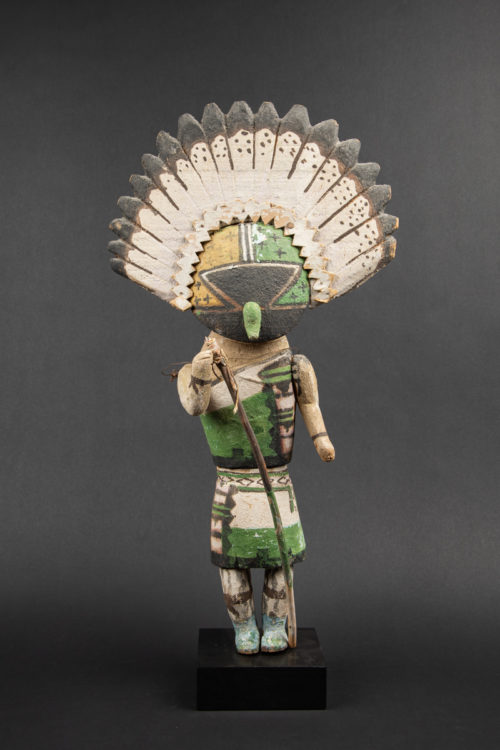
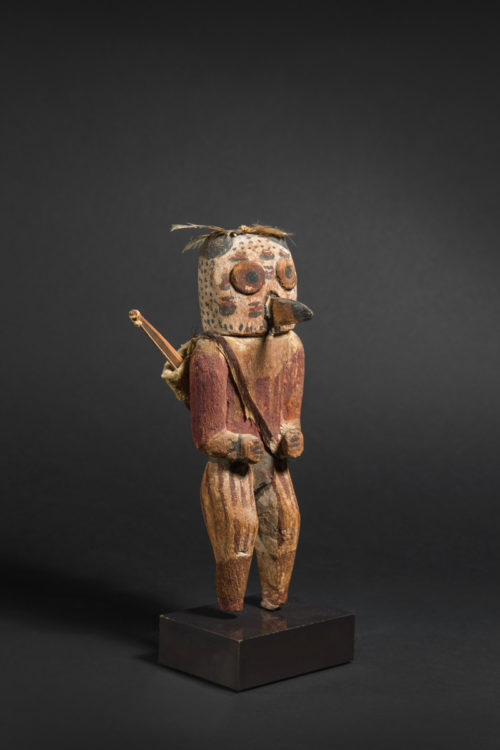
The Hopi name this katsina Kwahu. A member of the Chiro Katsinam (Bird Kachina) family, the Kwahu Katsina dances exclusively within the underground ceremonial chamber (the kiva) in order to ensure the proliferation of eagles.
To embody the Kwahu Katsina, Hopi dancers were required to fast beforehand out of respect for the sacred nature of the eagle.
The Hopi consider the eagle to be the most important bird, and as such, it is the one they honor the most, offering it gifts and dedicating ceremonies to it. The Eagle spirit is believed to bring about rain.
Furthermore, as a keeper of wisdom, the eagle is viewed as a privileged intercessor with the gods. For this reason, eagle feathers were carefully preserved by the Hopi, who regarded them as protective elements.
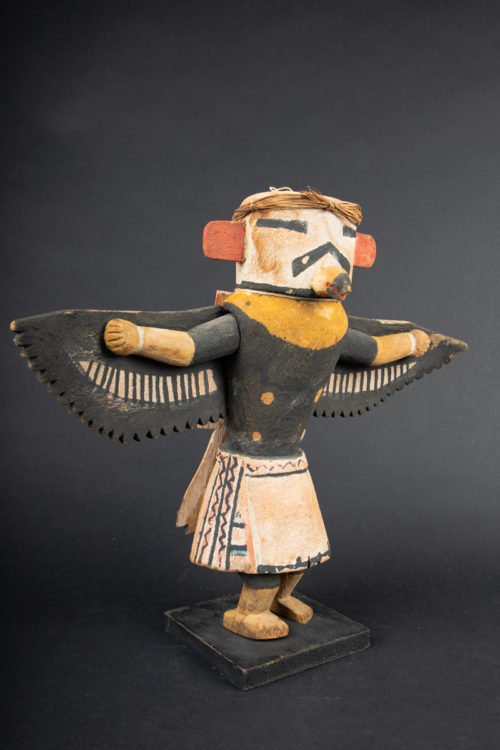
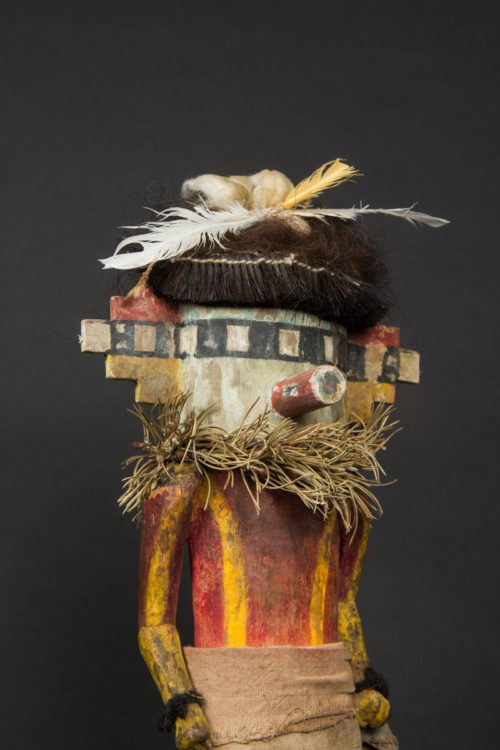
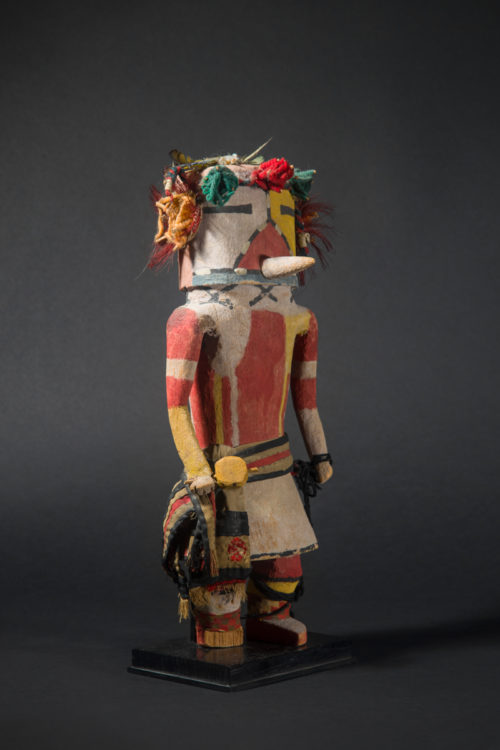
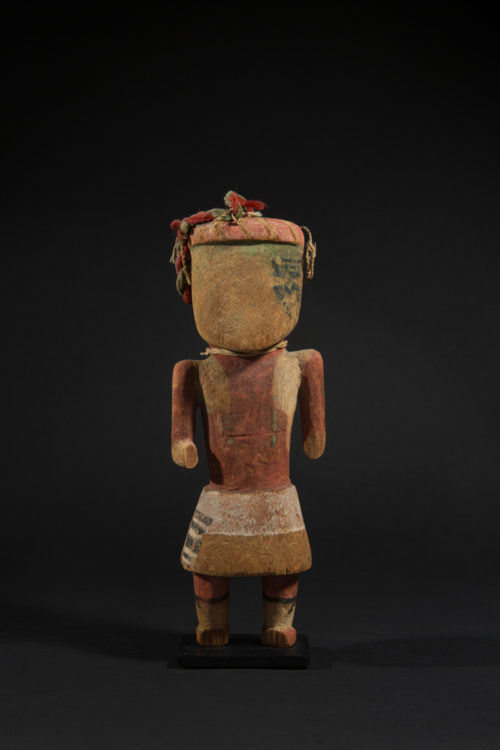
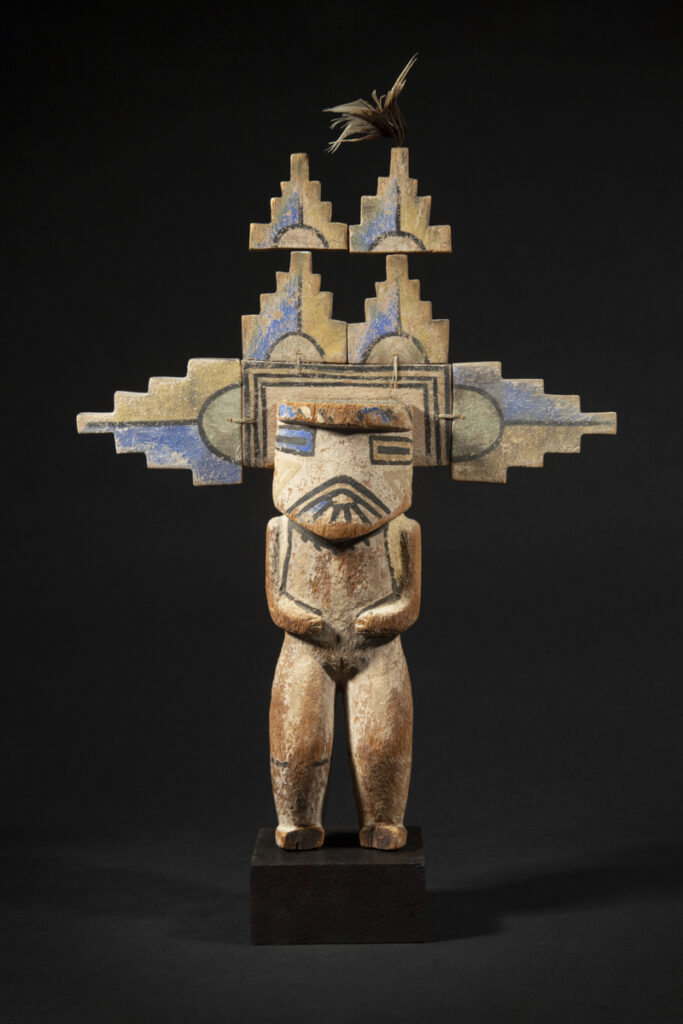
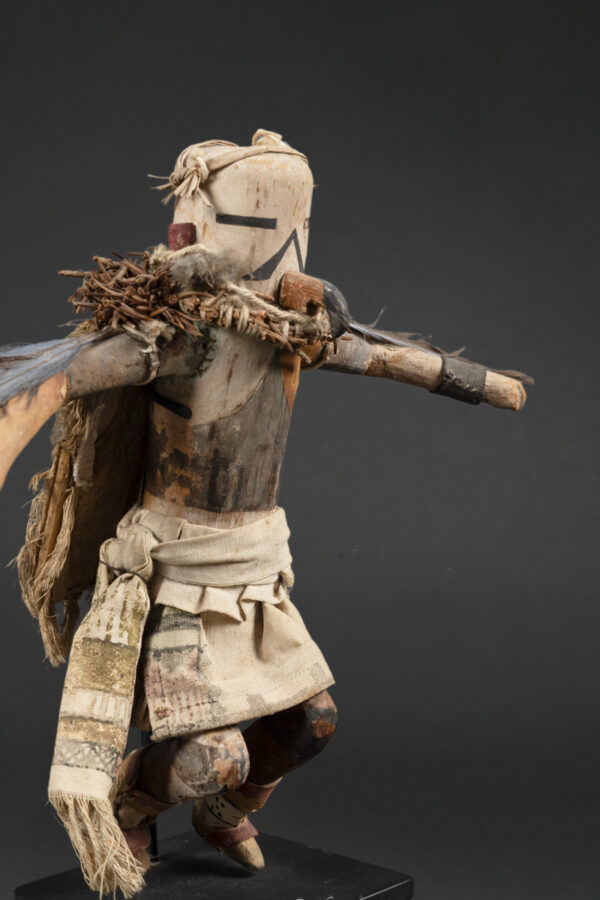
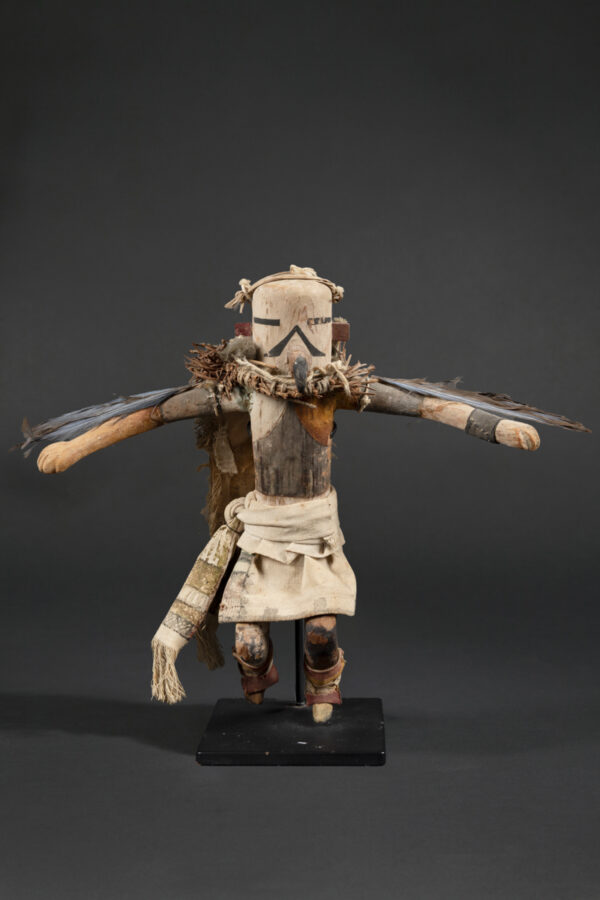
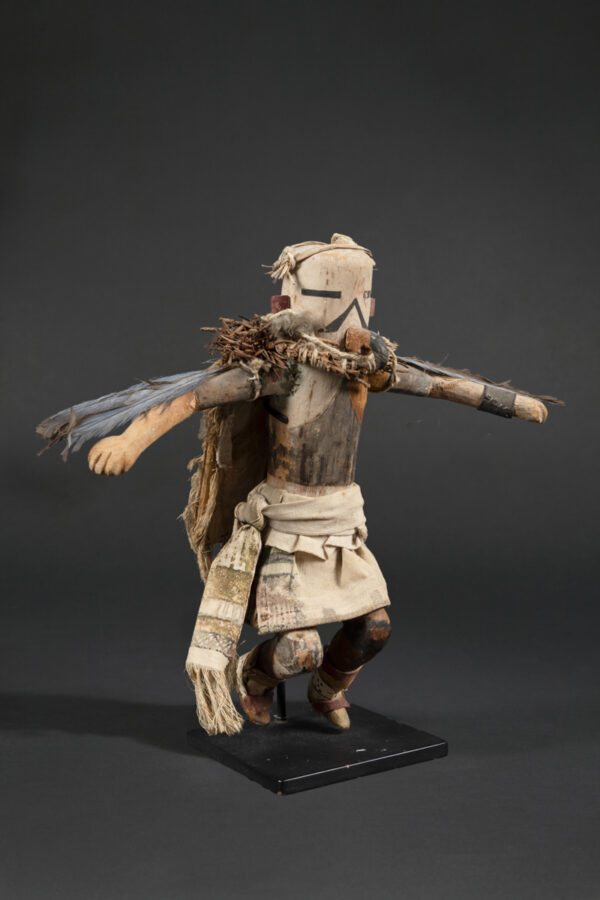
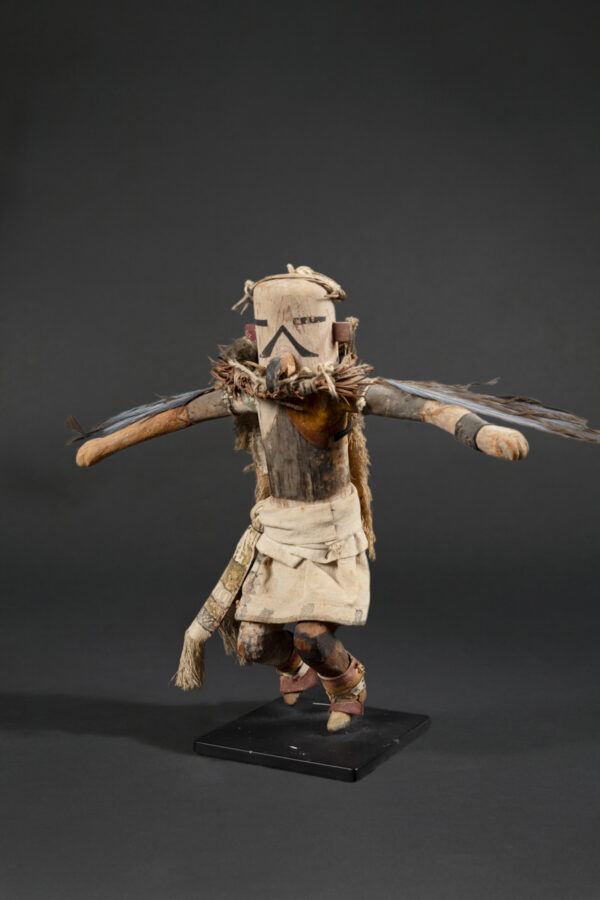
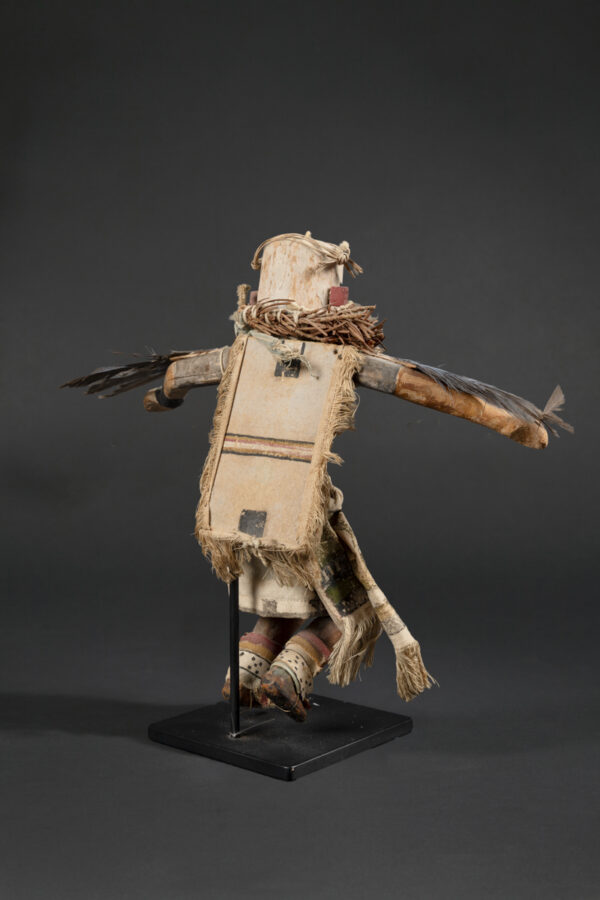
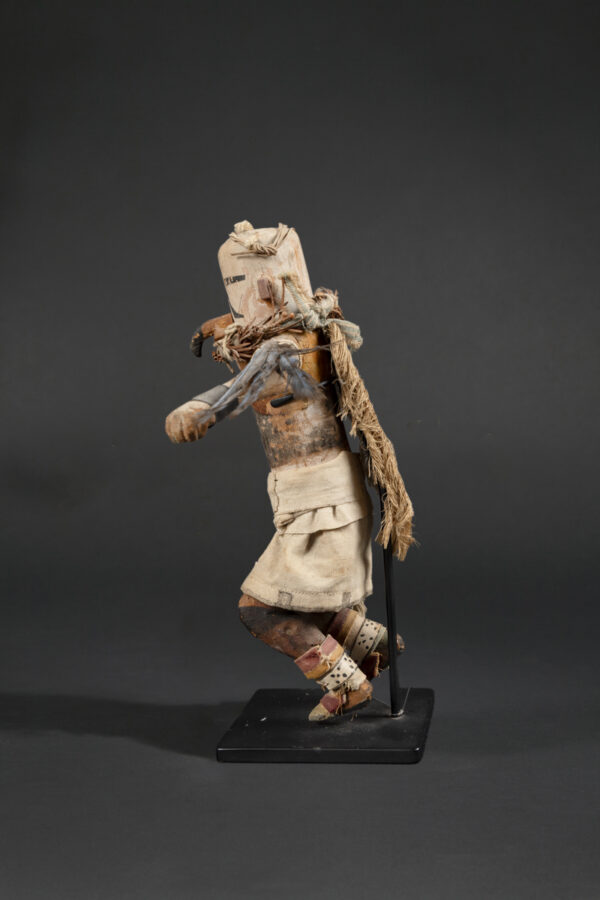
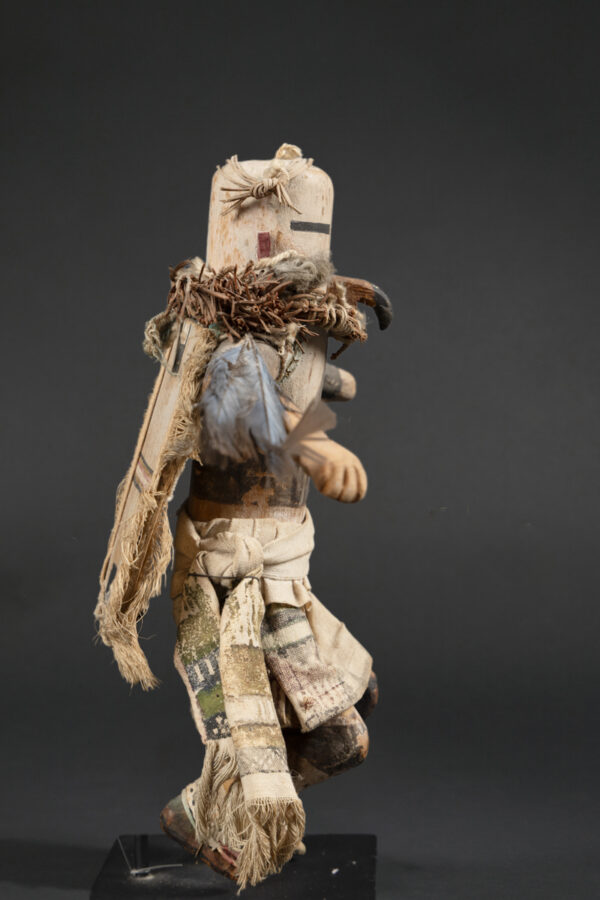
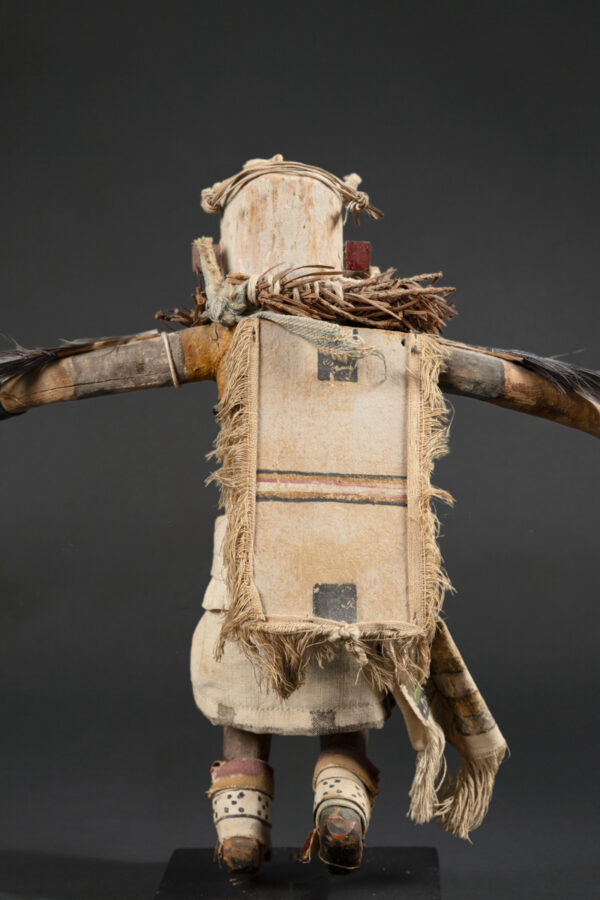
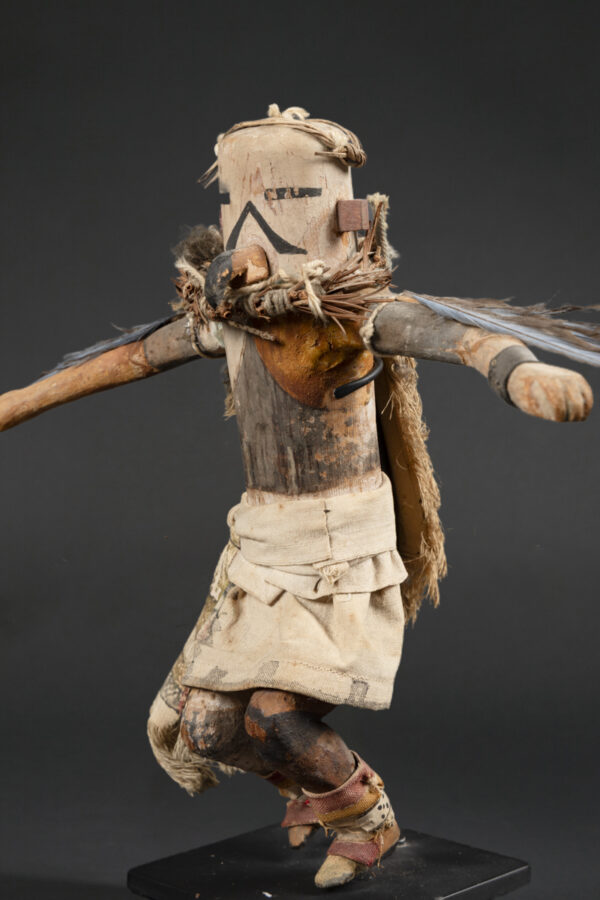
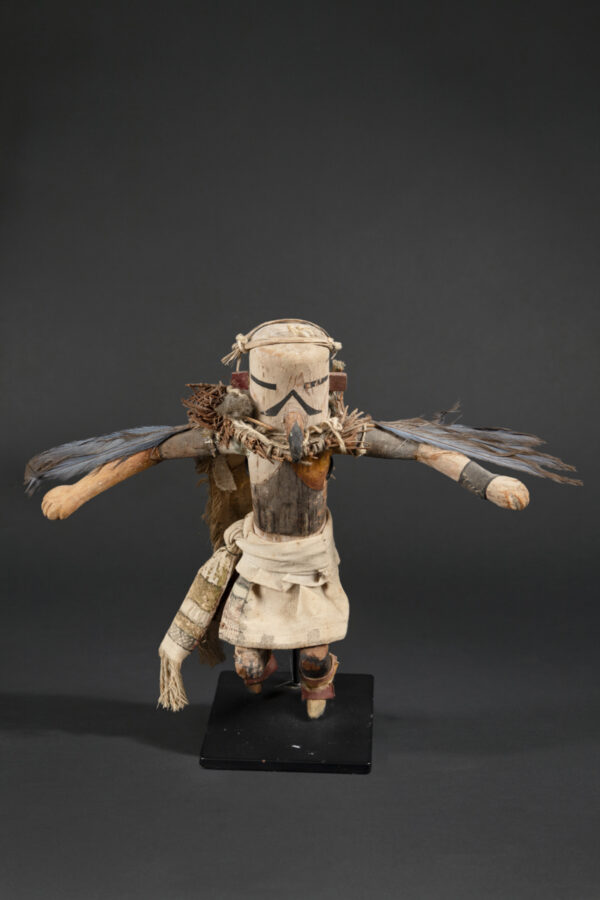
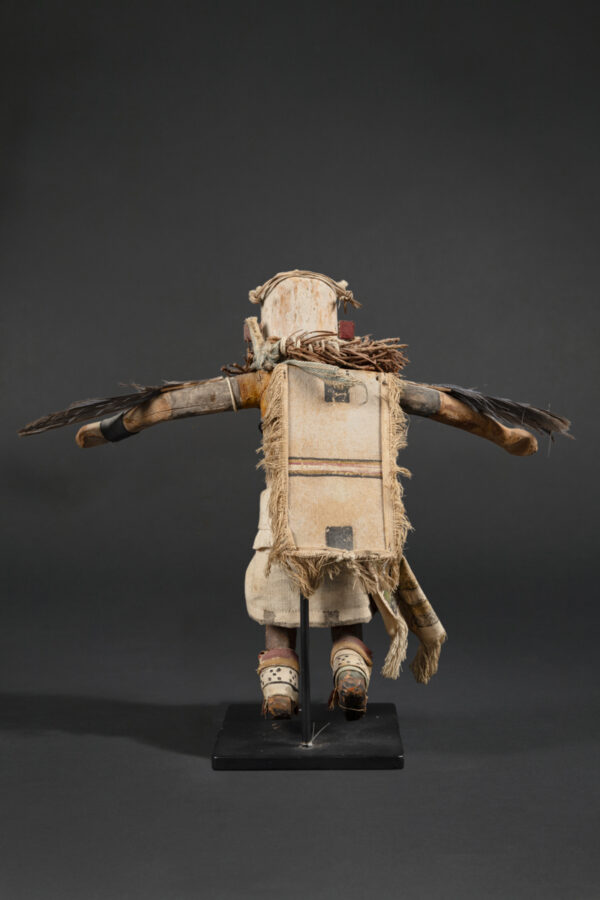
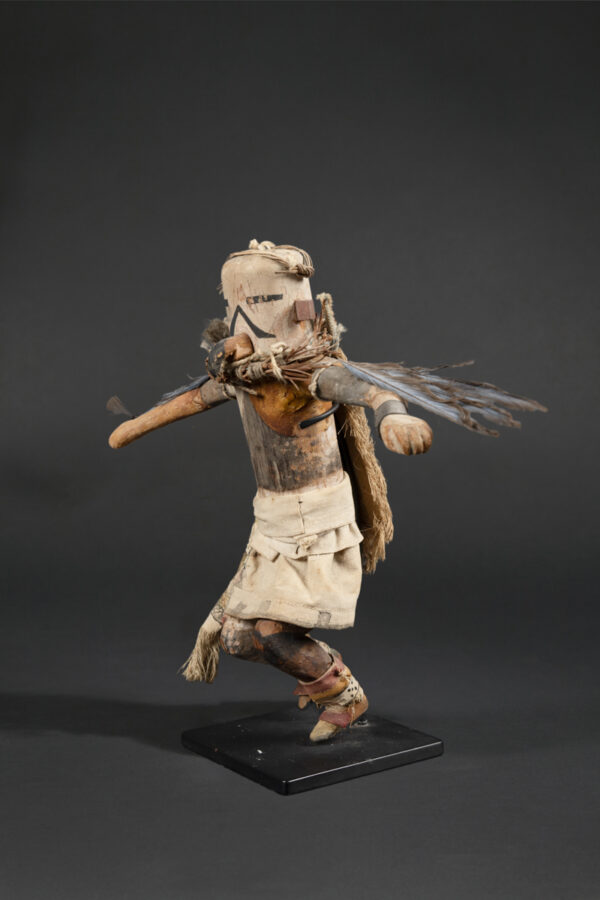
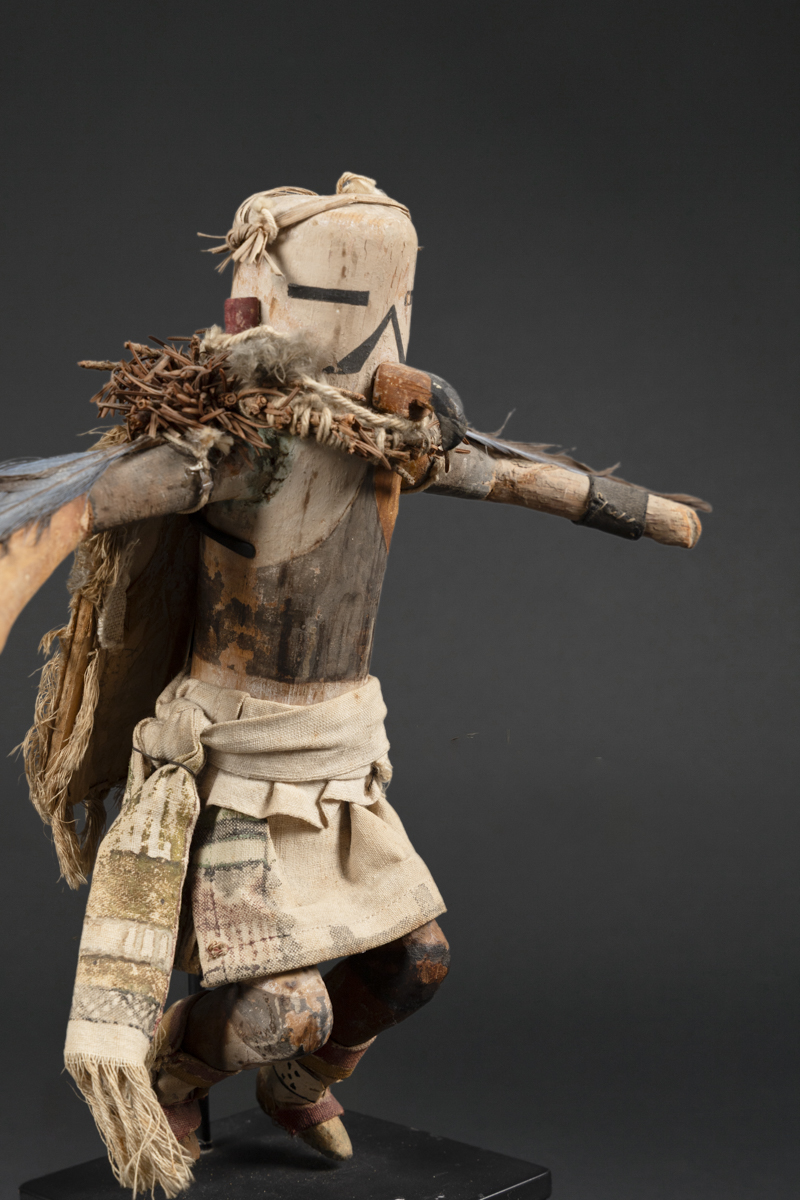
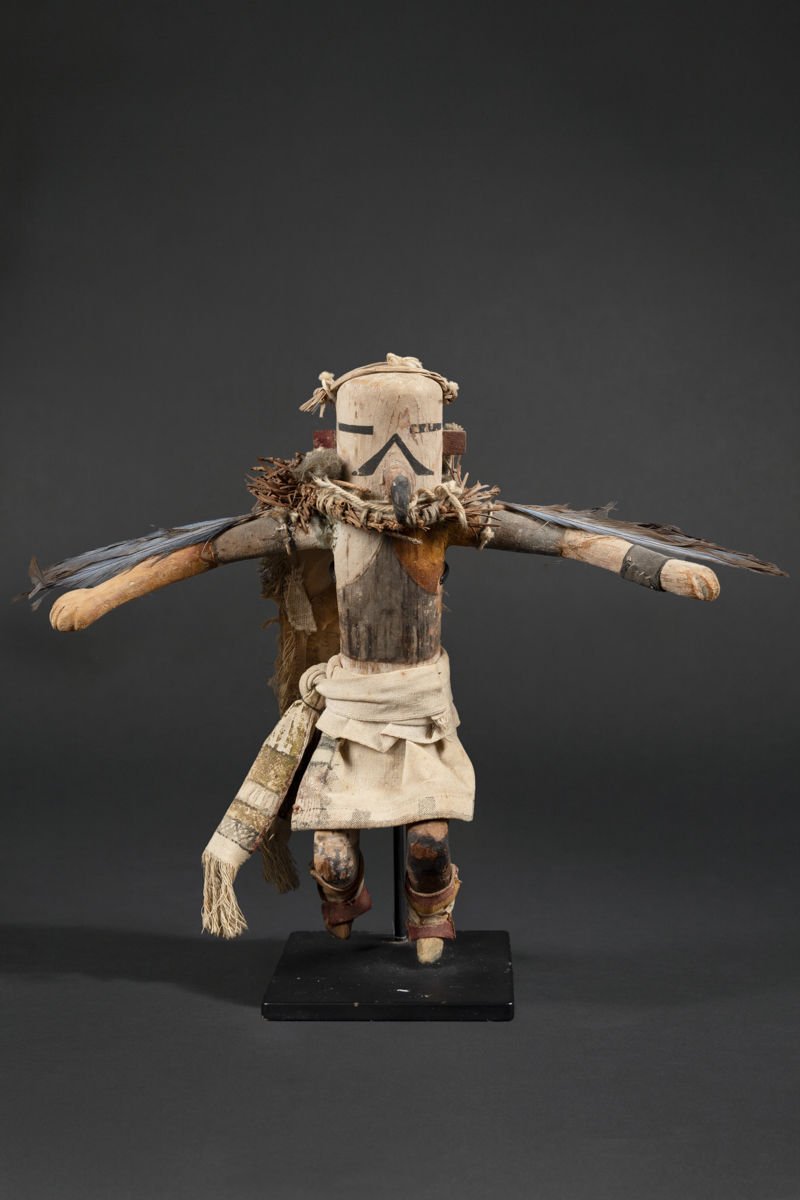
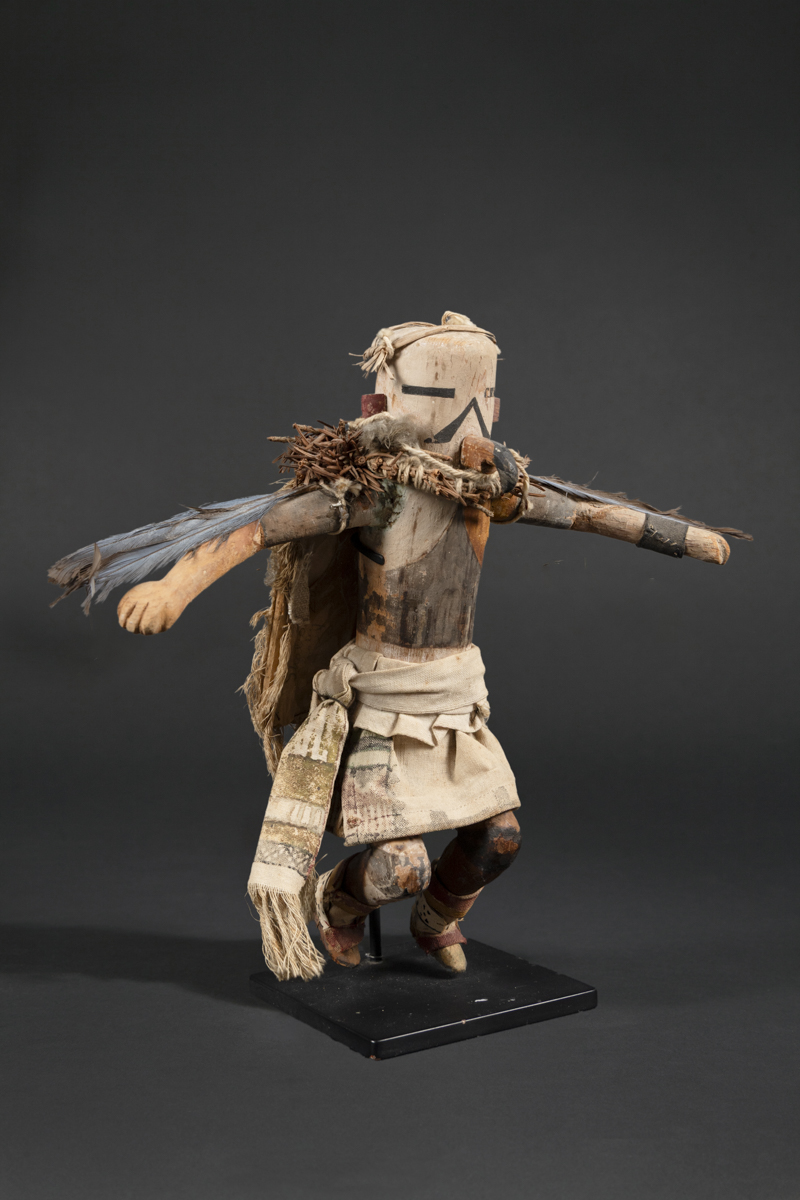
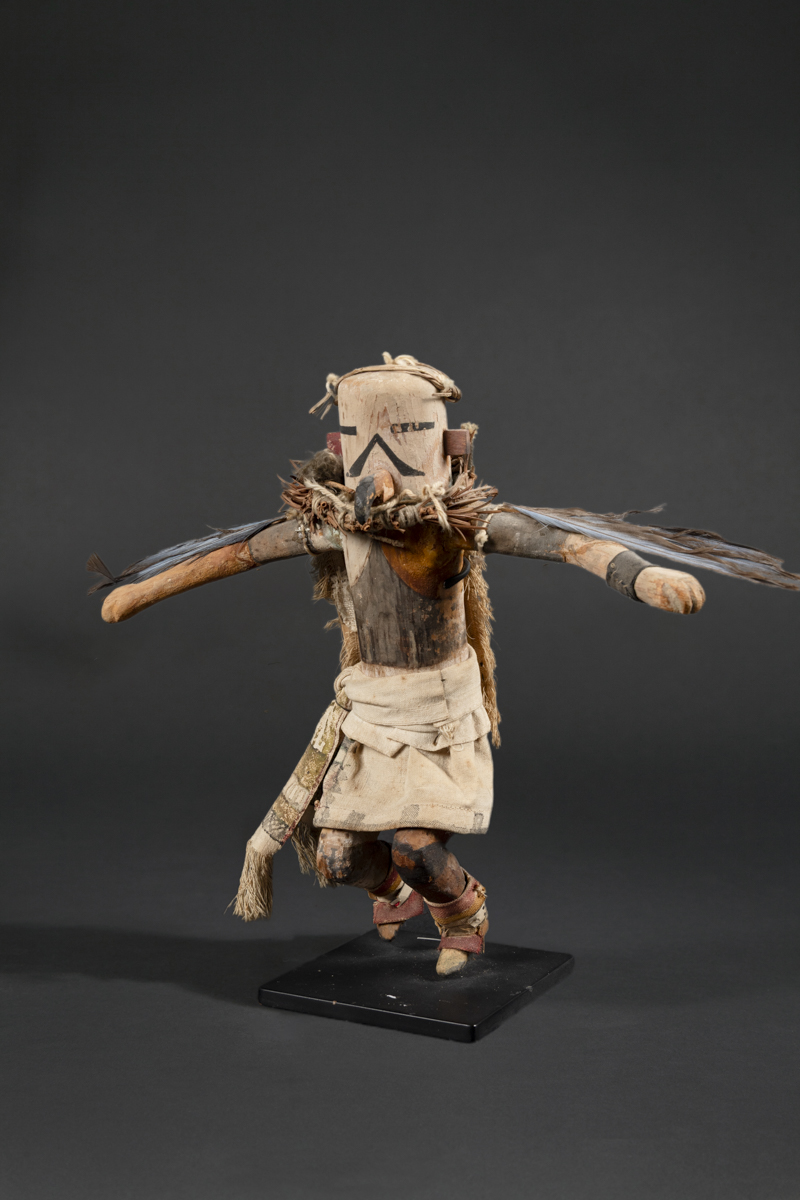
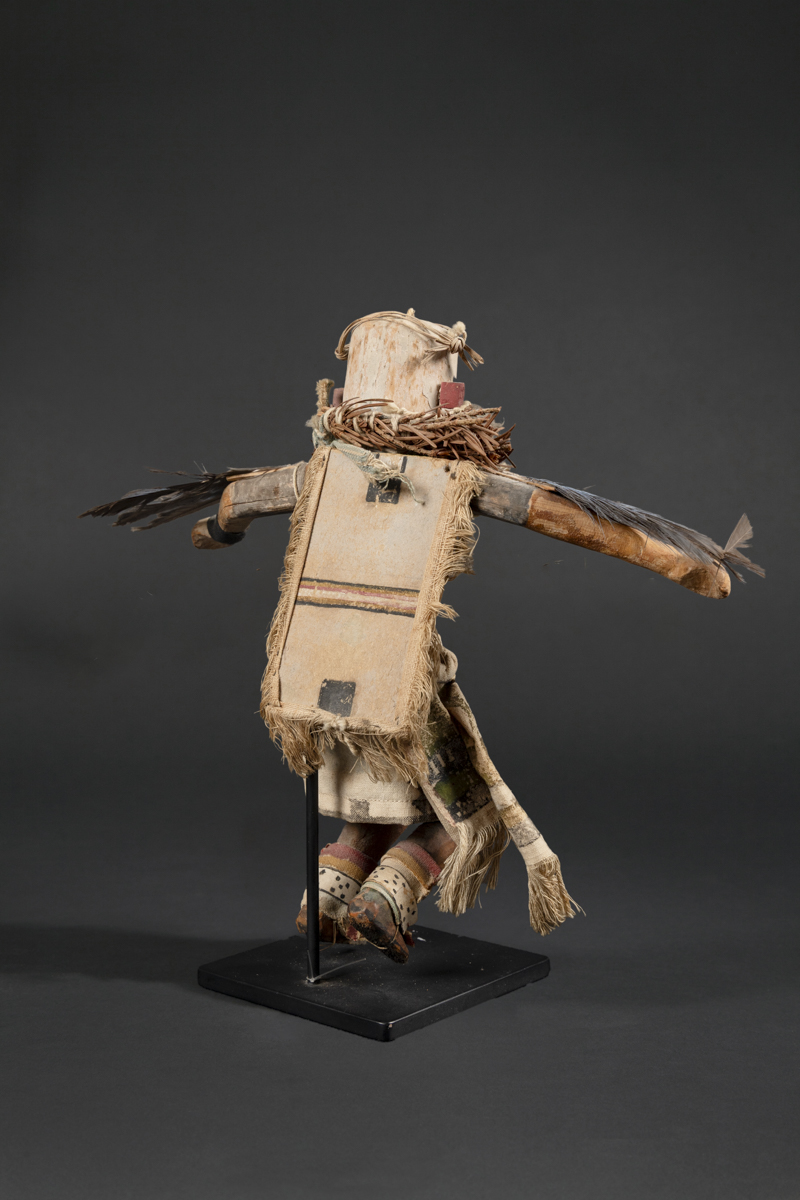
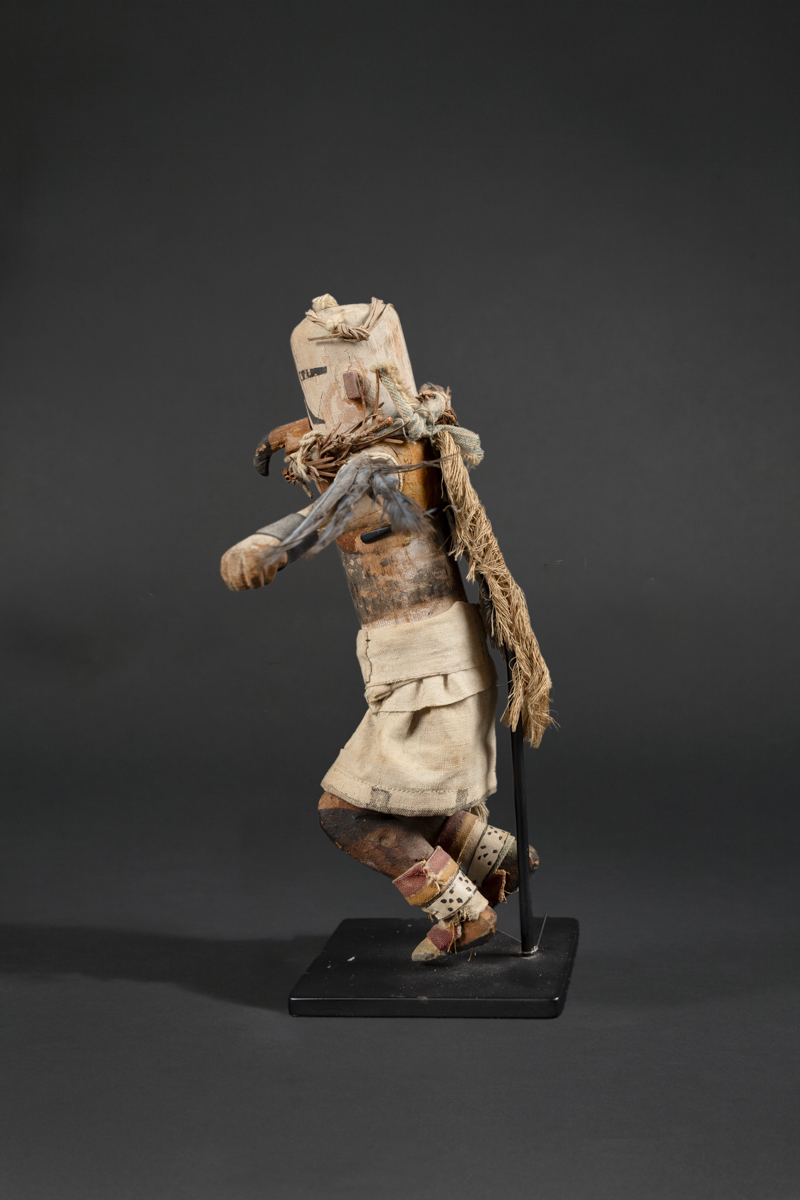
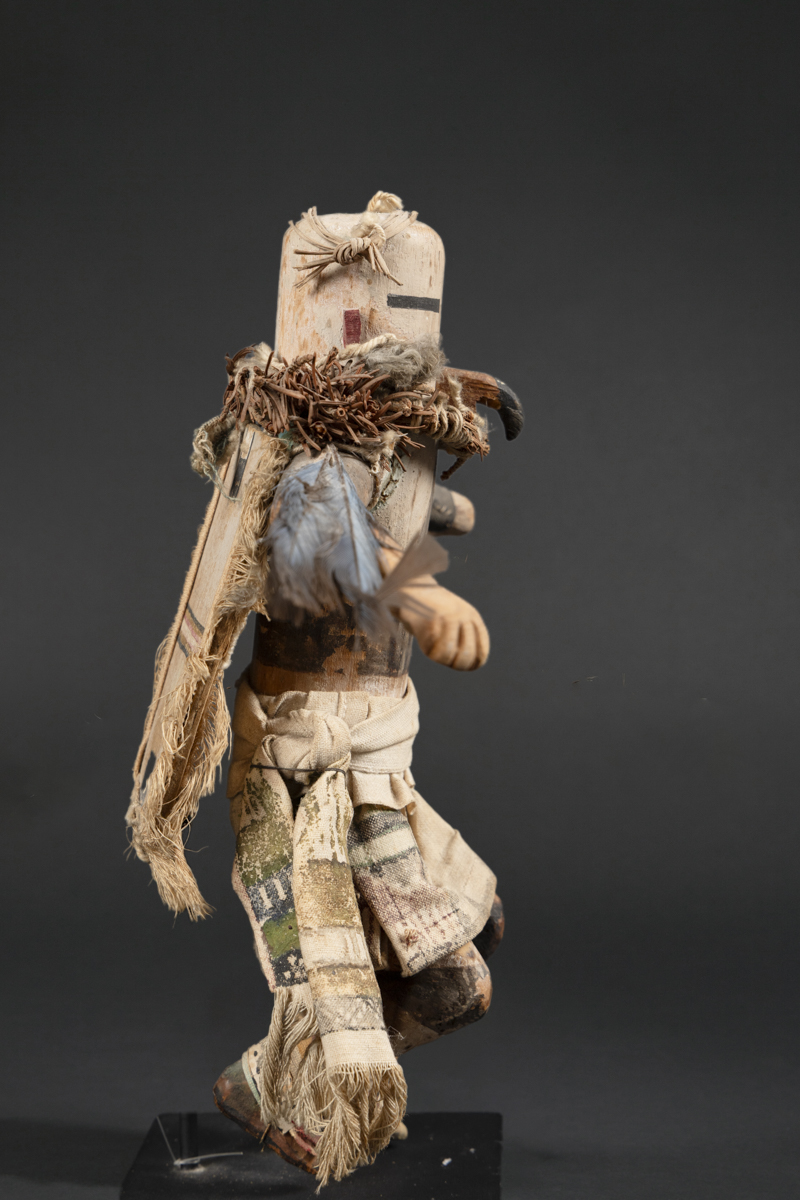
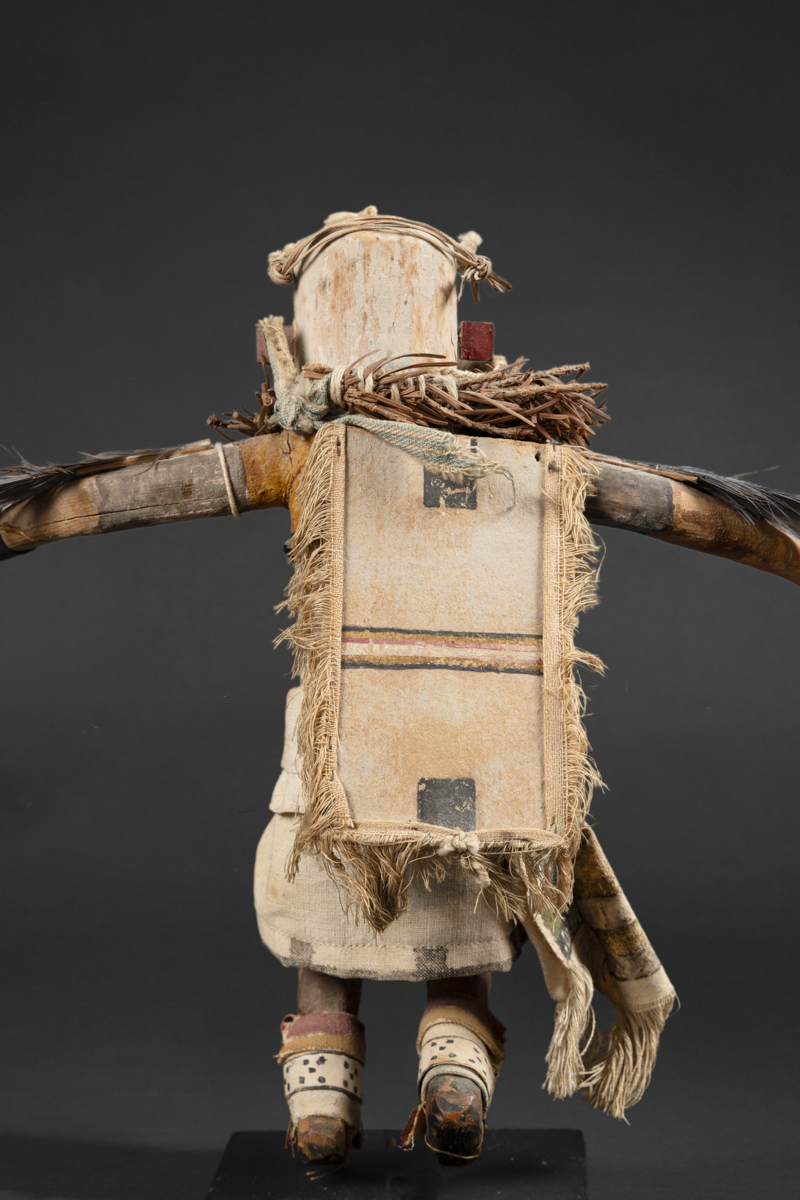
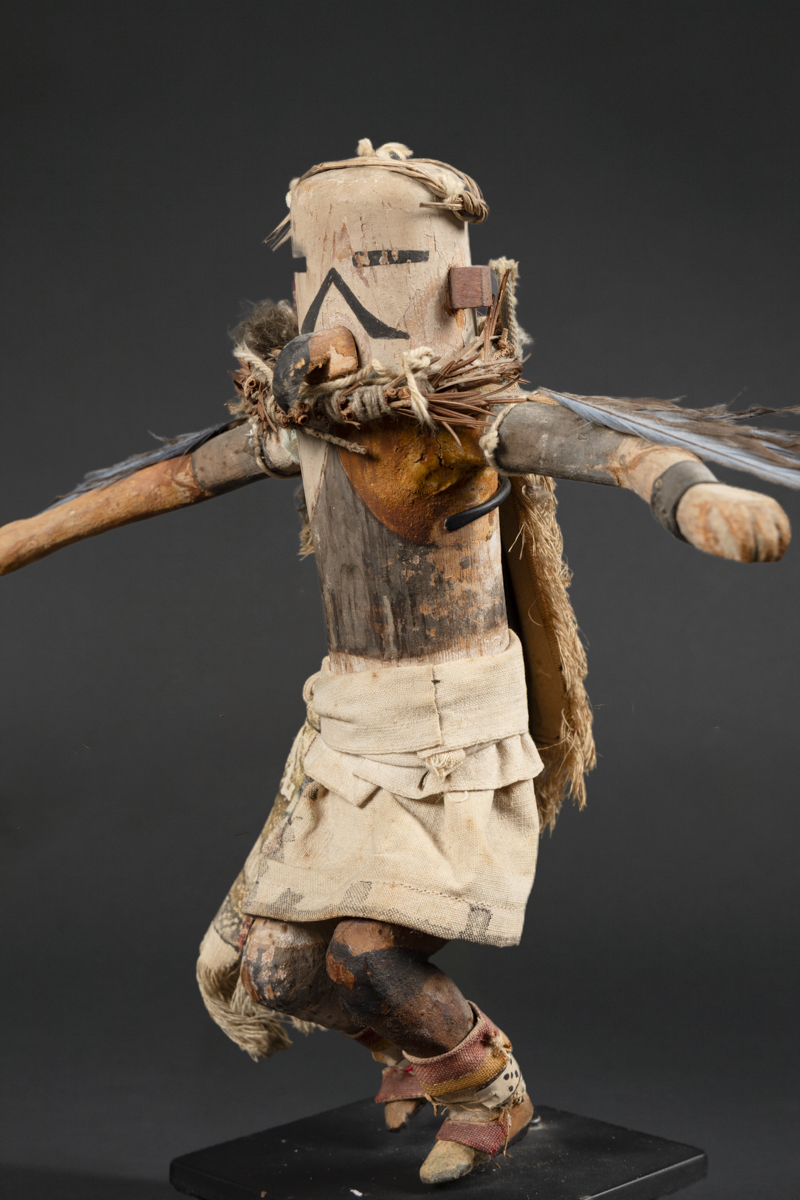
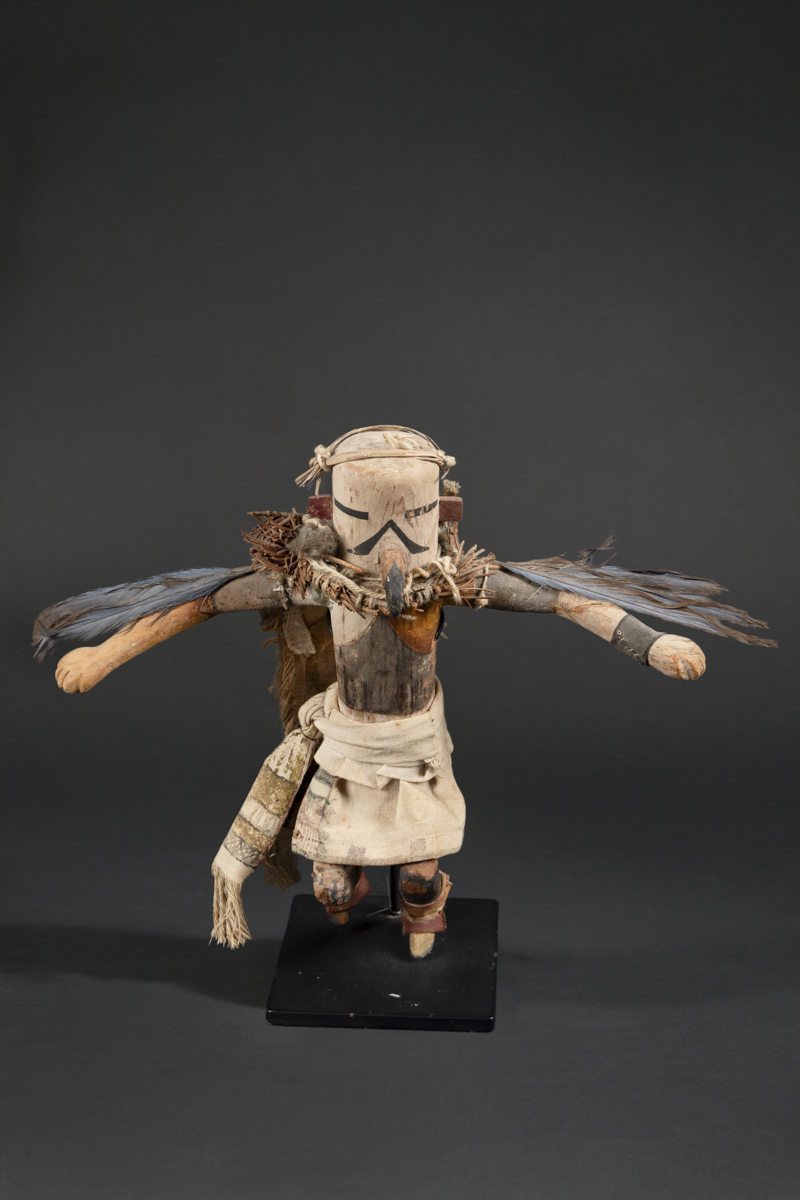
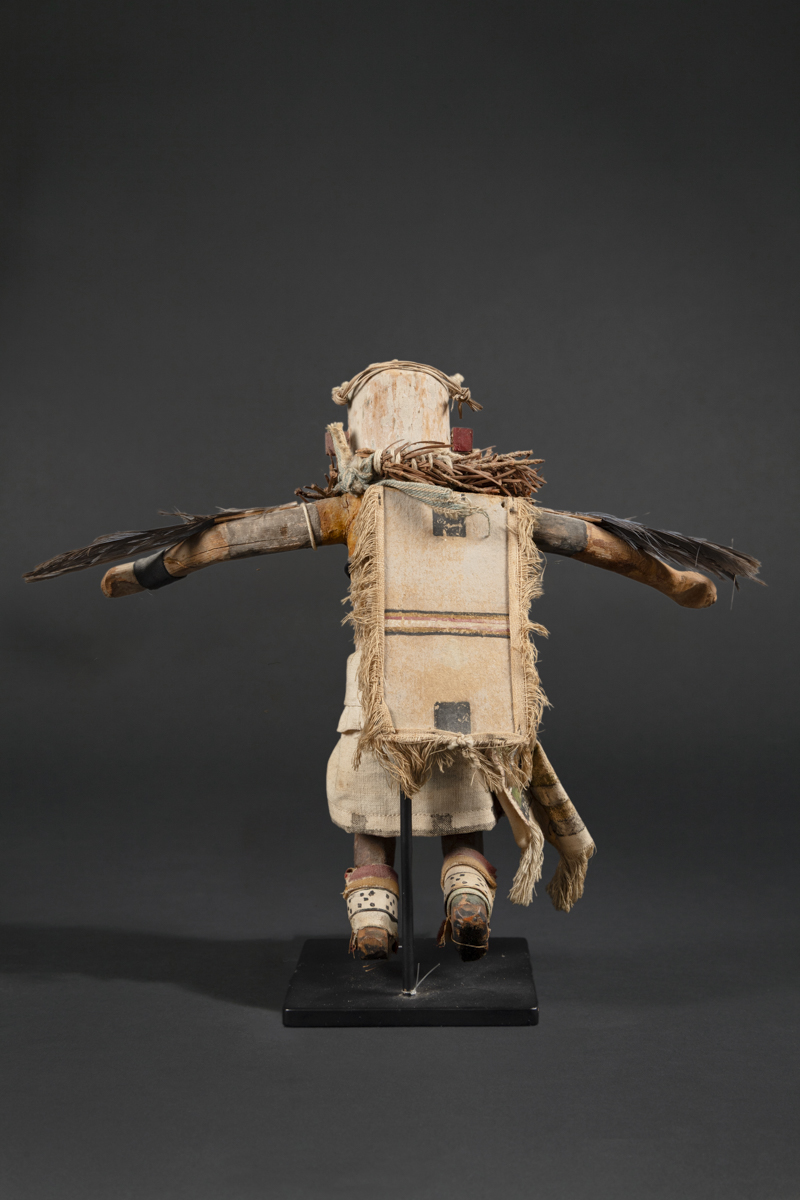
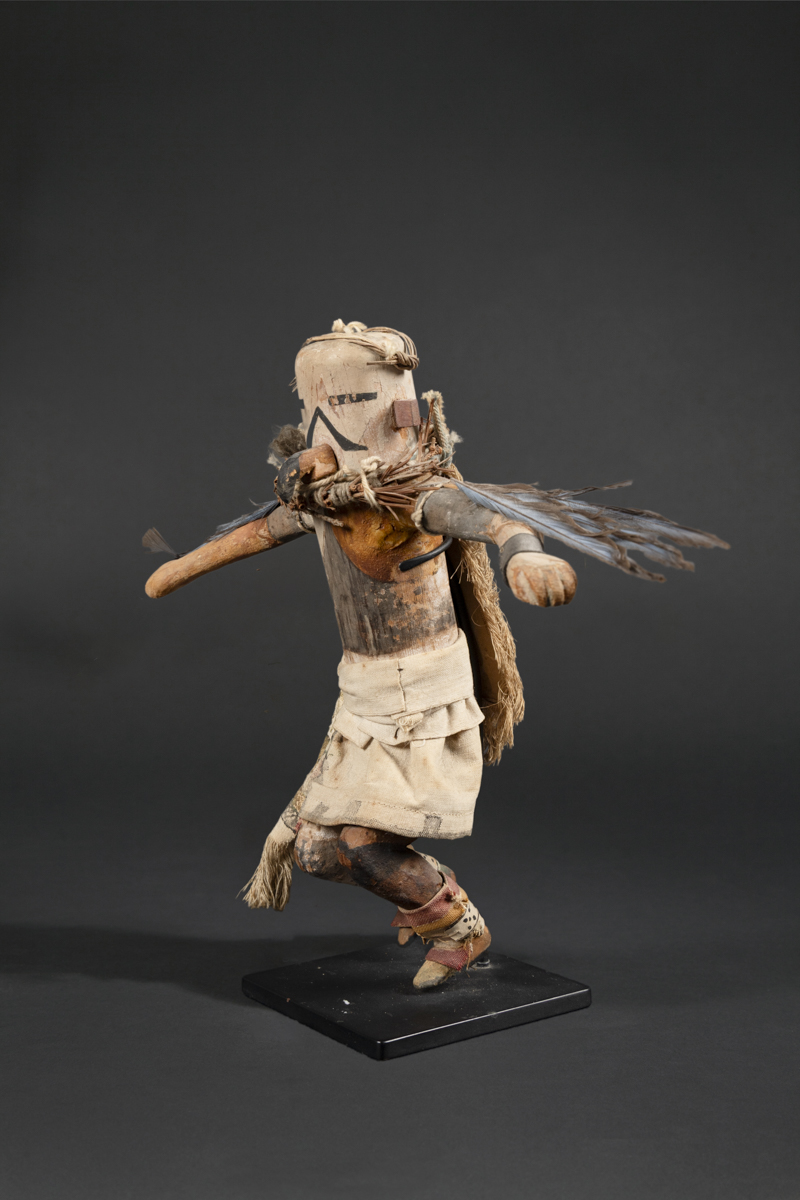
This eagle katsina possesses the rare distinction of having outspread wings, mimicking the Kwahu dancers. On its back, it carries a feature known as a "water tablet" or rain tablet, which is characteristic of the Eagle Katsina dancer's costume but rarely depicted on katsina dolls. Worthy of note is the figure's superb dynamic posture, particularly the asymmetrical position of its feet depicting the dance. This figure exudes a quite exceptional sense of hieratic majesty and power.
The Hopi name this katsina Kwahu. A member of the Chiro Katsinam (Bird Kachina) family, the Kwahu Katsina dances exclusively within the underground ceremonial chamber (the kiva) in order to ensure the proliferation of eagles.
To embody the Kwahu Katsina, Hopi dancers were required to fast beforehand out of respect for the sacred nature of the eagle.
The Hopi consider the eagle to be the most important bird, and as such, it is the one they honor the most, offering it gifts and dedicating ceremonies to it. The Eagle spirit is believed to bring about rain.
Furthermore, as a keeper of wisdom, the eagle is viewed as a privileged intercessor with the gods. For this reason, eagle feathers were carefully preserved by the Hopi, who regarded them as protective elements.
This eagle katsina possesses the rare distinction of having outspread wings, mimicking the Kwahu dancers. On its back, it carries a feature known as a "water tablet" or rain tablet, which is characteristic of the Eagle Katsina dancer's costume but rarely depicted on katsina dolls. Worthy of note is the figure's superb dynamic posture, particularly the asymmetrical position of its feet depicting the dance. This figure exudes a quite exceptional sense of hieratic majesty and power.
Explore the entire collection