Uncategorized | Arizona
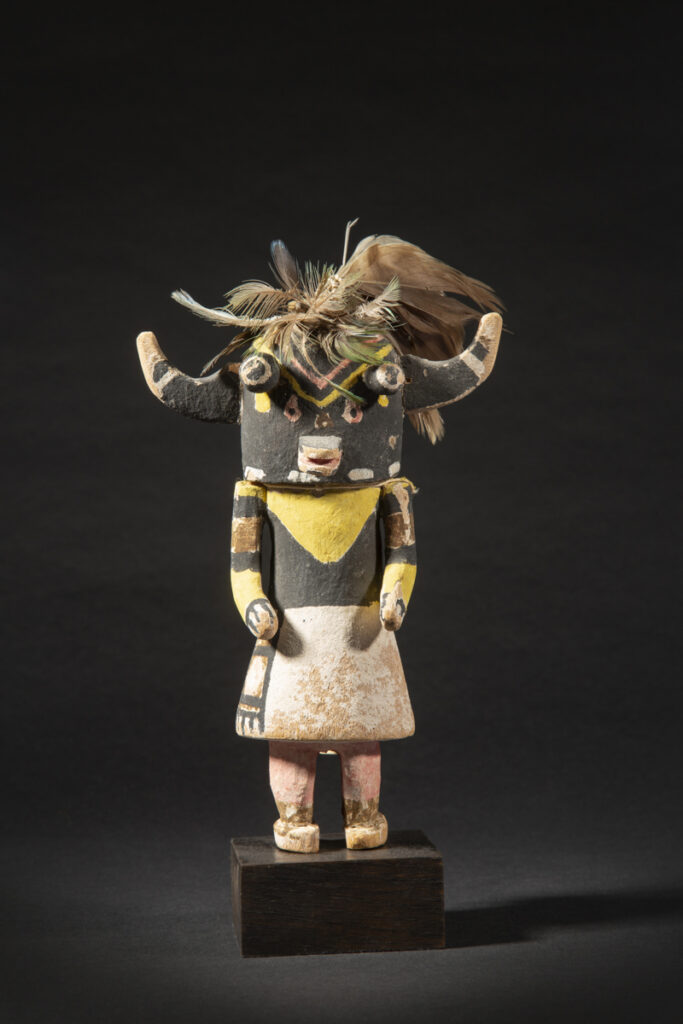
Katsina Doll
Arizona
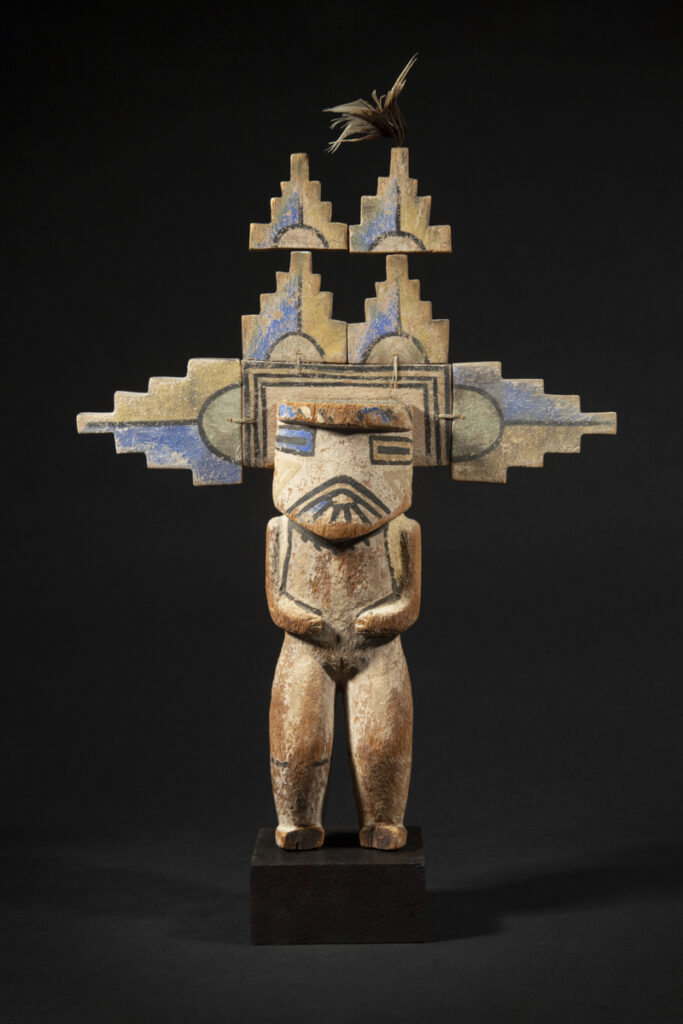
Rain Messenger – Uncle Katsina Doll
Heheya
Hopi
Arizona, USA
Circa 1900-1910
Carved wood (cottonwood) and pigments
Height: 20.5 cm – 8 in.
Provenance
Collection Jacqueline Kaplan, Los Angeles
Collection Monique Chambon, France, acquired from the above in 1981
Heheya Katsina doll 20.5 cm / Galerie Flak
Price: on request
Katsina dolls (or Katsinam) represent spirits or gods from the pantheon of the Pueblo peoples in the American Southwest. Given to children, Katsina dolls constituted a pedagogical tool allowing them to familiarize themselves with the spiritual world and perpetuating knowledge of the founding myths on which their society was based.
This Katsina doll, known by the Hopi name Heheya, belongs to the group of Katsinam associated with the Harvest. This spirit once danced on each of the three mesas of the Hopi land.
Various Southwestern myths (Hopi and Zuni) refer to Heheya. According to one of them, as the Heheya Katsinam were on their way to help humans with the harvest, one of them lost his way and ended up in a cave. Feeling alone and abandoned, he began to weep. Since that day, the face of Heheya has always been shown covered with tears or, as in this example, adorned with rain clouds.
In other versions, Heheya weeps because, at a certain time, humans stopped calling upon him during the Katsina dances—hence his sorrow. The tears of Heheya, symbolizing life-giving rain, remind people of the importance of celebrating the Katsinam so that they never allow these spirits to fade into oblivion.
This Katsina doll, known by the Hopi name Heheya, belongs to the group of Katsinam associated with the Harvest. This spirit once danced on each of the three mesas of the Hopi land.
Various Southwestern myths (Hopi and Zuni) refer to Heheya. According to one of them, as the Heheya Katsinam were on their way to help humans with the harvest, one of them lost his way and ended up in a cave. Feeling alone and abandoned, he began to weep. Since that day, the face of Heheya has always been shown covered with tears or, as in this example, adorned with rain clouds.
In other versions, Heheya weeps because, at a certain time, humans stopped calling upon him during the Katsina dances—hence his sorrow. The tears of Heheya, symbolizing life-giving rain, remind people of the importance of celebrating the Katsinam so that they never allow these spirits to fade into oblivion.
Explore the entire collection