Archives | USA
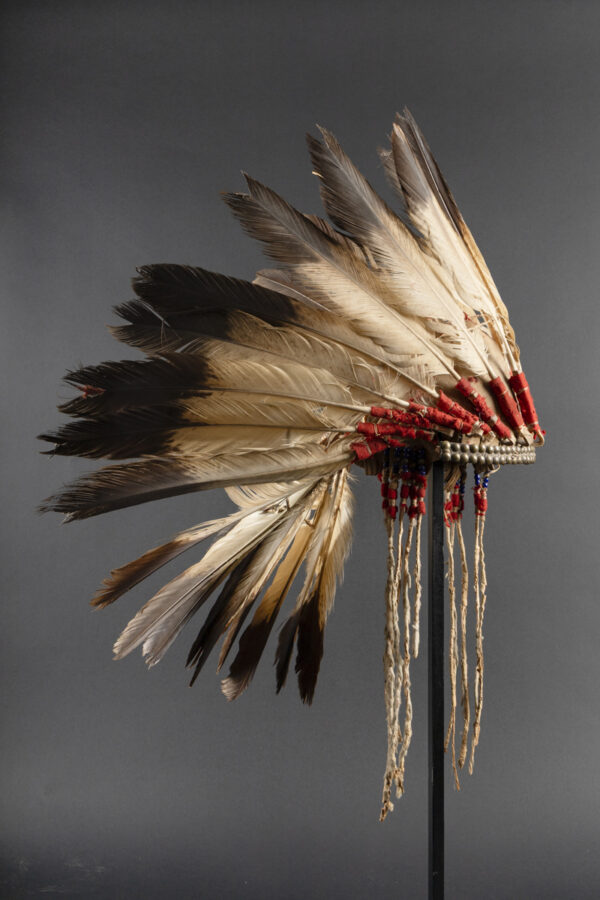
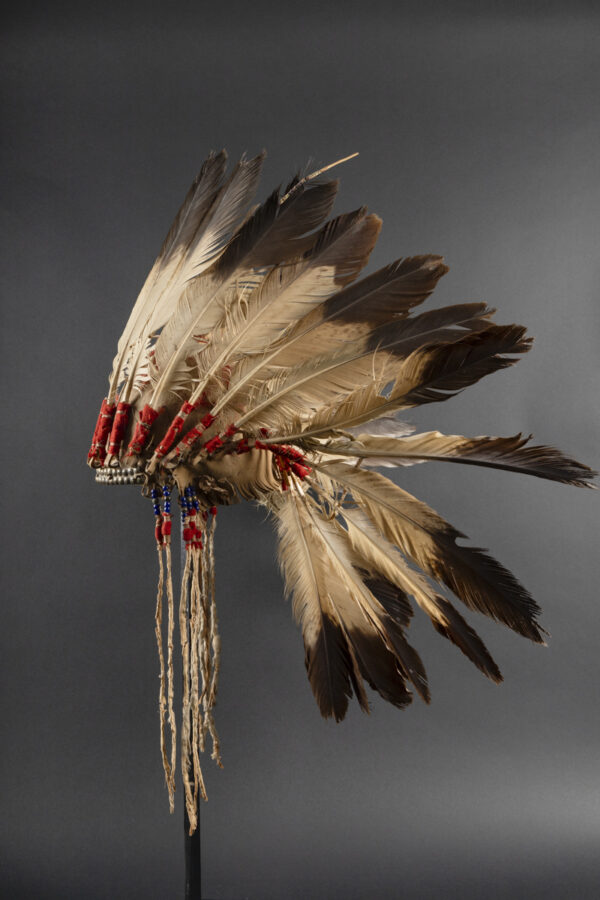
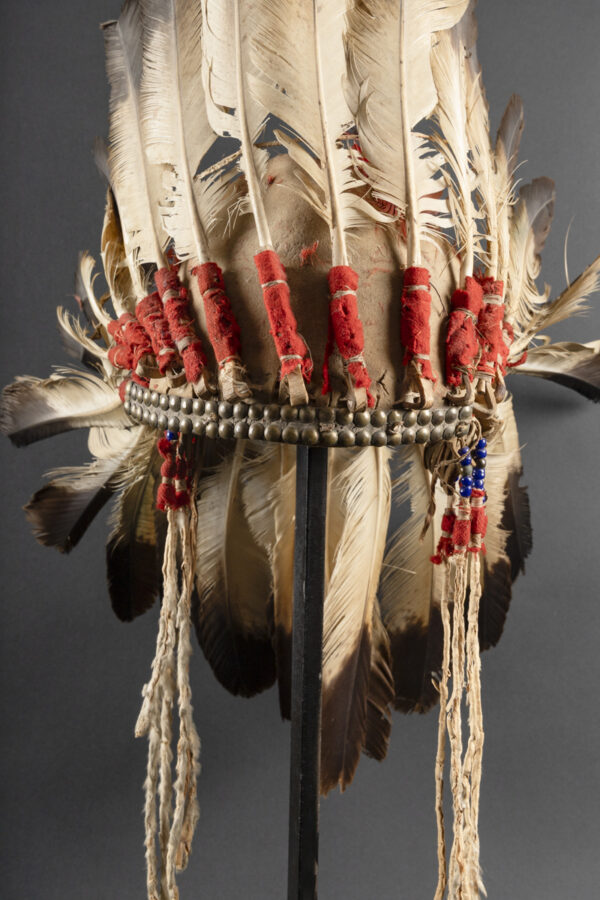
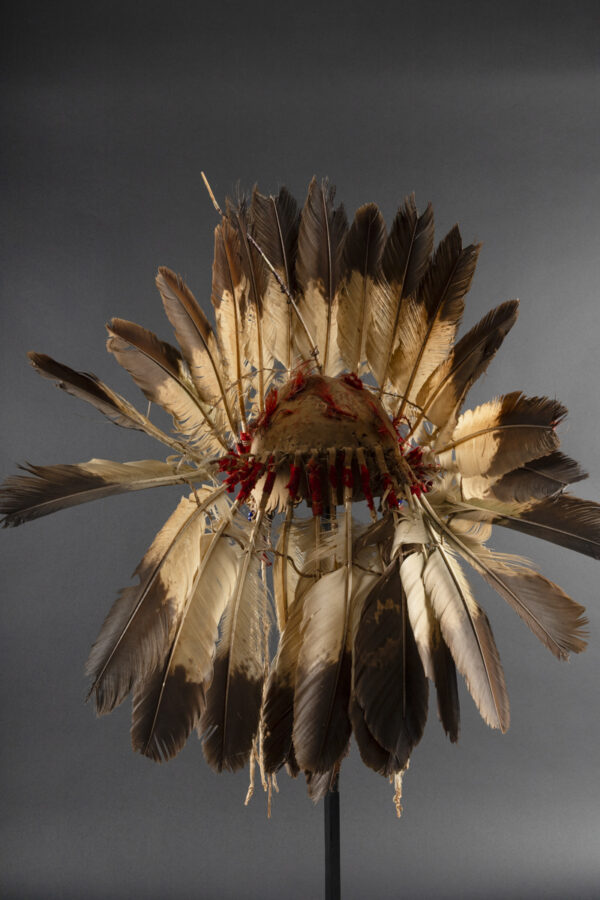
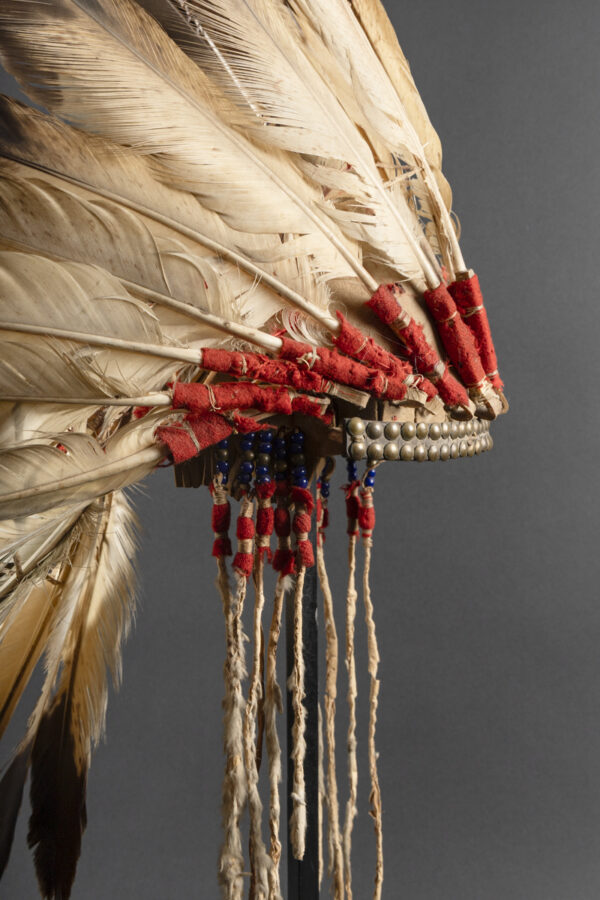
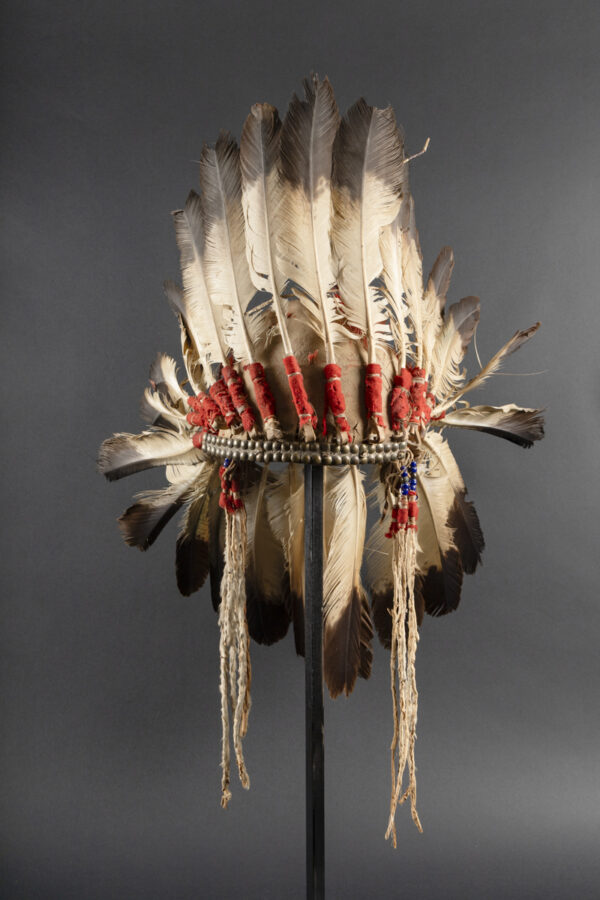
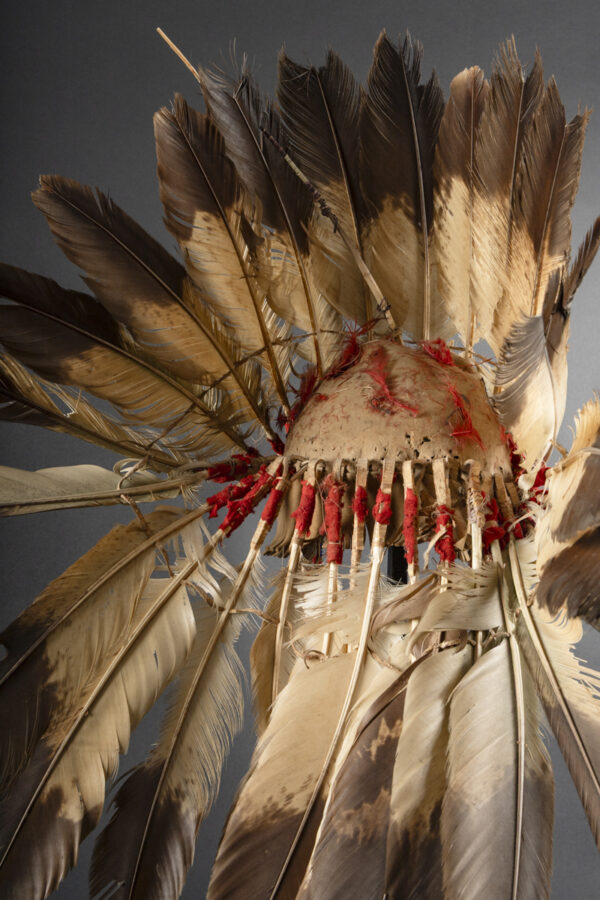
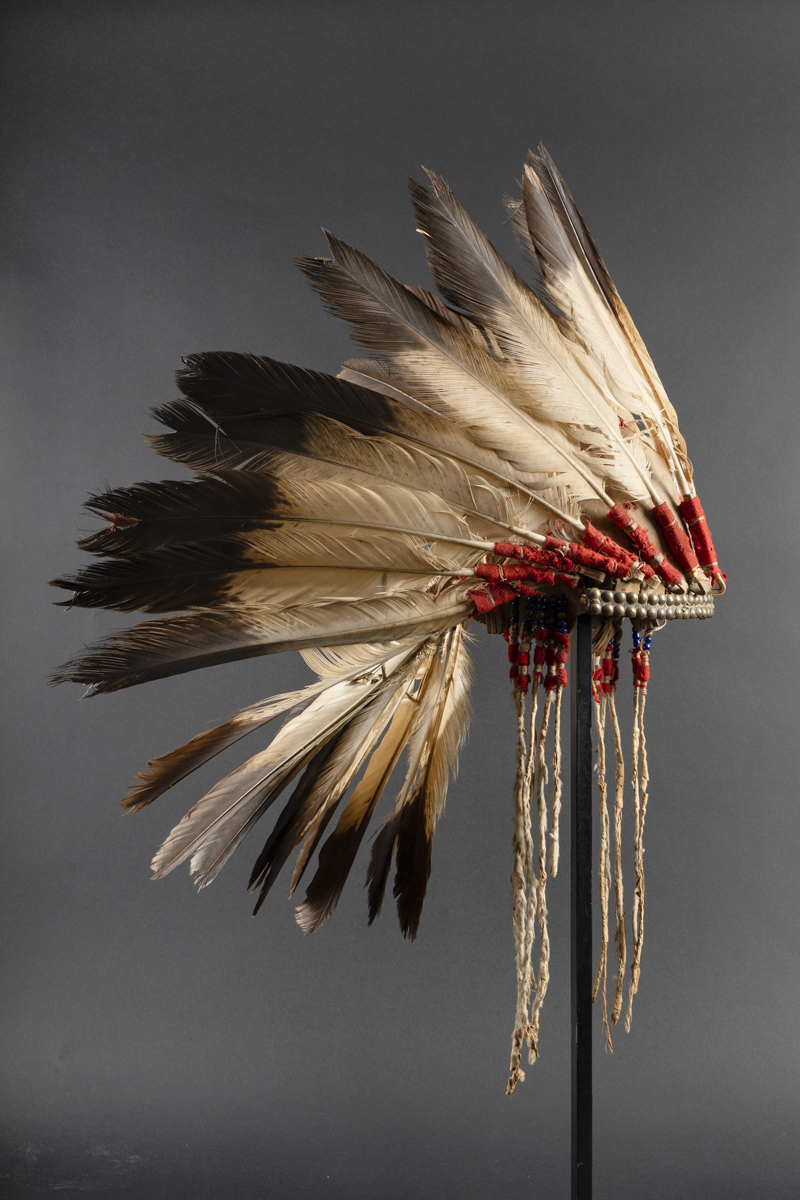
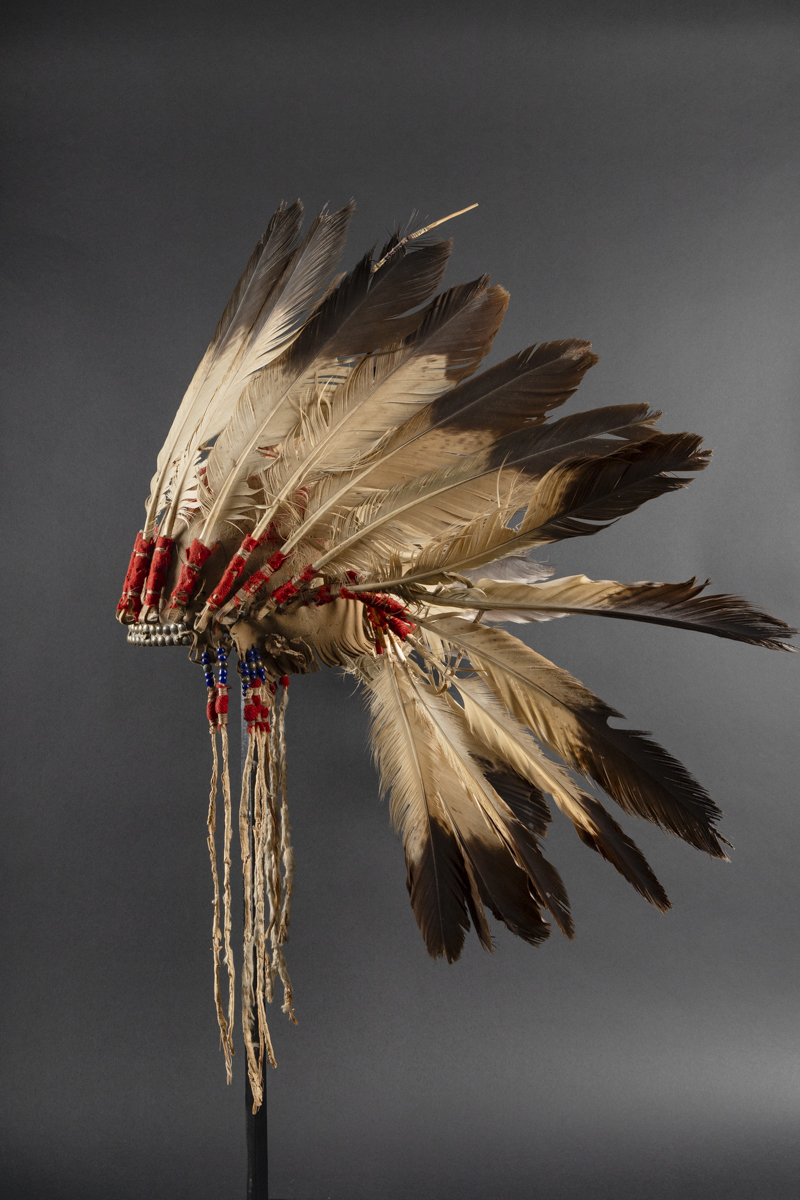
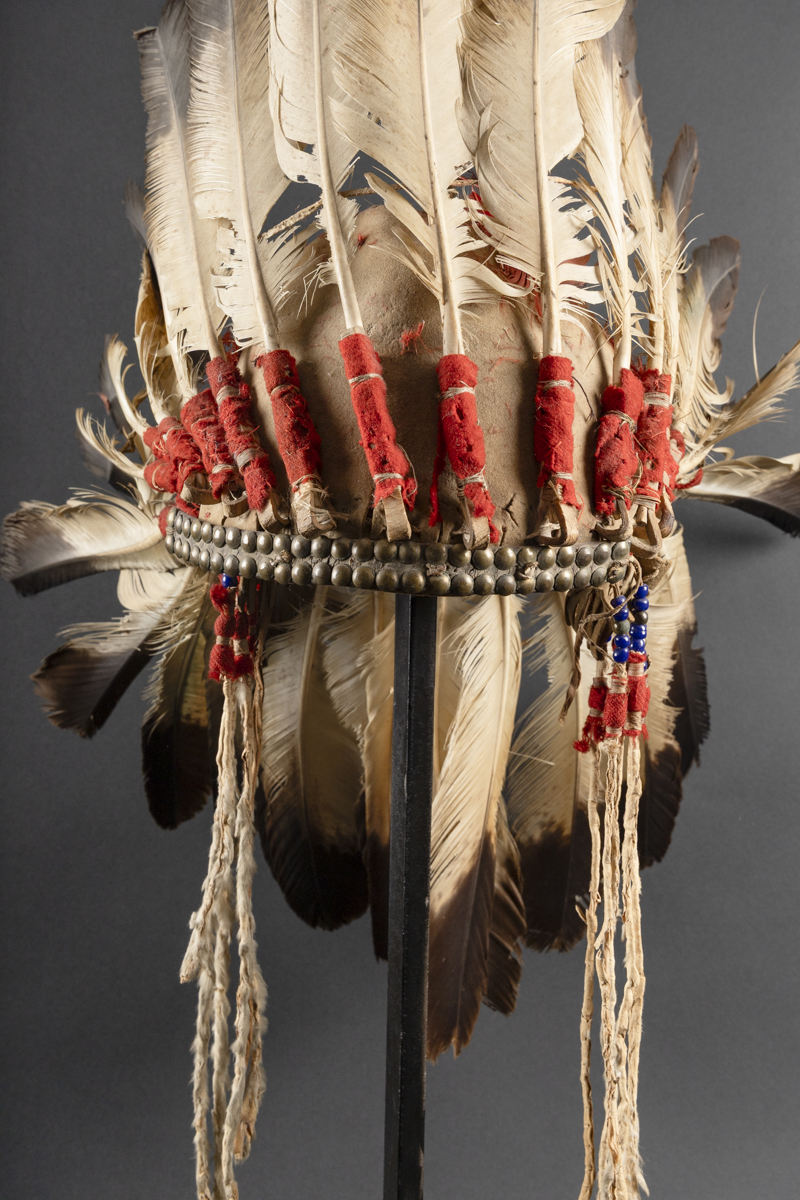
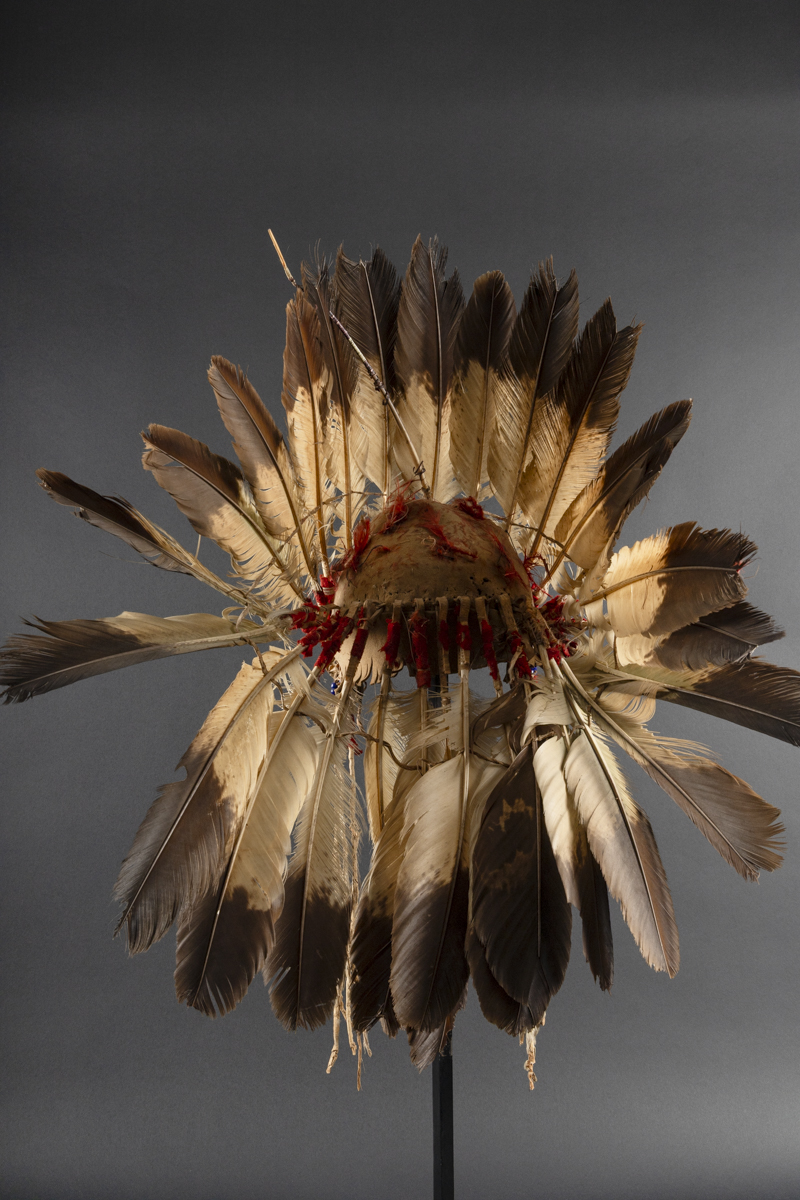
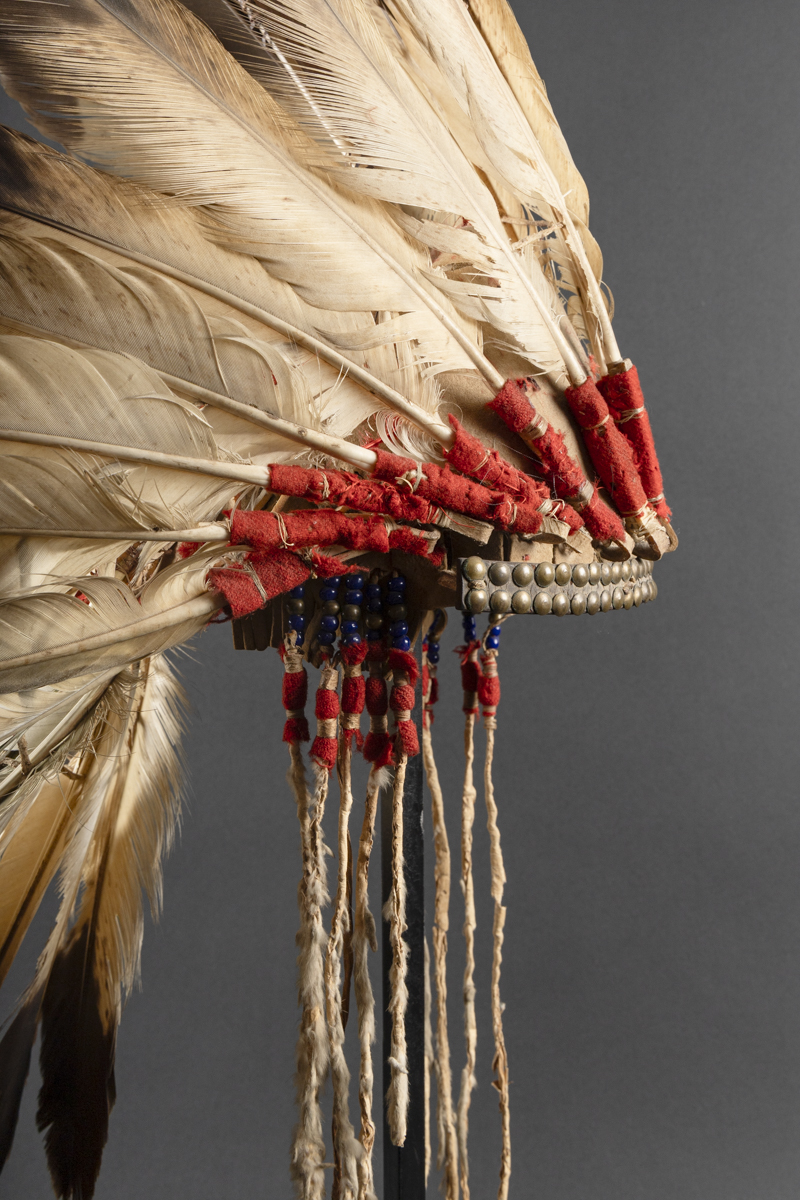
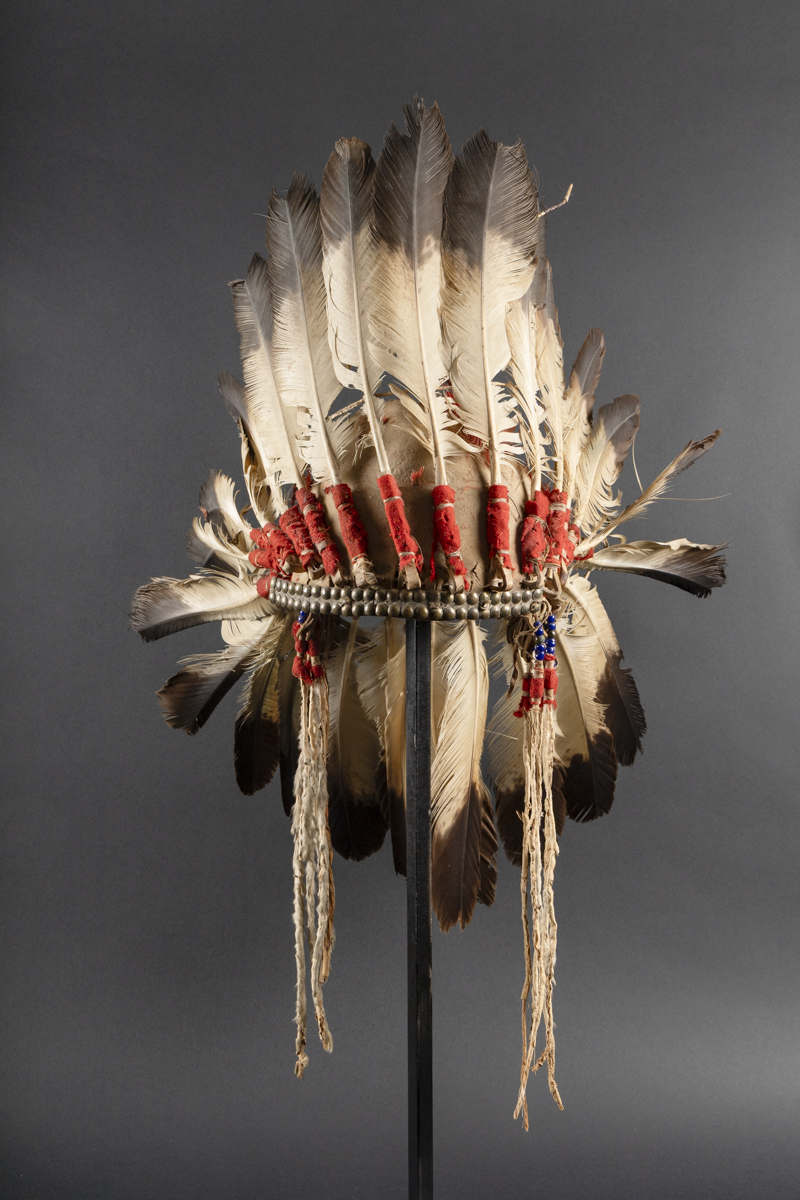
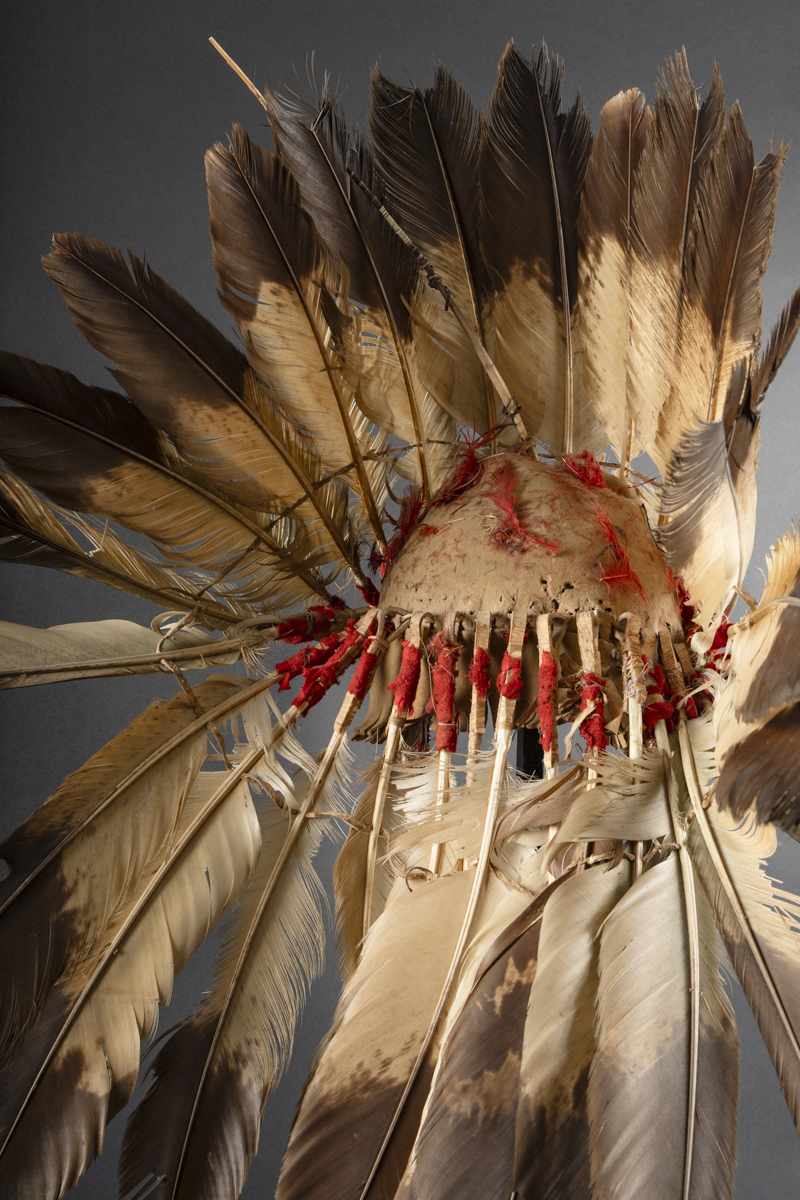
War bonnet
USA
War bonnet
Crow or neighboring Nations
Plains, USA
1880s
Eagle feathers, ermine fur, cloth, beads
Height: 70 cm – 25 ½ in.
Provenance
Binoche Renaud Giquello, Drouot, 24 April 2010, lot 200
Private collection, Paris, acquired at the above sale
CITES FR1007500944-K
Sold
This type of eagle-feather headdress was the most important and spectacular symbol of prestige for warriors of the Plains and neighboring regions.
However, the iconic "war bonnets" were rarely worn before the 1830s. They were mainly seen among certain groups in the Eastern Prairie region. During the 19th century, they became widespread throughout the entire region.
According to the Sioux (Lakota), neighbors of the Crow, the eagle symbolizes sacred warrior power. Furthermore, as Marc Petit notes in the book "Mémoires Indiennes" (Musée Champollion, Figeac, June 2011), the eagle is considered the "master of the sky and birds," and its feathers are symbols of bravery and wisdom. The down feathers, swaying with the slightest breath of air, were seen as a means of communication with the Spirit world.
Creating a headdress involved numerous ceremonies and songs celebrating the valor of the warrior for whom it was intended. During its crafting, each time a feather was added, one of the warrior's great military achievements was recalled. As such, once completed, the headdress stood as a trophy commemorating the many victories of the warrior and, more broadly, of the entire tribe.
Within the tribe, only chiefs and a small number of men were permitted to wear a war bonnet. Wearing the headdress was absolute proof of bravery in battle, and all members of the tribe owed respect to the person who wore it.
However, the iconic "war bonnets" were rarely worn before the 1830s. They were mainly seen among certain groups in the Eastern Prairie region. During the 19th century, they became widespread throughout the entire region.
According to the Sioux (Lakota), neighbors of the Crow, the eagle symbolizes sacred warrior power. Furthermore, as Marc Petit notes in the book "Mémoires Indiennes" (Musée Champollion, Figeac, June 2011), the eagle is considered the "master of the sky and birds," and its feathers are symbols of bravery and wisdom. The down feathers, swaying with the slightest breath of air, were seen as a means of communication with the Spirit world.
Creating a headdress involved numerous ceremonies and songs celebrating the valor of the warrior for whom it was intended. During its crafting, each time a feather was added, one of the warrior's great military achievements was recalled. As such, once completed, the headdress stood as a trophy commemorating the many victories of the warrior and, more broadly, of the entire tribe.
Within the tribe, only chiefs and a small number of men were permitted to wear a war bonnet. Wearing the headdress was absolute proof of bravery in battle, and all members of the tribe owed respect to the person who wore it.
Explore the entire collection