Preview
Okvik figure
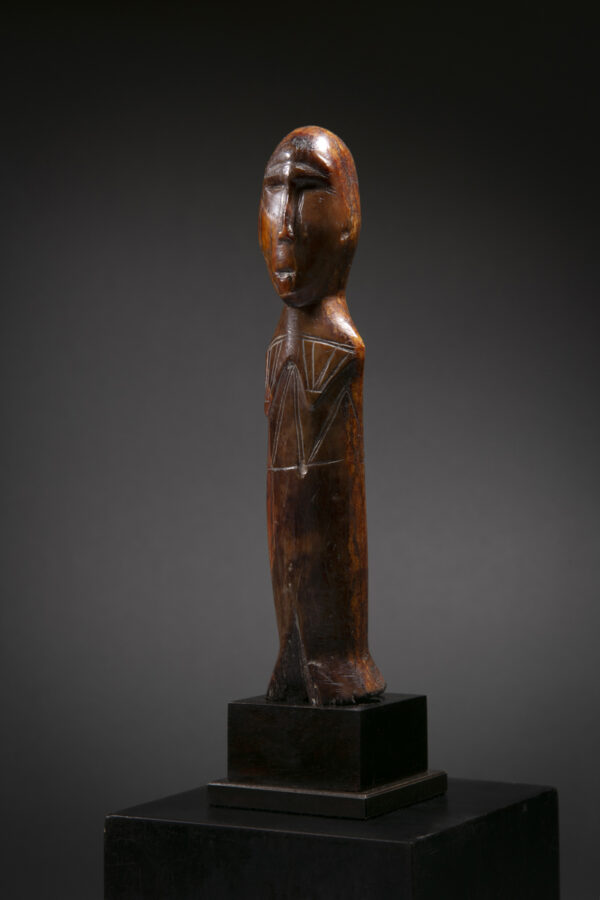
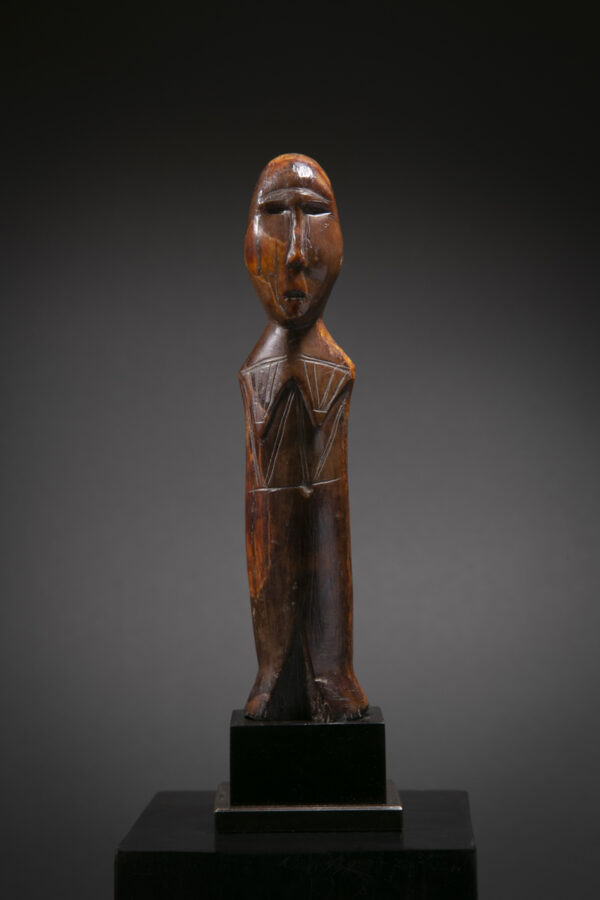
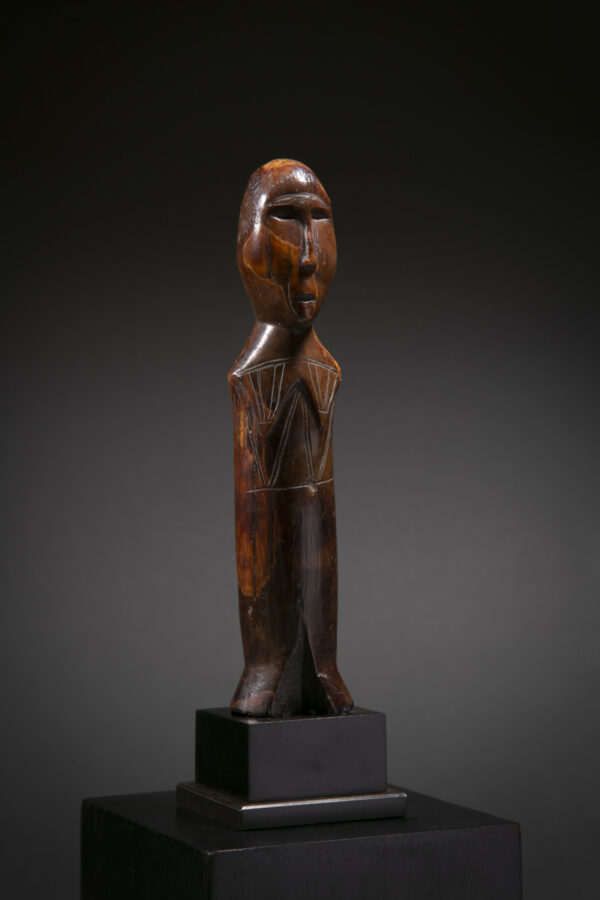
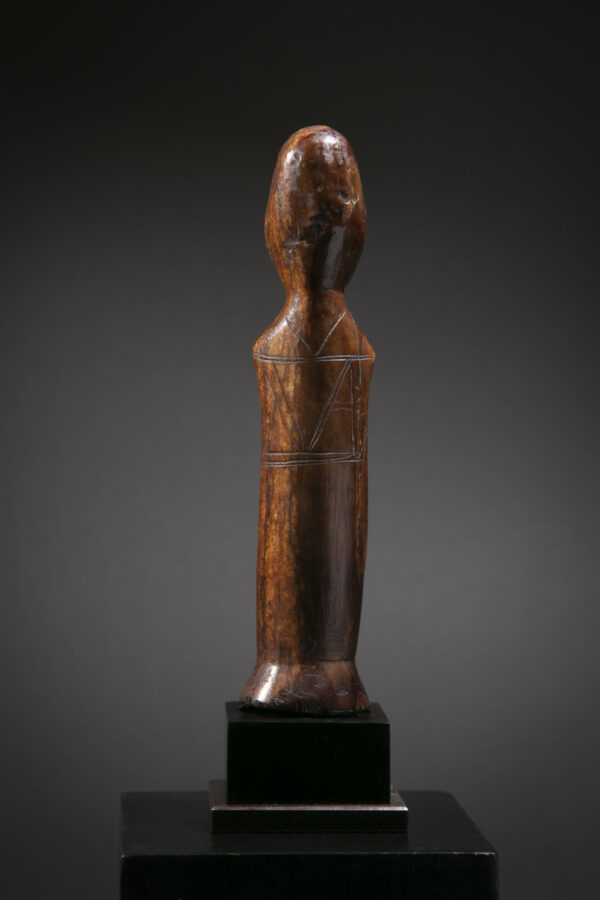
Okvik “Madonna”
An exceptional, large female figure
Okvik culture, Old Bering Sea I
Archaic Eskimo
St. Laurent Island (Sivuqaq), Alaska
Marine ivory
250 BC – 100 AD
Height: 6 ¼ in. – 15.9 cm
Provenance
Collection Perry J. Lewis, USA
Collection Galerie Flak, 2021
Private collection, acquired from the above
Exhibition & Publication:
“Espíritus del Agua”, Fundación La Caixa, Madrid & Barcelone, 1999 – 2000, planche 2, page 76
“Arctic Dreams”, Parcours des Mondes, 2021 (Galerie Flak)
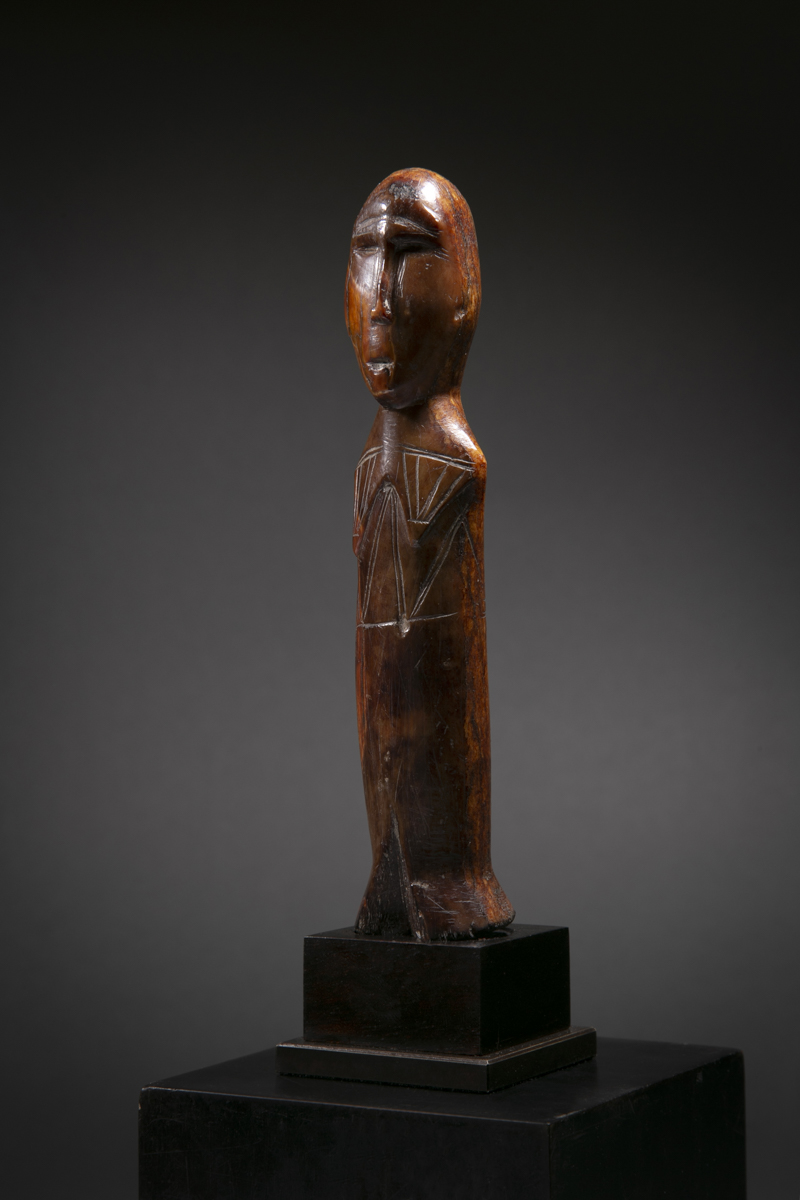
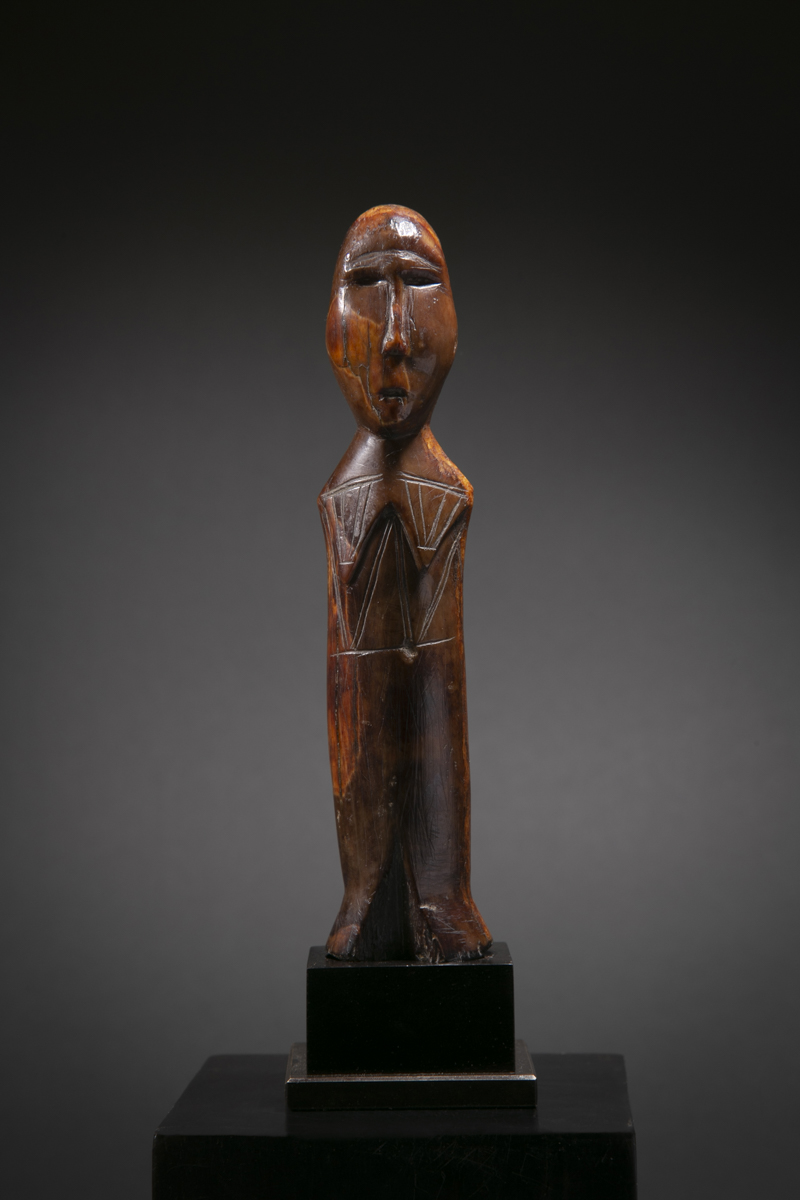
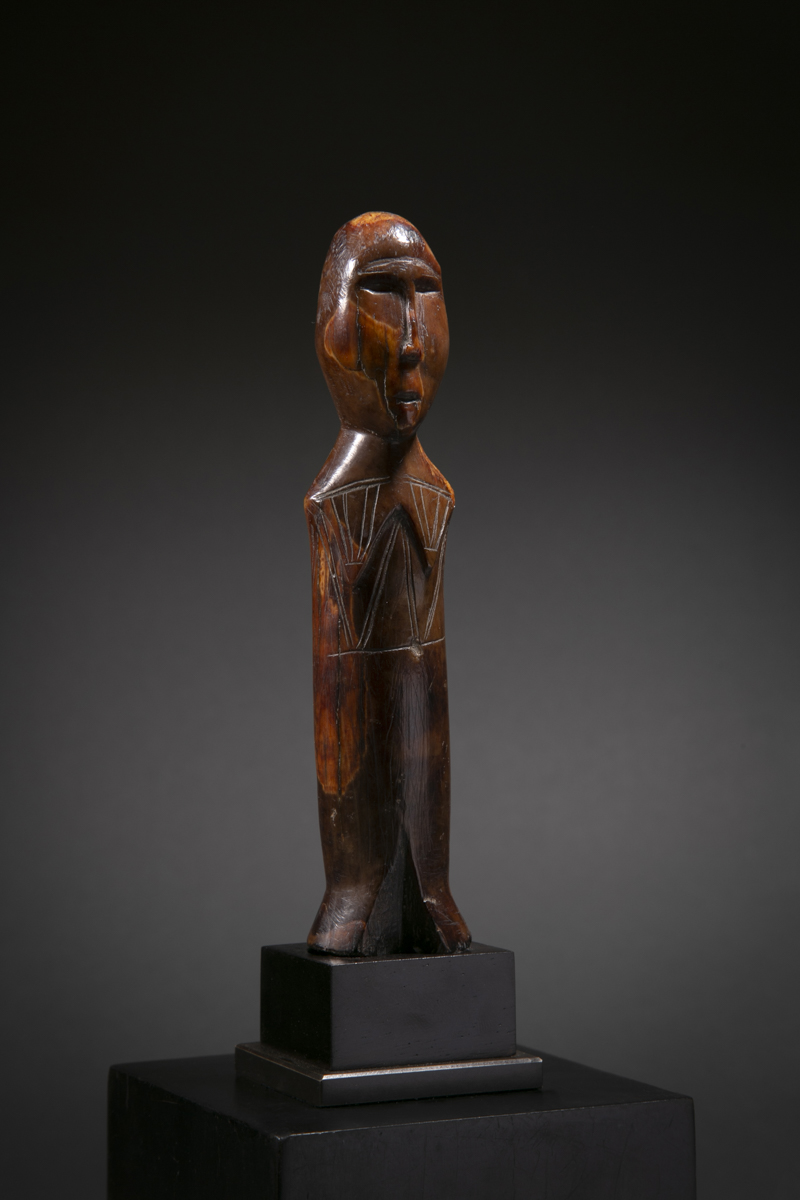
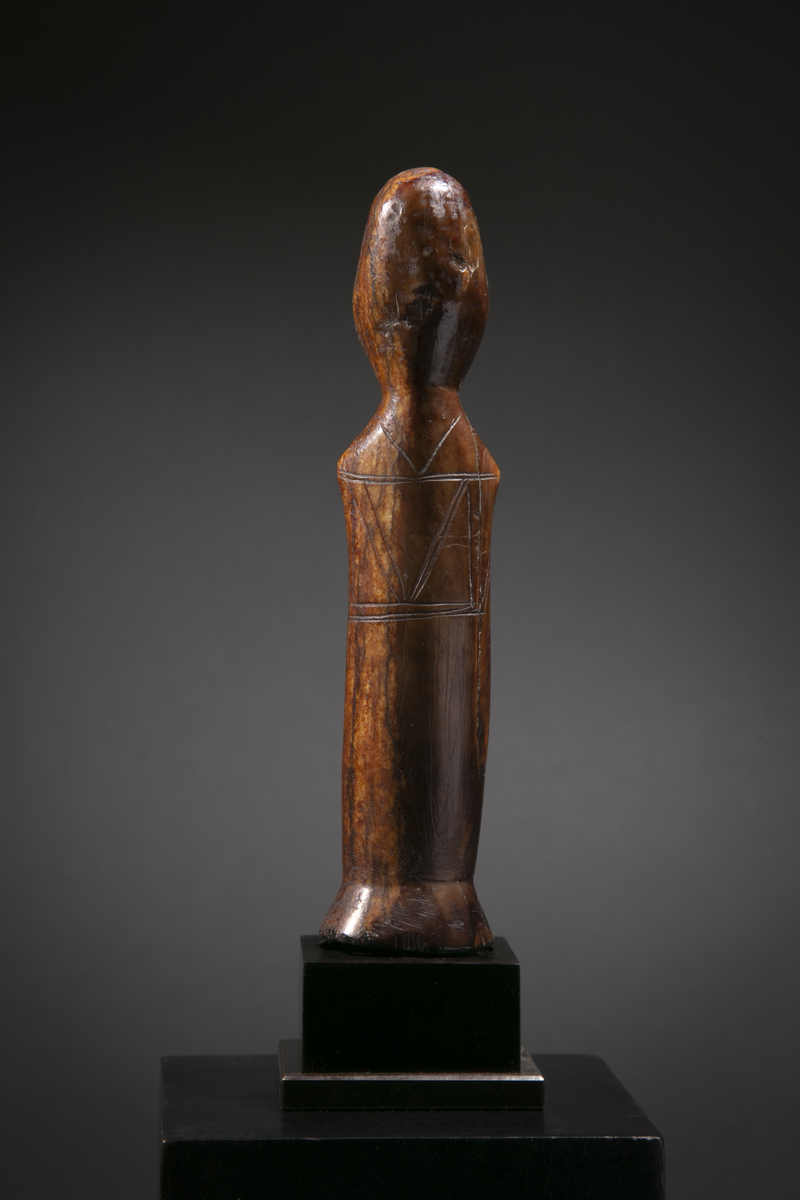
Okvik Madonna female figure 15.9 cm / Galerie Flak
Price: on request
An elongated torso, a pure, stylized face, a gaze from eternity…
Are we looking at an idol from the Cyclades, a prehistoric Venus of Lespugue, or an ancestor from Easter Island?
The truth is elsewhere: this figure carved in marine ivory, patinated by the cold, the wind and the passage of time, comes from those vast frozen lands of the Far North.
Only a short distance off the coasts of Siberia, in the hostile milieu of the Far North, the first ancient Eskimo civilizations crossed the Bering Strait to establish themselves in Alaska around 2000 B.C.
These semi-nomadic populations of hunters following the migration of the large sea mammals – whales, walruses, seals – progressively established themselves on St. Lawrence Island and the coasts of Alaska, giving birth to the Okvik civilization (250 B.C. to 100 A.D.)
The Okvik and the later cultures that succeeded it – Old Bering Sea II and III, then Punuk, and Thule – were the ancestors of the present-day Eskimos (Inuit). The word «Okvik » literally means « the place where the walruses come ashore » and corresponds to a choice hunting ground on St. Lawrence Island.
Year after year, the frozen soil of the permafrost continues to yield carved objects in bone and marine ivory that were put there or buried at some point over the ages.
This hieratic figure in fossilized ivory constitutes an extremely rare, archetypal example of archaic Eskimo art. It belongs to the very small corpus of the great classic art of the Okvik culture (Old Bering Sea I) which was born and developed on St. Lawrence Island at the southern part of the Bering Strait more than 2,000 years ago.
Okvik figures in marine ivory were used during ceremonies linked to fertility as well as for ensuring successful hunting expeditions.
Objects used to transmit knowledge and as aides for shamanic practices, these sculptures constituted a privileged channel for communicating with the invisible world of the spirits.
This human figure is characterized by the purity and elongation of its lines. The treatment of the face recalls in a vivid way the work of certain 20th century artists, such as Amedeo Modigliani or Constantin Brancusi.
Are we looking at an idol from the Cyclades, a prehistoric Venus of Lespugue, or an ancestor from Easter Island?
The truth is elsewhere: this figure carved in marine ivory, patinated by the cold, the wind and the passage of time, comes from those vast frozen lands of the Far North.
Only a short distance off the coasts of Siberia, in the hostile milieu of the Far North, the first ancient Eskimo civilizations crossed the Bering Strait to establish themselves in Alaska around 2000 B.C.
These semi-nomadic populations of hunters following the migration of the large sea mammals – whales, walruses, seals – progressively established themselves on St. Lawrence Island and the coasts of Alaska, giving birth to the Okvik civilization (250 B.C. to 100 A.D.)
The Okvik and the later cultures that succeeded it – Old Bering Sea II and III, then Punuk, and Thule – were the ancestors of the present-day Eskimos (Inuit). The word «Okvik » literally means « the place where the walruses come ashore » and corresponds to a choice hunting ground on St. Lawrence Island.
Year after year, the frozen soil of the permafrost continues to yield carved objects in bone and marine ivory that were put there or buried at some point over the ages.
This hieratic figure in fossilized ivory constitutes an extremely rare, archetypal example of archaic Eskimo art. It belongs to the very small corpus of the great classic art of the Okvik culture (Old Bering Sea I) which was born and developed on St. Lawrence Island at the southern part of the Bering Strait more than 2,000 years ago.
Okvik figures in marine ivory were used during ceremonies linked to fertility as well as for ensuring successful hunting expeditions.
Objects used to transmit knowledge and as aides for shamanic practices, these sculptures constituted a privileged channel for communicating with the invisible world of the spirits.
This human figure is characterized by the purity and elongation of its lines. The treatment of the face recalls in a vivid way the work of certain 20th century artists, such as Amedeo Modigliani or Constantin Brancusi.
Publication
Explore the entire collection